English


Manual vs Electric Jib Crane: Which Is Better?
Manual vs Electric Jib Crane Which Is Better
Date: 2026-10-08 Share:
A manual jib crane is usually the better fit for occasional, short lifts where simplicity, low initial complexity, or the absence of electrical power matters. An electric jib crane is generally better for repeated lifts, longer vertical travel, consistent cycle time, and reduced operator effort.
The choice is not simply manual versus motorized. A jib can combine an electric hoist with manual rotation, while a powered jib crane may motorize lifting and slewing. Selection depends on load, frequency, lift height, radius, positioning, environment, and downtime cost.
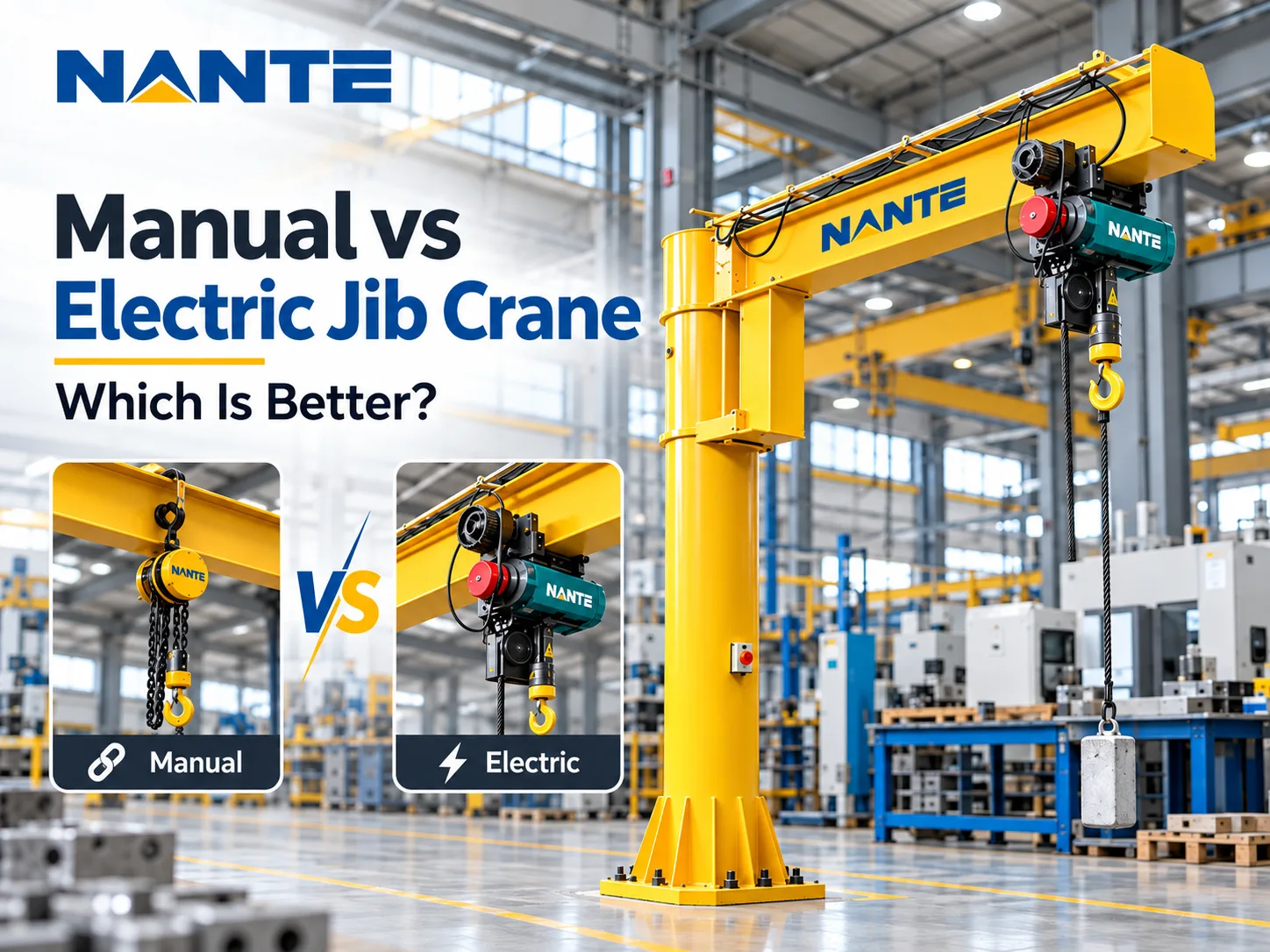
Manual Jib Crane vs Electric Jib Crane: Quick Comparison
What Changes Between the Two Systems?
The crane structure may look similar, but the operating system changes how work is performed. A manual material handling crane normally uses a hand-chain or lever hoist, with the boom or trolley moved by operator force. An electric system uses a motorized hoist and may add powered trolley travel or powered rotation.
| Decision factor | Manual jib crane | Electric jib crane |
|---|---|---|
| Lifting method | Hand chain or lever action | Motor-driven hoist |
| Rotation | Commonly push/pull | Manual or powered slew |
| Best operating pattern | Occasional, short-duration handling | Repetitive or production-linked handling |
| Operator effort | Higher and load-dependent | Lower for lifting; controls still require trained operation |
| Cycle consistency | Depends more on operator pace | More repeatable when correctly specified |
| Electrical infrastructure | Not required for basic operation | Power supply, protection, and controls required |
| Maintenance scope | Fewer electrical components | Mechanical plus motor, brake, power, and control components |
Neither design is automatically safer. Safety depends on correct selection, structural support, inspections, maintenance, training, and applicable site rules.
Compare Lifting Mechanism, Effort, and Speed
When a Manual Material Handling Crane Makes Sense
A manual hoist converts chain pulling into controlled lifting. It works without local electrical power and can suit tool changes, maintenance, or infrequent workstation loading.
Its main limitation is human effort. As load, lift distance, and cycle count increase, lifting takes longer and fatigue can reduce productivity. Chain pull also requires a suitable operator position and enough clear space to handle the hand chain without snagging nearby equipment.
Evaluate manual operation as a complete task, not only by rated capacity. Consider load weight, vertical travel, lifts per shift, operator reach, travel path, and production interruption.
Where an Electric Jib Crane Adds Value
An electric jib crane uses a powered hoist to raise and lower the load. Its commercial value is predictable handling with less physical effort, especially for repeated lifts.
Electric lifting is usually favored when production takt time matters, lift height is substantial, operators handle loads frequently, or controlled low-speed positioning is required. Available hoist speeds, duty classification, brakes, limit devices, and controls must match the actual load spectrum and operating pattern.
The buyer must also define voltage, phase, frequency, cable management, disconnects, control voltage, environmental protection, and maintenance capability.
Rotation and Positioning: Manual or Powered Slew?
Manual Rotation Is Often the Practical Middle Ground
Many applications do not need a fully powered jib. An electric hoist can lift while the operator manually rotates the boom, reducing effort without adding a slew motor, drive, brake, and controls.
Manual rotation works when the boom turns freely, the load can be guided safely, and starting or stopping requires acceptable force. Floor slope, bearings, boom length, load radius, obstructions, and wind affect push force.
When a Powered Jib Crane Becomes Justified
Evaluate powered rotation when loads are difficult to start or stop, the radius is long, rotations are frequent, positioning must repeat, or safe manual guidance is impractical.
Specify suitable slew speed, braking, end limits, control logic, and clearances. Abrupt acceleration or braking can promote load swing; variable speed may aid careful positioning.
Decision Matrix by Application Frequency and Load
Preliminary Configuration Matrix
This matrix is a screening tool, not a capacity calculation. Final selection requires engineering review of the structure, support, hoist, trolley, power, and duty.
| Load and operating pattern | Starting configuration | Why it may fit | Confirm before purchase |
|---|---|---|---|
| Light load, occasional short lift | Manual hoist, manual rotation | Simple system with no lifting power requirement | Acceptable chain pull, operator reach, and cycle time |
| Light-to-moderate load, repeated lifts | Electric hoist, manual rotation | Reduces lifting effort while keeping slew simple | Hoist duty, lift speed, power supply, and manual push force |
| Moderate-to-heavy load, frequent production handling | Electric hoist; evaluate powered rotation | Supports repeatable cycles and reduces sustained effort | Load spectrum, starts per hour, speeds, braking, controls, and service access |
| Load near the selected crane’s rated capacity, even if infrequent | Engineered review before choosing actuation | Capacity alone does not define ergonomics or duty | Radius, structural reactions, deflection, hoist rating, and support design |
| No practical electrical supply | Manual system or alternative correctly rated power source | Avoids unsuitable electrical installation | Required productivity, environment, and emergency operating plan |
| Hazardous, corrosive, outdoor, or washdown area | Application-specific engineered system | Standard components may be unsuitable | Area classification, enclosure, temperature, coating, wind, and local rules |
How to Read the Matrix
Consider frequency and load together. A light component moved repeatedly can justify electric lifting more strongly than a heavier item moved once during maintenance. High rated capacity does not automatically require powered rotation.
Document a representative shift: lift count, average and maximum load, height, rotation angle, radius, loaded travel, empty return, and waiting time. This creates a supplier-ready duty profile.
Capacity, Productivity, and Maintenance Trade-Offs
Capacity and Duty Are Different Questions
Rated capacity answers how much the system is designed to lift under stated conditions. Duty addresses how often it operates and how demanding the load pattern is. A buyer comparing jib crane configurations should specify both rather than treating capacity as the only selection value.
The hoist, trolley, boom, support, bearings, foundation, anchors, and electrification form one system. Electric lifting may change weight, dynamic behavior, power routing, and maintenance access.
Productivity Must Be Measured Across the Workstation
Electric operation can shorten lifting, but the business case should use total cycle time: rigging, approach, lift, rotation, placement, release, and return. A faster hoist may add little if rigging or machine time dominates.
Compare annual labor, production impact, installation, inspections, spares, and downtime. For repeated handling, reduced fatigue and consistent motion may matter as much as lifting speed.
Nante Crane presents industrial cranes, electric hoists, and related components within its current product scope. Purchasing teams can use a specific chain hoist product reference to frame technical questions, while treating published product information as a starting point for application review rather than approval for a particular duty.
Maintenance Scope and Downtime Risk
Manual equipment still needs scheduled inspection, lubrication, chain, hook, brake, fastener, and structural checks. Its service scope is generally simpler.
Electric systems add motors, brakes, drives, controls, cables, limits, and electrical protection. Plan inspection intervals, competent personnel, critical spares, diagnostics, and lockout. The hoisting motor power calculation guide and overview of crane control options help frame supplier questions.
How to Specify the Better Jib Crane
Build a Comparable Request for Quotation
Provide the same operating data to every supplier so that quotations reflect the same scope:
- Maximum, typical, and minimum load, including below-the-hook devices.
- Required radius, lift height, hook approach, rotation range, and surrounding clearances.
- Lifts per hour or shift, operating hours, load spectrum, and required cycle time.
- Manual or electric hoist preference, plus manual or powered trolley and rotation.
- Available power and preferred pendant, radio, or fixed control arrangement.
- Indoor or outdoor conditions, temperature, dust, moisture, corrosion, and hazardous-area classification.
- Floor, column, or wall information and responsibility for foundations, anchors, installation, and commissioning.
- Required drawings, calculations, inspection records, test documentation, manuals, training, warranty, and spares.
Review rotation range planning before freezing the layout. Then normalize quoted scope: crane structure, hoist, trolley, electrification, controls, documentation, testing, packing, freight, installation, commissioning, exclusions, warranty, and change terms.
FAQs
Is an Electric Jib Crane Always Faster?
Powered lifting is more consistent and can be faster, but rotation, trolley movement, rigging, positioning, and machine waiting may limit total output.
Can an Electric Hoist Be Used With Manual Rotation?
Yes. Electric lifting with manual boom rotation is a common functional combination. Suitability depends on acceptable manual push force, load control, radius, rotation frequency, clearances, and the ability to route power without creating damage or entanglement risks.
Does a Heavier Load Automatically Require Powered Rotation?
No. Load is only one factor. Boom length, bearing design, floor level, environment, required acceleration, frequency, and operator position affect rotation effort. The supplier should assess the complete application and support structure.
Request a Project-Specific Jib Crane Review
Information to Include
Purchasing teams selecting between manual and electric operation should provide load weights, radius, lift height, rotation range, cycles per shift, operating environment, power supply, control preference, layout drawings, installation scope, and destination. With those inputs, Nante Crane can review the duty and interfaces and prepare a project-specific equipment recommendation and quotation; submit a jib crane project brief.