English



Crane Hoisting Motor Power Calculation: A Practical Engineering Guide
Crane Hoisting Motor Power Calculation: A Practical Engineering Guide
Date: 2026-09-04 Share:
Selecting a hoisting motor by rated load alone can produce an undersized drive, excessive heating, slow acceleration, or unreliable braking. A sound crane hoisting motor power calculation connects the lifted mass, vertical speed, mechanical losses, motor efficiency, starting conditions, and duty cycle. The result is a defensible motor size for engineering review and supplier comparison.
What the Hoisting Motor Must Deliver
The power path from motor to hook
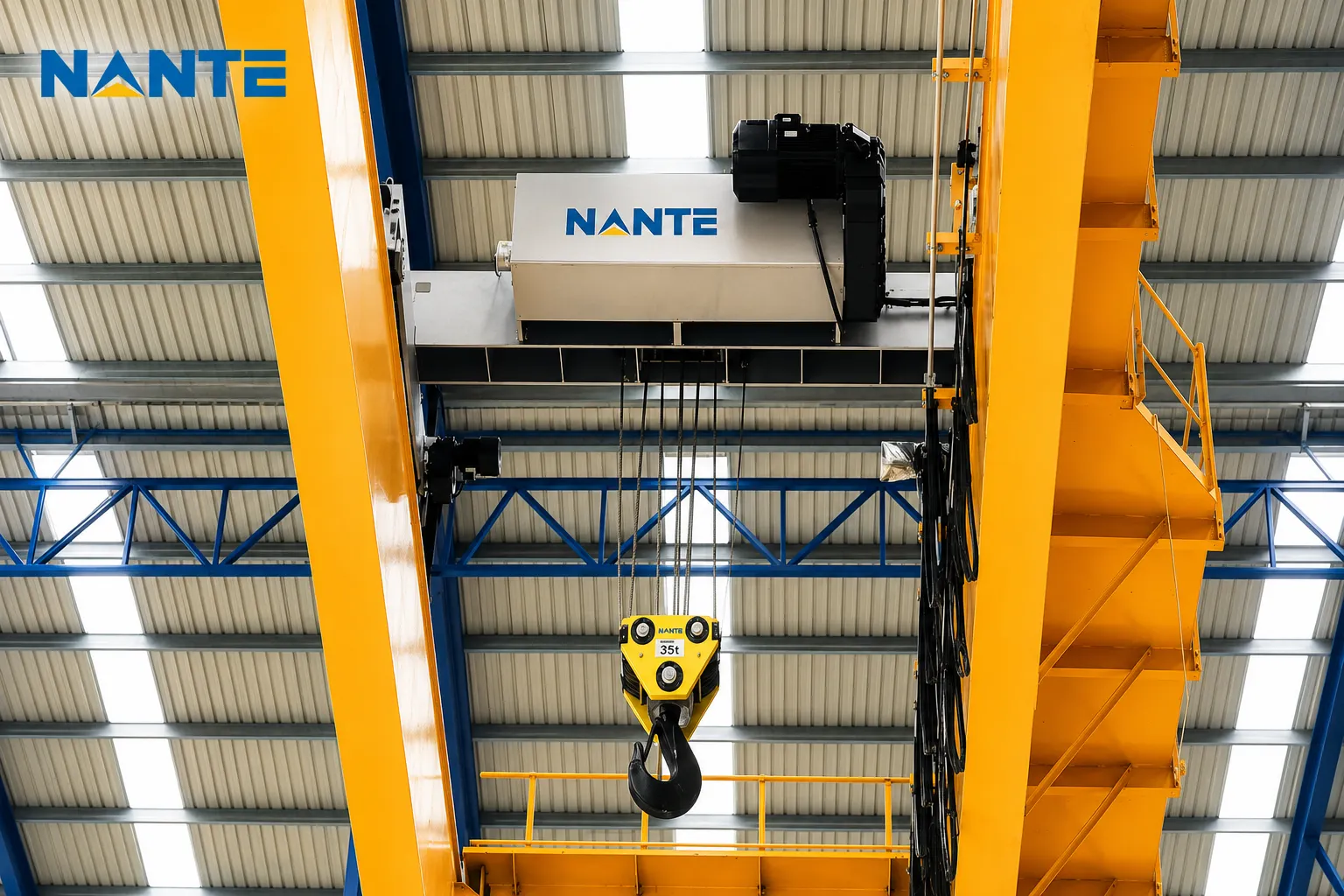
The motor produces torque and speed. A gearbox converts that output into drum torque, the drum pulls the wire rope, and the sheaves transfer force to the hook block. A complete Crane Hoisting Mechanism also includes the brake, drum, pulleys, hook block, controls, and limit devices. Motor power is therefore one part of a coordinated lifting system.
The core power equation
For steady lifting, the mechanical power at the load is:
P_load = m x g x v
The approximate motor input power is:
P_motor = (m x g x v) / (eta_mech x eta_motor)
Where m is the total lifted mass in kilograms, g is 9.81 m/s2, v is hook speed in m/s, eta_mech is the efficiency of gearbox, drum, bearings, and sheaves, and eta_motor is motor efficiency. The calculation gives continuous power for the stated lift. Acceleration, starts per hour, ambient temperature, and braking still need separate checks.
Step 1: Define the Design Load Correctly
Include every mass carried by the hoist
The design mass normally includes the payload plus the hook block, spreader beam, slings, grabs, magnets, and other attachments that are lifted by the hoist. A project team should state whether the quoted crane capacity is a working load limit or a gross lifted mass. Omitting a heavy hook block can understate required power and brake torque.
Check load spectrum, not only the maximum
Record the normal load, occasional maximum load, empty-hook lifts, and the percentage of operating time in each range. A motor that handles a rare peak may still overheat if most shifts involve frequent starts at high load. The load spectrum also supports the selected FEM, ISO, or CMAA duty classification.
Step 2: Match Speed, Reeving, and Drum Data
Use hook speed in the first calculation
The energy requirement depends on vertical hook speed. If a specification gives rope line speed instead, convert it through the number of rope falls. With a four-fall reeving arrangement, a 4 m/min rope speed produces approximately 1 m/min hook speed before elastic and slip effects. The gearbox and drum must also provide enough torque at the selected speed.
Consider acceleration and inching
A high lifting speed may improve throughput but raises power and stopping energy. Variable-frequency drives can provide controlled acceleration, low-speed positioning, and reduced mechanical shock, but the motor must be suitable for inverter duty and the control settings. Frequent inching can create more thermal stress than a few long lifts.
Step 3: Apply Mechanical and Motor Efficiency
Estimate losses transparently
Mechanical efficiency includes gearbox meshes, bearings, rope bending, sheave friction, and drum losses. Use supplier test data where available. For an early budget estimate, an engineering team may use a conservative efficiency assumption, then replace it with verified values during technical clarification.
Motor efficiency varies with load, speed, voltage, and temperature. The nameplate rating is normally shaft output, while the formula above calculates electrical input needed to produce that output. Confirm whether a supplier’s published kilowatt value is motor output, absorbed power, or a package rating.
Separate continuous power from peak torque
Steady-state watts do not fully describe a crane drive. Starting torque must overcome static friction and accelerate the rotating masses. The brake must hold the rated load when power is removed, and the gearbox must withstand shock and emergency stops. A Crane Motor review should therefore include torque-speed curves, starting method, brake arrangement, enclosure, insulation class, and control compatibility.
Calculator Example: 10,000 kg at 0.08 m/s
Worked hoist motor power calculation
Assume a 10,000 kg total lifted mass, 0.08 m/s hook speed, 90% mechanical efficiency, and 92% motor efficiency.
- Load power: 10,000 x 9.81 x 0.08 = 7,848 W.
- Combined efficiency: 0.90 x 0.92 = 0.828.
- Motor input estimate: 7,848 / 0.828 = 9,478 W, or about 9.5 kW.
The next standard motor size is not selected automatically. The engineering review should check acceleration time, starts per hour, braking duty, voltage, ambient temperature, enclosure, and the thermal class. An 11 kW motor could be appropriate for this example, while a more demanding duty cycle or faster acceleration may require a larger rating. The final choice must follow the motor manufacturer’s selection tables and the complete hoist duty calculation.
What the example does not cover
The equation does not prove that a hoist can lift an overload, compensate for poor reeving, or meet a stopping-distance requirement. It also does not size the travel motors, runway structure, electrical feeder, or generator. Those are separate checks in the crane design basis.
Duty Cycle Changes the Required Motor Size
Use operating time and starts per hour
Duty cycle combines motor running time, starts, reversals, load spectrum, and rest periods. A motor running for two minutes in a ten-minute cycle has a different thermal demand from a motor making dozens of short lifts in the same period. The project specification should state average daily hours, peak starts per hour, lift duration, and expected utilization.
Coordinate with a formal duty class
FEM and ISO classifications help translate workload into a repeatable equipment class. The duty class calculation guide can support the load-spectrum review, but the final class must match the complete crane, not only the motor. A higher class can affect gearbox bearings, rope diameter, drum construction, brake wear, and inspection intervals.
Crane Motor Selection Checklist
Electrical and environmental inputs
Before comparing quotations, document:
- Rated voltage, frequency, phase, and available short-circuit capacity.
- Required lifting speed, low-speed positioning, and acceleration time.
- Ambient temperature, altitude, dust, humidity, hazardous-area classification, and enclosure requirement.
- Inverter duty, braking resistor needs, control voltage, and electromagnetic compatibility requirements.
Mechanical and safety inputs
Confirm the drum diameter, rope diameter, reeving, gearbox ratio, hook approach, brake torque, overload protection, upper and lower limits, and emergency-stop behavior. A Crane Brake review should cover lining inspection, release monitoring, manual release provisions, and the relationship between brake torque and rated load.
Connect Motor Power to Hoist Selection
Compare complete hoist packages
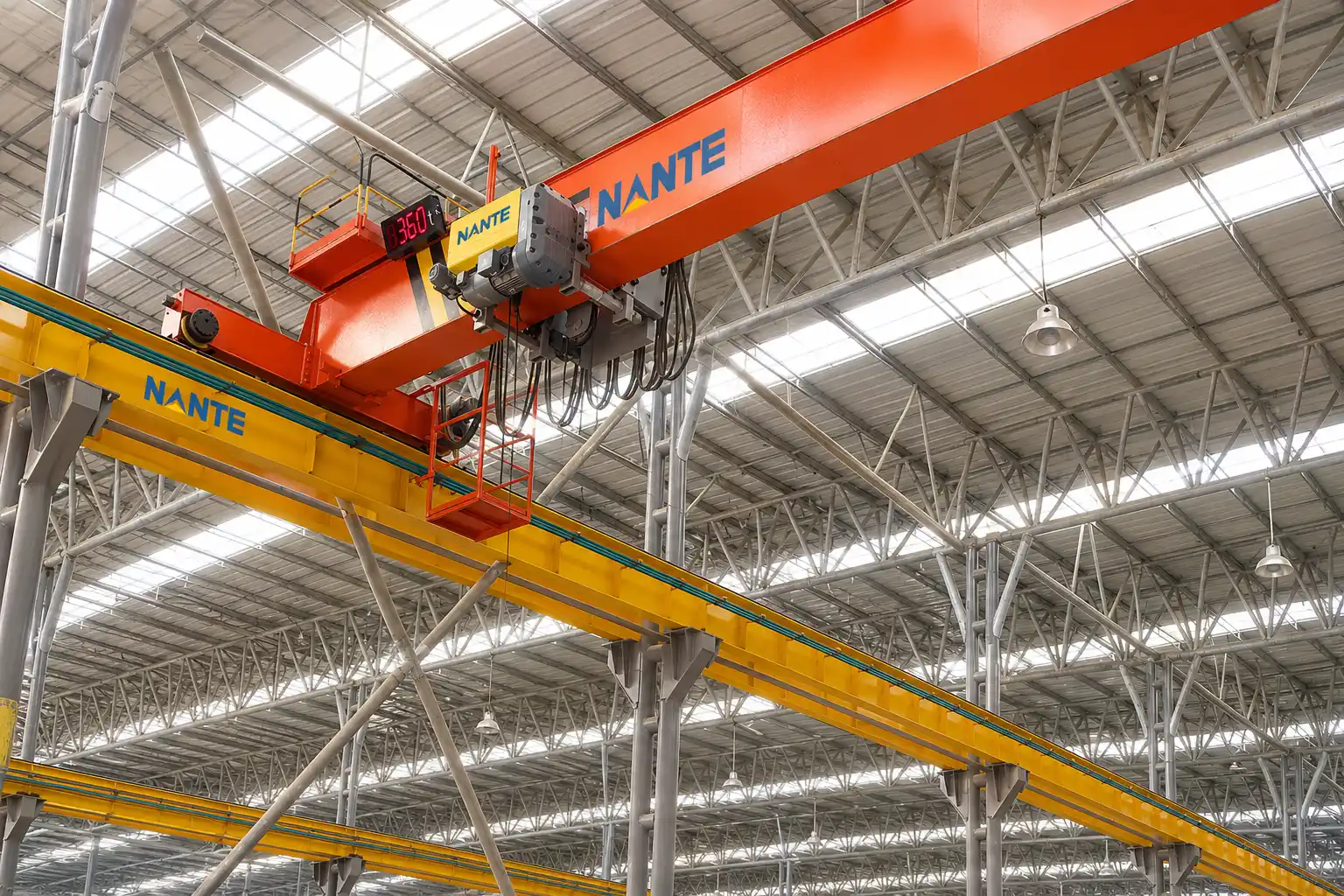
Motor size should be evaluated with the drum, gearbox, rope, hook block, controls, and brake as one package. A compact European Wire Rope Hoist may suit a low-headroom layout, while a conventional arrangement may offer different maintenance access or replacement-part options. The correct choice depends on duty, dimensions, speed, and interface data rather than motor kilowatts alone.
Ask for selection evidence
Request a calculation sheet showing load assumptions, efficiency values, thermal duty, motor torque, brake torque, and selected service factors. Request dimensional drawings, wiring diagrams, protection settings, test records, spare-parts lists, and commissioning instructions. Related hoist selection content can help normalize the technical comparison between offers.
From Calculation to a Purchase-Ready Specification
What a supplier should clarify
After the calculation is complete, the supplier should confirm rated capacity, lifting height, hook speed, reeving, duty class, operating hours, load spectrum, power supply, control method, environment, and applicable standards. The quotation should identify inclusions and exclusions for the motor, brake, inverter, pendant or radio control, festoon, installation, testing, training, warranty, and spares.
When Nante Crane enters the review
At this stage, Nante Crane can be evaluated as an equipment source using the same evidence set as any qualified supplier. Its official hoisting-mechanism page identifies motor, gearbox, brake, drum, pulley, hook block, control panel, and safety devices as parts of the mechanism, and lists NHA, NHC, CD/MD, and open-winch product families. Buyers should still request a project-specific calculation and confirm the final configuration against the duty and interface requirements.
FAQ
Is motor power equal to crane capacity?
No. Capacity is a force or mass rating, while motor power combines load and lifting speed after losses. Two hoists with the same capacity can require different motor ratings when speed, reeving, efficiency, or duty cycle changes.
Should hook-block weight be included?
Yes, when the hook block and attachments are lifted by the hoisting drive. The design basis should list payload, rigging, hook block, and any below-the-hook device separately so the calculation can be audited.
How much margin should be added?
There is no universal percentage. Margin should come from acceleration torque, thermal duty, voltage variation, ambient conditions, braking requirements, and the manufacturer’s service-factor guidance. Arbitrary oversizing can increase inrush current, cost, and mechanical stress.
Submit Inputs for a Project-Specific Motor Review
For a technical proposal, provide capacity, total lifted mass, lifting height, hook speed, reeving, duty class, starts per hour, operating hours, load spectrum, power supply, control method, environment, layout drawing, and delivery location. Nante Crane can then review the assumptions and prepare a matched hoist and motor configuration for quotation. Send the project brief through Contact Nante Crane.