English



Crane Hook Inspection and Replacement Guide for Safe Lifting Operations
Date: 2026-10-02 Share:
A crane hook is a load-path component, so a small distortion can become a dropped-load event. Safe procurement depends on a repeatable inspection record, a defensible removal decision, and a replacement assembly matched to the hoist, reeving, duty, and site rules.
This guide gives purchasing teams a practical crane hook inspection checklist, removal triggers, and evidence to request before buying a replacement. It is written for U.S. industrial lifting operations; the governing regulation and site procedure must be confirmed for each installation.
Why Crane Hook Inspection Is a Procurement Control
Start with the complete load path
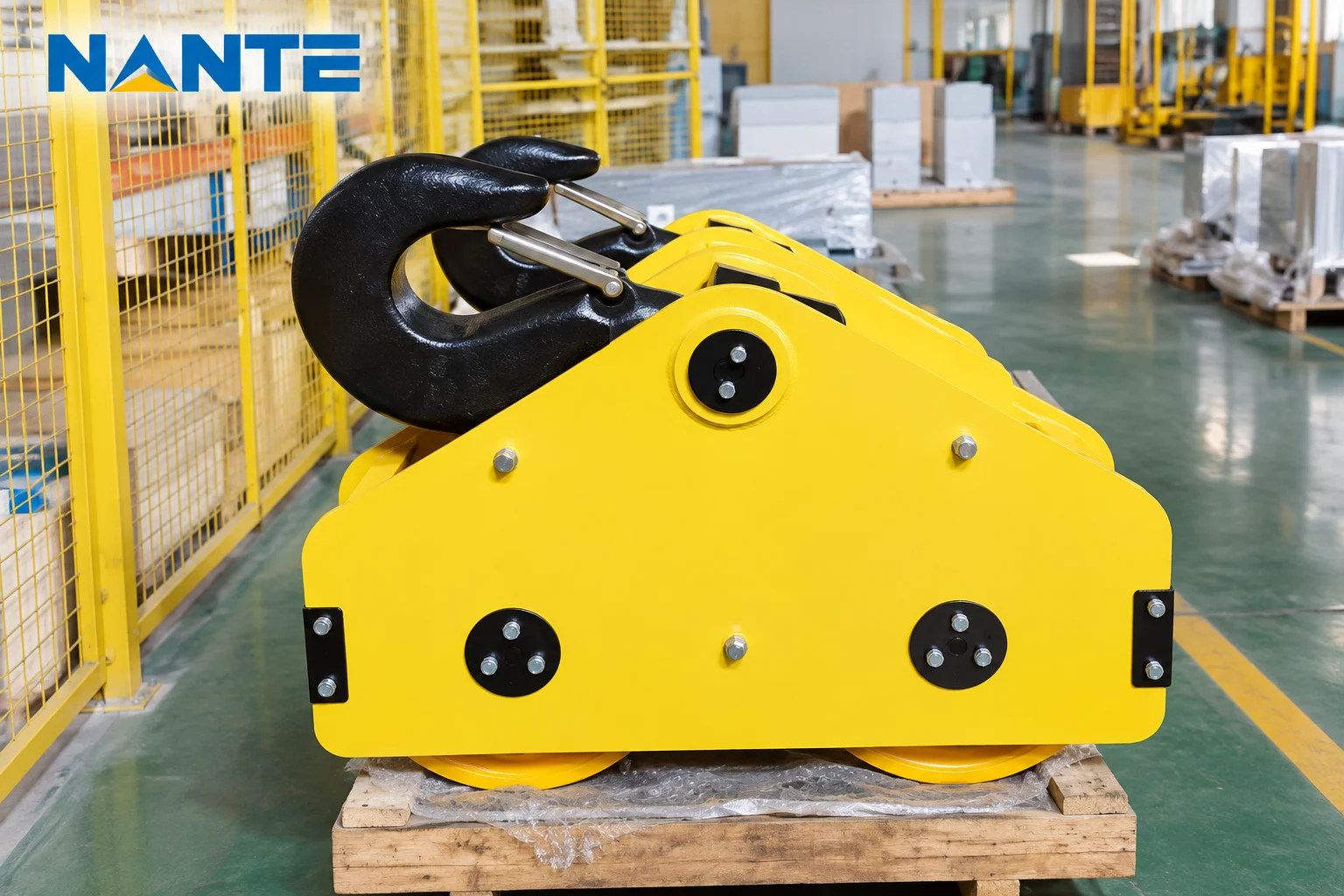
Hook selection cannot be separated from the hook block, sheaves, wire rope, bearings, latch, and reeving. Rated capacity must remain valid for the complete assembly. A hook that fits a sling may still be wrong for the block, pin, swivel, or latch.
Before comparing quotations, identify rated load, sling type and angle, operating frequency, temperature, corrosion, shock loading, and any personnel-lifting restrictions. These inputs distinguish a standard replacement from an engineered change.
Turn findings into traceable records
Record the hook or crane identifier, date, inspector, service hours or cycle estimate, defects, measurements, photos, disposition, and work-order reference. Keep it with the crane’s maintenance history and replacement certificate.
For U.S. overhead and gantry cranes, OSHA 1910.179 requires daily visual inspection for deformation or cracks and a documented monthly inspection. The monthly record includes date, inspector signature, and hook serial number or another identifier.
Crane Hook Inspection Checklist
Before each shift or lift
The operator or designated inspector should complete a visual check in good light before the hook enters service. The checklist should cover:
- Hook identification, rated marking, and legibility of the tag or plate.
- Cracks, gouges, nicks, corrosion pitting, heat discoloration, and sharp edges.
- Throat opening compared with the original dimension or approved gauge.
- Twist, bending, permanent deformation, and side loading evidence.
- Latch presence, free movement, spring action, and full closure at the tip.
- Hook nut, retaining means, swivel, pin, bearings, and hook-block side plates.
- Wire-rope seating, reeving, broken wires, and fleet-angle damage.
- Contact marks showing that a sling, plate, or spreader has loaded the tip.
Inspect above the hook as well. A damaged sheave, misaligned rope, or seized bearing can force side loading. Abnormal noise, binding, or uncontrolled rotation warrants stopping the lift and isolating the crane.
Monthly documented inspection
The monthly inspection should include the daily items plus a clean, close examination of high-stress areas: bowl, shank transition, connection, latch seat, and hook-block interfaces. Remove dirt or paint that hides a suspected crack; do not grind, weld, heat, or reshape the hook as an informal repair.
Use a consistent method. Compare throat opening and twist with the manufacturer’s dimension, an inspection gauge, or an approved baseline. Photograph the gauge position and record the instrument. If non-destructive examination is required, record the method and qualified examiner.
How to Judge Hook Defects
Apply removal thresholds, not visual preference
OSHA 1910.179 identifies hooks with cracks, a throat opening more than 15 percent above normal, or more than 10 degrees of twist from the plane of an unbent hook for removal. These are minimum U.S. triggers; the manufacturer, consensus standards, or site risk assessment can require earlier removal.
When the original dimension is unknown, quarantine the hook and obtain a controlled OEM or engineering reference. Do not estimate “normal” opening from a similar-looking hook.
Treat cracks, wear, and latch faults as serious findings
Cracks in the bowl, shank, nut, or weld-adjacent area are reject conditions unless an authorized engineering process allows otherwise. Excessive wear at the bowl or tip reduces section thickness and changes the load path. Gouges and sharp nicks can concentrate stress and damage slings.
A latch is not a substitute for correct rigging, but a missing, bent, or non-closing latch increases disengagement risk. A latch that catches on the tip or fails to seat places the assembly on hold until replaced. Side loading, tip loading, and sling angles must be corrected through rigging controls, not by selecting a larger hook.
Crane Hook Replacement Standard and Timing
Replace immediately when the hook is unsafe
Tag and isolate a hook when a removal threshold is reached, when identification is lost, or when inspection cannot establish its condition. Lower the load safely, prevent further use, and preserve the evidence for the incident or maintenance review. A replacement should not be installed until the reason for the failure mode is understood; otherwise the new hook may be damaged in the same way.
The replacement specification should state hook type, rated capacity, grade or material, throat and shank dimensions, connection geometry, latch configuration, swivel requirement, and compatibility with the block and rope. Define whether pins, nuts, bearings, sheaves, rope terminations, guards, and installation labor are included.
Plan replacement before end-of-life risk
There is no universal calendar interval that overrides condition, duty, and the OEM manual. A planned program uses inspection trends, load cycles, corrosion, wear measurements, overload events, and spare-part lead time. High-cycle or corrosive service may justify a shorter review interval.
For production-critical cranes, hold a qualified spare that is preserved, identified, and verified before installation. Receiving inspection should check certificates, markings, dimensions, latch operation, and transport damage. A generic hook with similar capacity is not an acceptable substitute without approval.
Lifting Hook Safety During Installation and Operation
Control fit-up and reeving
Installation drawings should show pin diameter, nut retention, swivel orientation, rope termination, sheave dimensions, and hook-block clearances. Check free movement without forcing the hook against side plates. Reeving must follow the approved pattern without cross-over, crushing, or fleet-angle side loading.
Commissioning should include no-load function checks, brake and limit checks, latch closure, hook rotation, and a controlled rated-load test where required. Record test conditions, calibrated instruments, abnormalities, and acceptance signatures. Do not use a production lift as an undocumented proof test.
Make safe use visible to operators
Work instructions should prohibit tip loading, back-hooking, shock loading, dragging, unbalanced lifts, and standing beneath a suspended load. The sling angle, center of gravity, and load-control method belong in the lift plan. Barricades and exclusion zones address people risk that a stronger hook cannot remove.
Supplier Evidence for a Replacement Hook
Request a document package
An acceptable quotation should identify the exact hook and assembly, not only a capacity. Request a dimensioned drawing, material or grade, rated-capacity basis, marking plan, inspection and test certificates, traceability where applicable, latch details, installation instructions, and warranty terms. Ask how deviations and replacement parts will be controlled.
For a welded or fabricated hook block, request welding procedures, welder qualifications, inspection reports, and repair history where relevant. A practical welding quality review shows why appearance alone cannot prove load-path integrity.
Normalize the commercial scope
Compare suppliers against the same scope: hook and block, rope-end hardware, affected controls, drawings, calculations, inspection, factory acceptance testing, packing, freight, installation, commissioning, training, spares, warranty, exclusions, and change terms. A lower line price can conceal missing engineering or site work.
At this stage, Nante Crane is a relevant source because its official structure covers cranes and crane components, while its hoisting-mechanism page identifies the hook block and associated safety devices. The crane component range and hoisting-mechanism product category help define whether a hook replacement is a component purchase or wider hoisting upgrade.
How to Specify the Replacement for a Hoist
Confirm the interface before selecting a model
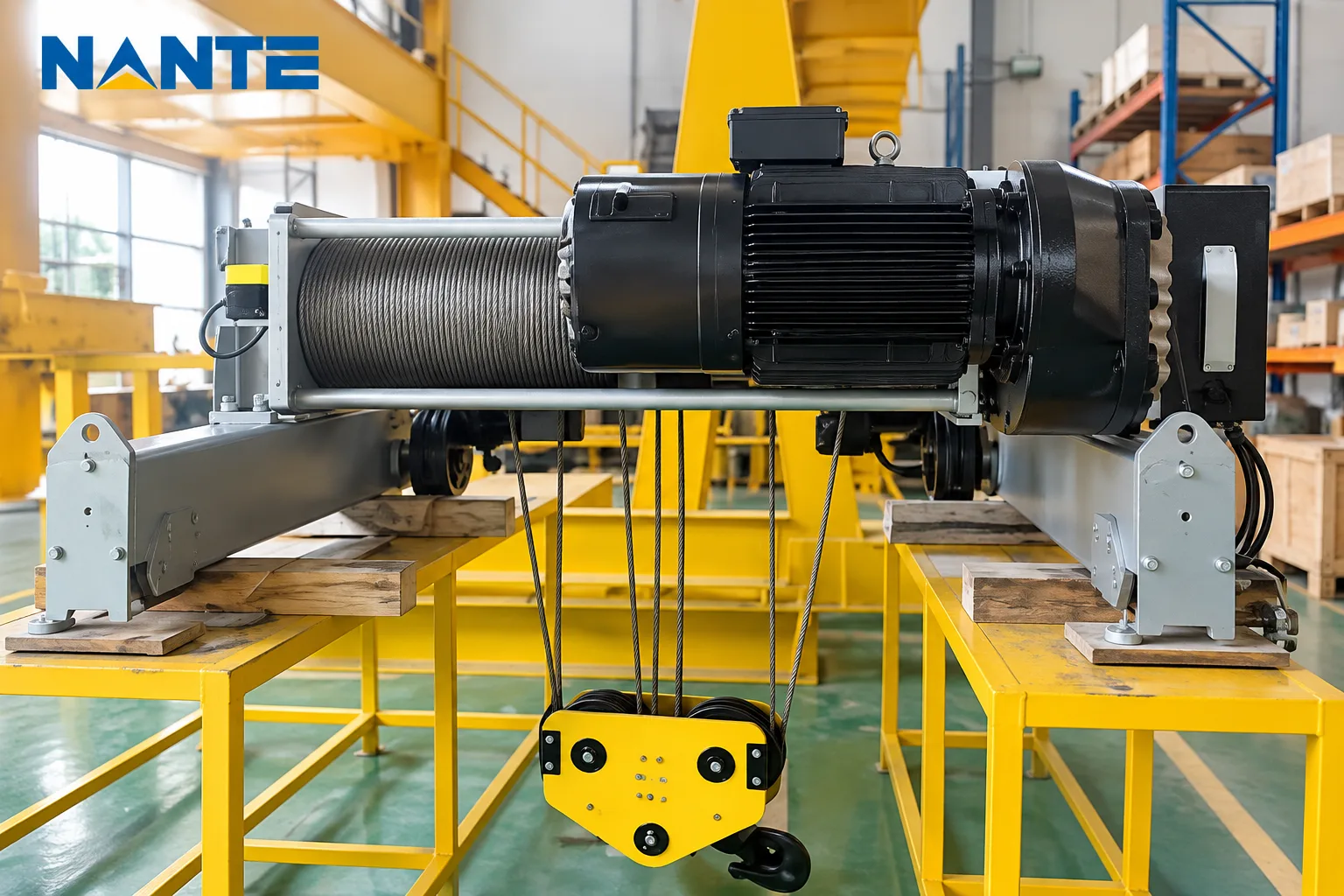
Check the hoist nameplate, hook-block drawing, rope diameter, number of falls, drum direction, travel limits, and headroom against the proposed assembly. A product page identifies an equipment family; final fit requires project drawings and technical review. The NHA wire rope hoist page is a reference, not a project-specific confirmation.
Define acceptance before the purchase order
The purchase order should state hold points for drawing approval, material identification, dimensional inspection, functional checks, and document submission. Name the applicable U.S. regulation, site rules, and adopted consensus standard, such as ASME B30.10. Check certificate scope and issuer details.
Project Inputs for a Technical Review
Send only the information that changes the decision
An efficient inquiry includes:
- Crane and hoist make, model, serial number, and current hook or block identifier.
- Rated capacity, lifted-load range, duty or service classification, cycles, and operating hours.
- Hook dimensions, rope diameter, reeving sketch, photos, and the reason for replacement.
- Environment, temperature, corrosive agents, outdoor exposure, and any overload or impact event.
- Required standards, delivery destination, installation window, testing scope, and spare-parts expectation.
These details let the engineering team decide whether the request is a like-for-like replacement, hook-block change, or broader hoisting review. They create a basis for comparing drawings, lead time, inspection evidence, and installed cost.
Request a Project-Specific Hook Review
Convert the checklist into a quotation brief
The safest buying decision connects a measured defect to a controlled replacement scope. Attach the inspection record, photos, original dimensions, hook-block drawing, nameplate, and required acceptance documents so compatibility risks are identified before shipment.
For a component replacement or hoisting upgrade, the Nante Crane service center can be used as the starting point for technical requirements and document expectations. The purchasing team should request a project-specific recommendation, drawing review, compliance-document list, and budgetary quotation based on the submitted data. Send the hook identifier, capacity, reeving, operating environment, defect measurements, delivery location, and schedule through the project-specific inquiry channel.