English



Single Girder Overhead Crane Buying Guide for Factories and Warehouses
Date: 2026-10-16 Share:
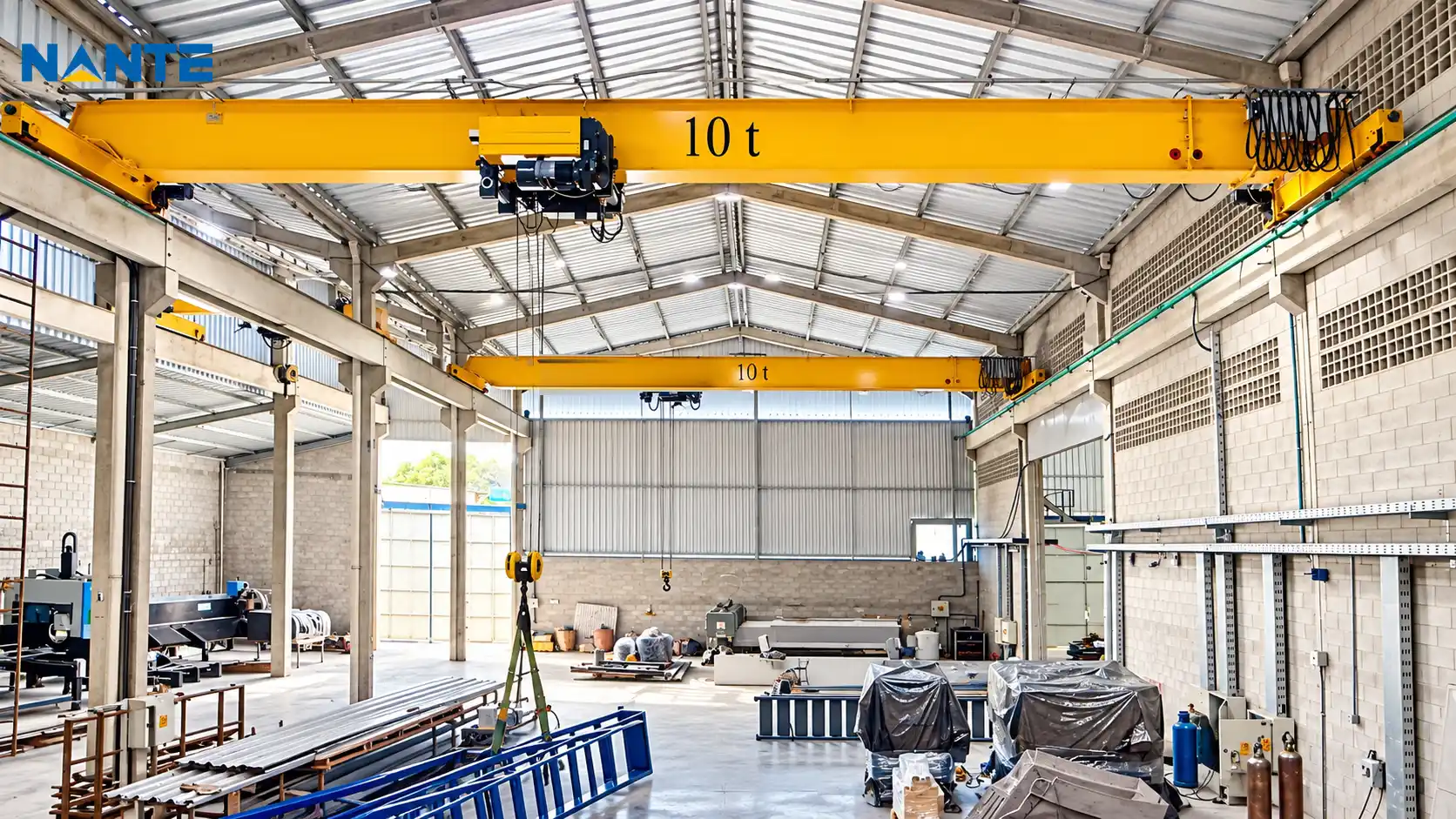
A single girder overhead crane can improve material flow in a factory or warehouse, but the correct model depends on more than rated lifting capacity. The purchasing team must match the crane to the load spectrum, runway geometry, operating frequency, available headroom, controls, environment, and required documentation.
A low purchase price can become expensive if the crane cannot cover the working area, conflicts with building structures, or lacks suitable testing and maintenance information. The most reliable buying process begins with a documented duty requirement and ends with a quotation that clearly defines scope, interfaces, and responsibilities.
Start With the Lifting Requirement
Confirm Capacity and Load Spectrum
Rated capacity should be based on the heaviest load that the crane will lift, not only the average load. The specification should distinguish between routine loads, occasional maximum loads, below-capacity handling, and any lifting attachments that add dead weight.
The project brief should record:
- Maximum lifted load, including lifting devices
- Typical load weight and dimensions
- Load center of gravity and handling method
- Required lifting frequency
- Whether loads are hot, corrosive, dusty, or irregular
- Whether two cranes may lift one load together
A single girder overhead crane should not be selected by capacity alone. A crane that rarely lifts its maximum load may need a different duty classification from one that performs repetitive cycles throughout every shift.
The current product page lists a lifting-capacity range of 1–20 metric tons. That range is a starting reference for quotation discussions, not a substitute for a project-specific load calculation. The purchasing team should request confirmation of rated capacity, load combinations, and applicable design assumptions in the technical offer.
Measure Span, Lift, and Coverage
Span is the distance between runway rails. It affects girder behavior, wheel loads, building reactions, and available hook coverage. The required span should be taken from verified building drawings or a site survey rather than an approximate tape measurement.
Lifting height must account for the highest storage position, the lowest obstruction, hook and block dimensions, sling length, and any required clearance below the runway. A crane with adequate nominal lift may still fail operationally if the hook cannot reach the loading point.
The product page currently shows a 5–30 m span range and 3–30 m lifting-height range. These figures should be checked against the actual runway, roof structure, aisle width, and local installation conditions.
For a more detailed comparison of crane architectures, the purchasing team can review this single girder crane product page.
Select the Working Class Before the Equipment
Match Duty Class to Operating Cycles
Duty class describes how often and how heavily the crane operates. A suitable selection considers working hours, starts per hour, average load spectrum, travel distances, acceleration, braking, and the proportion of lifts near rated capacity.
The specification should identify the classification system required for the project, such as FEM, CMAA, or another applicable engineering basis. The quotation should state the selected class and explain how it was determined.
A light-duty warehouse crane may have long idle periods and infrequent lifts. A production crane may perform repeated pick-and-place cycles, with more demanding motor, brake, wheel, gearbox, and structural requirements. Treating both applications as identical can create premature wear or unnecessary cost.
This duty classification comparison can help organize the questions for a supplier review.
Check the Operating Environment
Temperature, humidity, dust, washdown, chemicals, outdoor exposure, and hazardous-area requirements can affect motors, enclosures, controls, lubrication, paint systems, and electrical components.
The purchasing team should specify:
- Indoor or outdoor installation
- Ambient temperature range
- Dust, moisture, or corrosive exposure
- Required enclosure and protection levels
- Power supply characteristics
- Noise or speed restrictions
- Any hazardous-location obligations
Environmental requirements should appear in the technical specification and quotation. A general-purpose configuration should not be assumed suitable for a specialized process area.
Choose the Crane Configuration
Compare Hoist and Headroom Options
Headroom is the vertical distance between the runway and the highest practical hook position. Low-roof buildings may require a low-headroom hoist, while a standard monorail hoist may be suitable where more vertical space is available.
The supplier should provide a dimensional drawing showing:
- Minimum hook approach
- Overall crane height
- Trolley dimensions
- End-carriage dimensions
- Maintenance access
- Required clearances from roof members and services
The product page identifies low-headroom and standard-room hoist options, as well as hollow-shaft and open-gear end-carriage designs. The right choice depends on building constraints, maintenance access, expected duty, and the desired balance between compactness and serviceability.
Select Controls and Travel Performance
Control selection should reflect the work pattern and required operator visibility. Pendant control may suit a simple, clearly visible work area. Radio remote control can support better operator positioning, but the specification should address emergency stop functions, authorization, battery management, and interference control.
The current product information lists pendant and remote control options, with indicative cross-travel and long-travel speeds of 20 m/min and 32 m/min. Final speeds should be confirmed against load behavior, runway length, stopping distance, positioning accuracy, and plant safety procedures.
Variable-frequency drives may be appropriate where smooth acceleration, reduced load swing, or controlled positioning is important. The quotation should identify included drives, braking arrangements, limit switches, overload protection, and emergency controls.
Warehouse Crane Selection: Check the Building Interface
Confirm Runway and Structural Responsibilities
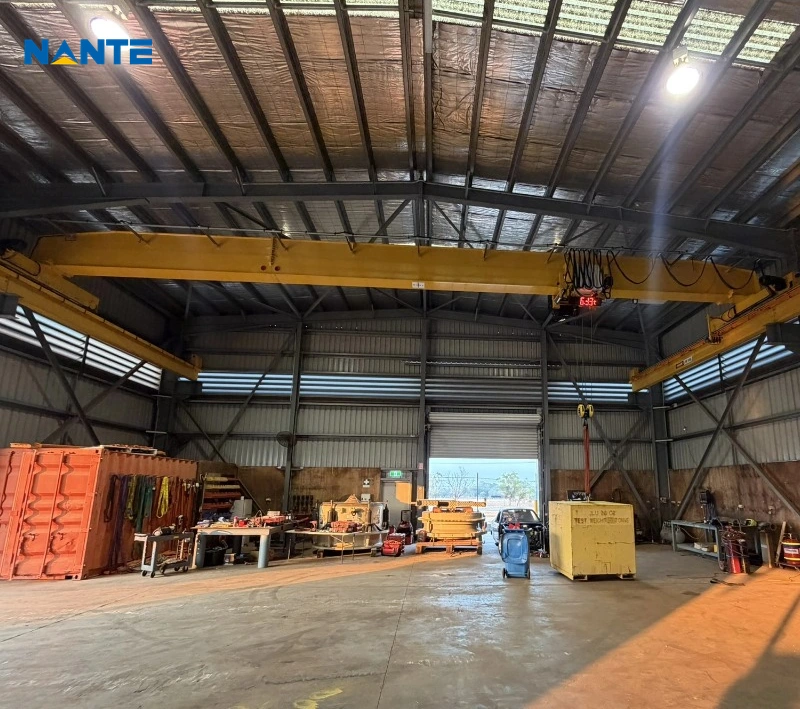
A crane quotation is incomplete without a clear statement of runway scope. Some projects require only the bridge and hoist; others require rails, runway beams, columns, electrical conductor systems, platforms, or structural reinforcement.
The tender package should define:
- Rail size, alignment, and span
- Runway beam and support responsibility
- Wheel loads and horizontal forces
- End stops and buffers
- Power-feed system
- Building connection details
- Survey and installation tolerances
If the existing building is reused, a structural engineer should verify whether the columns, roof, foundations, and connections can accept the calculated loads. The crane supplier should provide reactions and interface drawings early enough for this review.
Require a Complete Document Package
Technical evidence is more useful than a brochure. A serious quotation should identify the drawings, calculations, inspection records, operating instructions, maintenance schedule, spare-parts list, and test documentation included in the supply.
Important documents may include:
- General arrangement and dimensional drawings
- Electrical schematics and control descriptions
- Load-test and functional-test procedures
- Material and weld inspection records where applicable
- Calibration records for test equipment
- Coating or surface-treatment information
- Packing, shipping, and installation instructions
- Recommended spare parts and consumables
The project owner should also confirm which party handles installation, commissioning, operator training, and final acceptance.
Industrial Overhead Crane Buying Guide: Compare Suppliers Fairly
Normalize the Commercial Scope
Price comparisons are meaningful only when the scope is comparable. Each supplier should receive the same capacity, span, lift, duty class, environment, control, power, runway, delivery destination, and documentation requirements.
A comparison sheet should separate:
- Crane bridge, hoist, trolley, and end carriages
- Runway rails, beams, supports, and conductor systems
- Controls, drives, alarms, and safety devices
- Testing, inspection, packing, freight, and insurance
- Installation, commissioning, training, and handover
- Warranty, service response, exclusions, and change orders
A lower offer may exclude civil work, travel, commissioning, spare parts, or critical documentation. Those exclusions should be priced before the purchasing team selects a supplier.
Evaluate the Supplier’s Evidence
A qualified single girder overhead crane supplier should be able to explain how the proposed design satisfies the stated duty and interface requirements. The review should examine engineering drawings, manufacturing controls, inspection plans, test procedures, service arrangements, and relevant project evidence.
The supplier’s legal entity, manufacturing location, certificate scope, issuing organization, and validity dates should be checked separately. A management-system certificate does not automatically prove that a specific crane complies with every product or site requirement.
At this stage, Nante Crane can be included in a structured supplier comparison. The official Company Profile provides a separate reference point for reviewing the company information, while the product page identifies configuration options and current published parameters.
Plan Handover, Maintenance, and Total Cost
Define Acceptance and Service Requirements
Acceptance should be based on agreed drawings, performance criteria, safety functions, documentation, and test results. The contract should state how defects are recorded, corrected, and closed before final handover.
Maintenance planning should cover inspection intervals, lubrication points, brake and wheel checks, electrical troubleshooting, wire rope or chain requirements, and recommended critical spares. The service plan should also identify response channels and responsibilities after commissioning.
A crane that is easy to inspect and maintain can reduce downtime over its operating life. For warehouses with changing layouts, the project team should also consider future lifting zones, additional controls, and potential runway extensions during the initial design review.
Prepare a Project-Specific Inquiry
A useful quotation request should include the maximum and typical loads, span, lifting height, runway length, duty class, operating hours, load spectrum, environment, power supply, control preference, delivery location, installation scope, and required standards.
A site plan, building section, photographs, or existing runway drawings can resolve uncertainties faster than general descriptions. The supplier can then identify missing dimensions, propose a suitable configuration, and separate equipment pricing from interface work.
Frequently Asked Questions
Is a single girder overhead crane suitable for every warehouse?
No. It may suit light- or medium-duty handling where the load, span, lift, duty cycle, and building structure match the design. Heavy loads, high cycle rates, very large spans, or demanding process conditions may require another crane arrangement.
Which matters more: capacity or duty class?
Both are essential. Capacity defines the maximum permitted load, while duty class reflects repeated use, load spectrum, and mechanical demand. A correct selection must satisfy both criteria.
Should runway work be included in the crane quotation?
Runway scope should be stated explicitly. Depending on the project, it may include rails, beams, supports, conductor systems, structural checks, installation, and alignment. Unclear responsibility is a common source of cost and schedule changes.
What information should accompany a buying inquiry?
The core package should include capacity, typical loads, span, lift, runway length, operating hours, duty class, environment, power, controls, delivery location, drawings, and installation expectations. These inputs allow a supplier to prepare a more reliable technical and commercial response.
For a project-specific review, submit the operating data, layout, duty requirements, and required scope to the project inquiry team.