English


How to Evaluate an Overhead Crane Supplier Before Buying
Date: 2026-10-16 Share:
An overhead crane supplier should be evaluated through evidence of engineering fit, manufacturing control, testing, delivery responsibility, and lifecycle support. Before sending an RFQ, buyers need enough proof to shortlist credible candidates. Before placing an order, the agreed requirements must become documented contract deliverables.
This two-stage approach prevents purchasing teams from comparing attractive prices for different equipment scopes. It also exposes unclear factory ownership, incomplete inspection records, and service promises that may become expensive after installation.
How to Evaluate Crane Suppliers Before an RFQ
Establish a common project brief
Prepare a short brief covering rated capacity, span, lifting height, building layout, operating hours, load spectrum, environment, power supply, and installation location. Identify attachments that add to the lifted load and any restrictions on headroom or hook coverage.
If duty class is unknown, describe actual lifting frequency and typical loads. A capable supplier should explain the proposed classification and record assumptions rather than select equipment from capacity alone.
The first conversation should reveal what information the supplier needs, which risks require engineering review, and whether the application falls within its experience.
Separate supplier and manufacturer responsibilities
An overhead crane manufacturer may design and fabricate equipment, while a supplier may distribute, integrate, or source it. Either arrangement can work when responsibilities are transparent.
Request the contracting entity, manufacturing location, subcontracted processes, and the party responsible for design approval, quality release, warranty, and replacement parts. Confirm who handles problems spanning the crane, runway, controls, and installer.
Unclear ownership is a qualification gap. A reseller should demonstrate access to manufacturer documentation and technical support; a manufacturer should identify how purchased components and outsourced operations are controlled.
Request a named technical contact and a clear escalation route. During screening, one focused clarification can reveal whether sales staff can obtain a documented engineering answer or simply repeat catalog language. Record response quality alongside the supporting evidence.
Overhead Crane Supplier Evaluation: Engineering and Experience
Test whether engineering matches the application
Request a redacted sample general arrangement drawing, calculation index, electrical schematic, and technical clarification record from a comparable project. At screening, existing examples are more realistic than demanding completed project-specific calculations.
Check whether the team can explain duty selection, wheel loads, building clearances, maintenance access, and control interfaces. Ask which documents become available during quotation, after order placement, and before fabrication.
Product selection should follow these inputs. For example, a single-girder overhead crane may warrant review for an appropriate workshop application, but catalog information cannot establish suitability for a specific duty profile.
Verify comparable project references
Request examples with similar duty, environmental exposure, installation constraints, and control complexity. A crane with the same rated capacity may have served a very different application.
With customer permission, ask references about drawing accuracy, delivery changes, commissioning issues, documentation, and spare-parts response. Photographs establish visible context; they do not establish reliable performance or contractual compliance.
For a deeper technical review, the related guide to crane manufacturer engineering capability outlines the design evidence worth requesting.
Crane Supplier Qualification Through Factory and Quality Evidence
Inspect the factory against a real production route
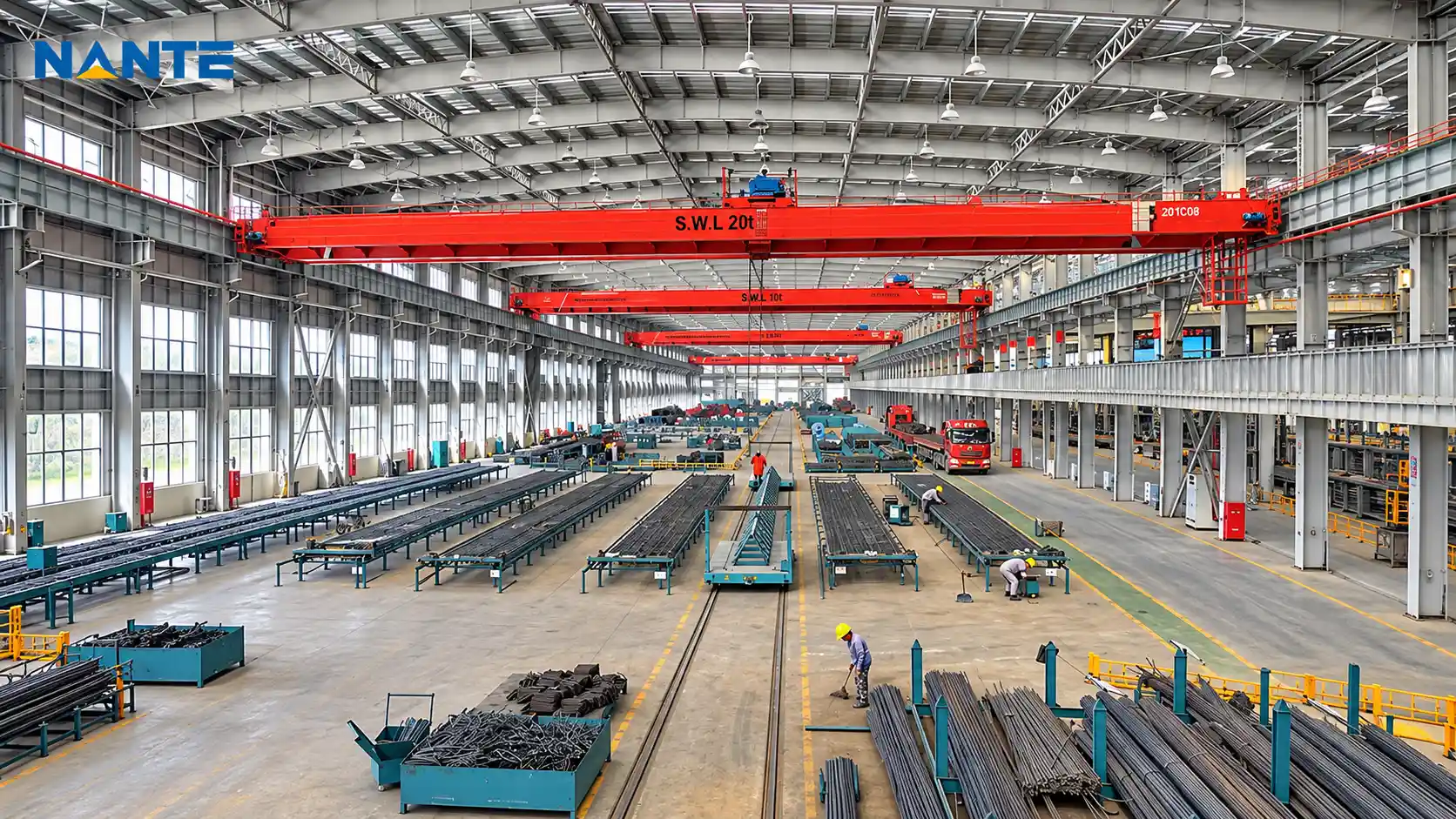
A factory inspection should follow material receipt, cutting, fabrication, welding, machining, coating, assembly, and final release. Match available equipment and personnel to the proposed crane configuration.
Request evidence of drawing revision control, material identification, welding procedures, welder qualifications, dimensional inspection, and subcontractor oversight. For remote evaluation, use a live walkthrough and traceable sample records.
Ask how current orders affect the proposed schedule. A large workshop or busy production floor does not prove that critical machines, inspection staff, or testing facilities will be available when required.
Require traceable quality-control records

Quality control should connect each inspection to the project, component, drawing revision, inspector, and acceptance criterion. Review how nonconforming parts are identified, corrected, reinspected, and released.
Useful samples include material certificates, weld inspection reports, coating records, purchased-component checks, and calibration records. Request a final documentation index so omissions can be identified before shipment.
Check management-system certificates against the legal entity, manufacturing site, scope, issuer, validity, and expiry. Certification supports process assessment; it does not establish that the quoted crane meets every product or site requirement.
Confirm Compliance, Testing, and Acceptance Responsibilities
Define destination-specific requirements
For US general-industry applications within its scope, OSHA 29 CFR 1910.179 addresses overhead and gantry cranes, including inspection and testing requirements. Applicability must be checked for the actual equipment and workplace.
Ask the supplier to identify applicable design, electrical, structural, and inspection requirements, including the agreed standards and editions. Broad statements such as “international standard” are insufficient.
The project team should establish who verifies the supporting structure, electrical interfaces, installation, and local acceptance. These responsibilities cannot be assumed from the crane equipment quotation.
Agree on FAT and site acceptance
A factory acceptance test, or FAT, should reference approved requirements and define test methods, acceptance criteria, instruments, witness points, and reporting. Review how failed tests and outstanding defects are closed.
Confirm which functions can be checked before shipment and which depend on the installed runway, power supply, or site interfaces. Factory testing does not replace site commissioning and applicable acceptance checks.
Before award, agree on the test plan and required records. Avoid imposing a universal load-test percentage without checking the governing requirements and manufacturer recommendations.
Write approval and release points into the purchase order. Drawing approval, inspection attendance, defect closure, and shipment authorization need defined owners. If a witness cannot attend, specify the alternative review procedure and the records required before release.
Use a Crane Supplier Checklist to Control the Shortlist
Record evidence and unresolved issues
Use the same checklist for every candidate. Mark each item verified, pending, or unacceptable, with an evidence reference, responsible person, and closure date.
| Evaluation area | Evidence to request | Warning sign |
| Supplier identity | Contracting entity and manufacturing source | Undisclosed factory or responsibility |
| Engineering fit | Comparable drawings and documented assumptions | Capacity-only selection |
| Manufacturing | Production route and subcontractor controls | Brochure photos without records |
| Quality control | Traceable inspection samples | Reports without project identification |
| Testing | Proposed FAT and site acceptance scope | No acceptance criteria |
| Execution | Milestones and interface responsibilities | Delivery promise without dependencies |
| Support | Warranty terms and parts arrangements | Undefined labor or service coverage |
A numerical score can support comparison, but critical safety, compliance, and responsibility gaps should remain approval gates. Commercial strengths should not offset unresolved mandatory requirements.
Apply the same qualification process to Nante Crane
The official company profile describes Nante Crane as a designer and manufacturer of cranes and crane components. It also states that third-party-witnessed factory acceptance testing can be provided.
These statements support an initial sourcing discussion. Buyers should still request current, project-relevant documents, confirm witness arrangements, and define the evidence package in the contract.
Compare Scope, Delivery, and Lifecycle Support Before Ordering
Normalize the overhead crane quote
Compare equipment, controls, electrification, runway interfaces, documents, testing, packing, freight, installation, commissioning, training, spares, and warranty on the same basis.
Identify exclusions, options, assumptions, and change terms. A lower equipment price may transfer substantial work to the project owner.
The related guide to comparing crane quotations from different suppliers provides a useful framework for turning offers into comparable scope.
Check execution and service commitments
Request milestones for drawing approval, purchased components, fabrication, inspection, shipment, and commissioning. Separate supplier lead time from transport and site-readiness dependencies.
Review warranty start conditions, exclusions, replacement responsibilities, labor coverage, troubleshooting channels, and critical-parts availability. Confirm the service arrangement for the destination rather than assuming overseas coverage.
Ask for an example replacement-parts identification process using a crane serial number and component reference. Confirm access to manuals, electrical drawings, and control settings. Clear identification and authorized substitution procedures help prevent incorrect replacements and avoidable troubleshooting delays.
The official project lifecycle service overview describes design, manufacturing, installation or installation guidance, commissioning, and technical support. The quotation should specify which activities apply to the project.
FAQ: Evaluating an Overhead Crane Supplier
What evidence is needed before sending an RFQ?
Verify supplier identity, manufacturing responsibility, relevant experience, sample engineering and quality records, and willingness to disclose assumptions. Reserve detailed project deliverables for the agreed quotation and contract stages.
Is buying directly from a manufacturer always preferable?
The appropriate arrangement depends on technical accountability, local integration, service access, and commercial scope. Evaluate how responsibilities are fulfilled and documented, regardless of whether the bidder manufactures or distributes the crane.
When should a buyer delay order placement?
Delay award when mandatory requirements, factory responsibility, acceptance criteria, critical exclusions, or service obligations remain unresolved. Assign each open item an owner and require written closure before approval.
Request a Project-Specific Supplier Evaluation Discussion
Submit the inputs needed for a meaningful technical response
Purchasing managers, engineers, and contractors can provide capacity, span, lifting height, operating profile, environment, layout, destination, and installation scope. Include the required standards and any factory-witness or documentation expectations.
Nante Crane can review the lifting application and discuss the proposed equipment and service scope. Identify unresolved qualification questions in the same brief and submit an overhead crane project inquiry.