English


Festoon Cable System vs Cable Reel: How to Choose the Best Crane Power Supply Solution
Date: 2026-10-30 Share:
A festoon cable system and a cable reel both supply power to moving crane equipment, but they solve different cable-management problems. A festoon carries cable loops on trolleys along a track. A reel winds and releases cable from a drum as the equipment moves.
For a first comparison, look at the movement path and the available cable-storage space. A defined route with room for a track and cable loops points toward evaluating a festoon. A route that requires cable to wind onto a drum, including some long-travel or vertical arrangements, points toward evaluating a reel. Distance matters, but by itself it does not determine the better fit.
A Quick Decision Tree for Festoon or Reel
Start with the physical movement
- Does the cable need to follow a fixed beam or rail, and is there clearance for a track and hanging loops?Evaluate a festoon system.
- Must cable be gathered onto and paid out from a drum as the crane moves?Evaluate a cable reel.
- Is the path vertical, curved, obstructed, or exposed?Compare both layouts against the actual route, mounting points, and cable path before choosing.
- Could either system fit?Compare the space each needs, how its cable moves, what parts need inspection, and what is included in installation.
- Are route or operating details still unknown?Mark them as open design inputs rather than assuming that a system type or quote already accounts for them.
The result is a shortlist, not a final specification. Travel direction, power and control needs, cable type, operating pattern, and site conditions still need to be checked against the proposed design.
Use the tree to define the comparison
The useful question is not “Which system is better?” It is “Which cable-management method fits this crane’s movement and site with fewer compromises?” A fair comparison uses the same travel route, electrical requirements, and installation boundary for both options.
That framing also keeps the decision distinct from a general component survey. The goal here is to choose between two architectures, not to compare every crane power supply method or specify every component.
The Core Difference: Loops on a Track or Cable on a Drum
How a festoon manages movement
In a festoon arrangement, trolleys carry cable loops along a track or supporting structure. As the moving crane component travels, the loops extend and gather. The cable remains supported along the route instead of being stored on a reel.
This makes the geometry visible: the design has a track line, trolley positions, loop depth, and an area where loops gather when the crane is parked. That layout can be suitable when the crane structure provides a practical route and there is enough clearance to keep loops away from obstructions and work areas.
The tradeoff is that the track and loops occupy space and require a supported path. Curves, joints, outdoor exposure, and access for inspection need to be part of the arrangement from the start.
How a cable reel manages movement
A cable reel stores cable around a drum and winds or pays it out as the crane or equipment moves. Depending on the duty and configuration, the reel may use a spring drive or a motorized drive.
The layout concentrates cable storage around the drum, but it still requires a suitable mounting position and a controlled cable path. The cable guide, payout direction, tension behavior, and movement cycle all matter. A reel may simplify the storage geometry where loops and tracks are difficult to accommodate, but it does not eliminate the need for route planning.
Neither architecture is inherently the lower-maintenance option. The relevant comparison is which moving parts are exposed in the actual installation, how easily they can be inspected, and how cable wear can be detected.
Match the Option to Distance, Path, and Space
Distance and travel direction
Longer travel increases the amount of cable that must be managed, but it does not automatically make a reel the right choice. A long, straight route may still be suitable for a festoon if there is room for its track and loop arrangement. Conversely, a shorter route may favor a reel when cable must be stored on a drum or the installation is constrained.
Travel direction is equally important. Bridge travel, trolley travel, and vertical movement create different paths. Identify which axis needs power, where the fixed feed point can be located, and how the cable reaches the moving equipment. A drawing with start and end positions is more useful than a distance figure by itself.
Clearances and mounting options
A festoon needs a route for its track and clearance for cable loops to move and gather. The purchasing team should check headroom, end stops, nearby structure, walkways, lighting, and any equipment that could interfere with the loop envelope.
A reel needs a secure mounting position and enough room for the drum, guide, cable exit, and connections. Check whether the mounting location changes the required cable route or creates interference at either end of travel. When space is tight, compare both systems on the same drawing rather than relying on a catalog illustration.
Environment and movement pattern
Outdoor exposure, corrosive atmospheres, dust, oil, heat, or frequent movement can affect cable and moving components in either system. The design should identify the relevant site conditions and state what materials, protection, and inspection provisions are included. “Indoor” or “outdoor” alone may not describe all the conditions that matter.
Also record operating frequency, travel speed, starts, stops, and reversals. These inputs help establish how the cable and support or winding mechanism will move in service. If the operating profile is uncertain, it should be treated as an assumption to verify, not a reason to favor one system automatically.
Compare the Two Options Side by Side
Use a layout-based comparison
| Question | Festoon system | Cable reel |
| How is cable managed? | Loops carried by trolleys along a track | Cable wound onto and released from a drum |
| What route does it need? | A supported track line along the movement path | A mounting point and a controlled cable path |
| What space must be checked? | Track, loop depth, gathering area, end clearance | Drum, guide, cable exit, mounting clearance |
| What movement detail matters? | How loops extend, gather, and pass route features | How cable pays out, winds back, and behaves at stops |
| What should maintenance planning cover? | Track, trolleys, joints, hangers, and cable | Drive, drum, guide, cable path, and winding behavior |
| What usually rules it out? | Inadequate loop or track clearance | No suitable mounting point or cable path |
This matrix is for screening. It does not rate either option as universally superior, and it does not replace checking cable and electrical requirements for the crane.
Look for the real tradeoff, not a generic winner
If both arrangements fit, compare their footprint, interfaces, inspection access, and installation scope. A compact reel may help where loop clearance is limited, but its mounting and cable-guiding needs still have to work. A festoon may provide a clear track-based route, but the loop envelope must remain unobstructed throughout travel.
The decisive issue is often a project constraint: available structure, a vertical movement, a difficult cable route, or limited maintenance access. Record that constraint and ask each supplier to show how the proposed configuration addresses it.
Keep This Comparison Separate From Detailed Design Guides
Use specialist guides for the next level of detail
This article is intentionally limited to choosing between festoon and reel architectures. Detailed cable sizing, trolley spacing, drum capacity, drive selection, and other product-specific engineering inputs belong in the applicable design and selection process.
For those next steps, consult the festoon system design guide and the crane cable reel selection guide. Those pages address system-specific design and selection questions rather than the initial head-to-head choice.
Check what each proposal actually includes
Before comparing quotations, confirm whether the same scope is being priced: power system, cable, mounting or track interfaces, electrical connections, drawings, testing, packing, freight, installation, commissioning, spares, warranty, exclusions, and changes.
Ask for a drawing that shows the proposed route and moving envelope. Ask the supplier to identify assumptions about the crane movement, operating environment, and interfaces. This makes it easier to see whether one price reflects a different scope rather than a genuinely different system cost.
Applying the Comparison to Nante Crane Options
Verify the application against the project layout
The festoon system range describes track-based configurations and use for crane cross travel and short-distance long travel. The cable reel range describes cable take-up for crane long travel or vertical power supply, with spring and motorized options. These are the supplier’s stated applications, not universal rules for every crane installation.
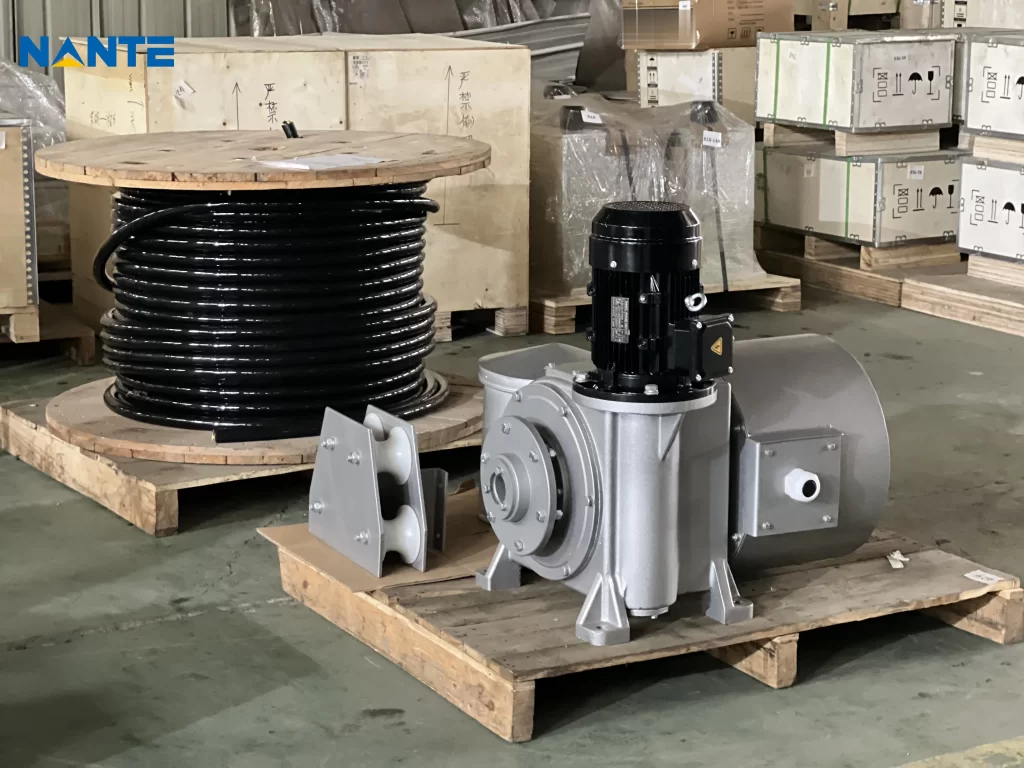
Nante Crane lists both festoon systems and cable reels within its crane component offerings. For a project comparison, the useful next step is to share the movement path and site constraints so the proposed arrangement can be assessed against the actual layout.
Frequently Asked Questions
Does longer crane travel automatically mean a cable reel?
No. Distance is only one input. A festoon can remain a candidate on a longer defined route when track and loop clearance are available. A reel may suit long travel where its mounting and cable path work for the installation.
Is a festoon system always easier to maintain?
Not necessarily. A festoon makes its track and trolleys part of the route, while a reel has winding and guiding components. Maintenance effort depends on the installation, operating pattern, access, and component design.
Can a crane use both systems?
A project may use different power arrangements for separate movements, but the interfaces and responsibilities need to be defined. The proposal should make clear which system serves each axis and how the electrical and mechanical boundaries connect.
What should be prepared before requesting a comparison?
Provide a layout showing travel directions, mounting locations, obstructions, and available clearances. Add power and control requirements, the operating pattern, environment, and installation scope. Suppliers can then compare both options using the same project assumptions.
Request a Project-Specific Comparison
Submit the route and operating conditions
The project owner or purchasing team should provide the crane layout, travel directions and distances, mounting constraints, power and control requirements, operating pattern, environment, delivery location, and installation scope. A comparable review can then identify which architecture fits the route and what design assumptions remain open.
Submit the project information for a festoon-versus-reel crane power review.