English



What Determines the Required Hoisting Speed of an Overhead Crane?
Date: 2026-10-22 Share:
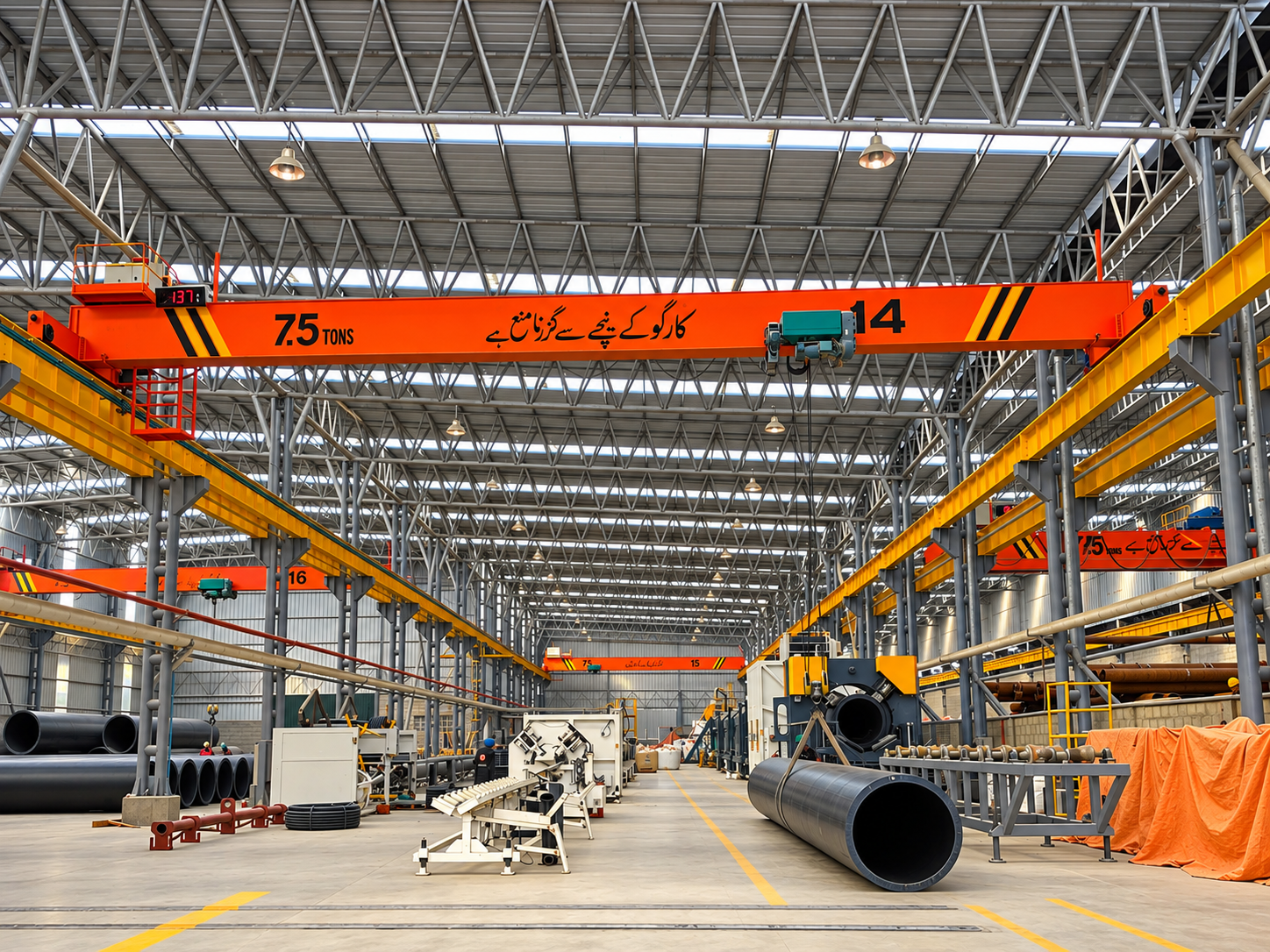
Crane hoisting speed is the load’s vertical travel rate. The required rate depends on time available per lift. Load weight, lifting height, production quantity, positioning accuracy, environment, and duty cycle must be evaluated together.
An engineering specification should state the required speed, normal and maximum loads, lift height, cycles per hour, and time allowed for set-down. A faster hoist can improve throughput, but excessive speed can increase sway, stopping distance, impact loads, thermal stress, and cost. The target is the speed that meets the production cycle while preserving safe, repeatable control.
What Determines Required Crane Hoisting Speed?
Load weight and safe acceleration
Load weight affects motor torque, gearbox selection, brake sizing, rope forces, and acceleration. A hoist that lifts a light load quickly may not deliver the same rate at rated capacity. Identify rated capacity, typical and peak loads, lifting attachment weight, and load spectrum.
Acceleration and deceleration are part of the lifting event. High nominal speed is useful only after the load clears its support and before positioning. Variable-frequency control can provide a low-speed start, productive travel, and controlled stop. Check settings against load swing, hook stability, and placement tolerance.
Lifting height and motion profile
Lift height directly converts speed into hoisting time. A 3 m and a 12 m lift may use the same hoist, but the longer lift consumes more seconds per cycle. Hook approach, rigging, release, and clearance checks also take time, so vertical travel is not the complete cycle.
The motion profile should distinguish rapid travel through clear space from slow travel near the floor, rack, mold, or process equipment. Two-speed hoists or inverter control can support this profile. A single high speed may increase positioning corrections and erase the apparent gain.
Cycle time and production requirements
Production demand sets the time budget. A process handling 20 loads per hour differs from a maintenance crane making two lifts per shift. Include pick-up, vertical lift, bridge and trolley travel, lowering, release, and empty-hook return.
If travel or loading takes longer than the lift, increasing hoisting speed will not increase output. If vertical movement is the bottleneck, a faster or dual-speed hoist may be justified. Select speed from the whole cycle, not the data sheet alone.
Crane Hoist Speed Calculation
Basic time equation
For a first estimate, use:
Hoisting time = lifting distance / average hoisting speed
If the load rises 6 m at 0.5 m/s, vertical travel takes 12 seconds. At 0.8 m/s, it takes 7.5 seconds, saving 4.5 seconds. Use average effective speed when acceleration, deceleration, and positioning matter.
For a complete cycle, add the non-hoisting elements:
Cycle time = pick-up + hoist up + travel + lower + release + return + allowances
Allowances cover operator actions, inspection, signal exchange, stabilization, and waiting. Full rated velocity can overstate practical productivity.
Worked example: how lifting speed affects productivity
Consider a crane completing 30 identical lifts per hour, each raised and lowered 6 m. Ignore horizontal travel and assume 10 seconds for pick-up, release, and positioning.
At 0.5 m/s, upward and downward travel total 24 seconds. With handling, the cycle is 34 seconds, or about 105 cycles per hour. At 0.8 m/s, vertical travel totals 15 seconds; the 25-second cycle allows about 144 cycles per hour. Potential gain is roughly 37%, not 60%, because handling time is unchanged.
If travel, queueing, or clearance adds 50 seconds, cycles become 84 versus 75 seconds and potential gain falls to about 12%. Use measured process times; not every saved lifting second improves output.
Account for acceleration, positioning, and travel
Test at least three operating points: empty hook, typical load, and rated load. Record acceleration, steady-state speed, deceleration, and low-speed positioning distance. For sensitive loads, sway and placement tolerance may govern usable speed.
Assess bridge and trolley speeds at the same time. A crane that lifts quickly but travels slowly may miss takt time. Excessive travel speed can create end-stop impact or require longer stabilization. Hoisting speed is one part of a coordinated motion plan.
Match Overhead Crane Lifting Speed to Duty Cycle
Light, intermittent, and repetitive service
Duty cycle describes how often mechanisms work and how heavily they are loaded over the design life. A service crane used for inspections may have low annual cycles. A production crane may start, lift, travel, lower, and repeat across several shifts. The same rated capacity can therefore require different motors, brakes, ropes, drums, controls, and maintenance intervals.
Record lifts per hour, average lift duration, daily hours, shifts, working days per year, load spectrum, and expected service period. The crane duty-cycle calculation guide can help organize these inputs.
Duty class changes the usable speed
Higher utilization can increase motor heating, brake wear, rope bending cycles, gearbox load, and structural fatigue. Check speed against the duty group and starts-per-hour requirement; high speed with an underrated mechanism can create an unsuitable thermal and maintenance profile.
FEM, ISO, and CMAA terminology is not a one-line conversion. The overhead crane duty class reference explains why structure and mechanism utilization require calculation assumptions.
Speed is not isolated from the hoist package
The hoist, rope reeving, drum, hook, brake, motor, inverter, overload protection, limits, and controls form one system. Check a wire rope hoist for capacity, lifting height, speed range, duty group, protection, maintenance access, and environment.
The design review should verify power demand, braking distance, emergency stops, load limiter response, phase protection, and normal and abnormal control behavior.
Engineering and Procurement Checks
Confirm capacity, headroom, and environment
The speed target must fit the available headroom and the required hook path. Low-headroom arrangements may alter drum, rope, trolley, and motor geometry. Outdoor, dusty, humid, corrosive, hot, or hazardous environments may require different enclosure, coating, insulation, heating, or control provisions.
Include the lifted attachment and permanent below-hook device in capacity. The crane capacity guide notes that span, reach, load position, and operating pattern also affect selection.
Request evidence, not only a speed number
Before award, the quotation should show the speed basis and exclusions. Useful documents include:
- Load spectrum, cycle-time, and duty-class calculations.
- Hoist, motor, brake, rope, drum, and inverter data sheets.
- Acceleration, deceleration, stopping, and positioning assumptions.
- Drawings showing hook path, headroom, runway interfaces, and clearances.
- Inspection and test plans, calibration records, factory acceptance criteria, manuals, and spare-parts recommendations.
Normalize crane scope, controls, power, runway work, testing, freight, installation, commissioning, training, warranty, and exclusions. A lower price may omit engineering or site work needed to achieve the stated cycle.

How to Specify the Required Lifting Speed
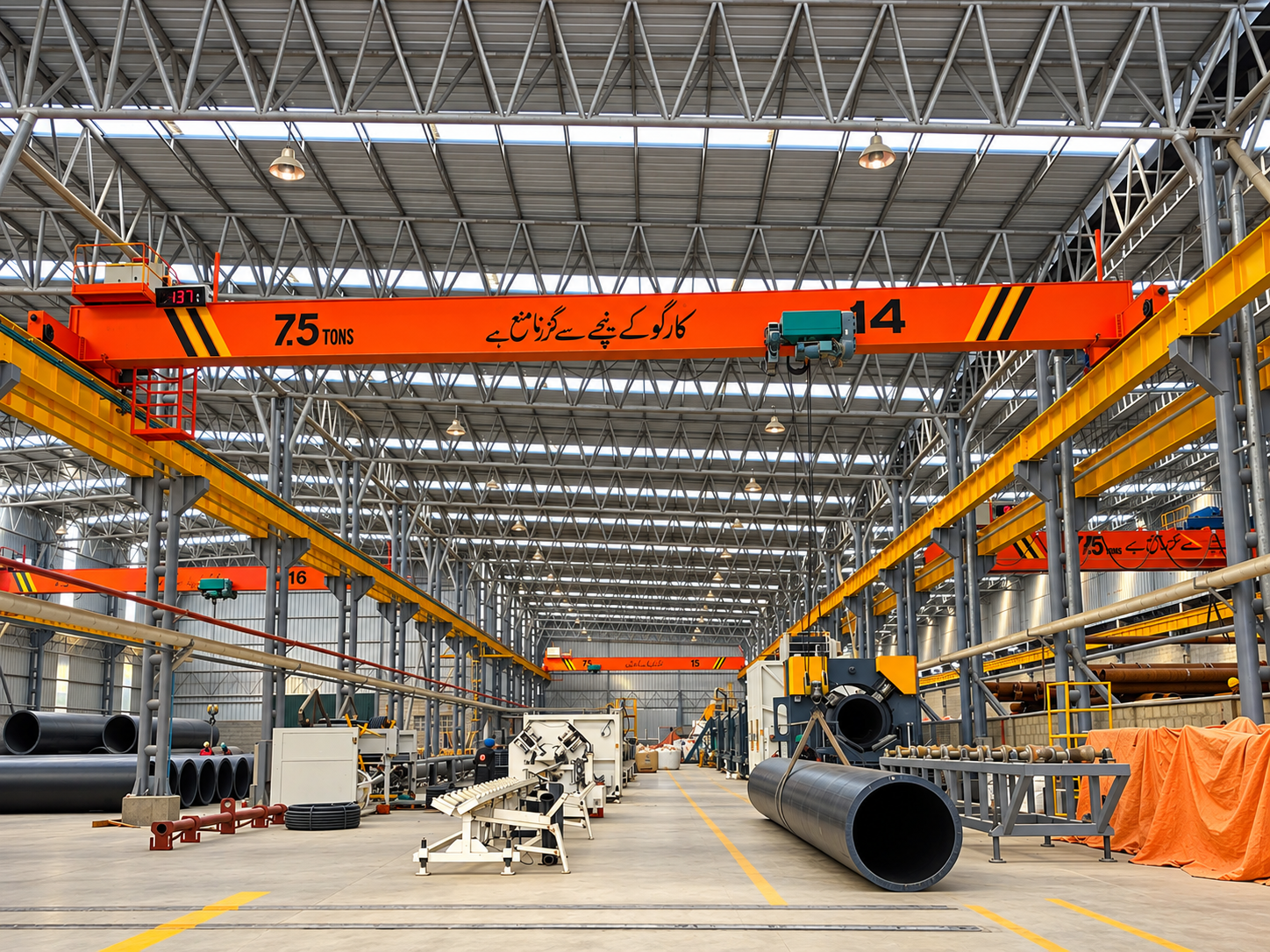
Build a procurement-ready data sheet
Specify:
- Rated capacity, typical load, peak load, and below-hook equipment.
- Maximum and normal lifting height, hook approach, and headroom.
- Required up and down speeds, speed tolerance, and low-speed positioning rate.
- Cycles per hour, lifts per shift, shifts per day, and annual operating days.
- Horizontal travel distances, process takt time, and allowable waiting time.
- Load sensitivity, placement tolerance, environment, power supply, and controls.
- Governing standard, duty classification method, inspection plan, and service expectations.
Require a calculation showing how proposed speed meets the cycle, including acceleration and handling allowances. For future production, include forecast workload or identify limits on later upgrades.
Frequently Asked Questions
Is faster always better for crane productivity?
No. Faster hoisting helps only when vertical travel is a bottleneck and the load can be accelerated, stopped, and positioned safely. Travel, loading, inspection, and operator actions may dominate the cycle. Higher speed can also increase sway, wear, energy use, and capital cost.
What is the most important input in a crane hoist speed calculation?
The most important input is a representative cycle-time record that combines lifting height, load condition, motion times, and production demand. A rated capacity without cycles, shifts, and load spectrum is not enough to select the mechanism duty or the practical speed.
Can the speed be increased after installation?
Sometimes, but not automatically. Motor, brake, rope, drum, inverter, structural, control, and stopping requirements must be rechecked. A change that exceeds the original duty or creates more sway may require component replacement, new testing, or a revised risk assessment.
Project-Specific Crane Hoisting Speed Review
For a technical proposal, the project owner should provide capacity, span, lifting height, typical and peak loads, cycles per hour, shifts, load spectrum, environment, power and control preferences, applicable standards, delivery location, and installation scope. Nante Crane can review those inputs against an overhead crane and hoist configuration, while its service center describes project-life-cycle support such as design, inspection, installation, commissioning, maintenance, and technical assistance. Submit the completed data set for a project-specific speed and duty review through the project inquiry form.