English


Rubber Tyred Gantry Crane vs Rail Mounted Gantry Crane: RTG vs RMG Crane Comparison
Rubber Tyred Gantry Crane vs Rail Mounted Gantry Crane RTG vs RMG Crane Comparison
Date: 2026-06-05 Share:
In the busy world of container handling, picking the right equipment can affect efficiency, costs, and output in important ways. This rubber tyred gantry crane comparison looks at RTG vs RMG Crane options. It helps port operators, terminal managers, and industrial facility owners reach good decisions.
Rubber Tyred Gantry (RTG) cranes give good mobility in container yards. Rail Mounted Gantry (RMG) cranes give accuracy and steadiness on fixed rails. Main factors include flexibility, infrastructure needs, maintenance requirements, operational costs, and automation ability in modern container yard crane systems. This guide covers applications, pros and cons, and useful insights for the best choice.
What Are Rubber Tyred Gantry Cranes (RTG) and Rail Mounted Gantry Cranes (RMG)?
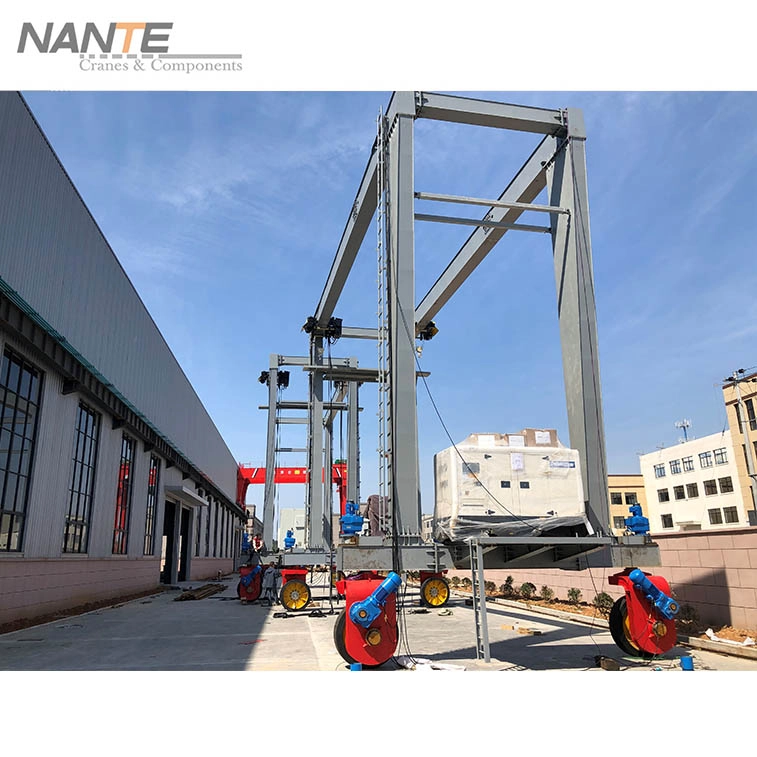
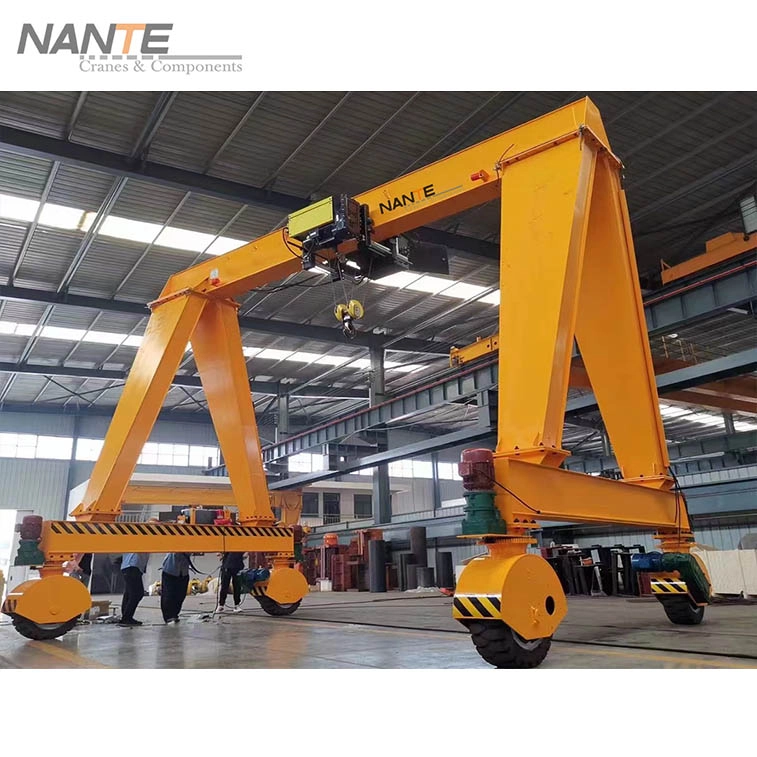
Rubber Tyred Gantry Cranes (RTG) are mobile lifting systems. They work on rubber tires. This setup allows free movement without special tracks. They often use diesel, hybrid, or electric power. They fit operations that need quick relocation. Nante Crane designs RTGs with capacities from 2t to 100t. These models have smooth steering, intelligent controls, and strong structures for dependable performance.
Rail Mounted Gantry Cranes (RMG) run on fixed steel rails set in the ground. They usually run on electric power for steady performance and high accuracy. RMGs do well in organized environments. In these places, stability and repeatability are very important. Both types handle containers well. Yet their design ideas differ in basic ways on mobility and infrastructure demands.
Key Applications of Each Crane Type
Rail Mounted Gantry Crane Applications
RMG cranes lead in high-volume container yard crane systems at major ports and intermodal facilities. They manage ship-to-shore transfers well. They also handle stacking in dense storage yards and rail-truck transshipment. Their fixed-path operation gives high throughput with little change. This makes them good for automated terminals and large logistics hubs that handle thousands of TEUs daily. RMGs support multi-stack setups. They connect smoothly with terminal operating systems (TOS).
Rubber Tyred Gantry Crane Applications
RTG cranes work well in changing or medium-volume places. They fit feeder ports, evolving container yards, precast concrete plants, and logistics depots. In these areas, layouts change often. Their power to move between blocks without rails gives operational flexibility for different workloads or site growth. RTGs manage container stacking, retrieval, and internal transfers well. This happens where fixed infrastructure is not practical.
Gantry Crane Mobility Comparison
Flexibility and Maneuverability
Mobility forms one of the main differences in gantry crane mobility comparison. RTG cranes move freely over paved yards. They change directions and shift between storage blocks fast. This adaptability helps with reconfiguring yards or answering changes in vessel schedules.
RMG cranes give better accuracy along rails. But they stay limited to set paths. They provide steady alignment for high-density stacking. Still, they do not have the quick repositioning of RTGs.
Side-by-Side View:
- RTG: High flexibility — ideal for dynamic yards.
- RMG: High precision — best for fixed, high-density operations.
Infrastructure Cost Comparison
Infrastructure forms a big decision point. RTG cranes need fairly flat and reinforced ground. They do not need big rail systems. This leads to lower upfront civil works and quicker setup. It makes them good for brownfield sites or projects with tight budgets.
RMG cranes need large investment in rail tracks, foundations, power supply systems, and exact alignment. The start cost is high. Yet this builds strong and lasting infrastructure for permanent high-volume terminals.
Typical Considerations:
- RTG: Lower initial infrastructure (ground preparation only).
- RMG: Higher initial infrastructure (rails & foundations) but potentially better long-term asset value.
A good site assessment helps balance these costs with expected operational lifespan and throughput.
Maintenance and Operational Cost (RTG vs RMG Operational Cost)
Maintenance Requirements
RTG cranes need higher routine maintenance. This comes from tire wear, diesel or hybrid engines, and hydraulic systems. Tires need regular checks and replacement over time. Engines need servicing too. However, parts are often easier to reach. This reduces downtime.
RMG cranes usually have lower maintenance needs. They focus on rails, wheels, and electric motors. Rail alignment checks matter but happen less often than tire care. Overall, RMGs move toward lower ongoing mechanical upkeep in stable environments.
Energy Consumption and Long-Term Costs
RTG vs RMG operational cost changes with power source and usage levels. RTGs often use diesel or hybrid systems. These give flexibility but bring higher fuel expenses. Modern electric or hybrid RTGs make this difference smaller.
RMGs run on electricity through rails or trolleys. They give lower energy costs and steady performance. Over 15–25 years, RMGs often show better lifecycle costs in high-use settings because of efficiency and durability. RTGs give strong ROI where mobility supports slightly higher variable costs.
Automation Capability in Container Yard Crane Systems
Automated Gantry Crane Systems
Automation changes modern terminals. RMG cranes fit more easily into fully automated systems. Fixed paths help with this. They allow exact positioning, remote operation, and connection with AGVs and TOS. This supports 24/7 performance with less labor.
RTG cranes support semi-automation well. They include features like auto-steering, positioning systems, and remote control. Full automation can happen but is often more complex because of free movement. Both types gain from intelligent controls. These improve safety and efficiency.
Nante Crane puts focus on intelligent designs. These include options for remote and automated features across their gantry range.
Side-by-Side Comparison Table
| Feature | RTG Crane | RMG Crane |
|---|---|---|
| Mobility | High (free movement on tires) | Limited to rails (high precision) |
| Infrastructure Cost | Lower (no rails) | Higher (rails & foundations) |
| Maintenance | Higher (tires, engine) | Lower (rails, motors) |
| Energy Source | Diesel/Hybrid/Electric | Primarily Electric |
| Operational Cost (Long-term) | Generally higher variable costs | Lower in high-volume use |
| Automation Potential | Good (semi/full possible) | Excellent (full automation easier) |
| Best For | Flexible, medium-volume yards | High-density, fixed terminals |
| Lifespan | ~15 years typical | ~25 years typical |
Choosing the Right Crane for Your Operations
Think about specific needs in these areas:
- High flexibility and changing layouts — Choose RTG for mobility and lower entry barriers.
- Maximum throughput and density — Select RMG for stability and automation.
- Budget focus — Evaluate total cost of ownership, not just initial price.
- Future automation plans — Factor in integration ease.
- Site conditions — Assess ground stability and available space.
Matching the crane to yard volume, layout, and growth strategy ensures good performance and return on investment.
Conclusion
This rubber tyred gantry crane comparison and RTG vs RMG analysis shows that neither type is better in every case. RTGs give strong flexibility and lower initial infrastructure demands. RMGs give accuracy, efficiency, and lower long-term costs in organized, high-volume environments.
Careful evaluation of gantry crane mobility comparison, RTG vs RMG operational cost, applications, and automation goals leads to the best choice for container yard crane systems or automated gantry crane systems. The right decision improves productivity, safety, and profitability for years ahead.
Ready to Optimize Your Container Yard Operations?
Nante Crane is a leading Chinese manufacturer with over 30 years of experience. It offers comprehensive gantry crane solutions. These include advanced Rubber Tyre Gantry Cranes and other gantry systems. With a strong focus on innovation, quality (ISO9001, ISO45001 certified), intelligent design, energy efficiency, and customization, Nante Crane serves 50+ countries and 5000+ end users across diverse industries. Their RTG models feature flexible steering, European-standard components, and intelligent controls tailored to modern terminal needs. Visit their site for custom solutions that match exact requirements.
FAQ
What is the main difference between RTG and RMG cranes?
RTG cranes move freely on rubber tires for flexibility, while RMG cranes operate on fixed rails for precision and stability.
Which has lower infrastructure costs?
RTG cranes generally require lower infrastructure investment since they do not need rail systems.
Are automated gantry crane systems available for both?
Yes. RMGs suit full automation more easily, while RTGs support effective semi-automation and remote operation.