English



How Launching Cranes Improve Bridge Construction Safety
How Launching Cranes Improve Bridge Construction Safety
Date: 2026-06-05 Share:
Launching cranes, also known as launching gantries, serve as special overhead systems. They greatly improve bridge construction safety. These cranes allow precise and self-advancing placement of precast segments or girders straight from bridge piers. They cut down ground-based risks. They also decrease dependence on large mobile cranes. In addition, they include modern bridge construction safety systems. This article looks at launching crane safety procedures, precast bridge erection safety, operator protections, structural stability, and automation. These elements play key roles in modern infrastructure engineering. They match safety rules and help lower risks on complex projects over water, valleys, or urban areas.
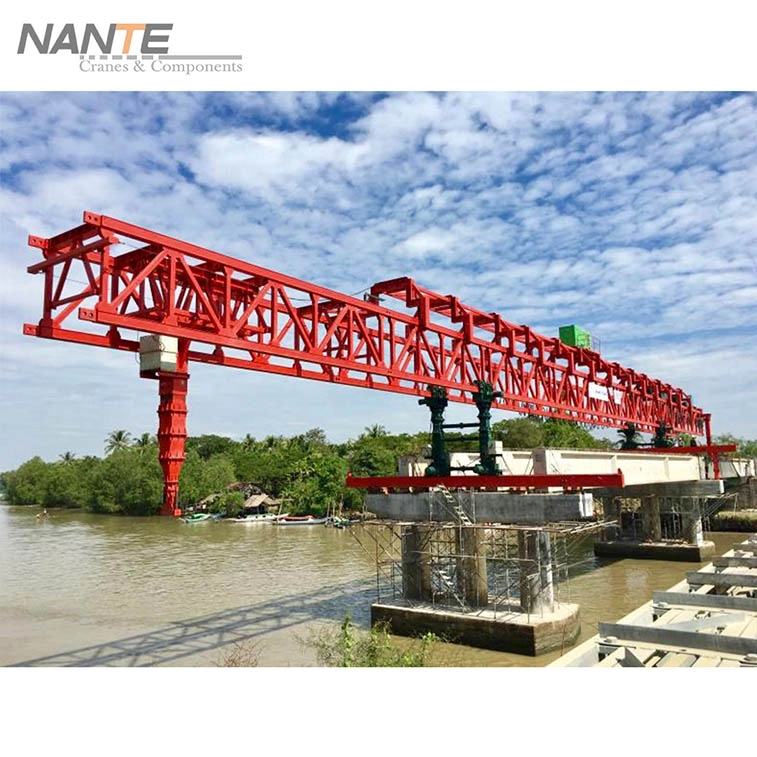
Understanding Launching Cranes in Bridge Construction
Launching cranes act as special machines built for modern bridge projects. They lift and place precast concrete beams, steel girders, or segmental box sections one span at a time. Then they move forward to the next spot with little ground support.
These systems usually have main trusses, support legs, launching mechanisms, and hoisting winches. In precast segmental or girder erection, the crane moves along the finished bridge deck or piers. This action reduces the need for extensive falsework or heavy ground equipment. The approach proves especially useful in difficult settings such as crossings over water, deep valleys, or active transportation corridors.
By keeping heavy lifting work high up and under control, launching cranes limit worker contact with ground hazards. They increase erection precision. They also help projects finish faster while they put bridge construction safety systems first.
Key Bridge Construction Safety Systems in Launching Cranes
Modern launching cranes include several layered safety features. These features create full bridge construction safety systems. The systems follow international standards such as FEM, CMAA, EN ISO, and GB. They help contractors meet strict safety rules in infrastructure engineering.
Core protections cover overload prevention, emergency stop functions, real-time monitoring, and extra mechanical and hydraulic locks. Sensors follow load weight, position, and speed. Automated alarms warn operators about any changes. These parts together lower chances of human error and equipment problems during important erection stages.
Hydraulic Synchronization Systems
Hydraulic synchronization systems stand at the center of safe launching crane work. They make sure lifting, lowering, and advancing stay even across multiple cylinders or support points. This prevents tilting, uneven stress, or structural imbalance.
Closed-loop feedback controls with high-precision sensors keep watch and adjust hydraulic pressure and flow all the time. If one point moves a bit faster, the system corrects it right away. This technology matters a lot when crews handle heavy precast segments that weigh hundreds of tons. It keeps positioning level and stops torsion on the gantry or bridge structure.
In real use, synchronized hydraulics allow smooth launching along slopes. They lower peak loads on piers. They also give fail-safe locking mechanisms that hold the position even if power fails. These actions directly support bridge construction risk reduction.
Anti-Fall Protection Systems
Work at height forms a normal part of bridge erection. For this reason, anti-fall protection systems become very important. Launching cranes add guardrails, safety nets, and built-in anchor points for personal fall arrest harnesses along walkways, platforms, and truss structures.
Designs often feature enclosed operator cabs, restricted access zones, and non-slip surfaces. Tie-off points meet rule requirements for leading-edge work. Full-perimeter protection on elevated platforms cuts fall risks. When crews combine these with exclusion zones below the crane and emergency rescue plans, the measures greatly decrease height-related incidents. The decrease appears clear when teams compare them to traditional mobile crane or scaffolding methods.
Launching Crane Safety Procedures for Precast Bridge Erection
Good launching crane safety procedures remain very important for precast bridge erection safety. Standard protocols make sure every step from setup to finish uses risk controls.
Pre-Launch Inspections and Risk Assessment
Before any work starts, teams carry out complete checks:
- Visual and functional inspection of brakes, cables, hydraulic lines, winches, and structural welds.
- Verification of pier and foundation stability, including load calculations and ground conditions.
- Weather monitoring (wind, rain, visibility) against operational limits.
- Confirmation of correct load weights, rigging, and counterweight configurations.
- Establishment of exclusion zones and communication protocols.
Only after teams give documented approval does the process move forward.
Operational Protocols and Crew Coordination
During launching and erection:
- Certified operators use synchronized controls for lifting and positioning.
- Speed and gradient limits stay under strict observation.
- Anchoring and locking systems engage at each support transition.
- Continuous radio or visual communication keeps crew awareness high.
- Real-time monitoring systems track parameters. Any team member holds immediate stop authority for any unusual condition.
Post-operation steps include securing the crane, recording activities, and getting ready for the next advance. Regular training and drills strengthen these procedures.
Enhancing Operator Safety
Operator safety gets special focus in launching crane design. Ergonomic cabs offer good visibility, vibration dampening, and climate control. These features reduce fatigue during long shifts. Many systems allow remote or semi-automated controls. The controls move operators away from the direct load zone.
Integrated monitoring displays show clear information on loads, positions, and system status. PPE integration points and emergency egress routes give extra protection to personnel. By making workflows smoother and cutting manual work, launching cranes build a safer and more controlled space for operators than ground-based or less automated methods do.
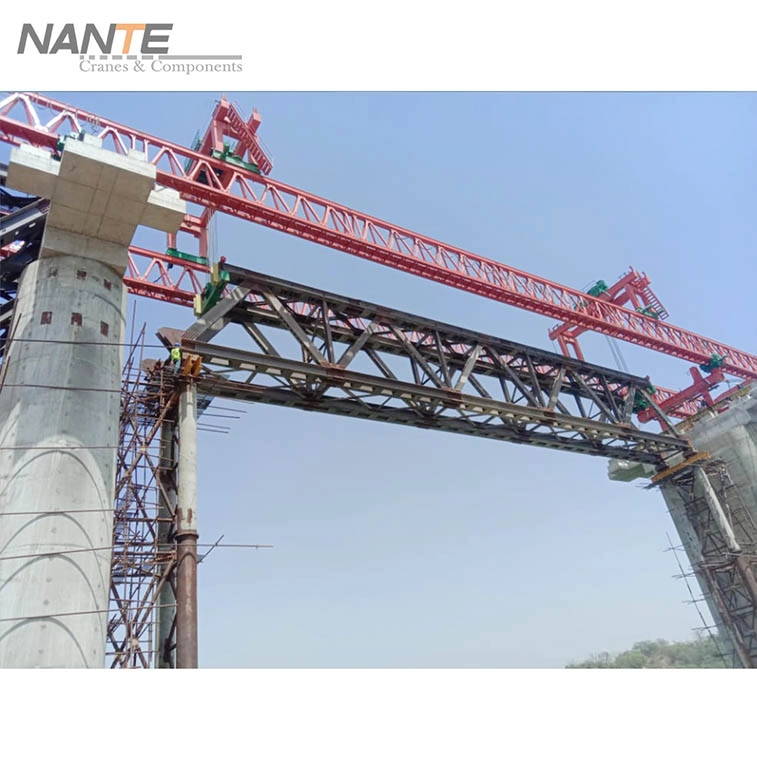
Ensuring Structural Stability During Erection
Structural stability cannot be questioned during bridge erection. Launching cranes use strong support legs, cross beams, and anchoring systems. These parts handle dynamic loads and different support reactions. Lock systems and extension trusses stop unplanned movement on slopes.
Real-time sensors watch deflection, tilt, and reaction forces. Hydraulic adjustment abilities keep level alignment. Designs follow strict engineering standards to fight overturning, uplift, or lateral forces. This becomes especially important on curved alignments or during forward launching. These features make sure both the crane and the partly finished bridge stay stable through the whole process.
Role of Automation Systems in Bridge Construction Risk Reduction
Automation takes a bigger part in bridge construction risk reduction. Modern launching cranes include programmable logic controls, synchronized drive systems, and predictive monitoring. These reduce human error in repeated tasks.
Automated positioning, load-moment indicators, anti-collision functions, and data logging help with exact segment placement and early problem detection. Variable frequency drives set speeds for safety. Integration with IoT supports remote diagnostics and maintenance planning. In the end, automation leads to fewer incidents, steady quality, and meeting new infrastructure engineering safety standards.
Best Practices and Safety Regulations in Infrastructure Engineering
Following best practices and safety regulations stays basic. Contractors should use manufacturer guidelines, carry out regular third-party inspections, and keep full training programs. Emergency response plans must exist. These plans cover quick crane securing and personnel evacuation.
Continuous risk assessment, documentation, and lessons-learned reviews help improve procedures on future projects. Alignment with standards from groups that handle occupational safety and structural integrity makes sure launching crane operations add to safer and more reliable bridge infrastructure.
Partner with Nante Crane for Safer Bridge Projects
Nante Crane serves as a leading designer and manufacturer of high-quality launching cranes. Capacities range from 50t-900t for different precast and segmental applications. With innovative designs that follow international standards (FEM, CMAA, EN ISO, etc.), advanced safety features, and a strong global track record, Nante Crane delivers reliable solutions. These solutions put structural stability, operator safety, and efficient bridge erection first. Visit nantecrane.com or explore their launching crane range to see how their equipment can raise safety and performance on your next infrastructure project.
FAQ
What are the main safety advantages of launching cranes in bridge construction?
They reduce ground risks, enable precise controlled erection, incorporate advanced monitoring and synchronization, and minimize worker exposure at height through integrated protection systems.
How do hydraulic synchronization systems prevent accidents?
By maintaining even movement and pressure across all points, they prevent tilting, overload on individual supports, and structural stress while providing automatic corrections and fail-safe locking.
What procedures ensure safe precast bridge erection?
Detailed pre-launch inspections, documented risk assessments, synchronized operational protocols, continuous monitoring, and post-operation securing steps form the core of safe procedures.
How do launching cranes reduce fall risks compared to traditional methods?
Through built-in guardrails, anchor points, safety nets, and elevated controlled workflows that limit time spent in hazardous positions and reduce reliance on extensive scaffolding.
What capacity options are available for launching cranes?
Options range from 50t-100t single girder models to 120t-300t double girder and up to 700t-900t segmental launching cranes, suitable for diverse project requirements.