English


RTG Crane Electrification: Cable Reel, Busbar, Battery-Hybrid, or Diesel-to-Electric Conversion?
RTG Crane Electrification: Cable Reel, Busbar, Battery-Hybrid, or Diesel-to-Electric Conversion?
Date: 2026-08-07 Share:
RTG crane electrification can reduce diesel expenditure, local exhaust emissions, and refueling interruptions, but each architecture changes the terminal differently. A cable reel vs busbar RTG electrification decision depends on block geometry, fleet size, transfer frequency, and grid capacity. A battery-hybrid RTG retrofit can preserve mobility and manage short power peaks, but its battery and charging system must match the real duty cycle.
Terminal operators should therefore compare complete installed systems rather than isolated equipment prices.
Start with the Operating Case
Establish the Diesel and Downtime Baseline
The project team should collect annual fuel use, operating hours, container moves, idle time, block transfers, and refueling records for each RTG. The team should also calculate the commercial cost of refueling and unavailable crane hours.
Electrification can remove onboard diesel combustion during grid-connected operation. Total emissions still depend on the electricity source and any diesel power retained in a hybrid system. Public assessments show that electric cargo-handling equipment can reduce port emissions, although results vary between terminals.
Confirm Yard and Grid Constraints
The engineering team should map block lengths, cross-aisles, road crossings, substations, cable routes, and planned layout changes.
The team should also confirm the available voltage, transformer capacity, feeder capacity, demand charges, and maximum simultaneous RTG load.
The terminal should assign a financial value to installation downtime. A technically suitable system can produce a weak business case when construction closes productive blocks or conversion exceeds the available outage window.
Cable Reel vs Busbar RTG Electrification
When a Cable Reel Fits the Yard
A cable reel supplies the RTG through a flexible cable that winds onto a crane-mounted reel. The complete system connects the reel, cable guide, feeding point, transformer, protection devices, and crane control interface.
A cable reel can suit long, mainly linear blocks with predictable crane travel. Industry guidance states that cable reel operation becomes more difficult when cranes change blocks constantly or when several RTGs share one lane. The crane usually disconnects and reconnects during a block change, which can create measurable delays.
A cable reel can avoid a continuous fixed power structure along the entire block. However, the crane may require structural verification, cable protection, a mounting platform, and allowance for additional equipment weight.
When a Busbar Fits the Yard
A busbar system installs conductor rails parallel to the container block. A collector transfers power from the fixed rail to the moving RTG.
A plug-in design uses a controlled manual or assisted connection. A drive-in design guides the crane-mounted collector into the conductor rail automatically.
A busbar can suit stable layouts, high crane utilization, and fleets that can share fixed infrastructure. The terminal must consider layout rigidity because rail supports can restrict future yard changes.
The design also requires collision protection, electrical interlocks, isolation sections, and a defined process for entering or leaving a powered block.
Battery-Hybrid RTG Retrofit
Size the Battery from Measured Work
The term “battery-hybrid” should identify the actual energy sources. One design may combine a smaller diesel generator with a battery. Another design may combine grid power with an onboard battery for block transfers, peak support, or temporary operation away from fixed power.
The engineering team should size the battery from measured lifting power, travel power, auxiliary loads, container weights, moves per hour, transfer distance, and charging opportunities.
Technical research treats operating measurements, powertrain modelling, energy-management strategy, and component sizing as connected design tasks.
The RFQ should state:
- The supplier should state the usable energy capacity.
- The supplier should state the continuous and peak power ratings.
- The supplier should state the permitted state-of-charge limits.
- The supplier should state the charging time and charging power.
- The supplier should state the thermal-control and emergency-isolation functions.
- The supplier should state the capacity-retention terms.
A nominal kilowatt-hour rating cannot prove that the battery can support a full operating shift.
Evaluate Charging and Peak Demand
The terminal can evaluate plug-in charging, opportunity charging, fixed-rail charging, cable-reel charging, or charging from a retained generator. Each method changes grid demand, operating freedom, and infrastructure cost.
Energy storage can absorb regenerated energy during container lowering or crane deceleration. The system can then release that energy during later lifting peaks.
Studies of electrified RTG networks have evaluated storage controls as a method of reducing electricity costs and peak grid demand.
Diesel-to-Electric RTG Conversion
Confirm Retrofit Feasibility
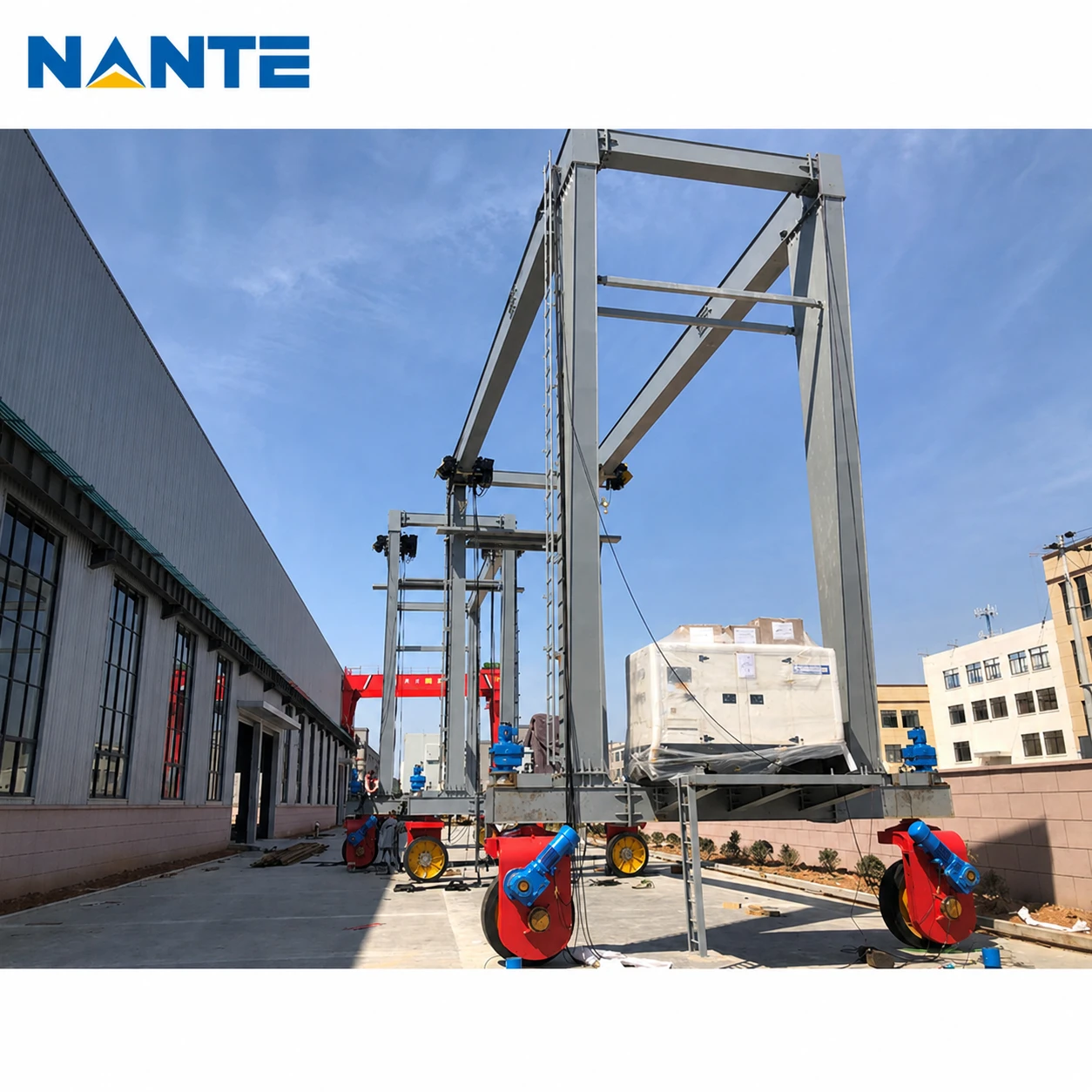
Many diesel RTGs already use a generator to supply electric motors. A diesel-to-electric conversion may replace the genset with an external power interface, a battery system, or a combined architecture.
The site survey should verify the existing drives, DC bus, PLC, braking arrangement, auxiliary systems, structural mounting points, and electrical-room space.
The commercial study should also confirm annual utilization and remaining economic life. Existing electrical infrastructure, crane use, and remaining life materially affect conversion economics.
Reduce Conversion Downtime
The project team should complete structural checks, interface engineering, control-panel assembly, software preparation, and factory testing before the crane outage begins.
A pilot conversion can validate installation time, energy consumption, block-transfer procedures, and control compatibility before fleet deployment.
The owner should define measurable acceptance criteria for lifting, travel, steering, power transfer, emergency isolation, battery operation, alarms, and energy metering.
Compare CAPEX, OPEX, and ROI
Build the Full CAPEX Model
The CAPEX model should separate the following cost categories:
- The model should include crane-side conversion equipment.
- The model should include yard power distribution and civil work.
- The model should include the utility connection and grid upgrade.
- The model should include engineering, software integration, and testing.
- The model should include training and installation downtime.
Electrical infrastructure can include a high-voltage source, switchgear, substation distribution, and cabling to crane connection points. The required scope varies with the terminal’s existing electrical capacity.
Every bidder should identify responsibility for the crane modification, power supply, control integration, energization, and final testing.
Build the Site-Specific OPEX Model
The OPEX model should include electricity use, demand charges, charging losses, block-transfer time, battery renewal allowance, and any retained diesel use.
The model should use actual tariffs and measured duty-cycle data instead of historical industry prices.
The model should credit recovered energy only when the grid or battery can accept it. The system cannot reuse every unit of lowering energy under every operating condition.
Calculate RTG Electrification ROI
The finance team can use the following starting formula:
Annual net savings = avoided diesel expenditure + avoided refueling and downtime costs − electricity expenditure − transfer or charging costs − battery renewal allowance.
The team can calculate simple payback by dividing total installed CAPEX by annual net savings.
The final model should also test net present value and internal rate of return. The sensitivity analysis should vary diesel prices, electricity tariffs, demand charges, crane utilization, transfer frequency, grid-upgrade cost, and installation delay.
Select and Specify the RTG Power System
Apply Five Selection Rules
- The team should shortlist cable reels when cranes travel mainly within long and predictable blocks.
- The team should shortlist busbars when several highly utilized cranes can share stable infrastructure.
- The team should shortlist battery-hybrid systems when mobility or peak-power control has high commercial value.
- The team should shortlist conversion when the existing RTG has a suitable electrical architecture and sufficient remaining life.
- The team should compare mixed systems when fixed power can support normal work and stored energy can support transfers or power peaks.
Define the Mobile Power Supply and Control Panel
The RFQ should state voltage, current, travel distance, cable path, reel speed, rail length, collector arrangement, road crossings, and emergency-disconnection requirements.
The supplier should provide a single-line diagram and a responsibility matrix for all electrical interfaces.
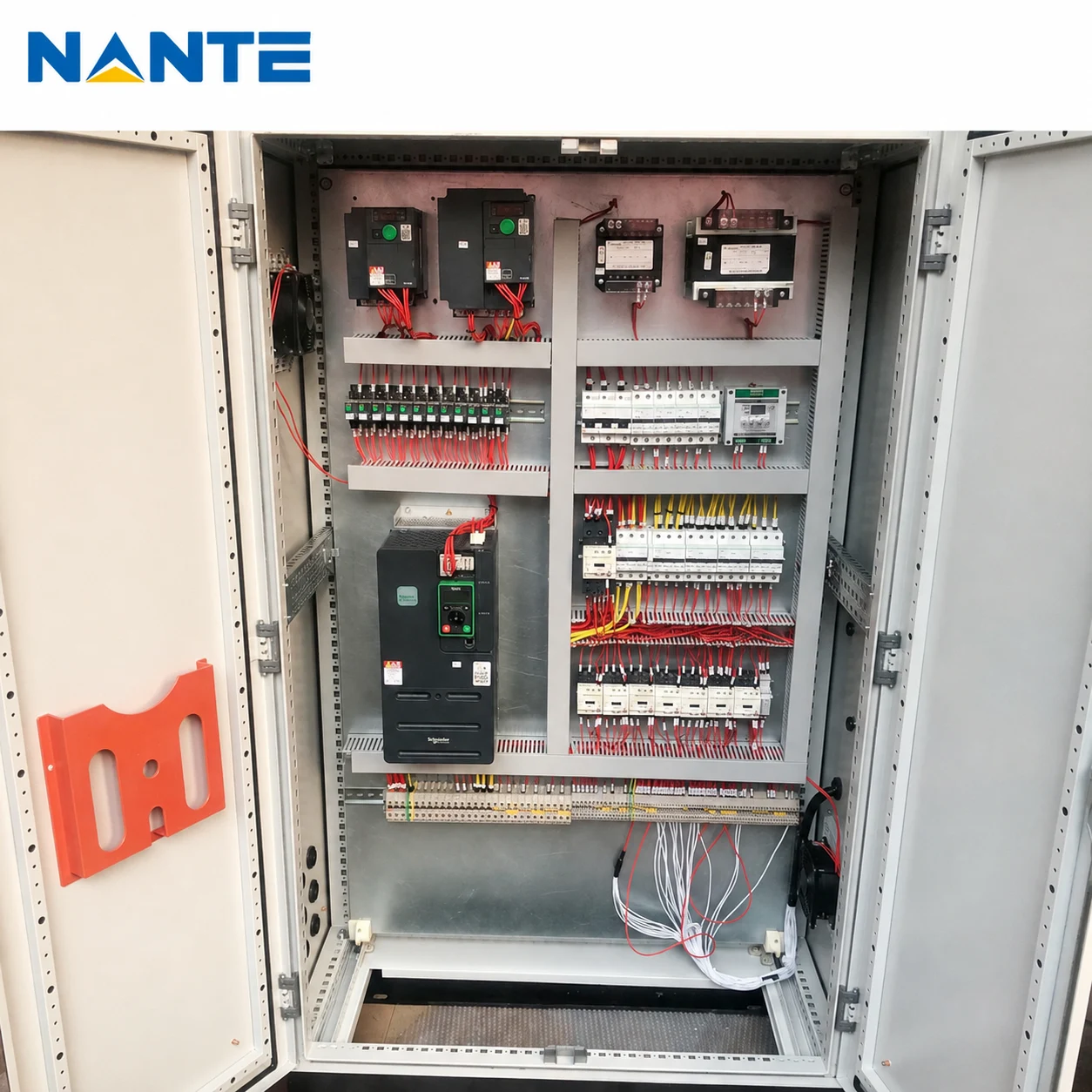
The RTG crane control panel should coordinate hoisting, travel, steering, incoming power, battery operation, energy recovery, alarms, metering, and emergency shutdown.
The specification should define enclosure protection, cooling, communication protocols, spare capacity, and operating-state logic.
FAQ
How Much Does RTG Crane Electrification Cost?
The installed cost depends on crane conversion, yard construction, grid capacity, control integration, downtime, and the selected architecture. The terminal needs a site-specific budget before it can compare ROI accurately.
Is a Cable Reel or Busbar Better for a Large Fleet?
A busbar can spread fixed infrastructure across several cranes. A cable reel can reduce the amount of continuous rail construction. Fleet size, block layout, utilization, and transfer patterns determine the better option.
How Far Can an Electric RTG Travel?
A cable reel’s connected range depends on feeding-point position, cable size, voltage drop, reel capacity, and cable route.
A battery-supported RTG’s independent range depends on usable energy, power demand, reserve state of charge, and charging access.
What Information Is Required for a Proposal?
The buyer should provide the RTG quantity and model, operating hours, block dimensions, transfer frequency, available voltage, grid capacity, electricity tariff, diesel use, preferred architecture, and implementation window.
Discuss Your Confirmed RTG Electrification Requirements
Nante Crane designs and manufactures cranes and crane components, including rubber tyre gantry cranes, mobile power supply systems, conductor rails, motorized cable reels, crane cables, and crane control panels. Its RTG products support flexible steering and integrated control options, while its mobile power range includes conductor rails, cable reels, festoon systems, energy chains, and crane cables.
Your terminal team can contact Nante Crane after it has confirmed the crane data, yard layout, operating pattern, electrical supply, preferred architecture, and project schedule. Your team can submit only the key procurement information that it has already verified.
A preliminary technical discussion can identify missing interface data and define the next engineering steps. The discussion does not require your team to make an immediate purchasing commitment.