English



Overhead Crane Temperature Rating: What Sets Hot and Cold Operating Limits?
Date: 2026-11-27 Share:
The overhead crane temperature rating is the approved operating range for a specified crane configuration, workload, and environment. Its upper and lower limits depend on whether every relevant component can perform its required function under the local temperatures it actually experiences.
The decisive component may be a drive inside a hot cabinet, a gearbox during cold startup, or structural steel exposed to low temperatures. Establishing the rating therefore requires a chain of evidence: site conditions, component limits, protective measures, and documented operating restrictions.
For buyers, the central question is whether the quoted range covers the complete lifting task, including starting, repeated operation, and shutdown recovery.
Define Crane Ambient Temperature and Equipment State
A temperature range is incomplete without a measurement location. Crane ambient temperature is the air surrounding the equipment, but the air near a hoist above a production line may differ from a reading beside the operator station.
The specification should distinguish four conditions:
- Storage:the crane remains inactive without suffering unacceptable deterioration.
- Startup:mechanisms and controls can begin operating under the prescribed procedure.
- Operation:the crane performs the stated load cycle and speeds.
- Local exposure:individual parts experience radiation, internal heating, or temperature transitions.
These conditions need not share identical limits. Equipment that survives an unheated weekend may still need an approved preparation sequence before lifting begins.
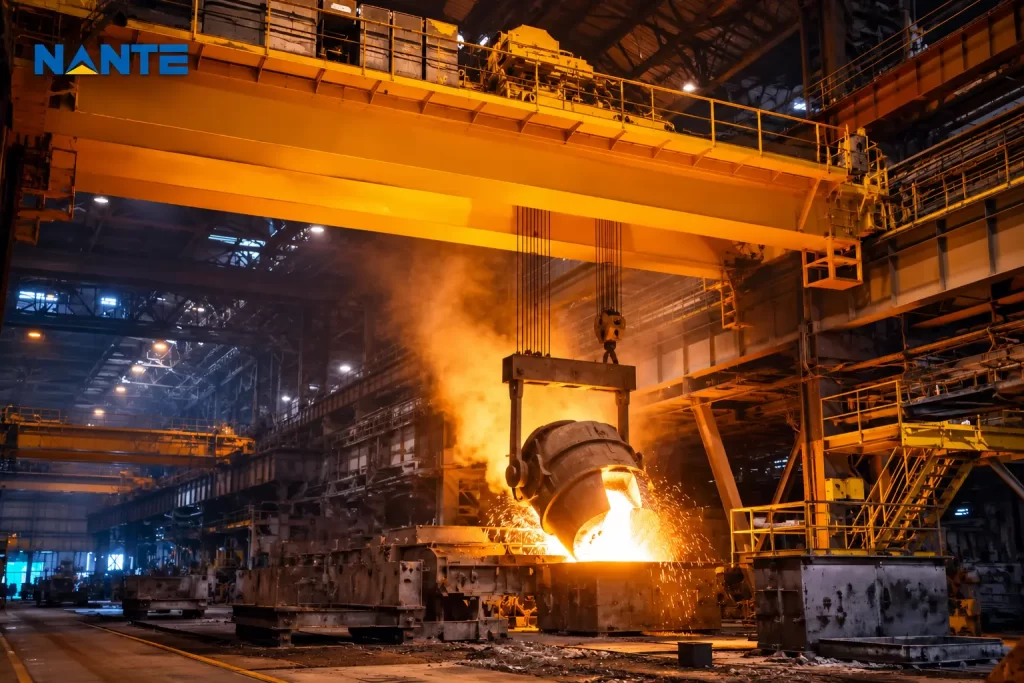
Hot material temperature also differs from ambient temperature. A furnace-facing brake or hook block can absorb radiant heat while nearby air remains cooler. Record the heat source, distance, exposure duration, and locations of vulnerable parts.
For installations with changing conditions, the supplier should identify which temperature readings govern permission to start, continue, or stop operation.
How Component Limits Become an Overhead Crane Temperature Rating
The complete operating envelope must satisfy all relevant limits under their actual conditions. Component ratings cannot simply be averaged, and the highest temperature printed on one data sheet cannot establish the crane’s upper limit.
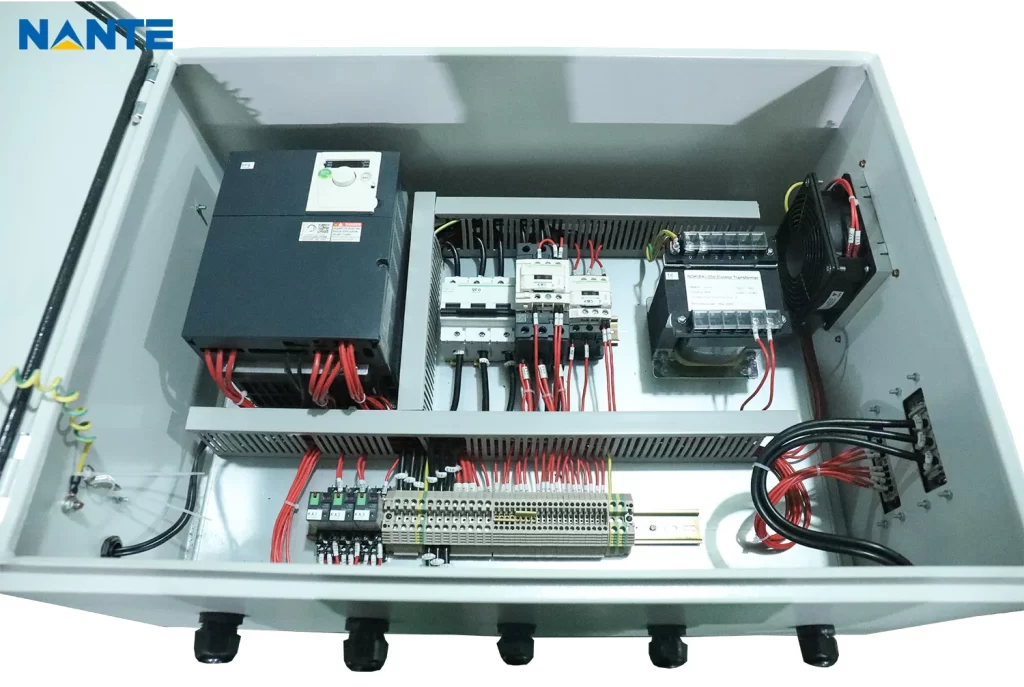
Protective measures change the conditions around selected components. A cooled cabinet may allow its electronics to operate in a hotter workshop, but that does not prove the exposed brake, cable, or gearbox is suitable.
The following review connects each system to a potential limiting condition and the evidence needed to resolve it.
| System | When it can limit the crane | Evidence to request |
| Motors | Winding heating exceeds the allowance at the required duty and speed | Ambient rating, temperature-rise basis, duty calculation, cooling arrangement |
| Lubricants and seals | Cold-start resistance or hot-running lubrication becomes unacceptable | Approved lubricant, operating viscosity assessment, seal compatibility, startup conditions |
| Electrical components | Device temperature or available drive current becomes unsuitable | Component data, derating curves, cabinet heat assessment |
| Structural steel | Material toughness or elevated-temperature properties do not support the design | Material certificates, design temperature, calculations, welding and inspection requirements |
| Brakes | Holding, release, application, or thermal capacity becomes inadequate | Brake selection, ambient limits, operating frequency, functional verification |
| Controls and interfaces | Sensors, moving cables, or protective functions cannot operate reliably | Environmental ratings, cable movement limits, control logic, test procedure |
Motors and lubricants: check the operating cycle
Motor temperature rises as electrical and mechanical losses generate heat. Frequent starts and loaded low-speed operation can make thermal demand different from what lifting capacity alone suggests. Shaft-driven ventilation may also become less effective at reduced speed.
The relevant decision is whether the selected motor can deliver the required torque throughout the specified cycle. The crane motor insulation comparison explains the insulation distinction; the project still needs model-specific ambient, cooling, and duty evidence.
Lubricants require a similar distinction between starting and running. Cold increases viscosity and resistance, while high operating temperature reduces viscosity and can accelerate oxidation. The approved lubricant must support both startup and lubrication after the mechanism warms.
A pour point or grease dropping point alone cannot establish that capability. Buyers should connect the lubricant specification to component load, speed, temperature, and the manufacturer’s permitted operating conditions.
Steel and brakes: verify the required function
Steel selection requires more than room-temperature strength. Low-temperature fracture toughness depends on material and fabrication details; sufficiently high member temperatures can reduce mechanical properties. Uneven heating can also change alignment and clearances through differential expansion.
Material traceability and relevant welding records should therefore support the specified design temperature. A heater protecting an electrical enclosure does not resolve the suitability of an exposed girder or connection.
Brakes need adequate holding torque and thermal capacity for the operating frequency. Cold-related corrosion or icing can also interfere with response. Selection should address the complete brake assembly and its control, with agreed checks for release, application, and the specified stopping conditions.
Electrical equipment and controls: assess the installed arrangement
Cabinet temperature depends on heat generated inside the enclosure and the surrounding environment. Drive current limits may require derating as temperature rises. Enclosure protection against dust or water does not establish sufficient cooling.
The review should include control devices outside the cabinet. Limit switches, load sensors, radio equipment, connectors, and moving cables must remain suitable at their own locations. A fixed cable’s temperature capability should not be assumed to cover repeated flexing under the same conditions.
Heating and cooling controls also need defined responses to failure. The supplier should explain which conditions permit operation and how the crane responds when the required protection is unavailable.
High Temperature Overhead Crane: Separate Exposure from Duty
Consider a hypothetical crane that occasionally passes a furnace and another that repeatedly holds loads beside it. Even with the same capacity and workshop air temperature, their exposure duration and internally generated heat differ.
For the first crane, the assessment may focus on transient local heating. For the second, repeated exposure may prevent sufficient cooling between cycles. Any brief-exposure allowance must be specifically documented; it cannot be inferred from the normal operating range.
The high temperature overhead crane application guide provides related design context. The quotation should identify the approved load cycle, exposed locations, protective arrangement, and remaining restrictions.
In this example, upgrading motor insulation would not resolve a control cabinet already exceeding a device limit. Relocation or cooling would need evaluation, followed by confirmation that the remaining components still satisfy their limits.
Low Temperature Crane: Separate Starting from Warm Operation
Consider a second hypothetical crane in an unheated building after a prolonged shutdown. Its electronics may be ready once the cabinet is heated, while the gearbox remains cold and moving cables remain exposed.
The startup decision must therefore consider the complete mechanism. A cabinet temperature indication alone cannot authorize loaded lifting. The supplier should define any preheating, inspection, unloaded functional checks, and conditions required before normal duty begins.
The discussion of low temperature crane motor operation supports this distinction between thermal aging and cold-start problems. Warming selected components does not establish low-temperature toughness for the structure.
The useful specification states both the conditions for initial movement and those for sustained loaded operation. If separate limits apply, the operating instructions should make them unambiguous.
Turn Crane Temperature Requirements into Verifiable Acceptance Criteria
For a project review with Nante Crane, the temperature schedule should connect each proposed component to its location, expected exposure, supporting document, and operating restriction.
Its double girder EOT crane with winch lists enclosure heating and cooling options. Such options provide a starting point for configuration review; the final operating range still requires project-specific confirmation.
Before ordering, establish three acceptance checkpoints:
- Design review:reconcile site temperatures, load cycle, material suitability, component ratings, and protection assumptions.
- Factory verification:agree which functions, wiring, alarms, heater or cooling controls, and records will be checked.
- Site commissioning:confirm installed locations, airflow clearances, cable routes, temperature measurements, and startup instructions.
A factory load test at moderate temperature does not independently demonstrate operation at environmental extremes. The acceptance plan should distinguish direct testing from calculations and component qualification.
The handover package should preserve approved replacement specifications. The crane lubrication maintenance guidance provides maintenance context, while the equipment manual should identify the actual lubricant and intervals. Substitute grease, replacement cables, cabinet relocation, or changed duty may require reassessment.
FAQ
Does reducing the load automatically extend the temperature range?
No. Reduced load may lower some thermal demands, but it does not establish material toughness, cable flexibility, or reliable control operation. Any revised restriction needs manufacturer or qualified engineering approval.
Is an alarm setting the same as an approved temperature rating?
No. An alarm is a protective setting within the operating strategy. The approved range must account for component capability, measurement location, workload, and the response required when limits are approached.
Request a Temperature-Specific Technical Proposal
Plant engineers and purchasing teams should submit capacity, span, lifting height, load cycle, ambient extremes, hot-load exposure, shutdown conditions, power supply, and installation destination. Include a layout and available temperature readings so Nante Crane can review the application and prepare a project-specific proposal through the form to submit crane temperature design inputs.