English


How to Evaluate an Overhead Crane Quotation: A Line-Item Review
Date: 2026-11-27 Share:
An overhead crane quotation is ready for comparison when each required item has a defined specification, price treatment, and responsible party. A line stating “complete crane supplied” does not establish whether the offer covers the equipment needed for the application or the work needed to put it into service.
The practical review follows a short sequence: identify a difference, request evidence, obtain a written clarification, and record its effect on the evaluated price. This exposes why apparently similar quotations differ without assuming that either the cheapest or most expensive offer is preferable.
How to Evaluate Crane Quotation Responses Line by Line
Create one review row for each requirement. Record the requested value, offered value, document reference, clarification, price adjustment, and approval status. Give each question an identifier that can follow the quotation into the purchase order.
For example, “confirm controls” is difficult to close. “Confirm whether the quoted price includes variable-frequency control for hoisting, trolley travel, and bridge travel separately” produces an answer procurement can evaluate.
Before issuing questions, confirm that every bidder received the same project revision. The Overhead Crane Quote checklist can support missing-input checks; the review should then concentrate on what each supplier actually offered.
Technical Differences That Need a Written Answer
Capacity and Span: Check the Drawing Against the Price
An offer may repeat the requested capacity while using different dimensions or load assumptions elsewhere. Match the priced configuration to the general arrangement drawing, including span between runway rail centers, lifting height, hook approaches, and building clearances.
For US projects, label short tons and metric tonnes explicitly. Confirm how lifting attachments contribute to the suspended load. Request maximum wheel reactions for the building engineer’s runway review.
Clarification to issue: “Identify the drawing revision covered by this price and list any dimensional or load-basis deviations.”
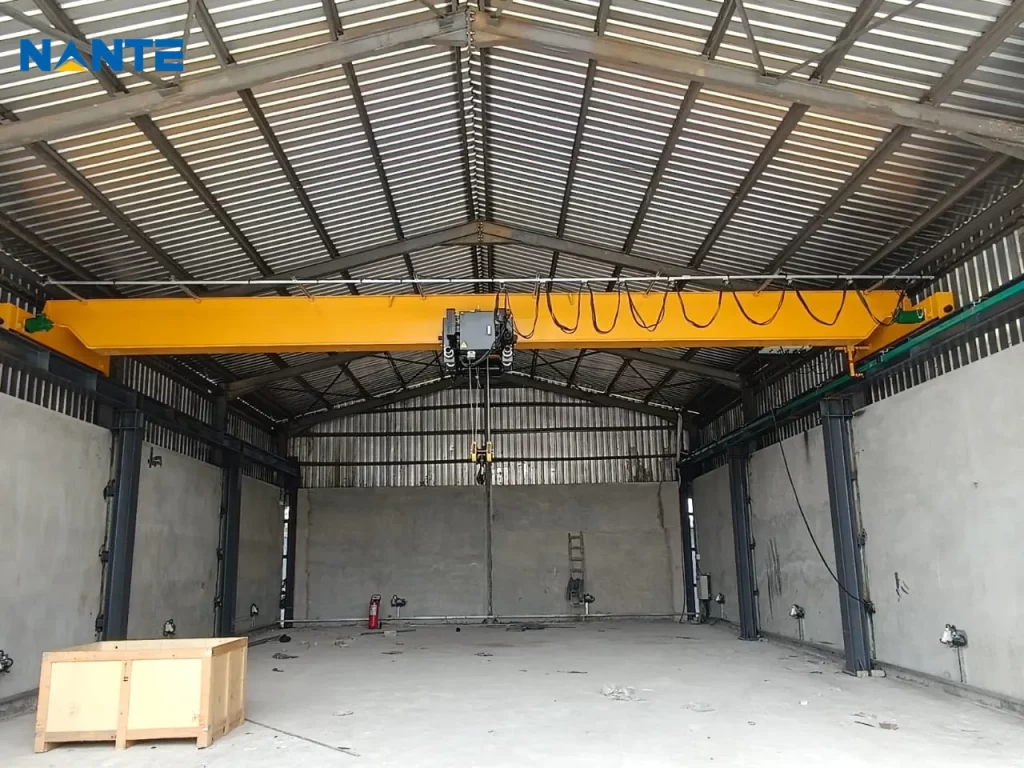
If the proposal needs a different hoist arrangement or building modification to achieve the required coverage, obtain that scope and cost before treating the price as comparable. Published single-girder overhead crane configurations are useful references; the project drawing must establish the actual fit.
Duty Class: Challenge an Unexplained Rating
“Heavy duty” leaves the purchasing team without a measurable selection basis. Ask which classification system applies, which crane and mechanism classes are offered, and which workload assumptions support them.
Repeated load cycles influence fatigue demand. Motor running time and starting frequency also affect mechanism selection. Two cranes carrying the same maximum load can therefore require different equipment for different production patterns.
Clarification to issue: “State the offered classes and the assumed load spectrum, operating hours, cycles, and service period. Identify any departure from the RFQ.”
Use the overhead crane duty class guide for classification background. When systems differ, request an engineering explanation of equivalence instead of accepting matching sales descriptions.
Hoist and Motors: Make Substitutions Visible
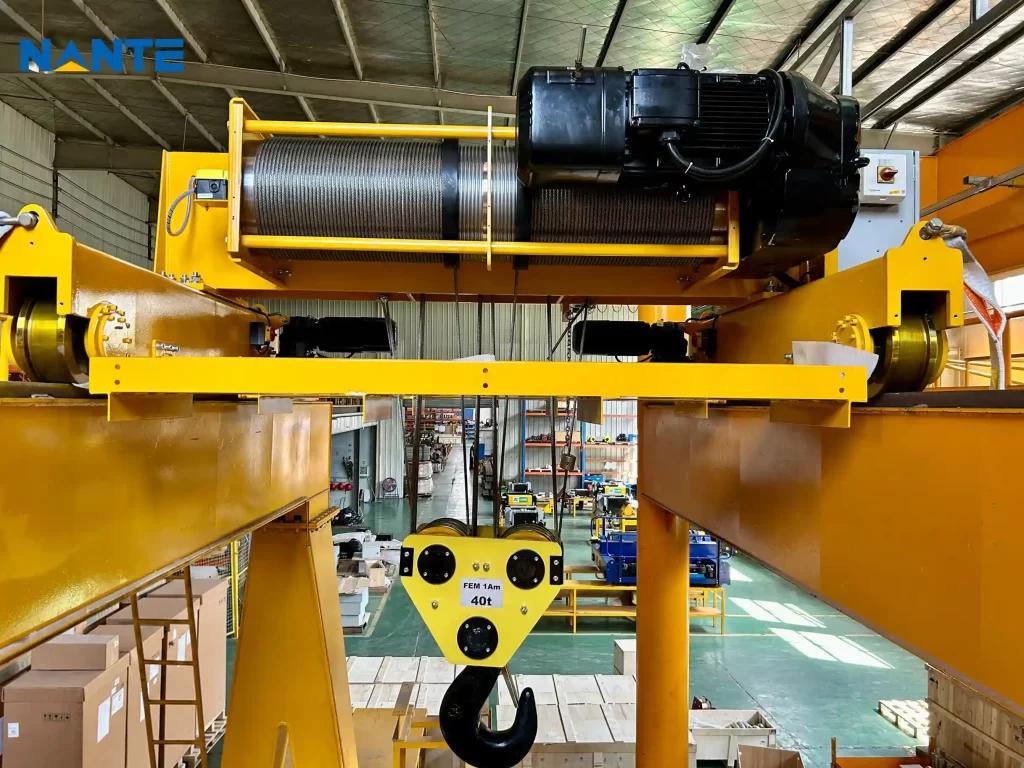
“Standard hoist with quality motors” does not establish an identifiable equipment package. Request the hoist model, lifting speed, usable lift, reeving, motor duty, thermal protection, gearbox rating, and brake arrangement.
The motor drives the rope drum through gearing; reeving changes the relationship between rope movement and hook movement. A change in hoist arrangement can affect speed, headroom, maintenance access, and component requirements even when rated capacity remains unchanged.
Clarification to issue: “Provide the priced component schedule and identify proposed alternatives, including their performance and interface differences.”
For frequent inching, check starts and heating limits rather than comparing motor power alone. Require approval for substitutions and request spare-part identification and replacement access information. A cheaper component package needs a documented application review before acceptance.
Controls: Ask Which Motions Receive Each Function
“VFD included” may describe travel control without specifying hoisting control. Compare the control method and speed range for all three motions separately.
Clarification to issue: “Mark each motion’s drive type and list the included operating stations, protective functions, and commissioning activities.”
Check pendant or radio equipment, limits, emergency stops, overload protection, and any specified collision-prevention functions. Request the supply boundary for conductor systems, festoon cables, isolators, and the building connection. Required positioning or automation functions should have defined acceptance criteria and integration costs.
Painting: Obtain a Measurable Coating Offer
“Standard industrial painting” can hide a different preparation or coating scope from the project requirement. Request the surface-preparation method, coating products, coat sequence, dry film thickness, and inspection records.
Clarification to issue: “Identify the coating system included for the stated environment and separately price any required upgrade.”
Also establish responsibility for coating repairs after transport and erection. Compare documented systems suited to the exposure; paint color and a larger coat count alone do not establish equivalent protection.
Certifications and Testing: Separate Claims From Deliverables
An offer saying “certified and factory tested” needs a document list and test scope. Separate management-system credentials from evidence relating to the quoted equipment. Check certificate entity, site, scope, issuer, validity, and expiry.
Clarification to issue: “List the applicable project requirements, supplied compliance documents, factory tests, witness arrangements, and site acceptance responsibilities.”
For US installations, establish applicable design, electrical, workplace, and inspection requirements for the equipment and location. A generic overseas certification statement does not settle destination acceptance.
Request test procedures, acceptance criteria, calibrated-instrument records, reports, and defect-closure arrangements. Specify who provides test weights, site labor, and any third-party attendance. Factory testing and site commissioning should appear as separate commitments.
Overhead Crane Quote Comparison: Work Through an A/B Example
Consider two hypothetical offers for the same agreed application. No market prices or actual supplier quotations are represented below.
| Review line | Offer A | Offer B | Action before ranking |
| Equipment price | Lower opening figure | Higher opening figure | Keep both as provisional totals |
| Duty basis | Operating assumptions missing | Workload assumptions stated | Obtain A’s basis and any revision price |
| Drives | “VFD included” | Motions identified individually | Confirm whether A covers the required motions |
| Runway power | Excluded | Defined conductor package included | Obtain A’s matching package price |
| Testing | “Factory test” | Procedure and reports identified | Align tests, witnesses, and site responsibilities |
| Site work | Supervision only | Erection and commissioning listed | Price labor, equipment, and remaining owner work |
Offer A’s equipment price cannot be ranked against Offer B’s broader package until these differences are resolved. Obtain revised supplier prices or documented owner-contractor estimates for required missing work. Avoid assigning arbitrary allowances to unresolved technical requirements.
Compare the adjusted totals only after mandatory requirements are met. Keep maintenance, spares, and downtime assumptions visible in a separate lifecycle assessment. The crane price factors guide provides background when a revised configuration changes the equipment price.
If Offer A’s revised price adds the conductor package, remove the separate allowance for that package from the worksheet. Otherwise the same work is counted twice. Keep optional convenience features outside the mandatory comparison total, and record any accepted alternative separately so the purchasing decision remains traceable.
When reviewing Nante Crane proposals, apply the same row-by-row method. Its published hoisting component range can help identify the equipment under discussion; the quotation revision should establish what is included for the project.
Crane Quotation Checklist: Close Each Item Before Approval
The final crane quotation checklist should confirm that answers have changed the commercial documents where necessary:
- Crane quotation requirements:Capacity, span, lift, duty, speeds, environment, and supply basis match the approved brief.
- Priced equipment:Component schedules, controls, coating, and accepted substitutions agree with the offer.
- Execution scope:Packing, freight, unloading, runway interfaces, installation, commissioning, training, and spares have named providers.
- Evidence and acceptance:Drawings, manufacturing and inspection records, certificates, tests, and handover documents have agreed deliverables and dates.
- Commercial terms:Currency, taxes, quotation validity, payment milestones, delivery triggers, warranty coverage, exclusions, and change terms are clear.
Close a clarification with a revised quotation or referenced contractual attachment. An informal answer should not remain disconnected from the final order.
For warranty review, test one practical scenario: a covered component needs replacement after commissioning. The terms should identify responsibility for the part, freight, removal, refitting, travel, and recommissioning. Also confirm the warranty start event and notification procedure. This makes the stated warranty period commercially interpretable.
Frequently Asked Questions
Does Every Difference Require a Price Adjustment?
No. A wording clarification may confirm existing scope. A configuration change or missing required service needs a stated price and schedule effect. Record a zero adjustment only after the supplier confirms inclusion.
When Should Price Ranking Pause?
Pause when capacity, duty, building fit, required protections, or acceptance responsibilities remain unresolved. A low total cannot establish suitability while a mandatory requirement is still uncertain.
Request a Quotation With Clear Comparison Lines
Purchasing managers and project engineers can send Nante Crane the capacity, span, lifting height, operating profile, environment, power supply, destination, and installation scope, together with a layout and the unresolved review rows.
These inputs support a project-specific technical and commercial proposal with defined equipment and scope assumptions. To request that next step, submit the project brief for an overhead crane quotation.