English


What Determines Overhead Crane Price? Key Cost Factors Explained
Date: 2026-08-21 Share:
An overhead crane price can vary widely even for the same rated capacity because overhead crane cost factors go far beyond tonnage. Span, lifting height, duty class, crane type, hoist, motors, electrical controls, steelwork, painting, certification, and optional functions all affect configuration. A reliable overhead crane quotation must reflect the actual application and supply scope.
What Determines Overhead Crane Price?
Four groups dominate price: load and dimensions, operating duty, equipment configuration, and project scope. Capacity, span, lifting height, duty, environment, testing, logistics, and installation define the final solution.
ISO 4301-5:2025 classifies bridge and gantry cranes by service conditions including working cycles, load spectrum, and average load displacement. Capacity alone is therefore not enough to define price.
Overhead Crane Price Factors at a Glance
| Price Factor | Price Influence | Main Reason |
| Capacity | High | Larger structure and lifting components |
| Span | High | More steel and stiffness |
| Lifting height | Medium–High | More rope and hoist capacity |
| Duty class | High | Higher-cycle design |
| Crane type | High | Different structural layouts |
| Hoist/winch | High | Speed, duty, braking, reeving |
| Motors/drives | Medium–High | Power and speed control |
| Electrical system | Medium | Drives, controls, sensors |
| Steel/runway scope | High | More structural supply |
| Painting | Low–Medium | Added corrosion protection |
| Certification/testing | Medium | Engineering and inspection |
| Optional functions | Low–High | Automation and safety complexity |
The factors interact; a long-span, high-duty crane can cost far more than a light-duty crane of the same tonnage.
Overhead Crane Cost Factors: A Detailed Breakdown
1. Lifting Capacity
Higher capacity requires stronger girders, larger hoisting equipment, heavier wheels, more motor power, and braking capacity. Specify the real maximum load rather than oversizing.
2. Span Length
Longer spans increase bending and deflection demands, often requiring deeper girders and more steel. Bridge weight, wheel loads, and transport also change, making span a major overhead crane price factor.
3. Lifting Height and Available Headroom
Lifting height affects rope, drum capacity, reeving, and hoist arrangement. Restricted headroom may require special geometry. Provide hook height and runway elevations, not building height alone.
4. Duty Class and Working Frequency
Duty depends on cycles, load spectrum, operating hours, and travel. Continuous production duty can require upgraded motors, brakes, gearboxes, wheels, and fatigue design. ISO 4301-5:2025 links classification to service conditions.
5. Crane Type: Single Girder, Double Girder, or Underhung
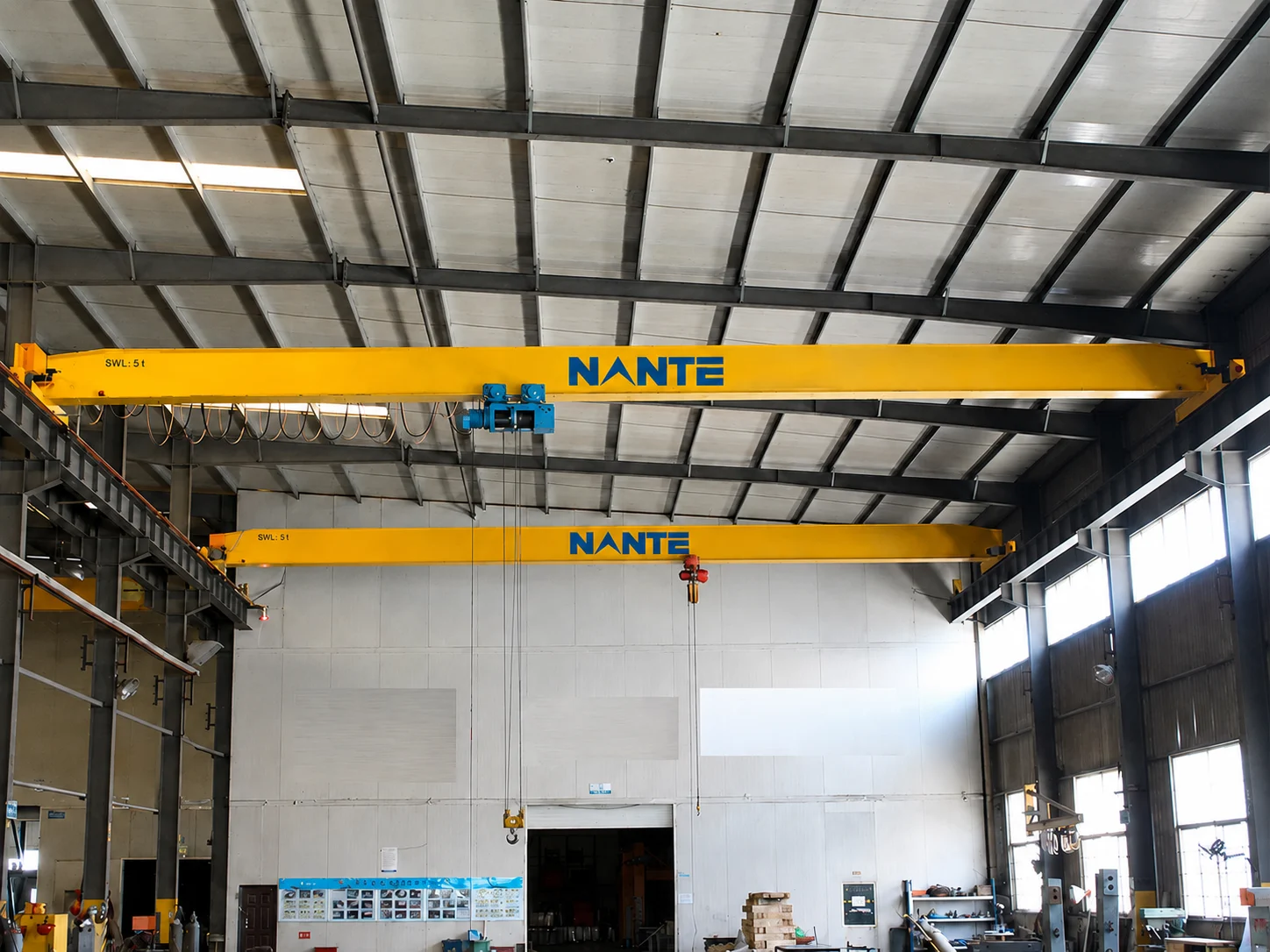
Single-girder cranes can suit light- and medium-duty work economically. Double-girder designs suit higher capacities, heavier duty, longer spans, or customized winches. Underhung cranes suit suspended runways or restricted headroom. Published overhead-crane configurations demonstrate how these structural concepts address different capacity, span, headroom, and duty requirements.
6. Hoist or Winch Configuration
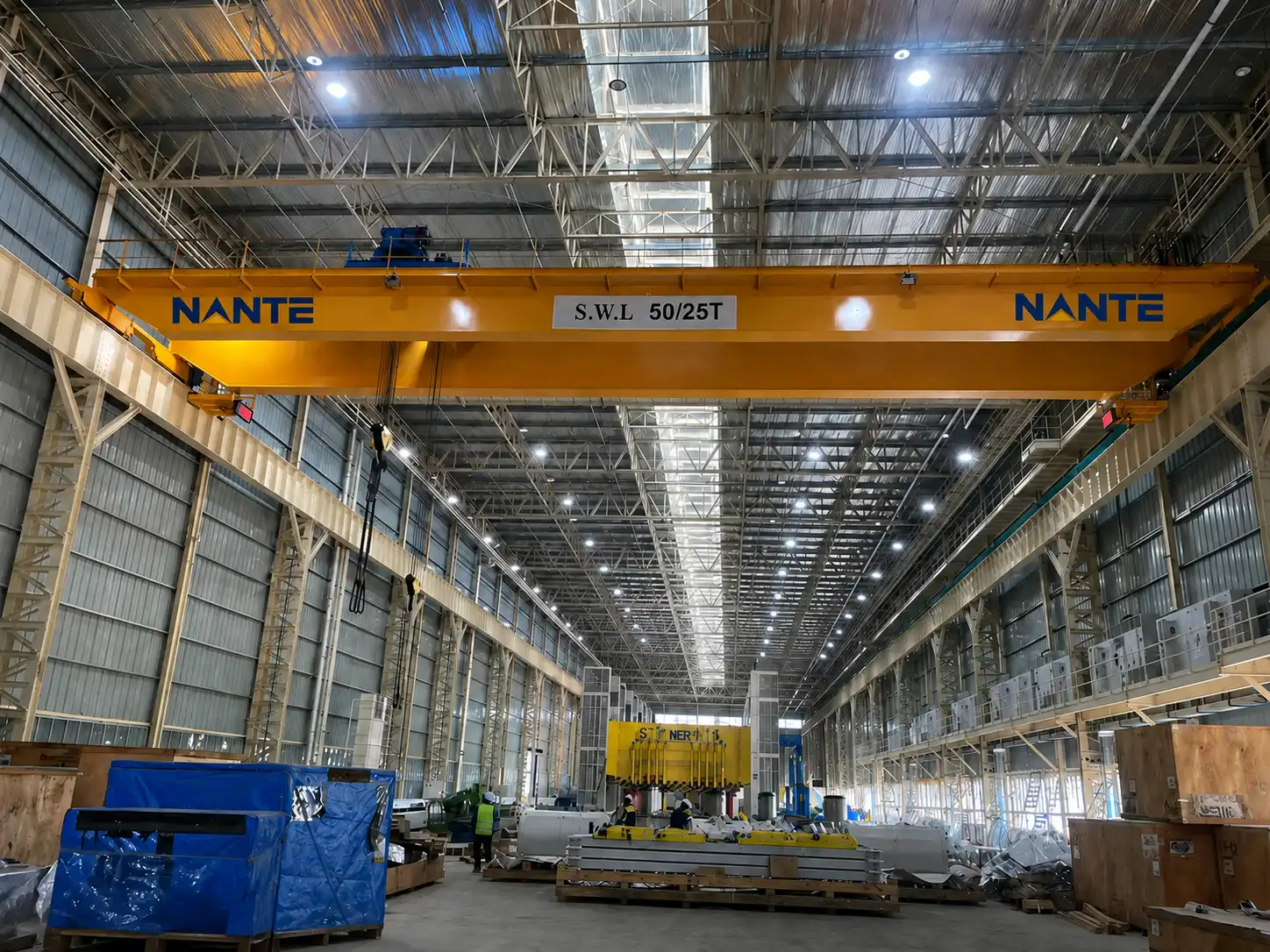
Hoisting equipment changes with capacity, speed, duty, reeving, drum size, and braking. Standard hoists cover many workshop applications; customized winches suit higher duty, speed, capacity, or additional braking. Published specifications show clear differences between hoist- and winch-based double-girder configurations.
7. Motors, Gearboxes, and Brakes
Motor power is only one cost variable. Starting frequency, speed, thermal protection, gearbox rating, brakes, and variable-frequency control also matter. Higher speed or frequent reversing raises mechanical and thermal demand.
8. Electrical System and Crane Control Panel
Electrical scope includes control panels, variable-frequency drives, remote controls, sensors, and protected enclosures. IEC 60204-32:2023 covers electrical and programmable electronic equipment for hoisting machines.
Advanced control systems can also add anti-sway, automation, IoT, and data logging. Control-panel enclosure specifications may also change according to environmental protection requirements.
9. Steel Structure and Runway Scope
Confirm whether price covers only the crane or also rails, runway beams, columns, accessories, and structural verification. Building reinforcement and civil work may be separate, so quotation scopes can differ substantially.
10. Painting, Corrosion Protection, and Environment
Outdoor, coastal, humid, dusty, or chemical sites may need stronger corrosion protection. ISO 12944-2 classifies corrosive environments, while ISO 12944-5 addresses paint-system selection.
Published overhead-crane specifications also list blast surface preparation and C3-C5 coating systems, illustrating how environmental requirements become part of the technical specification.
11. Certification, Inspection, Testing, and Documentation
Requirements may include calculations, certificates, welding records, factory testing, third-party inspection, manuals, and load tests. These requirements should be identified before suppliers prepare final quotations.
For U.S. applications, OSHA 1910.179 includes operational testing and states that rated load test loads shall not exceed 125% of rated load unless otherwise recommended by the manufacturer.
12. Optional Safety, Automation, and Smart Functions
Options include overload protection, anti-collision, remote control, variable speed, anti-sway, synchronized lifting, positioning, and monitoring. Their cost depends on hardware, sensors, programming, integration, and commissioning.
Why Can Two Overhead Cranes With the Same Capacity Have Different Prices?
Two 10-ton cranes can differ sharply. A short-span maintenance crane with standard controls is not equivalent to a long-span production crane with variable speed, anti-collision, corrosion protection, and enhanced testing.
The rated capacity is the same, but the structure, hoisting mechanism, drives, control system, environmental protection, and engineering scope are different. Same capacity does not mean the same crane—or the same price.
Overhead Crane Quotation: What Should the Price Include?
A headline equipment price is not enough. Buyers should establish exactly what is included before comparing suppliers.
Crane Equipment Scope
Check the bridge, end carriages, hoist or winch, motors, brakes, wheels, electrical panel, controls, and safety devices.
Structural and Site Scope
Confirm whether rails, runway beams, columns, building reinforcement, and electrical feed are included.
Services and Documentation
Compare engineering, testing, freight, installation, commissioning, manuals, spare parts, and warranty. Every overhead crane quotation should list inclusions and exclusions.
What Information Is Needed for an Accurate Overhead Crane Quotation?
Provide the following information in your RFQ:
- Rated capacity and typical load
- Crane span and runway length
- Required lifting height and available headroom
- Lifts per hour, working shifts, and duty class
- Required lifting and travel speeds
- Power supply
- Indoor or outdoor installation
- Temperature, dust, humidity, or corrosion conditions
- Preferred control method
- Safety and automation requirements
- Applicable standards or certification
- Destination and installation scope
A complete RFQ reduces assumptions and improves quotation comparison.
How to Compare Overhead Crane Quotations Correctly
Compare the Same Technical Specification
Match capacity, span, lifting height, duty, speeds, crane type, hoist, controls, painting, and safety functions. A lower quotation may simply be based on a lighter specification.
Compare the Same Supply Scope
Check runway equipment, freight, installation, commissioning, testing, documentation, and spare parts. Missing scope can create substantial costs later.
Compare Engineering and Compliance, Not Just Hardware
Review the design basis, duty classification, electrical requirements, testing, warranty, and documentation. These items help reveal whether quotations are technically equivalent.
Separate Purchase Price From Total Project Cost
Compare the complete project:
Total Project Cost = Equipment + Structure + Logistics + Installation + Testing + Commissioning + Documentation
The lowest equipment price may not produce the lowest project cost.
How to Reduce Overhead Crane Cost Without Under-Specifying the Crane
Cost optimization should remove unnecessary specification, not necessary safety or performance.
Define the Real Maximum Load
Avoid unnecessary capacity oversizing.
Specify the Correct Duty Class
Base duty on the real load spectrum and operating frequency.
Use Standard Configurations Where the Application Allows
Customize when headroom, environment, special handling, synchronization, or automation genuinely requires it.
Separate Mandatory Features From Optional Functions
Prioritize safety, compliance, and production requirements. Evaluate convenience features and future automation separately.
Define the Quotation Boundary Before Comparing Prices
Clarify runway scope, freight, installation, testing, and commissioning during the RFQ stage.
Common Overhead Crane Pricing Mistakes Buyers Should Avoid
Common mistakes include pricing by capacity alone, confusing building height with lifting height, ignoring duty or environment, assuming runway steel is included, requesting certification late, and comparing equipment prices without comparing scope.
Avoiding these mistakes makes it easier to evaluate the real value behind each quotation.
FAQ
What Are the Main Factors That Determine Overhead Crane Price?
Capacity, span, lifting height, duty class, crane type, hoist, motors, electrical system, steelwork, painting, certification, testing, and optional functions all affect the final price.
Which Overhead Crane Cost Factors Have the Biggest Impact?
Capacity, span, duty class, crane configuration, hoisting equipment, and structural scope usually have the greatest influence.
Why Can Two 10-Ton Overhead Cranes Have Very Different Prices?
Their spans, duties, lifting heights, speeds, controls, operating environments, structural requirements, and compliance scopes may be completely different.
Is a Single-Girder Overhead Crane Always Cheaper Than a Double-Girder Crane?
No. It may be more economical, but selection depends on capacity, span, duty, headroom, and required functions.
How Does Duty Class Affect Overhead Crane Price?
Higher duty requires components and structures designed for more cycles and greater thermal or fatigue demand.
Does Lifting Height Significantly Affect Overhead Crane Cost?
Yes. Higher lift can require more rope, drum capacity, different reeving, and hoist changes.
Does the Electrical Control System Affect Crane Price?
Yes. Drives, remote control, enclosure protection, sensors, automation, anti-sway, and monitoring change electrical cost.
Does an Overhead Crane Quotation Include Runway Beams and Installation?
Not necessarily. The quotation should state whether runway steel, rails, freight, installation, commissioning, and testing are included.
What Information Should I Provide for an Accurate Quotation?
Provide capacity, span, lifting height, runway length, duty, speeds, power supply, environment, controls, certification, destination, and installation requirements.
Can I Get an Approximate Overhead Crane Price Before All Specifications Are Finalized?
Yes. A budget estimate can use defined assumptions, but a firm quotation requires sufficiently complete technical and commercial information.
Request an Overhead Crane Quotation from Nante Crane
Nante Crane supplies single-girder, double-girder hoist, double-girder winch, and underhung overhead cranes, together with hoisting, travelling, power-supply, and control systems. The company reports serving customers in more than 50 countries and regions and more than 5,000 end users.
Planning an overhead crane project? Request a quotation based on your actual operating requirements. Send us your lifting capacity, span, lifting height, runway length, power supply, operating environment, and destination. If you are not sure about the duty class, crane type, certification, or control configuration, our team can help define the appropriate specification for your application.