English


How Crane Cabin Design Affects Operator Productivity
How Crane Cabin Design Affects Operator Productivity
Date: 2026-07-03 Share:
The Design of a Crane Cabin has a significant influence on safe, accurate and efficient lifting operations. For factories that use overhead cranes with operator cabins, well-designed cabins can reduce fatigue and increase visibility and thus the productivity of the crane operator. A crane cabin is more than just a protected seat above the area where lifting operations take place. It is the control center where human decisions interact with the movement of the machine and safety functions and where production targets are pursued.
For factory owners and engineers, the cabin should be evaluated as part of the full crane performance system. A well-designed cabin helps operators see clearly, reach controls naturally, stay comfortable, respond faster, and complete lifting cycles efficiently.
What Is Crane Cabin Design?
Crane cabin design is the planning of the operator’s working environment, including the cabin structure, seat, windows, control panel, joystick layout, lighting, climate control, communication equipment, safety devices, and monitoring systems.
A productive cabin has to fulfill four requirements: operator comfort, precise control, safe lifting and constant output. Such cabins can be found in manufacturing plants, steel workshops, warehouses, logistics centers and in the production of heavy equipment.
Ergonomic Crane Cabin Design Reduces Fatigue
Why Ergonomics Matters
For long hours of sitting while continuously making decisions, the crane operator is susceptible to back, shoulder, wrist, neck and eye strain. The discomfort could be alleviated by ensuring that the seat is at the correct height, the armrests are at the correct position and the controls are at a comfortable position to prevent any stretching or twisting of the operator’s body.
Fatigue affects reaction time and judgement as well as communication and accuracy in load positioning. In a lift, even a slight delay and/or repeated repositioning of the load can lead to increased cycle time and decreased daily output.
Key Ergonomic Features
A productive cabin requires adjustable seat height and backrest, as well as suspension and armrests. There must be sufficient legroom and a stable foot support. All controls must be within reach, and all displays in the normal viewing position. Hoist, trolley and bridge controls are to be grouped in a logical manner so that as much as possible can be done without delay.
Visibility Optimization in Crane Cabins Improves Load Control
How Visibility Affects Precision and Safety
Visibility optimization in crane cabins is essential for safe and efficient lifting. Operators need to see the hook, load, runway, trolley movement, landing area, nearby workers, equipment, and possible obstacles.
The inability to see affects every movement that an operator makes. Additional time will be required to confirm the load’s correct travel path. Signaling from others will become more of a factor, as well as the reworking of loads to correct for errors as they occur. In high volume applications even a few seconds of additional time to complete tasks can become a huge loss in production.
Design Elements That Improve Visibility
Visibility optimization in crane cabins can be effective by having wide front and side windows, downward viewing windows, all clear safety glass, anti-glare treatment, reflection-free lighting, cameras for blind spots, and monitors positioned in such a way so as not to block the view.
For factory owners, visibility translates into productivity. By improving visibility into factory activities, owners can get a handle on how to reduce their factory’s cycle time, idle time, repositioning of loads and communication delays.
Operator Comfort Systems Support Long-Shift Performance
The Role of Comfort in Daily Operation
Operator comfort systems allow operators to operate at optimal concentration during long and repetitive shifts. Factors that detract from attention to tasks are: heat, cold, vibration, noise, dust, poor seating, and glare. The operators comfort affects the accuracy of lifting and the quality of their decisions.
A comfortable cabin allows the operator to concentrate on the task of lifting, the load path, ground personnel, and monitoring the machine’s functions instead of being distressed by physical discomfort.
Important Comfort Systems
A productive crane cabin contains seats, noise insulation, vibration damping, clear lighting, fresh air, dust protection, communication equipment and easy-to-clean surfaces.
Comfort is not a luxury feature on industrial lifting equipment. It enables the operator to be alert, to reproduce identical movements, and to keep using the equipment.
Air-Conditioned Crane Cabins Improve Focus
Why Climate Control Matters
Air-conditioned crane cabins are useful in hot, cold, humid, dusty or high-temperature work environments. Heat stress can cause lack of alertness. In cold conditions hand movement can be slowed down and thus fine control will be more difficult. High humidity can cause fogging or condensation on the glass parts of the crane cabin, thus reducing visibility.
The climate control on your operator station will help to keep you focused as well as protect displays, electrical components and other control equipment from the elements.
Climate Control Features to Consider
Useful features include air conditioning, heating, air circulation, glass defogging, air filtration, proper airflow direction, and simple temperature controls within reach. For high-duty factories, air-conditioned crane cabins should be considered productivity equipment.
Human-Machine Interaction Makes Crane Operation Easier
What HMI Means in Crane Cabin Design
Human-machine interaction refers to the interaction between the crane operator and the crane through joysticks, pedals, buttons, displays, warning lights, alarms, cameras, and the Crane Control Panel.
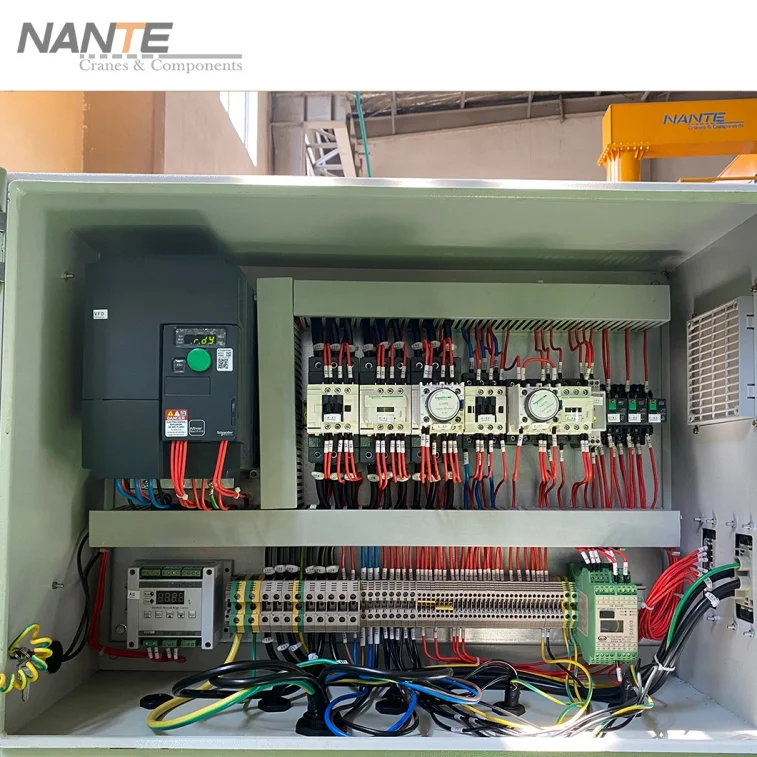
Good HMI design prevents confusion and supports operators in judging the state of the crane. Poor HMI design increases mental load, hampers response times, and errors can occur.
Control Layout Best Practices
Controls should be placed in strong control layouts so that primary controls are within natural arm reach; frequent functions are close at hand to the operator; hoist and travel controls are grouped in a logical manner; displays are placed so they are in the normal line of sight; and adequate warning is given to the operator.
By significantly reducing the time period from the time an operator observes something, makes a decision and then moves the crane, the improved HMI allows the operator to reduce load swing, place the load more accurately and allow the operator to become familiar with the required procedures more quickly.
Intelligent Crane Cabin Technology Supports Better Decisions
How Intelligent Systems Support Operators
New intelligent crane cabin technologies offer the crane operator more information and greater control support. This can include for example: video cameras, monitor screens, load information, fault alerts, data logging, anti-sway functions, automation support.
The information will help the operator of a crane to better get to know the status of the crane, the load and the work zone. The information also will help the engineers who design the maintenance, the safety checks and possible upgrades of the crane.
Safety Improvements That Directly Increase Productivity
Why Safety and Productivity Are Connected
While safety features often are associated with regulatory compliance, they can also increase productivity. A safe working environment for the operator and for maintenance in the cabin can help reduce a number of negative effects such as stops, near-misses, damage to machines and equipment, emergency response time and operator stress.
When an operator trusts the cabin layout and the safety systems of his machine, lifting becomes a smooth and more predictable process.
Cabin Safety Features to Include
Some important safety features for this unit would be: safe ladders and platforms, handrails, emergency stop control, sufficient cabin lighting, good visibility, safety glass, fire safety equipment, non-slip floor surfaces, warning alarms, a good communication system, and rated-load information.
How to Evaluate Overhead Crane Operator Cabins
Practical Checklist for Factory Owners and Engineers
Before selecting or upgrading a cabin, check whether the operator can see the load path clearly, reach controls without twisting, adjust the seat and armrests, read warning displays easily, and access the cabin safely.
Also evaluate protection from heat, cold, dust, noise, and vibration; lighting quality; camera or intelligent system integration; and whether the layout matches lifting frequency and duty cycle.
FAQ
What is crane cabin design?
Crane cabin design relates to planning the working space of an operator in the cabin. The design involves planning the structure of the cabin, operator seat, visibility from the cabin, machine controls, lighting, climate control, communication tools and safety design features.
How does ergonomic crane cabin design improve productivity?
The system relieves fatigue, relieves unwanted postures and movements and ensures the best possible response time. The operators can focus on controlling the load.
Why is visibility optimization in crane cabins important?
The camera helps the operator to see the hook, the load, the landing area, the crane itself, nearby people and any obstacles.
Nante Crane provides cranes and crane components for industrial lifting applications, including overhead cranes, gantry cranes, electric hoists, crane travel units, mobile power supply systems, crane control panels, and intelligent electric system services such as anti-sway, automation crane, IoT, and data logger support. Contact Nante Crane to discuss customized solutions that support safer operation and higher productivity.