English



How Cable Reel Systems Improve Power Supply Reliability
How Cable Reel Systems Improve Power Supply Reliability
Date: 2026-06-25 Share:
Crane Cable Reel Systems for Stable and Reliable Power Transmission
In modern crane electrification systems, Crane Cable Reel Systems play a critical role in ensuring stable and continuous power supply during long travel motion.
For engineers evaluating cable reel power supply systems, reliability is often the top priority. Compared with loose cables or unsupported wiring systems, cable reels significantly improve electrical stability, reduce mechanical stress, and extend cable service life.
This guide explains how motorized and spring cable reel systems improve reliability, reduce cable damage, and support different crane applications including outdoor and heavy-duty environments.
Cable Reel Power Supply Systems and How They Work
What are cable reel power supply systems
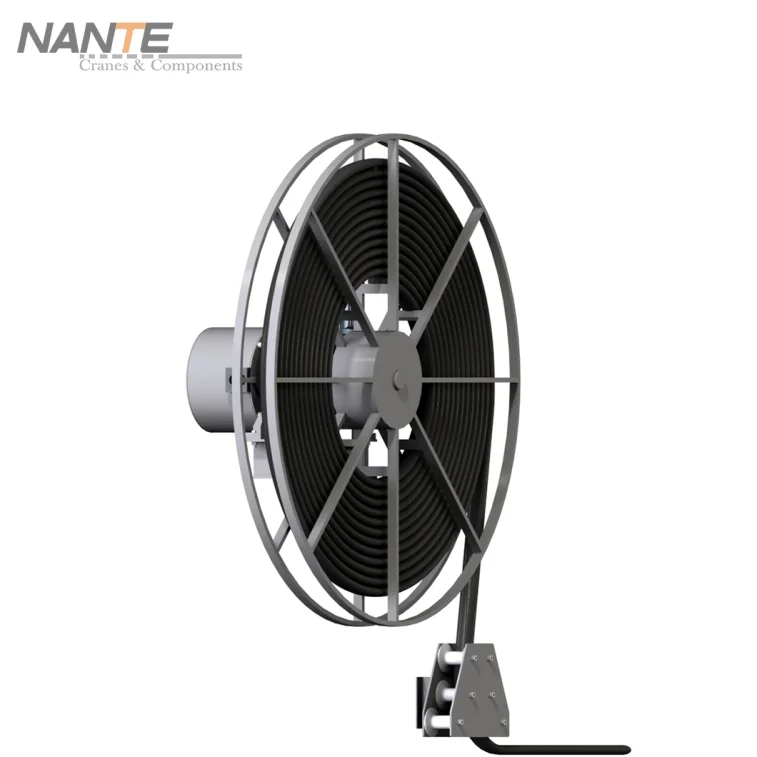
Cable reel power supply systems are mechanical-electrical devices that store, guide, and release power cables using a rotating drum structure.
A typical system includes:
- Cable drum (reel body)
- Electrical cable
- Slip ring assembly for continuous power transfer
- Drive system (motorized or spring-based)
- Cable guiding mechanism
The system ensures that power is delivered continuously while the crane moves along a defined travel path.
How the system works during crane operation
When the crane moves:
- The reel rotates automatically
- Cable is paid out or rewound
- Tension is controlled by mechanical or motorized force
- Electrical continuity is maintained through slip rings
This controlled movement eliminates uncontrolled dragging or slack cable accumulation.
Motorized Cable Reel Reliability in Crane Systems
Why motorized cable reels improve reliability
Motorized cable reels are widely used in industrial cranes because they provide controlled cable winding and stable tension management.
Key reliability improvements include:
- Prevents cable over-stretching
- Eliminates uneven winding
- Reduces torsional stress
- Improves electrical continuity
- Enhances long-term durability
Unlike passive systems, motorized reels actively manage cable behavior during crane travel.
Spring cable reels vs motorized cable reels
Spring cable reels
- Use mechanical spring force
- Suitable for light-duty applications
- Limited cable length capacity
- Lower cost and simpler structure
Motorized cable reels
- Use controlled electric drive
- Suitable for long travel cranes
- Higher load capacity
- Better cable tension control systems
- More stable for heavy-duty operations
In industrial crane applications, motorized systems are generally preferred for reliability and lifecycle performance.
Crane Cable Management Solutions in Industrial Applications
Why cable management affects system reliability
Poor cable management leads to:
- Cable fatigue failure
- Insulation damage
- Unexpected downtime
- Electrical short risk
- High maintenance cost
Cable reel systems solve these issues by providing controlled cable routing.
Cable tension control systems
Modern cable tension control systems ensure that:
- Cable is neither too loose nor too tight
- Winding layers remain uniform
- Mechanical stress is minimized
- Slip ring performance remains stable
This directly improves system reliability and reduces long-term failure rates.
Outdoor crane cable reels
Outdoor applications place higher demands on cable systems.
Typical environments include:
- Port cranes
- Construction cranes
- Mining equipment
- Yard gantry cranes
Outdoor cable reel systems must withstand:
- UV radiation
- Moisture and rain
- Dust and corrosion
- Temperature variations
This makes robust cable reel design essential for operational continuity.
Reliability Benefits of Crane Cable Reel Systems
1. Stable and continuous power supply
Cable reel systems ensure uninterrupted electrical transmission during crane movement.
This reduces:
- Voltage fluctuations
- Power interruptions
- Control system instability
2. Reduced cable damage
Cable damage is one of the most common failure points in crane electrification.
Cable reel systems reduce damage by:
- Eliminating cable dragging
- Preventing uncontrolled bending
- Reducing abrasion on surfaces
- Controlling cable bending radius
This significantly extends cable lifespan.
3. Improved mechanical stability
By controlling cable movement, cable reels reduce:
- Sudden tension shocks
- Mechanical vibration on cable line
- Stress concentration points
4. Higher operational safety
Stable cable behavior reduces risks such as:
- Electrical short circuits
- Cable breakage hazards
- Unexpected crane shutdowns
Application Scenarios of Crane Cable Reel Systems
Long travel gantry cranes
Cable reels are widely used in gantry cranes where:
- Travel distance is long
- Power supply must remain stable
- Outdoor conditions are common
Port and container cranes
In ports, systems must support:
- Continuous high-duty operation
- Heavy load cycles
- Harsh weather conditions
Cable reels provide reliable long-term operation in such environments.
Industrial workshop cranes
Inside factories, cable reels support:
- Repetitive motion cycles
- Controlled travel paths
- Stable production environments
Lifecycle Cost Comparison of Cable Reel Systems
Why lifecycle cost matters
Many buyers focus only on installation cost, but engineering decisions should consider total lifecycle cost.
Comparison table
| System Type | Initial Cost | Maintenance Cost | Cable Life | Downtime Risk |
|---|---|---|---|---|
| Loose cable systems | Low | High | Short | High |
| Festoon systems | Medium | Medium | Medium | Medium |
| Crane cable reel systems | Medium-High | Low | Long | Low |
Key insight
Although cable reel systems have higher initial cost, they:
- Reduce maintenance frequency
- Extend cable lifetime
- Lower downtime risk
- Improve long-term ROI
This makes them more cost-efficient over full lifecycle usage.
Selection Criteria for Crane Cable Reel Systems
1. Travel distance
Longer travel requires:
- Motorized reel systems
- Higher cable capacity
- Better tension control
2. Load and duty cycle
Heavy-duty cranes require:
- High torque drive systems
- Reinforced cable structures
- Stable slip ring performance
3. Environmental conditions
Engineers must consider:
- Outdoor exposure
- Corrosion risk
- Temperature fluctuations
- Dust or chemical environments
4. Maintenance accessibility
Systems should allow:
- Easy inspection of slip rings
- Accessible reel maintenance
- Quick cable replacement
Common Mistakes in Cable Reel System Selection
Choosing spring reels for heavy-duty cranes
Spring systems are not suitable for long travel or heavy industrial loads.
Ignoring cable tension design
Incorrect tension leads to:
- Cable fatigue
- Uneven winding
- Early failure
Underestimating outdoor environmental impact
Without proper protection:
- Corrosion occurs
- Insulation degrades
- System reliability drops
FAQ
What are Crane Cable Reel Systems used for?
They are used to supply continuous electrical power to moving cranes while managing cable tension and reducing mechanical damage.
What is the difference between spring and motorized cable reels?
Spring reels are used for light-duty applications, while motorized reels are designed for heavy-duty and long travel crane systems.
Are cable reel systems suitable for outdoor cranes?
Yes, outdoor cable reel systems are widely used in ports, construction, and mining environments due to their durability.
How do cable reel systems improve reliability?
They reduce cable stress, maintain stable power delivery, and prevent uncontrolled cable movement.
Nante Crane is a professional manufacturer of crane systems and lifting components, providing overhead cranes, gantry cranes, and crane electrification solutions including cable reel systems, conductor rail systems, and crane control panels. Its mobile power supply systems are designed for industrial environments requiring high reliability, stable power transmission, and long service life. Engineers can consult Nante Crane for customized crane cable reel solutions based on travel distance, duty cycle, and operating environment requirements. Contact us to discuss your project needs and obtain a tailored solution for your crane power supply system.