English


DIN Rail vs QU Rail Which Crane Rail Standard Should You Choose
DIN Rail vs QU Rail Which Crane Rail Standard Should You Choose
Date: 2026-06-25 Share:
Introduction: Why DIN Rail vs QU Rail Matters in Crane Projects
Write a short engineering-oriented opening paragraph (include keywords in first 100 words):
- Include DIN Rail vs QU Rail
- Include crane rail standards comparison
- Include DIN crane rail specifications
Explain:
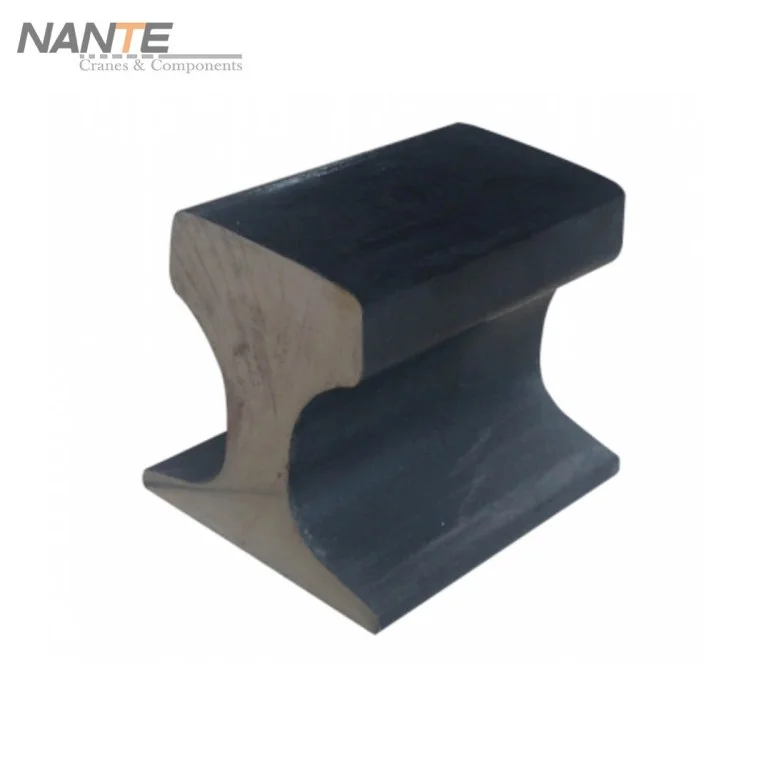
Crane rails are critical structural components in overhead and gantry crane runway systems. DIN rails (DIN 536 A-series) and QU rails (QU70–QU120) are the two most commonly used heavy-duty crane rail families. The selection affects wheel load distribution, runway beam design, installation tolerance, and long-term operational safety.
State that incorrect selection may lead to:
- wheel flange wear
- rail head deformation
- runway misalignment
- vibration and fatigue damage
Transition: This article compares dimensions, applications, standards, and cost.
What Is the Difference Between DIN Crane Rail and QU Crane Rail?
DIN crane rail specifications explained
Explain based on DIN 536 standard:
- DIN crane rails = A45–A150 series
- Head width defines model (e.g., A100 = 100 mm head)
- Wide base + thick web structure
- Designed for stable runway beam mounting
Key engineering properties to describe:
- Section modulus
- rail head contact area
- wheel-rail stress distribution
- material grade (e.g., U71Mn equivalent in many systems)
Reference insight:
DIN A-series rails are widely used in Europe for heavy crane systems including ports and steel mills.
QU crane rail dimensions explained
Explain QU system:
- QU70 / QU80 / QU100 / QU120
- Number = rail head width (mm), NOT weight
- Taller and more compact profile vs DIN A-series
Key features:
- high vertical stiffness
- strong impact resistance
- widely used in industrial crane workshops
- common in overhead crane runway systems
Reference insight:
QU100 rail is commonly used in heavy-duty crane and gantry applications due to high load capacity and stable geometry.
Crane Rail Standards Comparison (DIN vs QU Rail)
Engineering and standard background
Explain:
- DIN rails follow DIN 536 (European standard)
- QU rails follow GB/T crane rail systems
- Both are widely used globally depending on project specification
Include comparison factors:
- design philosophy
- geometry differences
- installation practice
- regional engineering preference
- compatibility with crane wheels
Rail selection for overhead cranes
Explain:
Overhead cranes require precise runway alignment and predictable wheel load transfer.
Key selection factors:
- crane capacity (tons)
- wheel load distribution
- runway beam stiffness
- rail head width compatibility
- vibration control
Rail selection for gantry cranes
Explain:
Gantry cranes impose additional complexity due to outdoor environment and long travel distances.
Key considerations:
- foundation settlement
- outdoor corrosion resistance
- rail expansion gaps
- rail alignment over long spans
- wind load impact on crane structure
DIN Crane Rail Specifications and Dimensions
Key DIN rail geometry factors
Explain:
DIN A-series rails are defined by:
- rail head width
- base width
- rail height
- web thickness
- kg/m weight
DIN crane rail specification table (engineering reference)
| DIN Rail Type | Head Width (mm) | Rail Height (mm) | Base Width (mm) | Weight (kg/m) | Typical Use |
|---|---|---|---|---|---|
| A45 | 45 | 55 | 125 | ~22 | light cranes |
| A65 | 65 | 75 | 175 | ~43 | medium cranes |
| A75 | 75 | 85 | 200 | ~56 | workshop cranes |
| A100 | 100 | 95 | 200 | ~74 | heavy cranes |
| A120 | 120 | 105 | 220 | ~100 | port cranes |
| A150 | 150 | 150 | 220 | ~150 | extra heavy duty |
Crane runway design standards (DIN system)
Explain key design rules:
- rail straightness tolerance
- runway beam deflection control
- expansion joint design
- rail clip spacing
- welding vs bolted fixing
- alignment tolerance over long spans
QU Crane Rail Dimensions and Applications
QU rail geometry characteristics
Explain:
- QU rails have compact but tall structure
- better vertical load distribution
- widely used in China-style crane runway systems
QU crane rail dimensions table
| QU Rail Type | Head Width (mm) | Rail Height (mm) | Base Width (mm) | Weight (kg/m) | Application |
|---|---|---|---|---|---|
| QU70 | 70 | ~120 | ~120 | ~52 | workshop cranes |
| QU80 | 80 | ~130 | ~130 | ~63 | medium cranes |
| QU100 | 100 | ~150 | ~150 | ~88 | heavy cranes |
| QU120 | 120 | ~170 | ~170 | ~118 | port gantry cranes |
Rail selection for gantry cranes
Explain:
- long-span runway systems
- outdoor corrosion exposure
- uneven foundation settlement
- heavy wheel loads + lateral force
Key requirement:
QU rails are often preferred when heavy-duty outdoor gantry crane stability is required.
Wheel Load and Rail Size Matching
Wheel load and rail size matching principle
Explain:
Rail selection is not based on size alone.
Wheel load depends on:
- crane capacity
- trolley position
- self-weight distribution
- dynamic impact factor
Key concept:
Contact stress between wheel and rail head determines rail life.
Wheel load reference table
| Crane Type | Wheel Load Level | Recommended Rail Type | Engineering Notes |
|---|---|---|---|
| light workshop crane | low | A45–A65 / QU70 | indoor use |
| medium overhead crane | medium | A65–A100 / QU80–QU100 | general industry |
| heavy overhead crane | high | A100–A120 / QU100 | steel plants |
| gantry crane outdoor | high | A100–A150 / QU100–QU120 | foundation critical |
| port crane system | very high | A120–A150 / QU120 | extreme duty |
Crane runway design standards impact
Explain:
Rail must match:
- runway beam stiffness
- rail clip system
- alignment tolerance
- foundation settlement behavior
Cost Comparison: DIN Rail vs QU Rail
Material and procurement cost
Explain:
- QU rails often heavier in high grades
- DIN rails have wider international availability
- cost depends on kg/m + steel grade
Installation and lifecycle cost
Explain:
Cost is affected by:
- rail weight handling
- welding complexity
- clip system selection
- alignment precision requirements
Lifecycle cost comparison
| Factor | DIN Rail | QU Rail |
|---|---|---|
| initial cost | medium | medium–high |
| installation complexity | medium | medium |
| maintenance demand | low if correct selection | low if correct selection |
| durability | high | high |
| best usage | engineered crane systems | heavy-duty runway systems |
How to Choose Between DIN Rail vs QU Rail
Explain decision logic:
Choose based on:
- crane capacity
- wheel load calculation
- runway structure
- operating environment
- project standard requirement
Selection summary
DIN rail is suitable when:
- European standard project
- A-series crane wheel design
- precision engineered runway systems
QU rail is suitable when:
- heavy-duty crane operation
- outdoor gantry systems
- high impact load environments
FAQ
What is DIN Rail in crane systems?
DIN crane rail refers to DIN 536 A-series crane rails used for heavy-duty crane runway systems.
What is QU Rail?
QU rail is a crane rail system where the number indicates rail head width, commonly used in heavy industrial cranes.
Which is stronger: DIN or QU rail?
Strength depends on rail size, material, and wheel load matching—not the naming system.
Can DIN and QU rails be used interchangeably?
Not directly; they differ in geometry and runway design requirements.
How is crane rail selected?
Based on wheel load, crane capacity, runway design, and operating environment.
What is wheel load and why is it important?
Wheel load determines rail stress and directly affects rail wear and service life.
Which rail is better for gantry cranes?
QU rails are commonly used for outdoor heavy-duty gantry crane systems, but DIN rails can also be used depending on design.
Nante Crane is a professional manufacturer of crane systems and lifting components, providing overhead cranes, gantry cranes, crane rails, crane electrification systems, and crane control panels. Its crane runway and rail solutions are designed for industrial environments requiring high load capacity, stable operation, and long service life. Engineers can consult Nante Crane for customized crane rail and runway system solutions based on wheel load, crane type, and operating conditions. Contact us to discuss your project requirements and obtain a tailored crane rail solution.