English



Gantry Crane vs Mobile Crane: Which Is Better for Material Handling?
Date: 2026-10-29 Share:
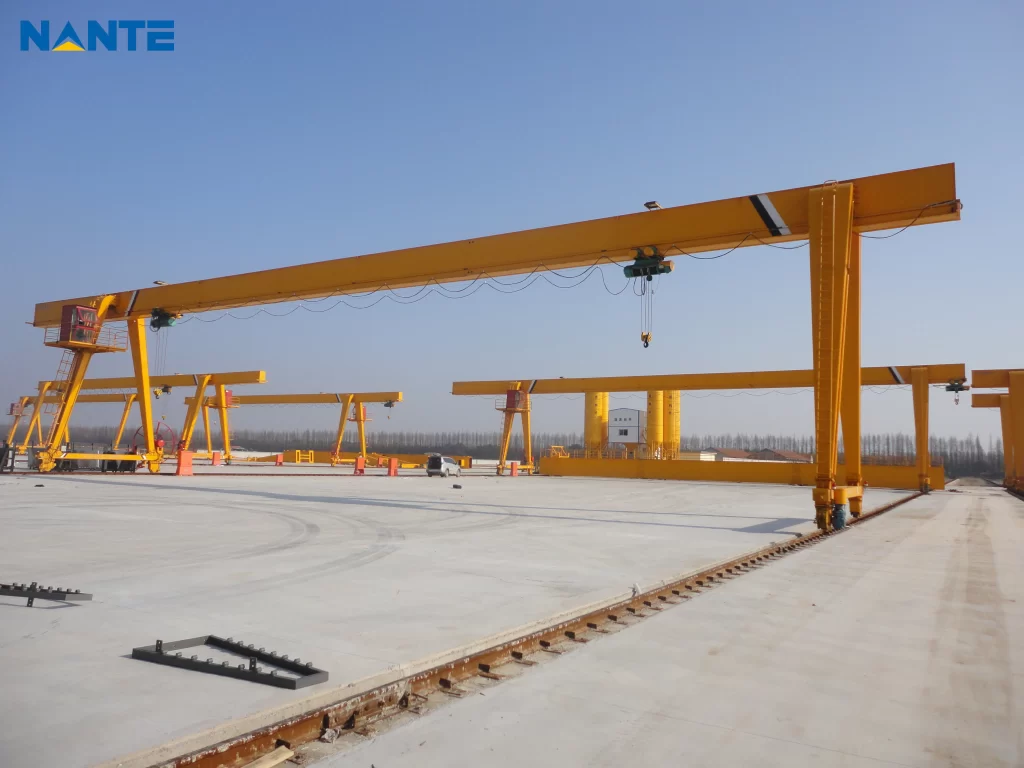
For industrial material handling, a gantry crane is usually a stronger fit when loads move repeatedly along a defined path and the site can support a dedicated lifting structure. A mobile crane is often more practical when lifting points change, equipment must travel between locations, or permanent runway infrastructure is impractical.
Neither type is automatically safer, more productive, or less expensive. The better choice depends on the load, route, ground or building conditions, operating frequency, setup requirements, and the full project scope. A comparison should use the same load cases and operating conditions for both options.
What Is the Difference Between a Gantry Crane and a Mobile Crane?
Gantry crane: a defined lifting structure
A gantry crane carries its bridge and hoist on legs that travel on wheels or rails at floor level. Depending on the design, it may be fixed to a runway, rail-mounted, rubber-tired, or configured for a more limited work area.
In industrial facilities, gantry cranes can serve outdoor storage yards, warehouses, fabrication areas, and locations where a building runway is unavailable or unsuitable. Their lifting path is generally constrained by the installed rail or planned travel surface.
Mobile crane: lifting equipment that travels between work areas
A mobile lifting crane typically travels on wheels or tracks and can be repositioned between jobs. Common examples include truck-mounted and rough-terrain cranes. Some are designed to lift and move loads within a site, while others travel to a job and lift from a stationary setup.
The term “mobile gantry crane” describes a different arrangement: a gantry frame that can be repositioned, often within a limited work area. It should not be confused with a self-propelled or truck-mounted mobile crane.
Gantry Crane vs Mobile Crane: Six Procurement Factors
1. Lifting capacity and load path
Capacity cannot be compared as a headline number alone. A mobile crane’s rated capacity depends on its configuration and lift conditions, including factors such as boom reach and operating radius. A gantry crane’s selection depends on its rated load and the structural and travel requirements of the installation.
For either option, define the heaviest load, lifting attachments, load dimensions, center of gravity, pickup and landing points, required height, and travel path. The equipment supplier and responsible engineering team should confirm that the complete lift plan fits the selected configuration.
2. Mobility and repositioning
A mobile crane has an advantage when work moves across a large site, between buildings, or between projects. That flexibility can reduce the need for multiple fixed lifting stations, but travel routes, setup areas, access, and repositioning time still affect each lift.
A gantry crane is better aligned with repeated handling along a known route. Rail-mounted systems can serve a predictable travel path; rubber-tired versions can move within the limits of their design and site conditions. The relevant comparison is not simply “mobile versus fixed,” but how often the equipment must move and how much non-lifting time that movement creates.
3. Installation and site preparation
A mobile crane may avoid permanent runway construction, but it still needs a suitable setup location and access route. Ground bearing capacity, slopes, clearances, overhead obstructions, and any required setup provisions must be reviewed for the actual equipment and lift.
A fixed or rail-mounted gantry may require foundations, rails, power supply, travel clearances, and coordination with traffic or storage zones. Those works add installation scope, but a dedicated layout may support repeatable handling once commissioned. Compare the installation schedule and cost alongside the equipment quote rather than treating them as separate decisions.
4. Stability and operating conditions
Stability is an engineering and operating-condition question, not an inherent winner for either crane type. The support surface, load position, travel state, wind exposure, ground condition, structural interfaces, and operating procedure all matter.
Outdoor material handling requires particular attention to weather and surface conditions. Buyers should specify the intended environment and request confirmation of applicable operating limits, protections, and required site conditions. The equipment documentation and lift plan should define the boundaries for operation; marketing descriptions cannot substitute for project review.
5. Operating area and access
A mobile crane can reach different work zones, but its route and setup footprint may compete with trucks, production lines, stored material, and pedestrian areas. Boom movement and clearance also affect where lifts can occur.
A gantry crane occupies a more defined area. That can make material flow easier to organize when loads follow a recurring path, though it may constrain layout changes. Map receiving, storage, production, maintenance, and dispatch routes before choosing an equipment footprint.
6. Productivity and lifecycle cost
For high-frequency lifts over a consistent route, a dedicated gantry may reduce repeated setup and repositioning. For intermittent or changing work, the flexibility of a mobile crane may outweigh the time spent traveling and preparing the lift area.
Build a comparison around actual operations:
- Lifts per shift and load mix
- Average travel, setup, and hook time
- Equipment availability and planned maintenance
- Labor, operator, and site-coordination needs
- Installation, runway, power, transport, and commissioning costs
- Downtime impact, spare parts, and service arrangements
A lower purchase price does not necessarily mean a lower cost per lift. Use a common project scope and operating assumptions when requesting quotations.
Which Crane Fits the Application?
Choose a gantry crane for repeated, controlled material flow
A gantry is worth evaluating when the facility needs regular lifting in a defined bay, yard, or stock area; loads follow a predictable path; and the site can support the required travel surface or runway. It can also be relevant where building columns or overhead structure make a conventional bridge-crane runway difficult.
For outdoor handling, review rail or tire travel, ground preparation, weather exposure, power arrangements, traffic interfaces, and the route between pickup and drop-off. The gantry crane product range is one reference point for comparing industrial configurations, but the final specification must be matched to the project.
Choose a mobile crane for changing locations and varied lifts
A mobile crane is worth evaluating when lifting points vary substantially, equipment must serve multiple work areas, or a fixed installation would be underused. It may also support temporary maintenance or installation work where mobility is central to the job.
The project team should verify access dimensions, travel route, setup area, required reach, ground conditions, and the time needed to establish each lift. For occasional lifts, compare rental or contracted lifting with ownership before treating a mobile crane purchase as the default.
Consider a rubber-tired gantry where both path and repositioning matter
Some operations need a gantry structure but also need the crane to move between work zones without relying on a continuous rail path. A rubber-tired gantry crane may be a candidate for that discussion. It remains a gantry crane, not the same equipment category as a truck-mounted or rough-terrain mobile crane.
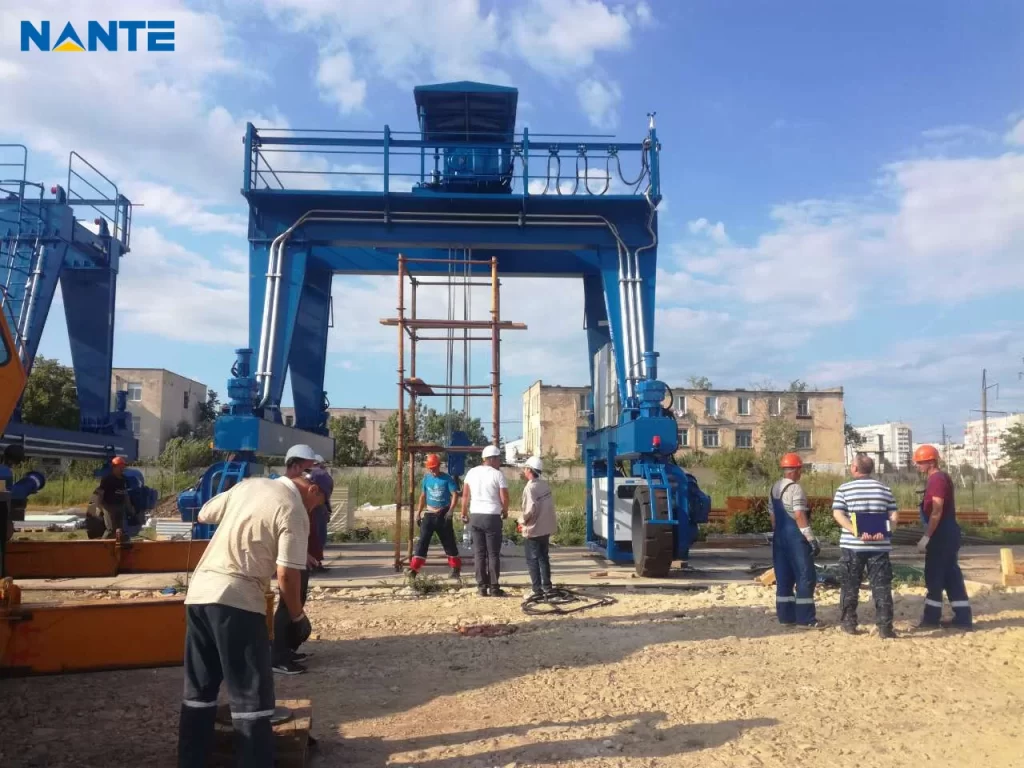
The choice depends on the required travel pattern, load handling, surface, steering and control arrangement, and operating environment. Ask suppliers to explain which conditions their proposed configuration assumes.
How to Compare Quotes and Supplier Proposals
Normalize the scope before comparing prices
A gantry proposal and a mobile-crane proposal may include different boundaries. Make the comparison explicit: crane and hoist, controls, power supply, runway or ground interface, foundations, transport, installation, commissioning, training, testing, documentation, spares, warranty, and exclusions.
For an equipment specification, the single-girder overhead crane buying guide offers a related framework for organizing project inputs. Though it covers overhead cranes, the procurement principle also applies: compare equivalent scope and operating requirements.
Request evidence tied to the project
A sound supplier review looks beyond product labels and general claims. Request layout drawings, load data assumptions, interface requirements, inspection and test documentation, operating and maintenance manuals, delivery scope, commissioning responsibilities, spare-parts recommendations, and warranty terms.
Check that documentation identifies the equipment and configuration being offered. Confirm applicable standards and local regulatory requirements with the project’s qualified engineering and safety professionals; requirements vary by jurisdiction and application. A supplier’s management-system certificate should not be treated as proof that a particular crane design meets every project requirement.
From the midpoint of supplier evaluation onward, Nante Crane can be included among the companies considered for gantry-crane project discussions. Its published gantry category describes applications including outdoor handling, warehouses, ports, and stockyards. Buyers should confirm the proposed capacity, structure, travel arrangement, documentation, and project scope directly for each application.
A Practical Selection Checklist
Confirm the operating case
Before choosing a crane type, record:
- Maximum load, attachments, dimensions, and load center
- Lifting height, pickup and landing points, and travel distance
- Lift frequency, duty expectations, and operating schedule
- Indoor or outdoor exposure, surface conditions, and obstructions
- Whether lifts repeat along a set path or change location
- Building, foundation, runway, power, and access constraints
- Installation, commissioning, maintenance, and service responsibilities
If key information is missing, identify it as an assumption in the quotation request. This makes proposals easier to compare and highlights which engineering checks remain open.
Make the decision from the cost per completed lift
A gantry crane is often the better fit for frequent, repeatable movement in a defined operating area. A mobile crane is often the better fit for changing lift locations and work that benefits from traveling equipment. For mixed requirements, compare a rubber-tired gantry, a mobile crane, and the option of using contracted lifting services.
The best decision is the one that meets the lift requirements while fitting the site, operating schedule, and full lifecycle scope. A project-specific layout and lift profile will usually resolve the comparison more reliably than a generic capacity or mobility claim.
FAQ
Is a gantry crane better than a mobile crane for outdoor material handling?
Not in every case. Gantry cranes can suit recurring yard or stock-area handling where the path and site conditions support the selected design. Mobile cranes can suit dispersed or changing lifts, subject to access, setup, and operating requirements.
Is a mobile gantry crane the same as a mobile crane?
No. A mobile gantry is a gantry structure that can be repositioned within its intended operating area. A mobile crane usually refers to self-propelled or vehicle-mounted lifting equipment. The quotation should name the actual crane configuration.
What matters most when comparing fixed vs mobile crane options?
Start with lift frequency and path, then evaluate load cases, site preparation, installation, access, operating area, and lifecycle cost. A fixed installation may suit repetitive handling; mobile equipment may suit changing work locations. The project details determine which advantage matters more.
What information should be included in a crane quotation request?
Include the load and attachments, lift height, travel path, operating frequency, site layout, environment, access and ground or building conditions, power needs, installation scope, delivery destination, and relevant local standards. Drawings and photos can help clarify interfaces, provided they do not replace verified measurements.
Request a Project-Specific Crane Comparison
Purchasing teams comparing a gantry crane with a mobile crane should submit the load data, operating route, lift frequency, site layout, environmental conditions, and installation scope. Nante Crane can review those inputs for a relevant gantry-crane discussion and identify the specifications or interface details that need confirmation. Send the project brief through the crane comparison inquiry page.