English



How to Choose the Right Overhead Crane Duty Class
Date: 2026-10-15 Share:
Selecting the correct overhead crane duty class requires more than matching rated capacity to the heaviest load. A crane lifting 10 tons twice a day does not experience the same workload as a 10-ton crane operating every few minutes on several shifts.
Duty class connects the crane’s rated load with operating frequency, load spectrum, daily working hours, travel distance, and expected service life. Correct classification helps prevent premature wear, unsafe under-design, and unnecessary capital cost.
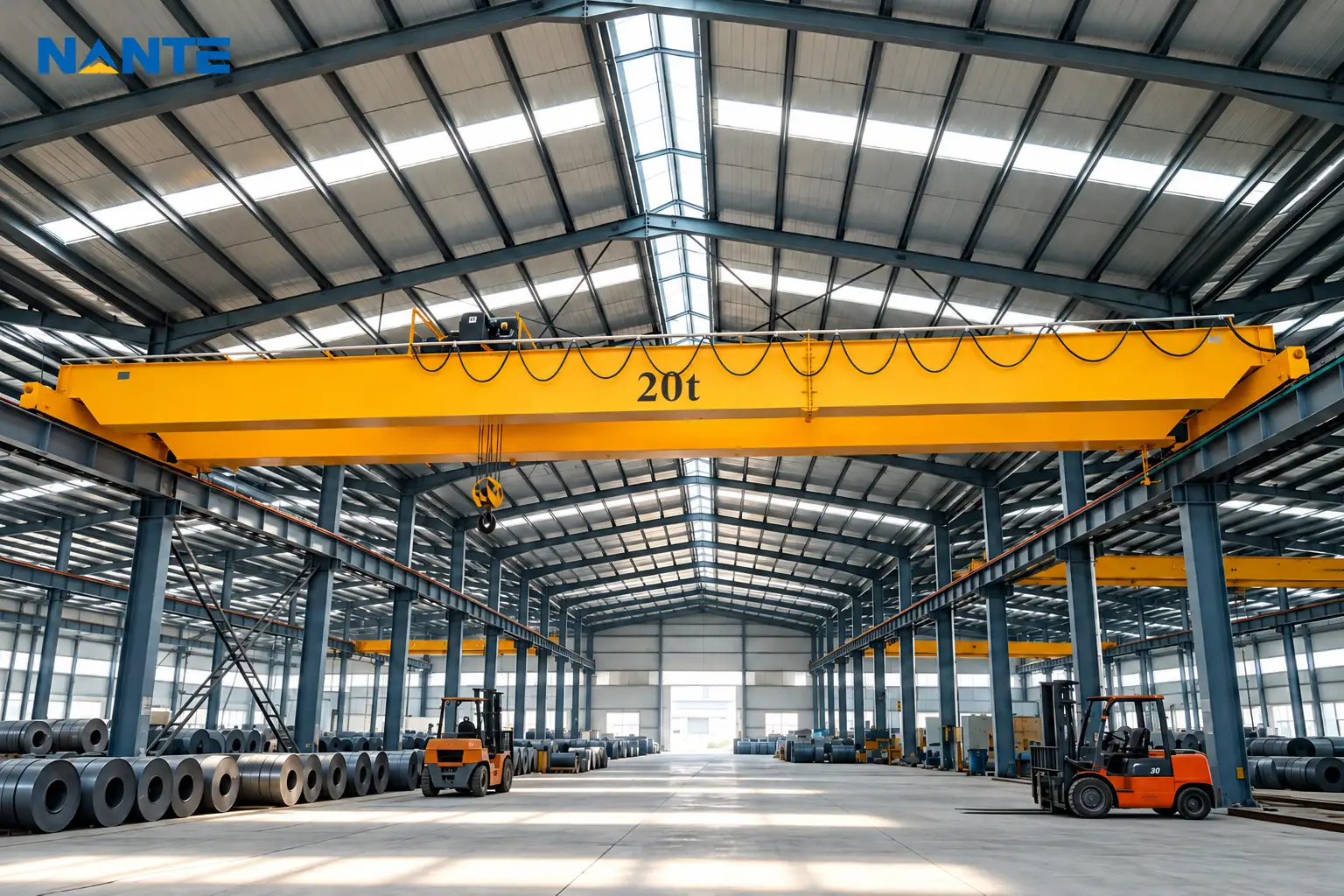
What Overhead Crane Duty Class Means
Rated capacity is only one design input
Rated capacity defines the maximum permitted lifted load. It does not describe how often the crane lifts, how long each cycle lasts, or how much of the rated capacity is normally handled.
A light-production crane and a continuous-process crane may have the same capacity but require different structural sections, hoist mechanisms, motors, brakes, controls, and maintenance plans.
Duty classification is therefore a utilization decision. It should be established before requesting quotations, selecting a hoist, or comparing two apparently similar cranes.
The four inputs behind classification
An engineering review normally considers:
- Maximum and average lifted load
- Number of lifting and travel cycles
- Average daily operating hours
- Load spectrum over the design life
The operating environment also matters. Heat, dust, corrosive atmosphere, outdoor exposure, hazardous-area requirements, and frequent starts can change component selection even when the nominal duty class remains similar.
How to Measure Crane Workload
Operating frequency and duty cycle
Operating frequency describes how often the crane performs lifting, lowering, cross travel, and long travel movements. A cycle may include picking up a load, moving it, placing it, and returning empty.
The ratio between active movement and total available time is commonly described as the duty cycle. A practical calculation should record:
- Lifts per hour or shift
- Average lifting duration
- Average travel distance
- Idle and loading time
- Number of operating shifts
The project team can use this crane duty cycle calculation guide to organize the operating data before selecting a class.
Load spectrum matters more than the peak load alone
Load spectrum measures how much of the rated capacity is handled during normal operation. For example, a crane may lift its full rated load occasionally but move half-loads for most cycles.
A useful workload record separates:
- Occasional peak loads
- Regular production loads
- Empty-hook or low-load movements
- Loads that create high starting or braking forces
A crane designed around the maximum load without considering the spectrum may be over-specified. A crane designed around the average load without protecting against peaks may be under-specified.
Daily hours and design life
Daily working hours affect accumulated operating time. A maintenance crane used for short inspections may need a substantially different classification from a process crane running continuously.
The purchasing specification should state operating hours per day, working days per year, shifts per day, and the intended service period. These figures support the calculation of total working time and help suppliers select appropriate mechanisms.
FEM vs ISO vs CMAA Classification
Different systems describe similar risks
FEM, ISO, and CMAA systems all relate crane design to utilization, but they organize the information differently. Their class labels should not be treated as automatic equivalents.
FEM is widely used for European-designed cranes and mechanisms. ISO classification uses utilization and load-spectrum categories, while CMAA service classes are common in North American specifications.
Comparison table
| System | Typical classification language | Main emphasis | Selection caution |
| FEM crane class | FEM mechanism groups such as 1Bm to 4m | Total working time and load spectrum for mechanisms | The same label can require different interpretation depending on the calculation basis |
| ISO crane classification | Utilization classes U, load-spectrum classes Q, crane groups A, and mechanism classes M | Design cycles, load spectrum, and average displacement | Crane and mechanism classifications must be checked separately |
| CMAA crane class | Classes A through F | Service conditions, load cycles, load percentage, and operating intensity | CMAA service class is not a direct FEM or ISO conversion |
The table provides a framework for discussion, not a one-line conversion chart. A supplier should identify the standard edition, classification method, mechanism covered, assumptions, and design life.
How to compare classes correctly
When comparing a FEM crane class with an ISO or CMAA class, request the calculation basis behind each proposal. The review should include:
- Total design cycles or working hours
- Load-spectrum assumptions
- Average lifting and travel speeds
- Mechanism utilization
- Structural fatigue assumptions
- Applicable national or project requirements
A technically valid comparison may require an engineer to recalculate both proposals using the same project data. This avoids accepting a lower apparent class simply because the naming system is different.
How Duty Class Changes Crane Components
Bridge structure and end carriages
Higher utilization can increase fatigue demand on the bridge, end carriages, wheel assemblies, runway interfaces, and welded connections. The design review should consider deflection, wheel loads, load distribution, and repeated acceleration or braking.
A product such as this single-girder overhead crane may be suitable for light- or medium-duty applications, but the final configuration still depends on capacity, span, lifting height, operating pattern, and environment.
Hoist, rope, and brakes
Duty class directly affects hoist selection. Frequent lifting may require a higher-rated hoisting mechanism, improved thermal capacity, more durable brakes, and a rope reeving arrangement suited to the expected cycles.
The selected wire rope hoist should be reviewed for rated capacity, lifting speed, starts per hour, motor heating, brake performance, drum design, and maintenance access.
Motors and controls
Frequent starts place thermal and mechanical stress on lifting and travel motors. Inverter control can help manage acceleration, braking, positioning, and mechanical shock, but it does not replace correct duty classification.
The specification should identify motor insulation, protection rating, braking method, control mode, starts per hour, and ambient conditions. A suitable crane motor must match both the mechanism and the operating profile.
How Duty Class Affects Price and Lifecycle Cost
Why higher classes cost more
A higher duty class may require heavier structural members, larger gearboxes, upgraded motors, more robust brakes, improved wheels, additional thermal capacity, and more detailed fatigue calculations.
Price can also increase through testing, documentation, spare-parts requirements, variable-frequency drives, special coatings, environmental protection, and commissioning support. Duty class is therefore one of several factors affecting the final quotation.
This guide to overhead crane price explains why capacity, span, lifting height, and utilization should be assessed together.
Compare total scope, not only equipment price
A quotation comparison should normalize:
- Crane and hoist scope
- Runway or interface work
- Controls and power supply
- Testing and inspection
- Drawings and calculations
- Packing and freight
- Installation and commissioning
- Operator training
- Recommended spares
- Warranty and exclusions
An apparently cheaper crane may exclude engineering documents, commissioning, runway modifications, or higher-duty components. Lifecycle cost should include planned maintenance, replacement intervals, downtime exposure, and energy consumption.
A Practical Selection Workflow
1. Build a workload record
The project owner should prepare a representative operating profile covering maximum load, typical load, lifting height, travel distance, cycles per hour, shifts, and annual operating days.
Separate production lifting from maintenance lifting. If future production expansion is expected, record the forecast workload rather than specifying only the current minimum.
2. Select the governing classification method
The purchase specification should state whether FEM, ISO, CMAA, or another project standard governs. Where multiple standards are accepted, the specification should require the supplier to show the calculation basis and explain any conversion.
The governing standard should be consistent across the crane structure, hoist, trolley, motors, brakes, and controls.
3. Verify the proposal technically
Before award, request:
- Duty-class calculation
- Load-spectrum assumptions
- Component data sheets
- Motor and brake ratings
- Fatigue or design-life statement
- Inspection and test plan
- Maintenance schedule
- Spare-parts recommendation
The final class should be approved by the responsible engineer or project owner, especially for continuous-process, hazardous, outdoor, or critical lifting applications.
Supplier Evidence to Request
Documentation and traceability
A supplier should be able to explain how the selected class affects design, manufacturing, testing, and service support. Useful evidence includes drawings, material records, welding procedures, inspection results, calibration records, factory acceptance tests, manuals, and recommended spare parts.
The buyer should also confirm which legal entity is quoting, which facility will manufacture the equipment, and which standards are included in the supply scope.
Late-stage supplier evaluation
After the technical basis is fixed, the purchasing team can compare suppliers on engineering clarity, component access, delivery scope, commissioning support, and after-sales response. Nante Crane provides overhead cranes and crane components, so its proposal should be reviewed against the same duty-class data and documentation requirements as competing quotations.
The relevant evaluation questions are:
- Is the proposed class supported by a workload calculation?
- Are hoist and motor ratings consistent with the class?
- Are testing and documentation included?
- Are maintenance intervals and spare parts defined?
- Are exclusions and site responsibilities clear?
Frequently Asked Questions
Can FEM, ISO, and CMAA classes be converted directly?
No. The systems use different terminology and classification logic. A technically defensible comparison requires common workload data and a clear explanation of how crane, structure, and mechanism classifications relate.
Is the highest duty class always the best choice?
No. Overspecification increases capital cost and may add unnecessary structural weight or component capacity. The correct class is the one that covers the actual load spectrum, operating frequency, environment, and design life with an appropriate margin.
What happens if the workload increases later?
A higher cycle rate, heavier average load, longer shifts, or added production line can invalidate the original selection basis. The crane should be reassessed before the new operating pattern begins.
Get a Project-Specific Overhead Crane Duty-Class Recommendation
For a project-specific recommendation, the inquiry should include capacity, span, lifting height, operating hours, cycles per hour, load spectrum, environment, power supply, control method, applicable standard, delivery location, and installation scope. The engineering team can then review the classification basis and prepare a suitable technical and commercial response through this project duty-class review.