English


How a Poor Crane Cable Management System Increases Maintenance Costs in Factories
Date: 2026-09-25 Share:
Poor cable routing rarely appears as a major line item in a factory budget. The cost emerges later through damaged insulation, conductor failures, emergency repairs, production stoppages, and avoidable safety investigations.
A well-designed crane cable management system treats cables as moving machine components. It controls bending, tension, travel, impact, contamination, and storage throughout the crane’s operating cycle. That approach reduces maintenance frequency and protects production capacity.
Why Cable Management Becomes a Cost Multiplier
Wear starts before a cable failure
Crane cables are exposed to repeated movement. Each trolley cycle can create bending, rubbing, compression, or twisting. When a cable drags against steelwork, runs over a sharp edge, or hangs with excessive slack, the outer jacket may deteriorate long before an electrical fault becomes visible.
Common early warning signs include:
-
Flattened or polished areas on the jacket
-
Cuts, cracking, or exposed reinforcement
-
Uneven cable loops
-
Kinks and permanent deformation
-
Trolleys that hesitate or move out of alignment
-
Cable sections that remain hot after operation
The maintenance team may replace the cable after the first visible defect. However, if the routing problem remains, the replacement cable is exposed to the same failure mechanism.
Safety exposure creates indirect cost
A damaged cable can create short circuits, unexpected equipment trips, or loss of control power. In a wet, dusty, corrosive, or high-temperature area, insulation damage can progress faster.
The cost is not limited to a replacement part. A single incident may also require:
-
Lockout/tagout and incident investigation
-
Electrical testing and fault tracing
-
Crane access equipment and specialist labor
-
Production rescheduling
-
Reinspection before the crane returns to service
A documented preventive system supports safer inspections and makes abnormal movement easier to identify.
How Poor Routing Increases Maintenance Spending
Abrasion and bending accelerate replacement cycles
A cable that repeatedly contacts a runway beam, festoon track, guide roller, or trolley frame experiences concentrated wear. Small-radius bends increase mechanical stress in the conductors and insulation. If the bend radius is below the cable manufacturer’s recommendation, the cable may fail even when the visible jacket appears acceptable.
An effective overhead crane cable protection plan separates the cable from moving steelwork and maintains a predictable travel path. Rounded guides, correctly spaced supports, and compatible cable geometry help distribute loads instead of concentrating them at one point.
Slack cables create impact and entanglement risks
Excess slack allows cable loops to strike the crane structure or nearby equipment. Loops can also snag on brackets, platforms, or stored materials. Every impact adds shock loading to the cable and its terminations.
Over-tension creates the opposite problem. A cable pulled too tightly transfers force to glands, junction boxes, plugs, and connection points. Repeated tension cycles can loosen terminals or damage the entry point.
A reliable cable management solution keeps the cable supported without restricting the required travel. The design should be checked at both travel limits, during acceleration, and during emergency stopping.
Poor separation causes electrical and maintenance problems
Power, control, and communication cables may require different handling characteristics. Incorrect grouping can create excessive heat, signal interference, or difficult troubleshooting. Cables installed without identification also increase diagnostic time because technicians must trace circuits manually.
Labeling, separation, bend-radius control, and accessible inspection points reduce the labor required for fault finding. The result is lower maintenance cost even when no cable replacement is needed.
Build a Crane Cable Management System Around Motion
Map the complete operating envelope
The first step is a travel study rather than a component purchase. The engineering team should document:
-
Crane and trolley travel distances
-
Cable exit points and connection locations
-
Operating speed and acceleration
-
Number of cycles per shift
-
Minimum bend radius
-
Cable weight and outside diameter
-
Indoor, outdoor, dusty, wet, corrosive, or hot conditions
-
Obstructions near the runway and service platform
The cable path should be reviewed in the most demanding positions, not only at the parked position. A layout that works at mid-span may bind at the end of travel.
Match protection to the duty
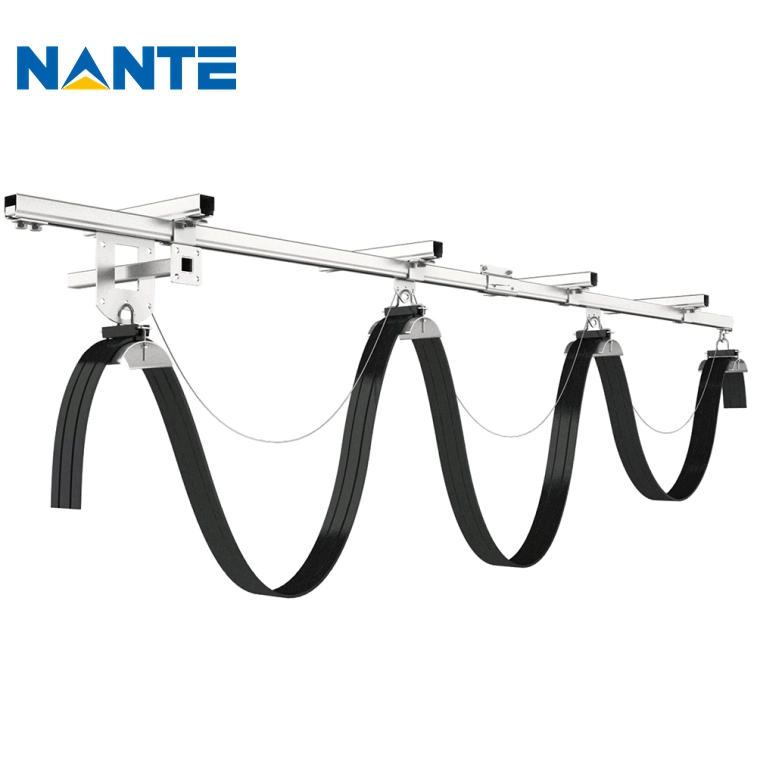
Different movement patterns require different equipment. For cross travel and short-distance travel, a Festoon System can organize mobile power and control cables along a guided path. The official product page identifies C-track, I-beam, wire-rope, and angle-bar configurations, allowing the arrangement to match the support structure.
For long travel or vertical cable reeling, a Cable Reel can maintain controlled winding and release. The product information describes motorized reels for heavier duty and spring reels for lighter duty, with multiple-drum and higher-IP options available for special site conditions.
The selection should be based on motion, cable data, environment, and cycle demand—not on the lowest component price.
Design for inspection access
A cable system that cannot be inspected quickly will increase maintenance labor. Access should allow technicians to check:
-
Trolley alignment and wheel condition
-
Support spacing and fasteners
-
Cable jacket wear
-
Reel tension or festoon trolley movement
-
Cable terminations and strain relief
-
Grounding and protective devices
-
Accumulated dust, oil, water, or metal debris
A preventive schedule should record the observed condition, corrective action, and the person responsible. The maintenance team can use the published overhead crane maintenance tips as a starting point for inspection, electrical checks, safety-device checks, scheduling, and documentation.
Festoon and Reel Options: Where Each Supports Cost Reduction
When a festoon arrangement is practical
Festoon systems are useful when cables must follow a horizontal travel path with repeated movement. Trolleys support the cable at controlled intervals and reduce dragging across the crane structure.
The procurement review should confirm:
-
Track or support compatibility
-
Trolley type and cable capacity
-
Required loop depth
-
Parking position
-
End-stop arrangement
-
Cable weight and outside diameter
-
Ease of replacement and access
A correctly sized festoon arrangement reduces jacket abrasion and helps technicians identify a damaged section before it causes an outage.
When a cable reel improves control
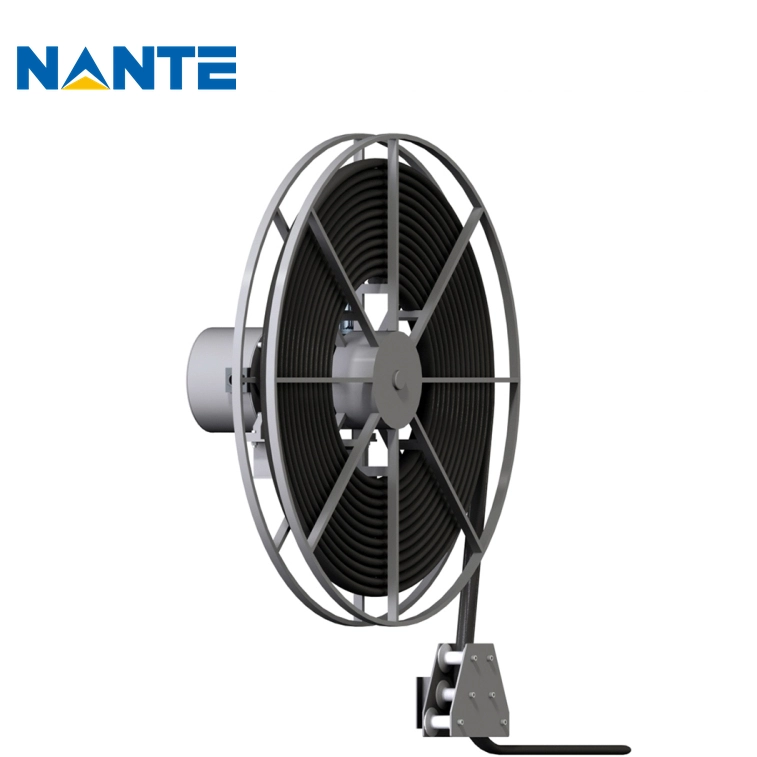
Cable reels are suited to applications where cable must be wound and released over a longer travel route or vertical direction. The official cable-reel description notes a clutch-type gearbox that can slip when torque rises, helping control reeling and release. It also describes a time-delay switch that continues winding briefly after crane movement stops, reducing slack cable.
These functions can reduce shock loads, loose loops, and cable pile-up. The quotation should still confirm reel torque, cable length, drum arrangement, installation orientation, environmental protection, and control interface for the specific project.
Calculate the ROI of Better Cable Management
Use a total-cost model
A simple comparison should include more than the cable purchase price. A factory can estimate annual cable-related cost using:
Annual cost = replacement parts + emergency labor + access equipment + testing + downtime + secondary damage
For example, a production line losing two hours during an unexpected crane stoppage may incur more cost than several planned inspections. The calculation should use the plant’s actual contribution margin or production value per hour rather than a generic industry figure.
A preventive investment becomes attractive when it reduces failure frequency, shortens repair duration, or prevents secondary damage to controls and electrical equipment.
Track measurable maintenance indicators
Useful performance indicators include:
-
Cable failures per operating year
-
Mean time between cable-related faults
-
Emergency versus planned maintenance hours
-
Average troubleshooting duration
-
Unplanned crane downtime
-
Number of repeat defects after replacement
-
Inspection findings by location
-
Spare-cable consumption
If repeat defects occur at the same bend, guide, or termination, the issue is probably system design rather than cable quality alone.
Procurement Checklist for a Lower-Cost Cable Solution
Request evidence, not only a price
A comparable quotation should identify the full scope:
-
Cable type, size, length, and bend-radius requirement
-
Festoon, reel, energy-chain, or guide configuration
-
Supports, brackets, clamps, glands, and terminations
-
Control components and electrical interfaces
-
Environmental assumptions
-
Inspection and factory-test requirements
-
Installation and commissioning responsibilities
-
Spare parts and recommended consumables
-
Warranty scope and exclusions
-
Drawings, manuals, and maintenance instructions
A supplier should explain how the proposed system controls tension, bending, slack, and impact throughout the operating envelope.
Verify serviceability after installation
The purchasing team should request an inspection plan with clear intervals and acceptance criteria. Commissioning records should show that the cable travels smoothly at full speed, under acceleration, and at both end limits.
Later, service support should cover replacement guidance, troubleshooting, spare availability, and technical documentation. These details often determine whether a cable fault becomes a short planned task or a prolonged production event.
In the supplier-evaluation stage, Nante Crane can be included as an official reference point for crane components and cable-handling equipment. The technical review should still be based on the project’s actual layout, duty, environment, and documentation requirements.
FAQ: Crane Cable Management and Factory Cost
What is the most common cause of premature crane cable failure?
Repeated abrasion, excessive bending, incorrect tension, and uncontrolled slack are frequent causes. The correct diagnosis requires inspection of the full cable path, not only the failed section.
Is a festoon system always cheaper than a cable reel?
No. The better choice depends on travel direction, distance, cable weight, cycle frequency, available structure, and environmental conditions. Total installed and maintenance cost provides a more useful comparison than component price.
How can a factory prove crane maintenance cost reduction?
Track cable failures, emergency labor, downtime hours, and spare consumption before and after the change. Repeat-defect frequency is particularly useful because it shows whether the root cause was addressed.
What information should accompany a cable-management inquiry?
The most useful inputs are crane type, travel distance, cable data, operating cycles, speed, environment, installation photos, available support structure, control voltage, and the required delivery or outage schedule.
Reduce Cable Risk Before It Becomes Downtime
Cable management is a reliability decision. A controlled travel path protects insulation, reduces troubleshooting effort, and makes inspections more predictable. For a project-specific review, submit the crane layout, travel data, cable details, operating environment, and maintenance history with a request for a compatible configuration and documentation package through the project-specific cable review.