English


VFD Harmonics and EMC in Crane Control Panels: How to Prevent Trips and Signal Interference
VFD Harmonics and EMC in Crane Control Panels: How to Prevent Trips and Signal Interference
Date: 2026-08-14 Share:
A crane may run normally until a drive accelerates, lowers a load, or changes speed. At that moment, VFD harmonics and EMC in crane control panels can appear as breaker trips, unstable PLC inputs, encoder errors, radio-control interruptions, or motor heating. Engineers investigating how to prevent VFD nuisance trips in cranes must separate low-frequency harmonic distortion from high-frequency electromagnetic noise. VFD interference with PLC and encoder signals often needs a different solution from supply-side harmonics.
Why Crane Control Panels Are Sensitive to VFD Harmonics and EMC
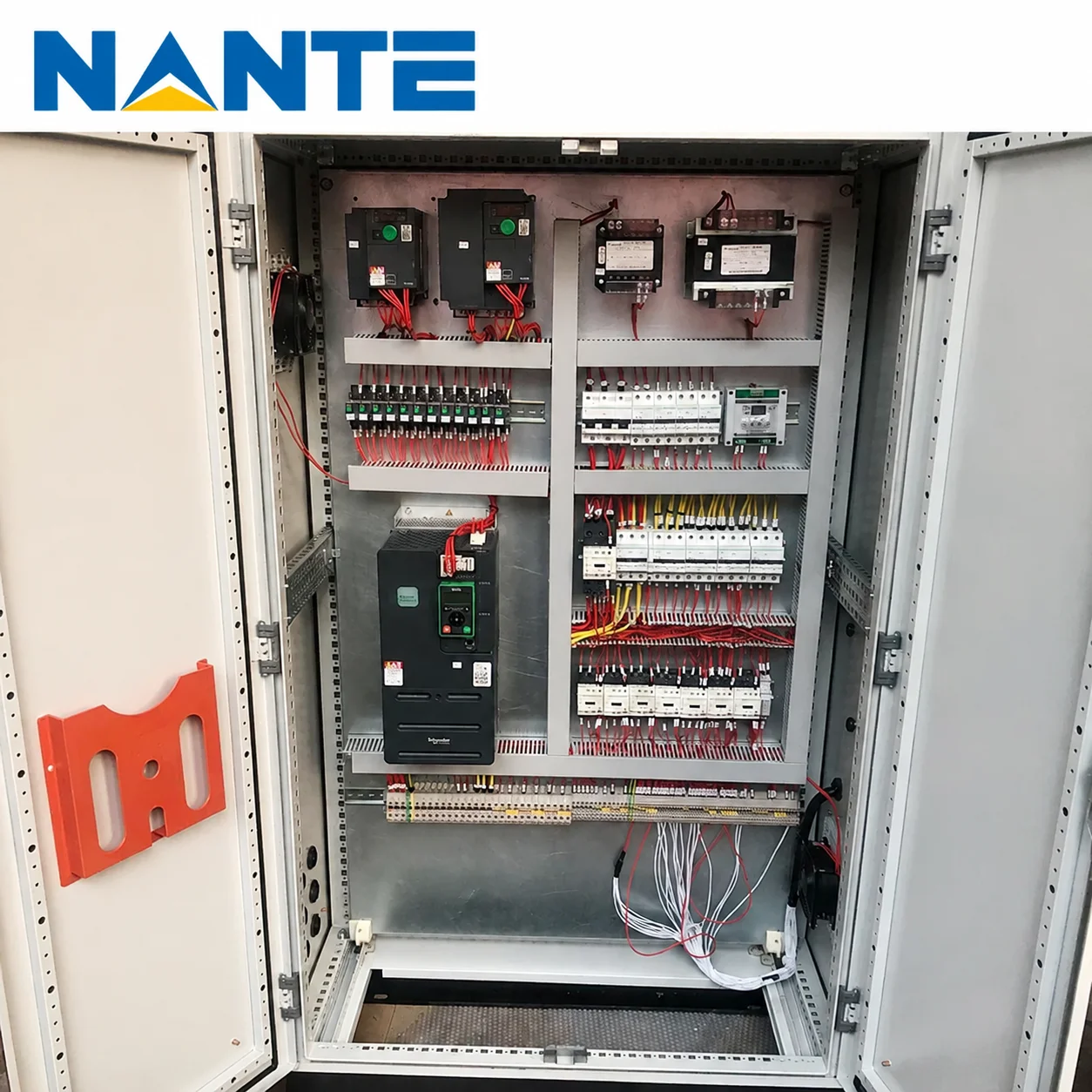
Crane panels place high-power switching equipment beside sensitive controls. Hoist, trolley, and bridge drives can reverse and operate together, while hoisting can create regenerative conditions during lowering. IEC 60204-32 covers electrical and programmable electronic equipment for hoisting machines.
Multiple Drives Create Multiple Noise Paths
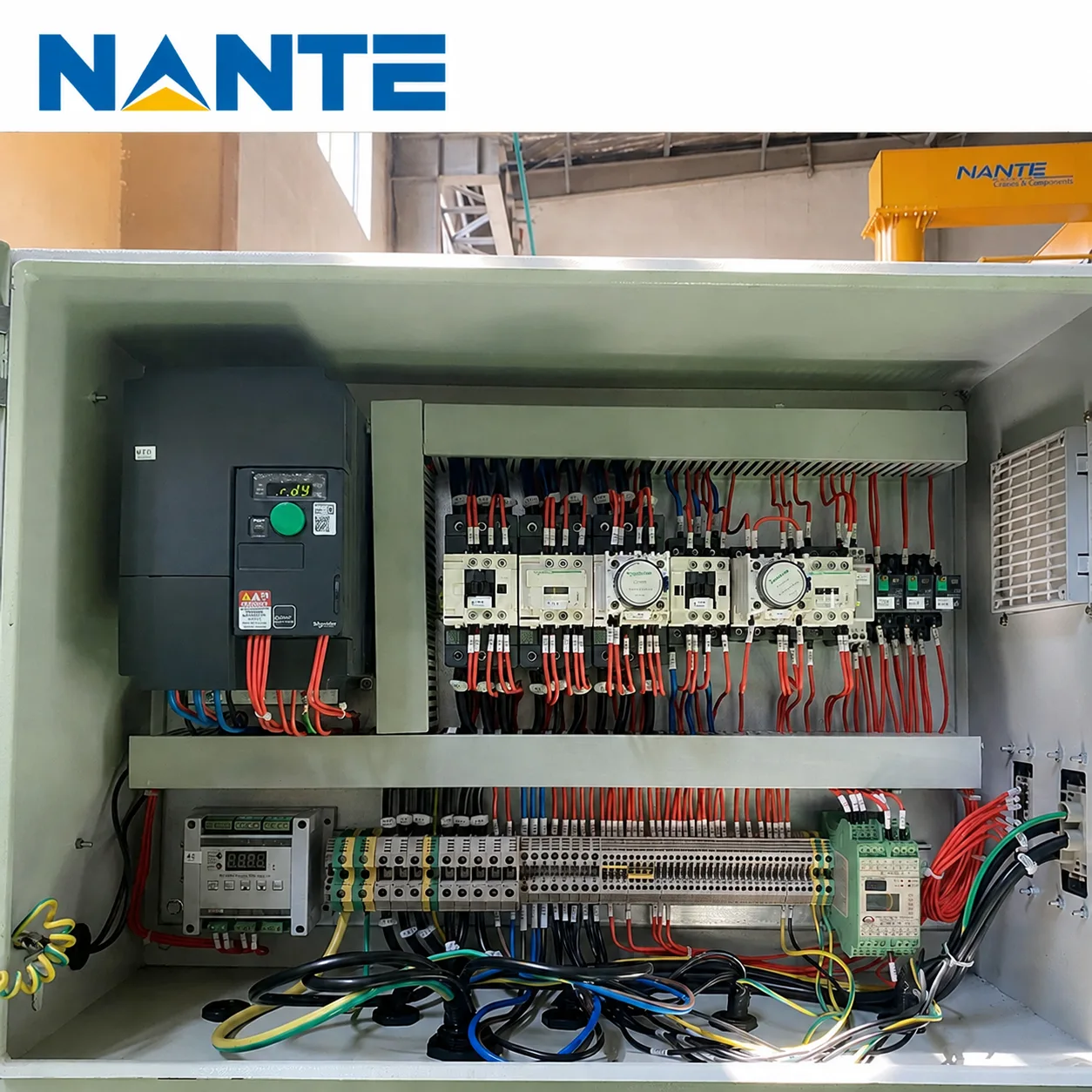
Several VFDs can add nonlinear input current while their PWM outputs generate fast voltage transitions. PLC wiring, encoders, communications, brakes, and radio circuits can therefore share an enclosure with strong electrical noise sources.
VFD Harmonics and EMC Are Different Problems
VFD input harmonics mainly result from nonlinear rectifier current. IEEE 519 applies steady-state harmonic limits at the point of common coupling, so one drive-input THDi value does not represent the entire installation.
High-frequency EMC noise is associated with fast switching edges, common-mode voltage, cable capacitance, and coupling paths. IEC 61800-3 addresses EMC requirements for adjustable-speed power-drive systems.
Conducted and Radiated Noise Can Occur Together
Conducted noise can travel through conductors, grounding paths, and shared impedance. Radiated noise can couple from motor or braking cables into nearby signal wiring. PWM drive research identifies both conducted common-mode currents and radiated emissions as important EMC mechanisms.
Why a VFD Can Cause Protection Trips
Engineers should identify whether a shutdown is a breaker trip, residual-current trip, or internal VFD fault. Harmonic loading, common-mode leakage, and regenerative overvoltage require different checks.
Why Lowering a Load Matters
A suspended load can feed energy back toward the drive during lowering or rapid deceleration. Engineers should inspect the braking arrangement and DC-bus behavior before classifying every shutdown as a harmonic problem.
Why PLC and Encoder Signals Become Unstable
High-frequency interference can enter 24 VDC controls through adjacent wiring, grounding impedance, or power-supply coupling. Digital inputs can flicker, analog readings can move, and communications can show intermittent errors. IEC EMC installation guidance emphasizes earthing and cabling because both factors influence interference coupling in electrical systems.
VFD Interference With PLC and Encoder Signals Needs Signal-Side Checks
Engineers should review signal type, shielding, reference potential, and routing. Encoder interference can appear as speed alarms, position jumps, pulse-count errors, or synchronization faults.
A cable shield forms part of a high-frequency current path, so termination quality matters. Research shows that properly terminated shielded VFD motor cable can reduce radiated EMI.
Can a VFD Interfere With a Crane Radio Remote Control?
A VFD can affect industrial wireless systems through radiated emissions or conducted noise. NIST identifies variable-speed drives as electromagnetic aggressors that can degrade industrial wireless performance.
Receiver Wiring Also Matters
Engineers should compare radio problems with crane motions and inspect receiver power wiring, grounding, and nearby motor cables. Engineers should not assume that every remote-control dropout originates only from the antenna or radio channel.
Why VFD-Fed Crane Motors Can Run Hotter
Converter-fed motors operate under electrical conditions that differ from sinusoidal supply. IEC TS 60034-25 specifically addresses the performance and interaction of AC machines operating from converter supplies.
Low Speed, Long Cables, and dv/dt Matter
A shaft-mounted fan can provide less cooling at low speed. Long motor leads can increase motor-terminal electrical stress because fast inverter pulses can interact with cable characteristics. Research on inverter-driven motors confirms that long cables can contribute to motor-terminal overvoltage.
Engineers can evaluate dv/dt or sine-wave filtering when cable length and waveform conditions justify output filtering. Research has demonstrated that suitable inverter output filters can reduce common-mode and differential-mode dv/dt at motor terminals.
How to Measure VFD Harmonics Correctly
Engineers should measure representative hoisting, lowering, travel, and simultaneous-drive conditions. THDi describes current distortion, while THDv describes voltage distortion.
The Measurement Point Matters
IEEE 519 applies harmonic goals at the system point of common coupling. Engineers should therefore distinguish a measurement at one VFD input from a project compliance measurement at the defined PCC.
Line Reactor, DC Choke, or Harmonic Filter?
An AC line reactor adds input impedance and can reduce harmonic-current severity. A DC choke adds DC-link impedance when the drive architecture supports it. IEEE literature recognizes both AC reactors and DC chokes as methods for reducing harmonic current in common adjustable-speed drive systems.
A Line Reactor Is Not an EMC Cure
An input reactor does not automatically correct encoder errors, PLC interference, radio dropouts, or poor shield termination. Engineers should select a harmonic solution only after measurements identify a supply-side distortion problem.
A harmonic filter may become appropriate when measured system distortion exceeds the project target or when simple impedance-based mitigation cannot provide the required result.
EMC Filter vs Harmonic Filter
An EMC filter targets high-frequency conducted emissions, while a harmonic filter targets lower-frequency waveform distortion. IEC 61800-3 treats drive-system EMC separately from the harmonic limits established at the PCC by IEEE 519.
A crane panel may therefore need an EMC filter, a harmonic solution, both solutions, or neither solution. The measured problem should determine the component selection.
How Shielding, Grounding, and Panel Layout Reduce Interference
IEC EMC guidance treats earthing and cabling as important mitigation measures. Engineers should combine protective earthing with effective high-frequency bonding and shield termination.
Separate Power and Signal Wiring
Engineers should place VFD outputs, motor conductors, and braking circuits in a high-noise zone. Engineers should place PLC I/O, encoders, communications, analog signals, and radio circuits in a cleaner electrical zone.
Engineers should avoid long parallel motor-and-signal cable runs. Separate ducts and deliberate crossings can reduce coupling, while equipment-specific EMC instructions should determine final cable spacing.
Common VFD EMC Fixes That Fail
Several quick fixes fail because they address the wrong mechanism:
- A larger breaker does not identify the actual trip cause.
- A line reactor does not automatically solve encoder noise.
- A replacement PLC does not correct poor cable routing.
- Shielded cable cannot compensate for ineffective bonding.
- A harmonic filter does not replace EMC segregation.
The engineer should always match the solution to the source, coupling path, and affected circuit.
How to Troubleshoot VFD Harmonics and EMC Step by Step
Engineers should use this diagnostic sequence:
- Engineers should record the exact fault and crane motion.
- Engineers should classify the event as a power, protection, feedback, or communication problem.
- Engineers should inspect drive fault records and protection data.
- Engineers should inspect cable routing, shielding, grounding, and bonding.
- Engineers should measure harmonics under realistic operating conditions.
- Engineers should test sensitive signals while the suspected drive operates.
- Engineers should choose the mitigation device only after the problem mechanism is clear.
This sequence helps engineers avoid replacing controls or adding filters without evidence.
What Information Should Be Confirmed Before Specifying a Crane Control Panel?
A buyer should confirm supply voltage and frequency, crane type, capacity, motor ratings, speeds, VFD-controlled motions, motor-cable lengths, control method, encoder and radio requirements, enclosure requirements, and harmonic or EMC limits.
Confirmed project information allows the electrical design to reflect the real crane duty, installation geometry, signal architecture, and power-quality requirements.
Standards Engineers Should Consider
IEC 61800-3 addresses EMC for adjustable-speed power-drive systems, while IEEE 519 addresses harmonic control at the point of common coupling. IEC 60204-32 covers electrical equipment for hoisting machines, and IEC TS 60034-25 addresses converter-fed motor characteristics and drive-to-motor interaction.
FAQ
Can VFD Harmonics Cause a Crane Breaker to Trip?
VFD harmonics can contribute to distortion and electrical loading, but engineers should identify the protection device and verify fault data before selecting a solution.
Does a Line Reactor Reduce VFD Harmonics?
A line reactor can reduce harmonic-current severity, but the result depends on drive topology and system impedance.
Can a VFD Interfere With PLC and Encoder Signals?
A VFD can create high-frequency interference that reaches control circuits through cable coupling, shared impedance, or grounding paths.
Does Shielded Cable Eliminate VFD Noise?
Shielded motor cable can reduce EMI when the shield is correctly terminated and bonded, but the cable cannot compensate for poor routing or ineffective bonding.
When Should a dv/dt Filter Be Considered?
Engineers should evaluate a dv/dt filter when motor-lead length, terminal overvoltage, insulation stress, or other motor-side waveform effects justify output filtering.
Discuss Your Crane Control Panel Requirements With Nante Crane
Nante Crane provides cranes, crane components, and control panels for hoisting and travel applications, including inverter-based crane control solutions.
If your project requirements are confirmed, contact Nante Crane and share your crane type, capacity, power supply, motor ratings, control method, cable lengths, and EMC or harmonic requirements. The engineering team can review the information and discuss a suitable control panel configuration for your project.