English


Tandem Lifting with Two Overhead Cranes: Synchronization, Load Sharing, and Safety Controls
Tandem Lifting with Two Overhead Cranes: Synchronization, Load Sharing, and Safety Controls
Date: 2026-08-14 Share:
Tandem lifting with two overhead cranes is used when one heavy, oversized, or extra-long load requires two lifting points. A safe tandem system must control more than simultaneous movement. Engineers must understand how to synchronize two overhead cranes for tandem lifting and how to prevent load imbalance in tandem crane lifting through coordinated drives, encoder feedback, load monitoring, and fault interlocks.
This lifting method is commonly used for large molds, steel structures, ship blocks, heavy fabricated sections, and extra-long workpieces.
When Does Tandem Lifting with Two Overhead Cranes Make Sense?
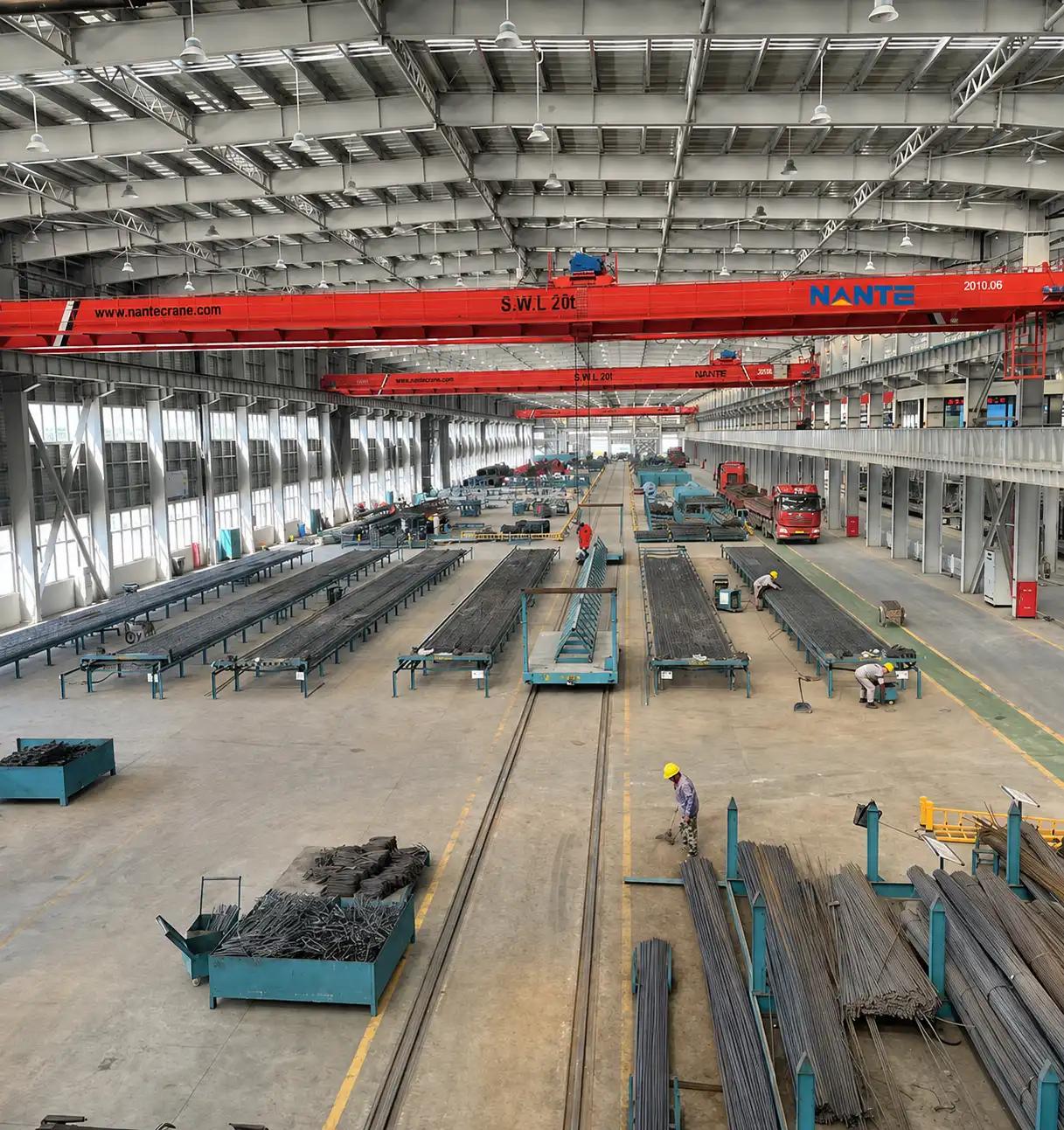
A tandem lift can be appropriate when one crane cannot provide the required lifting arrangement or when the load geometry requires two separated support points.
The engineering team must evaluate the load weight, center of gravity, structural stiffness, lifting-point spacing, required orientation, and available lifting space.
Large Molds, Steel Structures, and Ship Blocks
Large molds often have concentrated weight and offset centers of gravity. Long steel structures and ship blocks can also deflect between lifting points.
These conditions make synchronized hook movement important because unequal movement can cause load tilt, structural distortion, or unexpected load transfer.
Extra-long workpieces create a similar problem because a small position difference between widely separated hooks can produce a noticeable change in load angle.
What Must Be Defined Before a Tandem Lift Begins?
A tandem lift should begin with a defined lifting plan rather than informal coordination between operators.
U.S. overhead-crane requirements state that one qualified responsible person should direct an operation when two or more cranes lift one load.
The Team Must Know the Load
The engineering team must confirm:
- The total suspended weight.
- The center-of-gravity position.
- The lifting-point locations.
- The lifting-gear weight.
- The expected load share.
- The planned travel path.
The team must also evaluate each crane individually. The combined rated capacity of two cranes does not automatically make a particular lift acceptable.
How Does Load Sharing Between Two Overhead Cranes Work?
Two cranes do not automatically divide one load equally.
The center of gravity and the distance between each lifting point determine the initial static load carried by each crane.
Why Can One Crane Carry More Load?
If the center of gravity is closer to Crane A, Crane A normally carries a greater share of the load.
Rigging geometry, structural flexibility, hook height, and lifting-beam design can also change the real load distribution.
The control system must therefore consider both the calculated load share and the measured load on each crane.
How to Synchronize Two Overhead Cranes for Tandem Lifting
A common start command does not guarantee synchronized movement.
Mechanical tolerances, motor response, braking behavior, wheel slip, and drive differences can create position errors even when both cranes receive the same command.
Speed and Position Synchronization Are Different
Speed synchronization keeps both cranes close to the same instantaneous velocity.
Position synchronization keeps the accumulated displacement or hook-height difference within an engineered tolerance.
Two cranes can move at similar speeds while still having a significant position offset.
Hoist synchronization controls hook height. Bridge synchronization controls longitudinal movement. Trolley synchronization controls the relative position of the lifting points.
How Does Master-Slave Control Work?
A master-slave control system uses one motion channel as the reference while the second channel follows a corrected command.
The Controller Must Close the Feedback Loop
A typical sequence includes:
- The operator issues a movement command.
- The master channel establishes the reference.
- The encoders measure actual movement.
- The controller calculates the synchronization error.
- The slave drive adjusts its speed.
- The system continues monitoring both positions.
The system must also establish a valid relative position before synchronized movement begins.
How Does Encoder Feedback Prevent Synchronization Drift?
Encoder feedback gives the control system a measurable position or speed reference.
The encoder can monitor movement at the motor, drum, wheel, or another selected measuring point.
The Controller Must Monitor Position Error
The controller compares the actual positions of Crane A and Crane B.
The system can use separate thresholds for warning, reduced speed, and protective stopping.
The engineering team should define these limits according to load geometry, lifting-point spacing, operating speed, structural stiffness, and acceptable load attitude.
No single synchronization tolerance is suitable for every tandem lifting application.
How Do Variable-Speed Drives Support Synchronized Motion?
Variable-speed drives help coordinate acceleration, operating speed, deceleration, and stopping.
The control system can adjust one drive when encoder feedback shows that one crane is moving ahead of the other.
The system should make these corrections smoothly because aggressive speed changes can create additional dynamic load transfer.
How to Prevent Load Imbalance in Tandem Crane Lifting
A reliable tandem system should combine position synchronization with independent load measurement.
The System Should Monitor Absolute Load and Load Difference
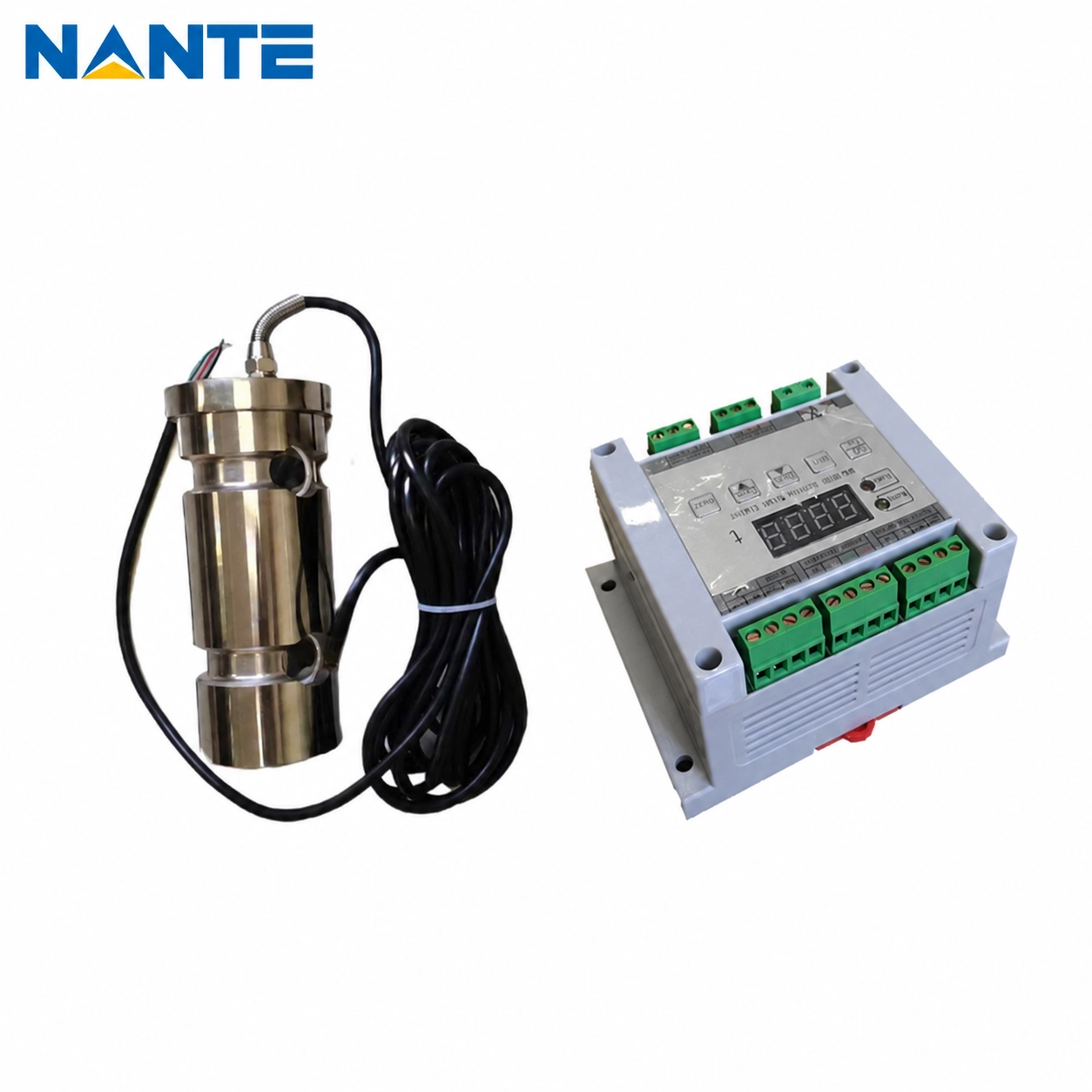
The controller should monitor the actual load carried by each crane.
The controller should also compare the difference between Crane A and Crane B.
An abnormal difference can indicate:
- Hook-height mismatch.
- Sling movement.
- Unexpected center-of-gravity behavior.
- Structural deflection.
- Incorrect load transfer.
- A developing overload condition.
The engineering design can define separate warning, slowdown, and stop thresholds.
How Does the System Prevent Load Tilting?
Position feedback can limit unintended hook-height differences.
Load feedback can identify changes in support reactions.
An inclination sensor can provide additional information because the sensor measures the actual attitude of the suspended workpiece.
A flexible steel structure or ship section can still deform even when both hooks remain synchronized. The control design should therefore distinguish hook synchronization, load sharing, and actual workpiece attitude.
How Should Single and Dual Remote Controls Work?
One remote control can issue coordinated tandem commands, but one common command does not guarantee synchronized physical movement.
Dual Remote Controls Need Command-Arbitration Logic
A dual-remote system should define which operator has motion authority.
The control system should prevent conflicting commands from independently changing the position of one shared suspended load.
The system should also define a safe response when wireless communication is lost.
How Should Emergency Stop and Fault Interlock Logic Work?
A tandem lifting system needs a defined response when one crane develops a critical fault.
The second crane should not continue a hazardous movement simply because its own drive remains operational.
Critical Faults Must Be Evaluated at System Level
The control logic should consider:
- Excessive synchronization error.
- Individual crane overload.
- Abnormal load difference.
- Encoder feedback failure.
- Drive failure.
- Communication loss.
- Limit-switch activation.
- Emergency-stop activation.
The control system should require a valid load condition and re-established synchronization before coordinated movement restarts.
What Happens If One Crane Stops During a Tandem Lift?
A stopped hoist can transfer load if the second hoist continues moving.
A stopped bridge can also change the relative position between the lifting points.
The control system should therefore treat a critical single-crane stop as a tandem-system event.
How Should the Tandem Lift Be Executed?
A controlled lifting sequence should include:
- The team confirms the weight, center of gravity, lifting points, rigging, and expected load distribution.
- The operators establish the required hook heights and relative crane positions.
- The operators perform a controlled initial lift.
- The team verifies the load share, workpiece level, and rigging condition.
- The cranes perform synchronized travel with continuous load and position monitoring.
- The operators lower the load in a coordinated manner until the workpiece is fully supported.
What Should Buyers Specify for a Tandem Crane System?
Buyers should provide the maximum load weight, load dimensions, center-of-gravity position, lifting-point spacing, required crane capacities, span, lifting height, travel distance, power supply, and required control method.
Buyers should also define which hoist, trolley, or bridge motions require synchronization and whether the process requires equal hook heights or an intentional position offset.
FAQ
Can Two Overhead Cranes Lift One Load?
Two overhead cranes can lift one load when the crane capacities, rigging, lifting points, control system, and operating procedure are designed for the common suspended load.
Do Two Cranes Always Share the Load 50/50?
Two cranes do not always share a load equally. The center of gravity, lifting-point locations, rigging geometry, hook positions, and structural flexibility affect the actual load distribution.
Is Speed Synchronization Enough?
Speed synchronization alone is not enough when controlled relative position is important. The control system should also monitor accumulated position or hook-height error.
Can Two Cranes Be Controlled by One Remote?
One operator interface can control two cranes in tandem mode. The system still requires suitable synchronization feedback, load monitoring, drive coordination, and safety interlocks.
What Happens If One Crane Becomes Overloaded?
The control system should detect the individual overload and initiate the designed warning, speed restriction, or protective response. The spare capacity of the second crane does not automatically make the overload acceptable.
Discuss Your Tandem Lifting Requirements with Nante Crane
Nante Crane provides overhead cranes, hoisting equipment, control panels, remote controls, and safety components for project-specific lifting applications.
Contact Nante Crane with your confirmed load weight, dimensions, lifting points, crane capacity, span, lifting height, and control requirements. The engineering team can review your project and discuss a suitable tandem lifting solution.