English


Overhead Crane for Heavy Machinery Assembly: Engineering Selection Guide for Manufacturers
Overhead Crane for Heavy Machinery Assembly: Engineering Selection Guide for Manufacturers
Date: 2026-08-14 Share:
Heavy machinery manufacturers need reliable lifting solutions to move large components safely and efficiently during assembly operations. An overhead crane for heavy machinery assembly helps factories handle heavy loads while improving positioning accuracy and production efficiency.
A properly designed heavy duty overhead crane for manufacturing supports demanding production environments, while a precision overhead crane system for assembly line helps achieve accurate component alignment.
This guide explains how to select the right overhead crane by evaluating key factors such as lifting capacity, crane span, lifting height, positioning accuracy, and production requirements.
Why Heavy Machinery Manufacturers Need the Right Overhead Crane Solution
The Role of Overhead Cranes in Heavy Equipment Assembly Processes
Heavy machinery assembly often involves large components that cannot be moved efficiently by manual handling equipment.
An overhead crane provides controlled lifting and transportation inside manufacturing facilities. The crane system can move components between different assembly stations while reducing unnecessary handling steps.
Common applications include:
- Lifting machine frames and structural components
- Positioning engines and mechanical assemblies
- Moving oversized parts during production
- Supporting final equipment installation
An overhead crane is not only a lifting device. The crane becomes part of the manufacturing workflow by connecting different production stages.
Industrial overhead cranes are widely used in manufacturing environments because they provide efficient movement of heavy loads across fixed working areas.
Challenges Faced by Heavy Machinery Manufacturing Plants
Heavy equipment manufacturers usually face several lifting challenges.
Large components require high lifting capacity. Large factories require wide crane coverage. Precision assembly requires accurate load positioning.
The main challenges include:
- Extremely heavy components
- Large workshop dimensions
- Limited installation space
- High assembly accuracy requirements
- Short production cycle targets
A suitable crane solution must match both the product requirements and the factory production process.
How to Determine the Required Lifting Capacity of an Overhead Crane
Calculate Crane Capacity Based on Maximum Load Weight
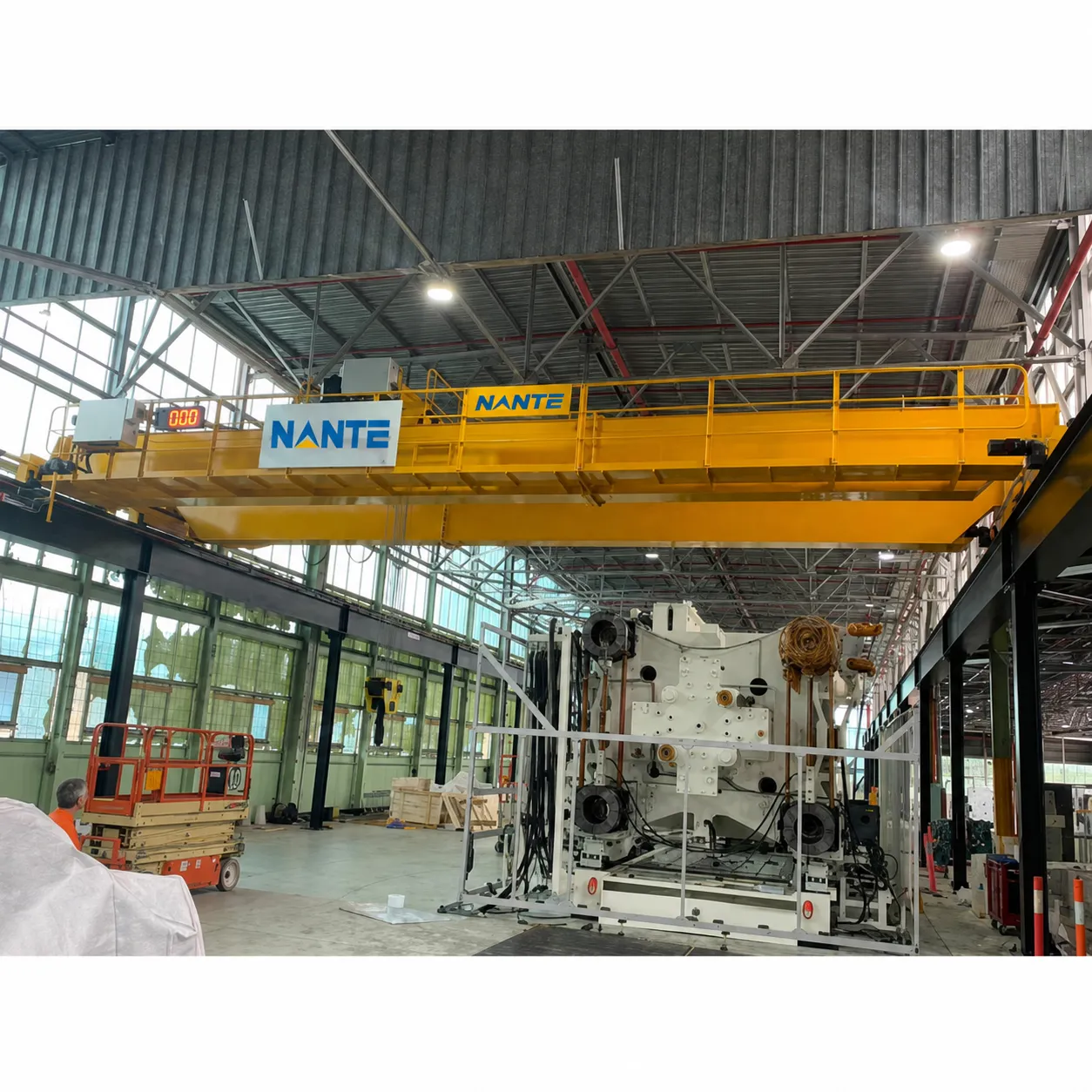
The lifting capacity is one of the most important factors when selecting an overhead crane for heavy machinery assembly. For heavy-duty applications requiring higher load capacity and stable operation, manufacturers often consider a double girder overhead crane solution.
Manufacturers should evaluate the maximum weight of the heaviest component instead of selecting a crane only according to average production loads.
The capacity calculation should include:
- Maximum component weight
- Lifting tools and accessories
- Future production expansion
- Required safety margin
For example, a factory producing large industrial equipment may require a higher capacity crane because future product upgrades can increase component weight.
A correct lifting capacity prevents overload risks and ensures stable long-term operation.
Choosing Between Standard Duty and Heavy Duty Overhead Cranes
Different production environments require different crane duty levels.
A standard duty crane may be suitable for occasional lifting operations. A heavy duty overhead crane is more suitable for continuous manufacturing environments with frequent lifting cycles.
Heavy machinery manufacturers should consider:
- Daily operating hours
- Number of lifting cycles
- Load frequency
- Production intensity
A heavy duty overhead crane for manufacturing should provide stable performance under repeated operations.
When Multiple Crane Systems Are Required
Some heavy machinery components are too large for a single lifting point.
Manufacturers may require coordinated crane systems when handling:
- Long machine structures
- Large steel frames
- Oversized assemblies
- Uneven load distributions
A properly designed multiple crane system can improve lifting stability and reduce component deformation during movement.
Selecting the Correct Crane Span for Large Manufacturing Facilities
How Factory Layout Determines Overhead Crane Span
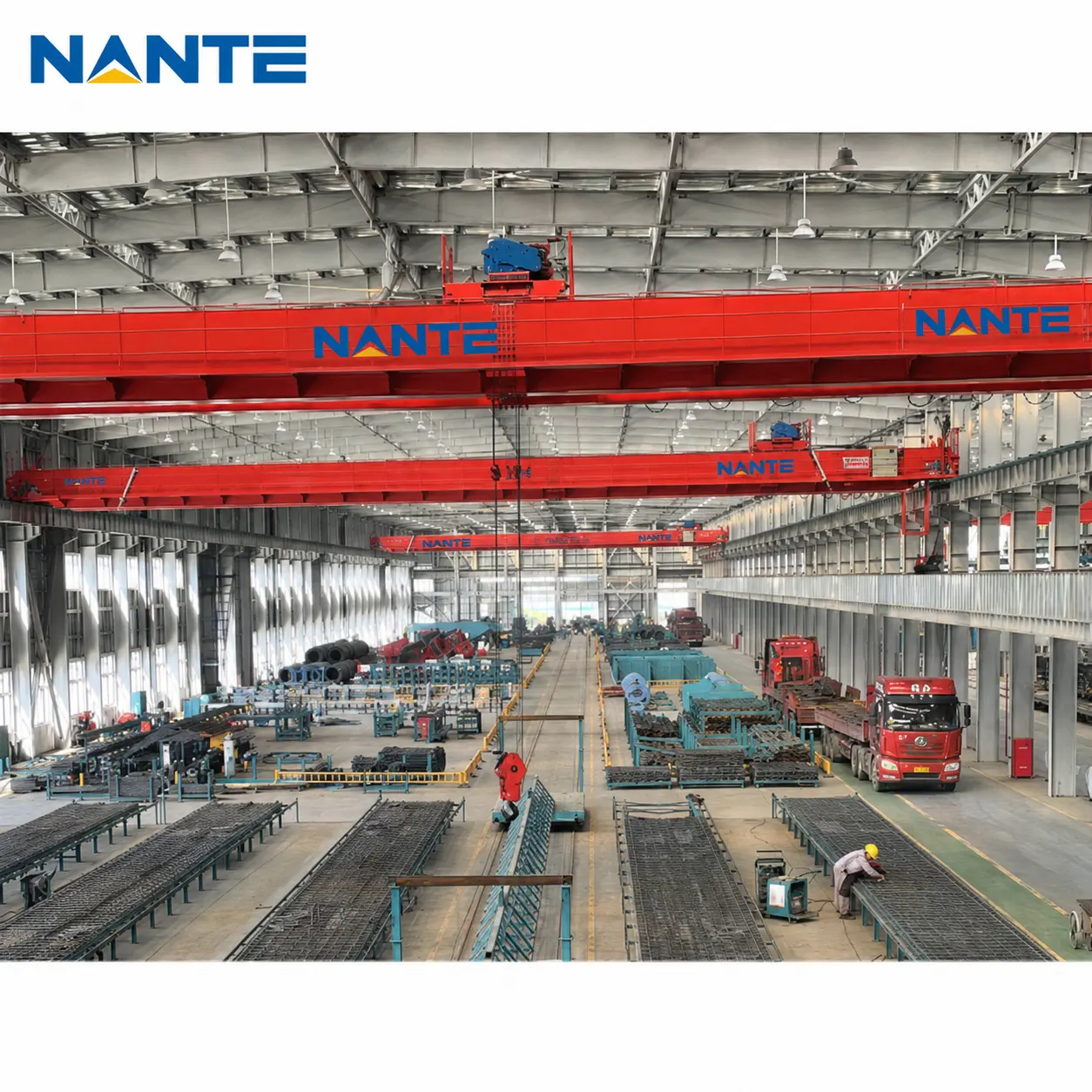
Crane span determines how much working area the crane can cover inside the factory.
Manufacturers should evaluate:
- Workshop width
- Building column distance
- Assembly station locations
- Material transportation routes
A suitable crane span allows operators to move components directly between production areas.
A poorly selected span may create additional manual handling work and reduce production efficiency.
Maximizing Working Area Coverage with the Right Crane Design
A crane should cover critical assembly areas without unnecessary movement limitations.
The crane design should consider:
- Bridge length
- Runway length
- Trolley travel distance
- Hook working area
The correct configuration helps manufacturers improve material flow and reduce production interruptions.
How to Select the Required Lifting Height for Heavy Machinery Assembly
Factors Affecting Required Hook Height
Lifting height directly affects assembly flexibility.
Manufacturers should consider:
- Equipment height
- Installation clearance
- Assembly requirements
- Transportation space
A higher hook height allows operators to install large components more easily.
The lifting height should provide enough clearance while maintaining safe operation.
Low Headroom Solutions for Limited Factory Buildings
Some factories have limited building height.
Low headroom crane designs can help manufacturers maximize usable lifting space without major building modifications.
These solutions are suitable for:
- Existing workshops
- Factory upgrades
- Space-limited production facilities
The correct lifting height design improves production flexibility.
Why Positioning Accuracy Matters in Heavy Equipment Assembly
The Difference Between Material Handling and Precision Assembly
Heavy machinery assembly requires more than simply moving components from one location to another.
Traditional material handling focuses on:
- Lifting
- Moving
- Placing
Precision assembly requires:
- Controlled movement
- Accurate alignment
- Stable positioning
When manufacturers install large mechanical components, small positioning errors can increase assembly difficulty.
A precision overhead crane system for assembly line operations helps operators achieve smoother and more accurate component placement.
Technologies That Improve Overhead Crane Positioning Accuracy
Modern crane systems can improve positioning performance through advanced control technologies such as a crane control panel, variable frequency drive control, and remote operation systems.
Important features include:
- Variable frequency drive control
- Smooth acceleration and braking
- Anti-sway control
- Remote operation systems
- Position feedback systems
Nante Crane provides crane control solutions including lifting control panels, long travel control panels, remote controls, and crane safety devices. These control systems help operators manage crane movements and improve operational control.
How Overhead Cranes Improve Production Cycle Time
Reduce Component Transfer Time Between Assembly Stations
Production efficiency depends on how quickly components move through the assembly process.
An optimized overhead crane system can reduce:
- Manual repositioning
- Waiting time
- Additional transportation steps
The crane can create a smoother material flow between different workstations.
Support Continuous Heavy Machinery Assembly Operations
A well-designed crane system supports stable production processes.
Manufacturers can improve:
- Workflow consistency
- Assembly speed
- Workplace organization
The crane becomes an important part of the production system rather than an independent lifting device.
Key Technical Specifications to Review Before Buying an Overhead Crane
Manufacturers should review the following specifications before selecting an overhead crane.
| Specification | Importance |
|---|---|
| Lifting Capacity | Determines maximum component weight |
| Crane Span | Defines working coverage |
| Lifting Height | Determines assembly clearance |
| Travel Speed | Influences production efficiency |
| Positioning Accuracy | Supports precision assembly |
| Duty Classification | Matches operating frequency |
| Control System | Improves operation management |
A complete evaluation helps manufacturers select a crane system that matches current and future production requirements.
How to Choose an Overhead Crane Manufacturer for Heavy Machinery Assembly
Evaluate Engineering Capability and Customization Ability
Heavy machinery manufacturers should select suppliers that understand industrial lifting requirements.
Important evaluation points include:
- Engineering design capability
- Customized crane solutions
- Technical communication ability
- Project support experience
A professional supplier should understand the relationship between crane performance and production requirements.
Check Product Range and System Integration Capability
A complete crane solution may include:
- Crane structure
- Hoisting system
- Control system
- Safety components
Nante Crane focuses on crane equipment and crane component design and manufacturing. The company provides overhead crane solutions and related components for industrial lifting applications.
Common Mistakes When Selecting an Overhead Crane for Heavy Machinery Assembly
Choosing Capacity Only Based on Current Production
Manufacturers should consider future product changes.
A crane selected only for current requirements may become insufficient when larger equipment models are introduced.
Ignoring Positioning Accuracy Requirements
A crane with enough lifting capacity may still fail precision assembly requirements.
Manufacturers should evaluate movement control and positioning performance.
Selecting Equipment Without Considering Production Workflow
The crane should match the entire assembly process.
Manufacturers should consider:
- Component movement routes
- Assembly sequence
- Operator requirements
- Production targets
Nante Crane Solutions for Heavy Machinery Assembly
Nante Crane provides crane equipment and crane component solutions for industrial lifting applications. The company develops overhead crane systems, crane components, and control solutions designed to support different manufacturing requirements, including heavy-duty handling and customized lifting applications.
FAQ
What lifting capacity does a heavy machinery assembly crane need?
The required lifting capacity depends on the maximum component weight, lifting accessories, operating frequency, and future production requirements.
Manufacturers should calculate the maximum expected load before selecting crane capacity.
How do I calculate the required span of an overhead crane?
The crane span depends on factory width, runway structure, assembly station locations, and required working coverage.
A suitable span allows efficient movement across production areas.
Why is positioning accuracy important for assembly cranes?
Positioning accuracy helps operators align large components during installation.
Accurate crane movement reduces adjustment time and improves assembly efficiency.
What information should I provide when requesting an overhead crane solution?
Manufacturers should provide:
- Maximum lifting weight
- Required crane span
- Required lifting height
- Factory layout information
- Working frequency
- Assembly application details
Contact Nante Crane for Your Heavy Machinery Assembly Crane Solution
Nante Crane provides customized overhead crane solutions for heavy machinery assembly applications. The engineering team can help evaluate your lifting requirements and recommend suitable crane configurations based on load capacity, crane span, lifting height, production needs, and operating conditions.
If you are planning a new crane project or upgrading your existing lifting system, please contact Nante Crane and share your confirmed project information, including lifting capacity, span, lifting height, duty requirements, and application details. The technical team will provide a professional recommendation based on your actual manufacturing requirements.