English


Crane Control Panel Explained: Components, Safety Logic, Automation, and Anti-Sway Control
Crane Control Panel Explained: Components, Safety Logic, Automation, and Anti-Sway Control
Date: 2026-07-30 Share:
A crane control panel acts as the command center of a modern lifting system. An overhead crane electrical control system converts operator or automation commands into controlled hoisting, trolley, and bridge movements. An intelligent anti-sway crane control system can also reduce suspended-load oscillation and improve positioning accuracy.
What Is a Crane Control Panel?
The Panel Connects Commands with Crane Motion
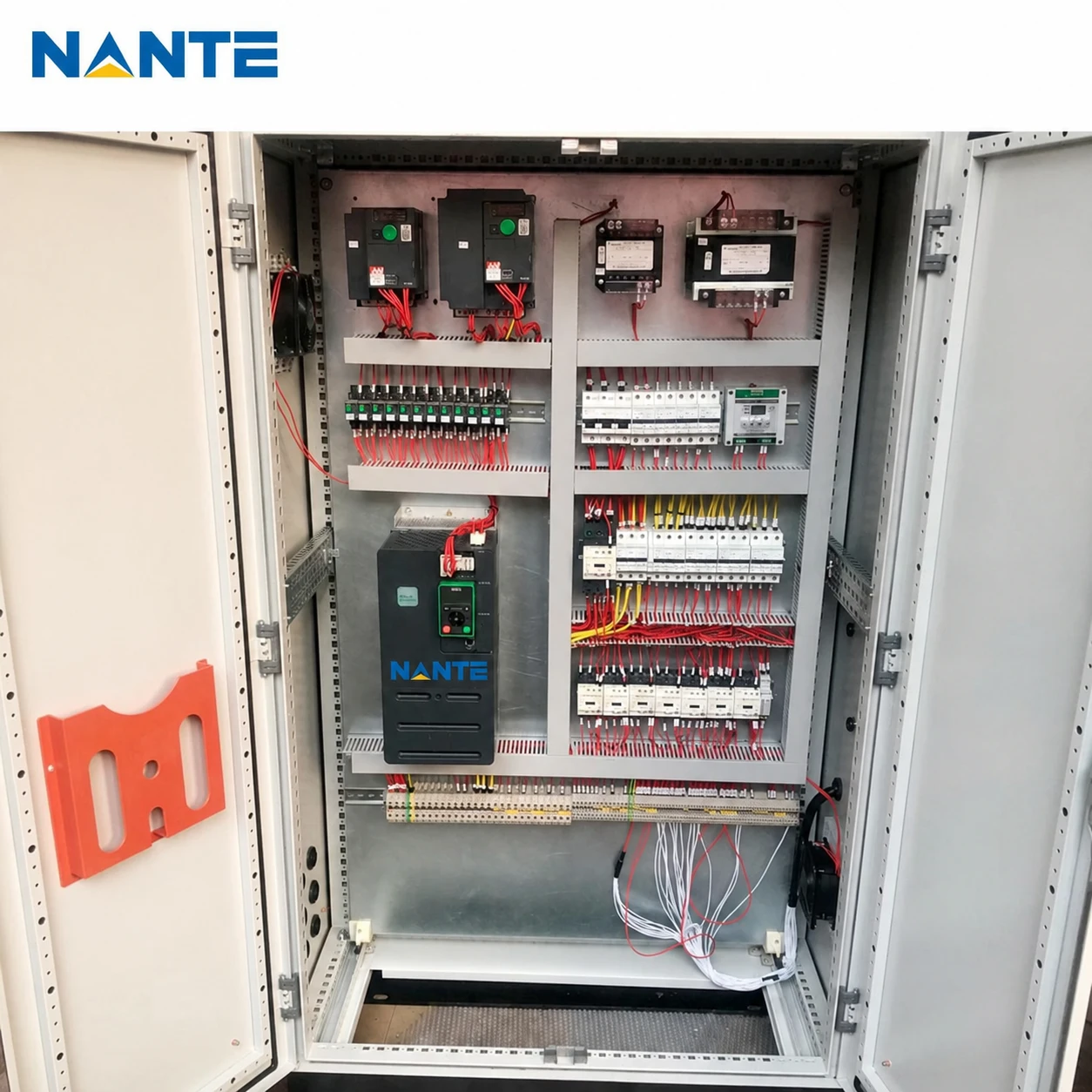
A crane control panel refers to the electric box which holds the machinery used in controlling and monitoring the actions of the crane. The control panel gets its directions from a pendant, a radio control, a cabin controller, local station, or automation.
The entire crane control system includes motors, brakes, sensors, limit switches, field wiring, communication lines, and control software.
How Does an Overhead Crane Electrical Control System Work?
The System Uses Four Connected Paths
The power path supplies electricity to the crane motors. The command path carries the requested direction and speed. The feedback path reports position, speed, load, and device status. The safety path blocks or stops movement when the system detects an unsafe condition.
A typical movement sequence follows these steps:
- The operator or automation system requests movement.
- The control logic checks the operating mode and safety conditions.
- The drive produces the required motor torque.
- The brake circuit releases the brake.
- The motor follows the programmed speed profile.
- The system decelerates the motor and reapplies the brake.
Which Control Panel Configuration Fits the Crane?
The Motion Scope Determines the Architecture
A long-travel control panel manages bridge movement along the runway. A hoisting and cross-travel panel controls lifting and trolley movement. A whole-crane control panel coordinates the hoist, trolley, and bridge within one architecture.
A centralized design can simplify alarms, interlocks, and communication. A distributed design can reduce field wiring and separate control functions by motion or installation location.
What Components Are Inside a Crane Control Panel?
Each Device Performs a Specific Function
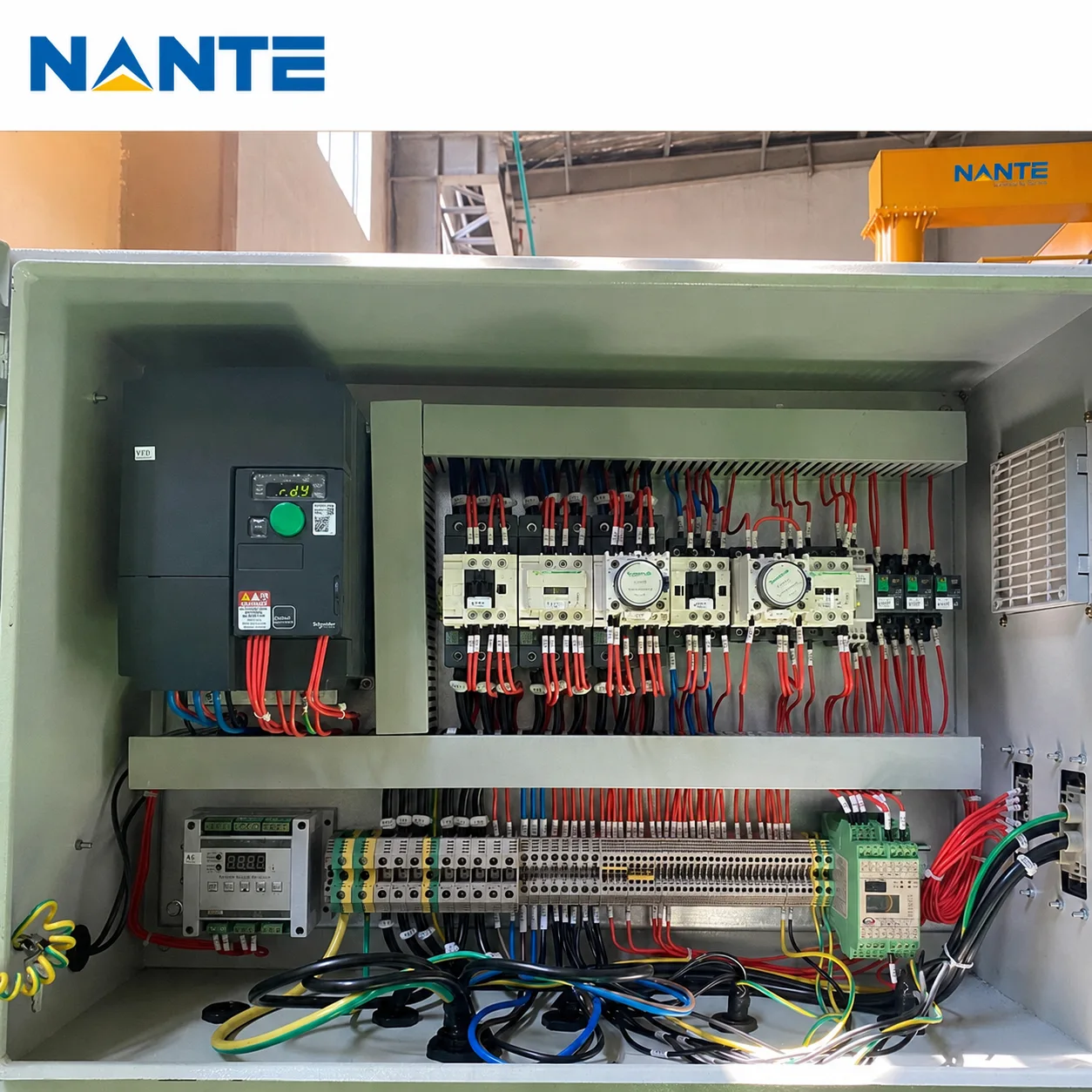
The main disconnect isolates the incoming power supply. Circuit-protection devices respond to short circuits and excessive current. Contactors and relays switch power circuits or process control signals.
Variable-frequency drives regulate motor speed, acceleration, and deceleration. A programmable logic controller evaluates operator commands, sensor inputs, alarms, interlocks, and automatic sequences.
Input and output modules connect the controller with field devices. Control power supplies serve relays, sensors, and logic devices. Terminal blocks organize external connections. A human-machine interface displays crane status, operating modes, alarm messages, and selected operating values.
How Does the Panel Control Crane Motion?
Hoisting Requires Coordinated Torque and Braking
The motor must produce sufficient torque before the holding brake releases. The brake must apply correctly when the hoisting movement stops or when the control system removes power.
The system also checks upper and lower limits, overload signals, motor status, and brake feedback before allowing movement.
Travel Requires Controlled Speed Profiles
The trolley moves the suspended load across the bridge, while the bridge moves along the runway. Controlled acceleration reduces abrupt load movement. Controlled deceleration helps the crane approach the target without repeated reverse corrections.
The control system can also coordinate paired travel motors to maintain consistent bridge or trolley movement.
How Does a Crane Control Panel Improve Safety?
Safety Logic Overrides Unsafe Commands
An emergency-stop circuit can interrupt hazardous movement independently of normal controls. Hoist limit devices can prevent excessive lifting or lowering. Overload protection can block further upward movement when the load exceeds the permitted limit.
Electrical interlocks can prevent conflicting commands. Mode interlocks can prevent manual and automatic interfaces from controlling the crane at the same time. Access interlocks can restrict operation when a protected area is open.
The control system should also prevent unexpected restarting after a power interruption. The system should verify commands, safety inputs, operating modes, and reset authorization before movement resumes.
How Does the Control System Improve Efficiency?
Repeatable Movement Reduces Corrections
A controlled speed profile can reduce abrupt starts, overshooting, and unnecessary repositioning. A higher travel speed can support long-distance movement, while a lower approach speed can support final placement.
Position feedback can improve movement repeatability between operators and shifts. Coordinated motor and brake control can also reduce sudden mechanical forces during starting and stopping.
The actual performance improvement depends on the crane structure, load characteristics, travel distance, operating speed, and required positioning accuracy.
How Does an Intelligent Anti-Sway Crane Control System Work?
The Controller Manages Pendulum Motion
A suspended crane load behaves like a pendulum when the trolley or bridge accelerates. Rapid speed changes, variable rope length, combined travel directions, and external disturbances can increase load swing.
An open-loop anti-sway system modifies acceleration and deceleration commands according to a calculated motion profile. A closed-loop system uses measured or estimated information, such as trolley position, rope length, drive feedback, or swing angle.
Anti-sway control can reduce residual load movement and support more accurate placement. The function can be especially useful for molds, coils, fabricated assemblies, storage loads, and automated handling applications.
The project team should define the travel speed, lifting-height range, load range, positioning tolerance, and operating mode before selecting the anti-sway method.
How Do Automation, IoT, and Data Logging Add Value?
Digital Functions Improve Control and Visibility
Crane automation can range from operator assistance to programmed movement sequences. Automatic positioning can guide the crane to approved pickup and placement points. Restricted-zone logic can prevent travel into defined areas.
Process interlocks can coordinate the crane with production equipment, storage systems, or transfer stations.
IoT monitoring can collect operating hours, movement cycles, alarm events, load data, positions, and selected electrical values. Data logging can create a timestamped event history that helps users identify the first condition during a production interruption.
Remote-access functions should use defined permissions, secure connections, and clear authorization rules.
How Do IP Ratings Affect Panel Selection?
The Enclosure Must Match the Environment
The IP rating describes an enclosure’s protection against solid objects, dust, and water under defined test conditions.
An IP55 crane control panel can suit many protected industrial environments. An IP65 or IP66 enclosure can provide stronger protection for dusty, outdoor, or water-exposed installations.
The buyer should also consider corrosion, condensation, ambient temperature, internal cooling, cable glands, door seals, and panel location. A higher IP rating does not solve every environmental risk.
What Happens When a Control Panel Fails?
One Fault Can Interrupt Material Flow
A power-supply fault can stop the complete crane. A drive fault can disable one movement. A sensor or communication fault can prevent the system from confirming a safe condition. A brake-control fault can initiate a protective stop.
A well-structured control system should distinguish warnings, controlled stops, motion-specific trips, and complete shutdowns. The alarm system should identify the affected function and record the time of occurrence.
The recovery logic should verify safe conditions before operation resumes. The system should not restart an interrupted automatic sequence unless the programmed recovery conditions permit that action.
Which Specifications Should a Buyer Confirm?
Complete Information Prevents Selection Gaps
A buyer should confirm:
- The crane type, capacity, span, runway length, and lifting height.
- The motor ratings, supply voltage, phase configuration, and frequency.
- The required hoisting, trolley, and bridge speeds.
- The preferred pendant, radio, cabin, local, or automatic control method.
- The operating environment and required IP rating.
- The overload, limit, anti-collision, anti-sway, positioning, and interface requirements.
- The required electrical drawings, alarm lists, parameter lists, and test records.
FAQ
What Is the Main Function of a Crane Control Panel?
A crane control panel receives commands, verifies operating conditions, and controls motors, brakes, safety devices, alarms, and auxiliary functions.
Can an Existing Crane Receive a New Control Panel?
An existing crane can often receive a new control panel after an engineering review confirms the motors, brakes, power supply, field devices, and safety requirements.
Does Every Crane Need Anti-Sway Control?
Every crane does not need the same anti-sway system. Applications with frequent travel, precise placement, restricted space, or automated handling usually receive the greatest benefit.
Discuss Your Crane Control Requirements with Nante Crane
Nante Crane designs and manufactures industrial cranes, lifting equipment, crane components, and electrical control solutions. Its control-panel range includes long-travel, hoisting, and whole-crane configurations, with IP55, IP65, or IP66 enclosure options and project-specific anti-sway, automation, IoT, and data-logging functions.
You can contact Nante Crane with your confirmed crane type, capacity, span, lifting height, motor data, power supply, control method, operating environment, safety functions, and automation requirements.
The technical team can review those details and discuss an appropriate control scope without placing pressure on your purchasing schedule.