English


Why Overhead Crane Service Life Matters
Date: 2026-07-17 Share:
A well-maintained overhead crane can provide reliable performance for many years. However, poor maintenance practices or incorrect operation can significantly shorten service life and increase operational costs.
Extending crane service life provides several benefits:
- Reduced unexpected downtime
- Lower maintenance and repair expenses
- Improved workplace safety
- Higher production efficiency
- Better return on investment
A crane is a totally integrated system of mechanical, electrical and safety parts. The condition of each part affects overall performance of the hoist. A small problem with a brake, wire rope, control system or bearing can eventually develop into serious problems and potentially cause a major failure if not corrected.
Crane Lifespan Is Connected to Life Cycle Cost
The actual cost of an overhead crane is not limited to its purchase price. Companies should evaluate the complete Life Cycle Cost, including:
- Initial investment and installation
- Routine inspection and preventive maintenance
- Lubrication and replacement parts
- Energy consumption
- Production losses caused by downtime
- Repair, upgrading, or replacement costs
A crane with a slightly higher initial investment may provide better value if it requires fewer repairs, consumes less energy, and maintains reliable operation for a longer period.
Main Factors That Affect Crane Lifespan
Working Duty and Load Frequency
The operating environment has a significant impact on the life of the crane.
A crane used for several hours a day and for numerous lifts will undergo greater mechanical stress than a crane used from time to time.
Important factors include:
- Number of lifting cycles
- Average load weight
- Working hours per day
- Starting and stopping frequency
- Travel distance
- Working environment
For heavy-duty applications, maintenance requires more strength as components are subjected to increased fatigue and wear.
Load Control and Overload Protection
Overload protection is one of the most important methods to protect crane components and extend service life.
Operating above the rated capacity creates excessive stress on:
- Hoisting mechanisms
- Wire ropes
- Hooks
- Brakes
- Motors
- Gearboxes
- Crane structures
Overloading can accelerate fatigue damage and increase the possibility of unexpected failure. Operators should always lift loads within the designed capacity and avoid side pulling or dragging loads.
Crane systems today also offer various safety devices, such as overload limiter, position limit switch, and others, to lower operating risk.
Environment and Corrosion Protection
The working environment also affects crane lifespan.
Common challenges include:
- High humidity
- Dust accumulation
- Chemical exposure
- Outdoor operation
- Extreme temperatures
These conditions can accelerate corrosion, electrical damage, and mechanical wear.
To reduce environmental damage:
- Keep components clean
- Protect electrical systems from moisture
- Inspect corrosion-prone areas regularly
- Use suitable protective coatings
Preventive Maintenance: The Key to Extending Crane Lifespan
Preventive maintenance is one of the most effective ways to extend the life of a crane. Instead of waiting for a part to fail, allow your maintenance team to identify any potential problems that could end up in expensive repairs.
Regular inspection and maintenance help detect:
- Component wear
- Loose connections
- Abnormal vibration
- Electrical problems
- Lubrication issues
- Safety device failures
Industry safety requirements outline frequent and periodic crane inspections based on component conditions, usage, and potential wear.
Daily Operator Checks
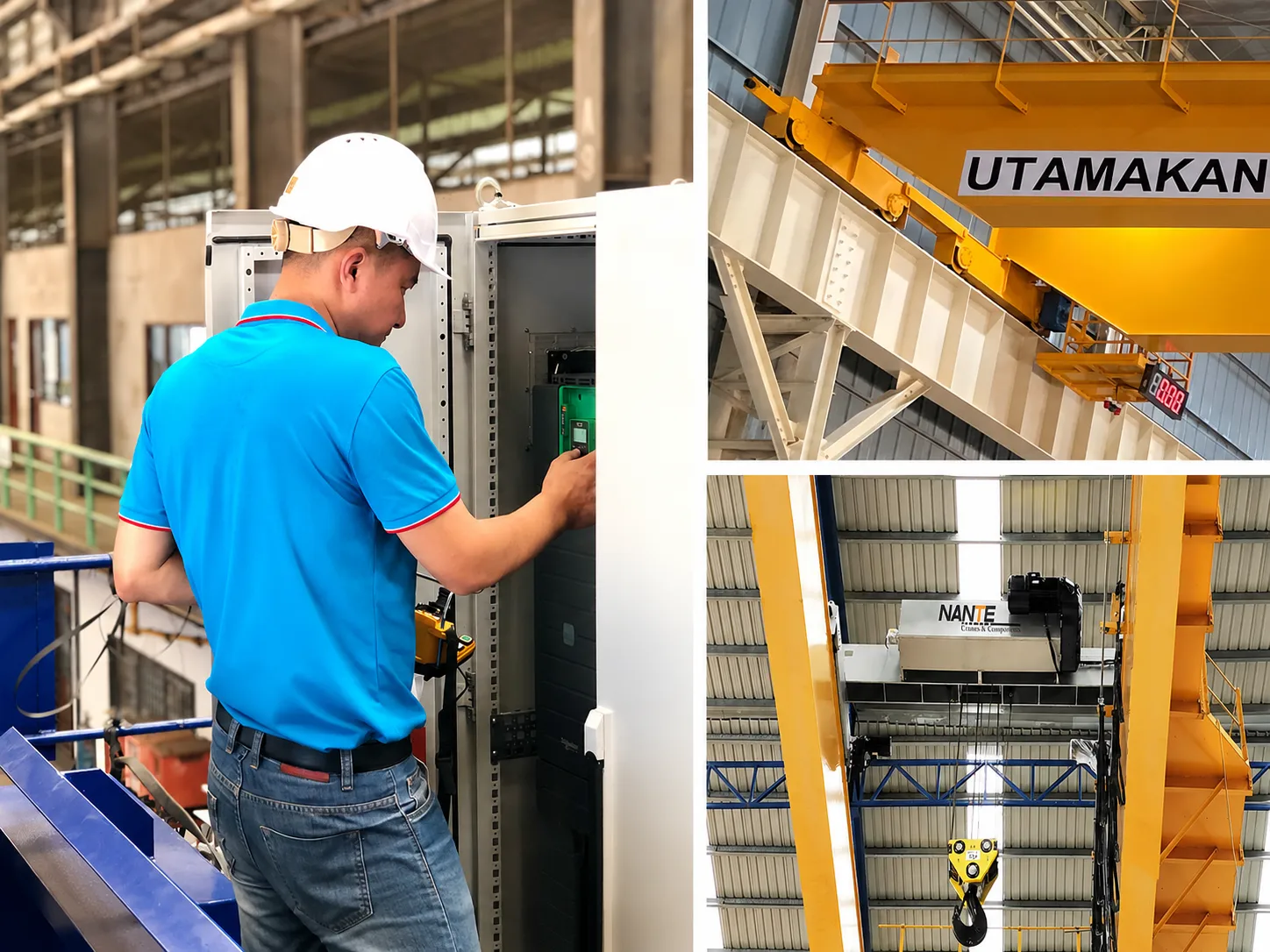
Operators are the first line of defense in crane maintenance.
Before operation, operators should check:
- Hook condition
- Wire rope condition
- Brake performance
- Control buttons or remote operation
- Limit switches
- Warning signals
- Abnormal sounds or vibration
Early detection of small problems can prevent expensive downtime.
Periodic Inspection and Maintenance
A complete maintenance plan should include regular inspection of:
- Hoist systems
- Trolley mechanisms
- Bridge travel systems
- Wheels and rails
- Electrical control systems
- Structural components
- Safety devices
Maintenance records should also be updated regularly.
A good record system helps companies understand equipment condition, predict future costs, and make better decisions about repair or modernization.
Lubrication: A Simple Way to Extend Crane Service Life
Proper lubrication reduces friction, heat generation, and component wear. It is one of the lowest-cost maintenance activities with a significant impact on crane lifespan.
Important lubrication areas include:
- Wire ropes
- Bearings
- Gearboxes
- Wheels
- Sheaves
- Gears
- Moving mechanical connections
Without sufficient lubrication, components may wear faster and consume more energy.
Common Lubrication Mistakes
Many crane problems are caused by incorrect lubrication practices.
Common mistakes include:
- Using unsuitable lubricant
- Applying too much or too little lubricant
- Ignoring lubrication schedules
- Lubricating dirty components
- Failing to inspect lubrication conditions
A proper lubrication plan should consider operating environment, working frequency, and manufacturer recommendations.
Use Overload Protection to Prevent Premature Failure
Overload protection does more than improve safety. It also protects the crane investment.
When a crane repeatedly operates under excessive loads, the equipment experiences:
- Higher structural stress
- Faster rope fatigue
- Increased brake wear
- Motor overheating
- Gear damage
Safety systems such as overload limiters and control protection devices help prevent operation outside acceptable conditions. Nante Crane’s crane control solutions include control panels and safety devices designed to support reliable crane operation.
Operator Training Can Extend Crane Lifespan
Even a high-quality crane can experience premature wear if operated incorrectly.
Good operating practices include:
- Lift loads vertically.
- Avoid sudden acceleration and braking.
- Do not exceed rated capacity.
- Position the hook above the load before lifting.
- Report abnormal conditions immediately.
Poor operating habits increase Life Cycle Cost by creating unnecessary repairs and reducing equipment availability.
Common Mistakes That Shorten Crane Lifespan
Waiting Until Failure Happens
Reactive maintenance often creates higher costs because failures usually affect multiple components.
Preventive inspections allow companies to repair small issues before they become major problems
Ignoring Early Warning Signs
Signs that require attention include:
- Unusual noise
- Slow movement
- Excessive vibration
- Electrical problems
- Damaged wire ropes
- Brake delays
Ignoring these signals can shorten crane service life significantly.
Choosing Equipment Only Based on Initial Price
The cheapest option is not always the most economical choice.
A better evaluation should consider:
- Reliability
- Maintenance requirements
- Energy efficiency
- Spare parts availability
- Service support
- Expected lifespan
Life Cycle Cost analysis provides a more accurate picture of the true investment value.
Practical Checklist to Extend Overhead Crane Service Life
Daily Checklist
- Inspect hooks and wire ropes
- Test controls and brakes
- Check abnormal noise
- Confirm safety devices work properly
Monthly Checklist
- Check lubrication points
- Inspect electrical components
- Review maintenance records
- Examine wear components
Annual Checklist
- Complete detailed inspection
- Evaluate structural condition
- Review safety systems
- Analyze lifecycle cost
- Consider modernization opportunities
FAQ
How long is the normal crane lifespan?
The lifespan of a crane depends on various factors, such as the operating conditions, maintenance, load cycles and usage. Regular preventive maintenance can extend the service life significantly.
How does preventive maintenance extend overhead crane service life?
Identify potential problems prior to failure, reduce unscheduled downtime, protect critical system and asset components and save money in the long run by reducing overall operating costs.
Why is lubrication important for crane lifespan?
Lubrication helps to reduce friction and wear in moving parts such as bearings, gears, wire ropes and other mechanical drive components.
Extend Crane Service Life with Nante Crane Solutions
Nante Crane is a crane and crane component designer and manufacturer specializing in lifting and material handling solutions. Its product range includes overhead cranes, gantry cranes, construction cranes, workstation cranes, offshore cranes, electric hoists, crane travel units, mobile power supply systems, and crane control components. Nante Crane focuses on technology innovation, energy efficiency, safety improvement, and helping customers reduce long-term operating costs through reliable lifting solutions.
With advanced crane control panel solutions supporting functions such as automation, anti-sway technology, IoT integration, and data logging, Nante Crane helps customers improve crane performance and optimize maintenance throughout the equipment lifecycle.
Contact Nante Crane to explore reliable overhead crane solutions designed for longer service life and lower Life Cycle Cost.