English


What Determines Gantry Crane Cost? Key Price Factors Buyers Should Know
What Determines Gantry Crane Cost? Key Price Factors Buyers Should Know
Date: 2026-08-27 Share:
Gantry crane cost depends on much more than lifting capacity. Span, lifting height, travel distance, duty class, hoisting equipment, power supply, wheels, controls, and outdoor protection can all change the engineering scope. Understanding these gantry crane price factors helps buyers request a more accurate gantry crane quotation and compare different offers on the same technical basis.
The gantry crane is defined as an integral combination of the lifting and traveling equipment that includes the bridge frame, legs, hoist unit, travel unit, electric drive, control, and safety systems. The reason why identical capacity gantry cranes may have different cost is that all these components should be compatible with each other.
Why Can Gantry Crane Prices Vary So Much?
Changing one specification often affects several other components.
Higher lifting capacity may require a heavier bridge, larger hoist, stronger wheels, and more powerful drives. A longer span can increase structural weight and wheel loads. Greater lifting height can affect the leg structure, rope length, and hoisting arrangement.
Outdoor cranes also have additional cost factors, including wind resistance, storm protection, weatherproof electrical systems, and corrosion protection.
This is why a gantry crane is usually quoted according to the actual application rather than a fixed standard price.
Gantry Crane Price Factors at a Glance
| Price Factor | Main Cost Impact |
| Capacity | Structure, hoist, wheels, motors |
| Span | Bridge size, stiffness, wheel load |
| Lifting height | Legs, rope length, hoisting system |
| Travel distance | Rails, power supply, installation |
| Duty class | Motors, brakes, gearbox, fatigue design |
| Hoist | Speed, reeving, motor power |
| Wheels | Wheel load, rail type, travel system |
| Electrical system | Controls, VFDs, automation |
| Outdoor protection | Wind, rain, corrosion measures |
How Gantry Crane Configuration Affects the Price
Single Girder Gantry Crane
A single-girder design can be economical when the required capacity, span, height, and duty permit a lighter bridge arrangement.
However, long spans, intensive operation, or harsh outdoor conditions can still require substantial structural and mechanical engineering.
Double Girder Gantry Crane
Double-girder cranes are commonly selected for higher capacities, longer spans, demanding duty cycles, or greater lifting-height requirements.
They may require more structural steel and heavier hoisting equipment, increasing the initial gantry crane price.
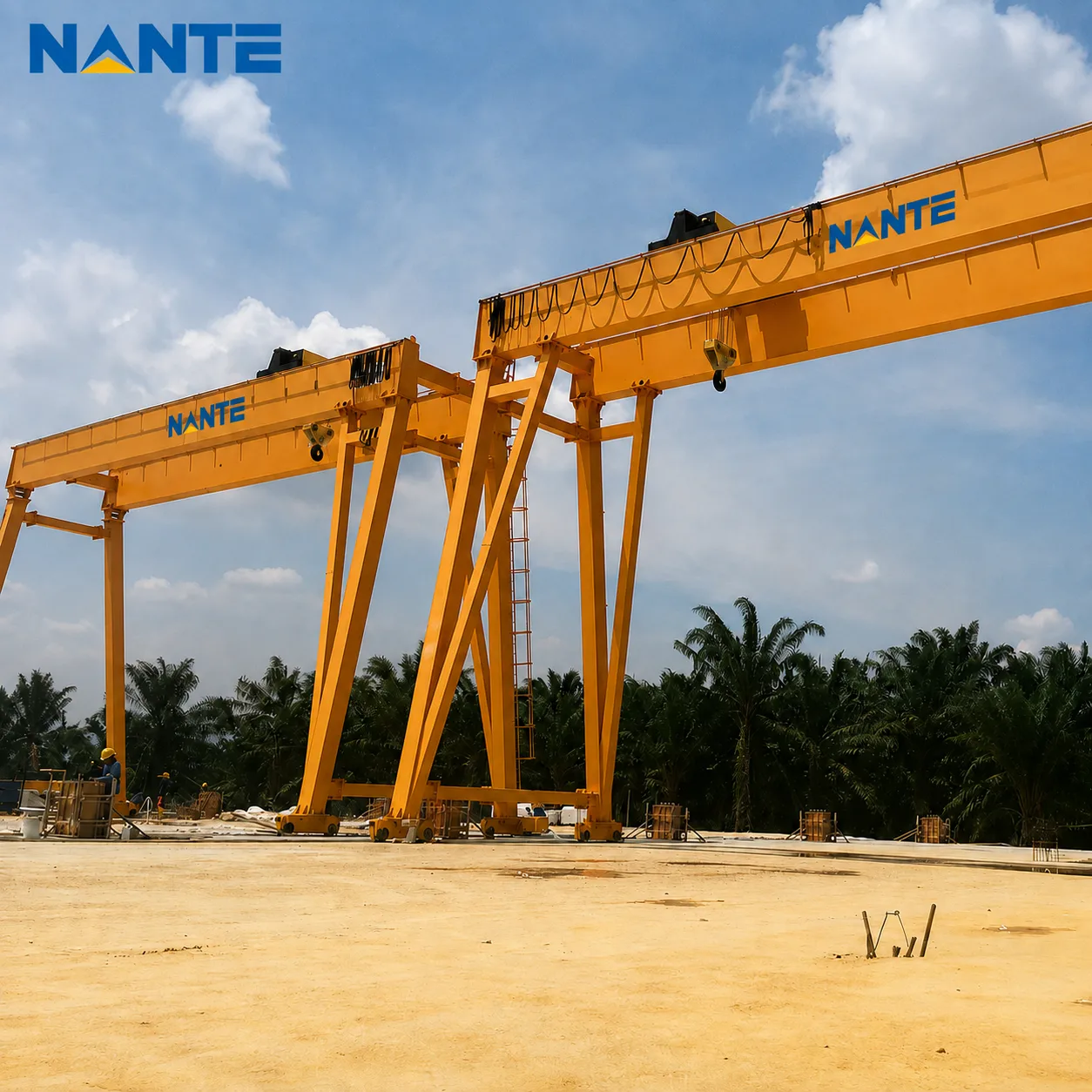
Semi-Gantry, Truss, and Rubber-Tyred Configurations
Different crane structures change the cost calculation.
Semi-gantry cranes interact differently with the building or runway. Truss structures may suit specific span or wind requirements, while rubber-tyred cranes use tyres, steering, and mobile travel equipment instead of a conventional rail arrangement.
Nante Crane’s gantry crane range includes single-girder, double-girder, truss, rubber-tyred, and semi-gantry configurations.
Gantry Crane Cost Factors Explained
1. Lifting Capacity
Rated capacity affects much more than the hoist.
It can influence the bridge girders, legs, wheels, motors, brakes, and overall structure. Buyers should define the true maximum load, including lifting attachments where necessary.
Overspecifying capacity can increase cost across the entire crane, while underspecifying it creates safety and operational risks.
2. Span
Span is the horizontal distance between the crane runway rails.
As span increases, the bridge normally requires greater stiffness and structural strength. This can increase crane self-weight and wheel loads.
Therefore, two cranes with the same lifting capacity can have significantly different prices if their spans are different.
3. Leg Height and Lifting Height
Leg height and hook lifting height are related but not identical.
Taller structures may require additional steel and stronger stability provisions. Greater hook travel can also require more rope, different reeving, or changes to the hoisting mechanism.
Buyers should specify the lifting height actually required by the operation rather than simply requesting the maximum available height.
4. Crane Travel Distance
Travel distance determines how far the gantry crane moves along its working area.
A longer travel distance may require more rails, rail accessories, cables, conductor systems, cable reels, festoon equipment, and installation work.
Do not confuse:
- Span: width of the working area
- Travel distance: length of the working area
Both should be stated clearly in a quotation request.
5. Duty Class
The duty classification of the crane is one of the most important considerations influencing the cost of gantry cranes, as it influences the necessary mechanical strength, rating of components, and anticipated service life.
Duty classification depends on the frequency of operation, the number of work cycles, load conditions, and load proximity to its capacity rating.
For instance, the mechanical and electrical specifications of the crane used occasionally for handling material differ from those of a crane that works for several hours per day.
6. Hoist or Winch Configuration
The hoisting system can significantly affect cost.
Hoisting cost is influenced by lifting capacity, lifting height, lifting speed, reeving, rope and drum arrangement, trolley configuration, braking, and variable-speed requirements. Higher lifting speeds may require larger motors and more advanced drive equipment, so faster operation can increase both mechanical and electrical costs.
Higher lifting speeds can require larger motors and more advanced drive equipment, so faster operation usually increases cost.
7. Power Supply and Mobile Electrification
Voltage, frequency, and phases are only part of the electrical specification.
Travel distance and incoming power position also affect the mobile power-supply system. Common options include conductor systems, festoon systems, cable reels, and energy chains.
Longer travel distances or complex layouts may require more electrical equipment and installation work.
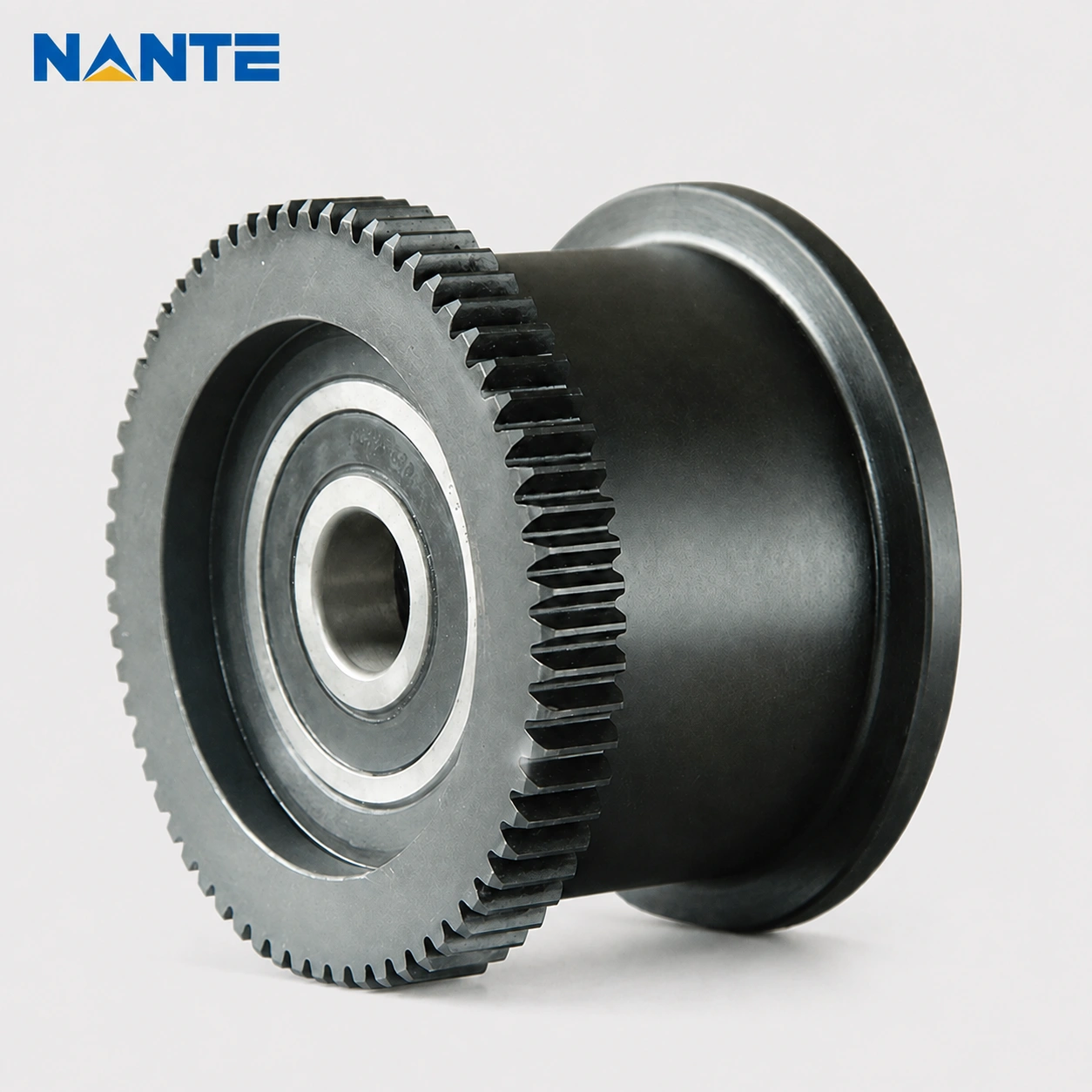
8. Wheels and Travelling Mechanism
The travelling mechanism can include wheel sets, motors, gearboxes, brakes, buffers, structural frames, and travel safety devices.
The correct travelling arrangement depends on crane self-weight, rated load, wheel load, rail type, travel speed, and the number of driven wheels. These factors determine the required wheel sets, motors, gearboxes, brakes, buffers, and supporting structure.
Poor wheel and rail matching can contribute to skewing, vibration, abnormal wear, and higher maintenance costs.
9. Electrical Controls and Safety Features
Electrical scope can vary considerably.
A basic crane may use simple controls, while an advanced system may include variable-frequency drives, remote control, monitoring, anti-sway functions, or automation.
More advanced controls increase initial cost but can improve smooth acceleration, positioning accuracy, and equipment protection.
10. Outdoor Protection
Outdoor gantry cranes may be exposed to rain, wind, humidity, dust, salt, temperature changes, and industrial contaminants.
Depending on the operating environment, an outdoor gantry crane may require higher electrical enclosure protection, corrosion-resistant coatings, weather covers, storm locks, rail clamps, or wind alarms. These additions can increase the initial price but are necessary where wind, rain, humidity, salt, dust, or temperature extremes are present.
Outdoor protection should always be based on the actual site conditions rather than simply specifying “outdoor use.”
What Information Is Needed for an Accurate Gantry Crane Quotation?
Basic Specifications to Provide
For a more accurate gantry crane quotation, provide:
- Lifting capacity
- Span
- Lifting height
- Travel distance
- Indoor or outdoor installation
- Load type
- Operating hours and lifts per hour
- Required lifting and travel speeds
- Voltage, frequency, and phases
- Control method
- Preferred crane configuration
- Temperature, dust, humidity, or corrosive conditions
- Site layout drawing if available
Complete information reduces assumptions and makes quotations easier to compare.
Check What Is Included in the Quotation
When comparing quotations, buyers should confirm whether the quoted scope includes the crane structure, hoisting mechanism, travelling system, electrical controls, mobile power supply, rails and rail accessories, safety devices, protective coating, packaging, freight, installation, commissioning, testing, documentation, and spare parts where required.
Two quotations should not be compared only by the final price until the technical scope, included equipment, and supply boundaries are clearly aligned.
Gantry Crane Price vs. Total Project Cost
The equipment price is only one part of the total investment.
Additional costs may include foundations, rails, electrical distribution, freight, erection, commissioning, and site preparation.
Operating costs also matter. Energy use, maintenance, inspection, component life, and downtime can all affect long-term value.
For this reason, the lowest initial gantry crane price is not always the lowest total project cost.
How to Reduce Gantry Crane Cost Without Under-Specifying
Cost optimization should come from accurate engineering requirements, not from removing necessary safety features.
- Specify a realistic maximum capacity.
- Avoid unnecessary extra span.
- Calculate the actual lifting height required.
- Match duty class to the real workload.
- Select practical operating speeds.
- Provide an accurate site layout.
- Define outdoor conditions precisely.
- Compare complete technical scopes.
When Is a Higher Gantry Crane Price Justified?
A higher initial price may be reasonable for high-frequency operation, frequent near-capacity lifting, long spans, large lifting heights, long travel distances, precise positioning, corrosive environments, or advanced control requirements.
In these cases, the higher cost usually reflects additional structural, mechanical, electrical, or environmental requirements.
FAQ About Gantry Crane Cost
How Much Does a Gantry Crane Cost?
There is no universal price. Capacity, span, lifting height, duty, travel distance, configuration, controls, and environment all affect the final cost.
What Are the Biggest Gantry Crane Price Factors?
The main factors are capacity, span, lifting height, duty class, travel distance, hoist, travelling mechanism, electrical system, and outdoor protection.
Does a Longer Span Increase Gantry Crane Cost?
Usually, yes. A longer span can require a heavier bridge structure and may increase wheel loads.
Does Travel Distance Affect the Gantry Crane Quotation?
Yes. Longer travel can increase rails, electrical equipment, cabling, and installation requirements.
Why Does an Outdoor Gantry Crane Cost More?
Outdoor cranes may require additional wind resistance, weatherproof electrical equipment, corrosion protection, and storm-securing systems.
What Should I Provide for a Gantry Crane Quotation?
Provide capacity, span, lifting height, travel distance, duty conditions, speeds, power supply, control method, load information, operating environment, and a site drawing where available.
Get a Gantry Crane Quotation for Your Project
Nante Crane provides gantry crane solutions for different lifting capacities, spans, lifting heights, duty requirements, travel distances, and operating environments. Contact Nante Crane and send us your required capacity, span, lifting height, travel distance, power supply, duty conditions, and site environment to receive an application-specific quotation. If some specifications are not yet confirmed, you can also share your application details or site layout, and our engineering team can help determine a suitable crane configuration before quotation.