English



What are the Main Components of a Gantry Crane for Container Handling?
Date: 2026-04-10 Share:
A gantry crane for container handling usually includes a bridge girder, support legs, trolley and hoist system, container spreader, travel mechanism, and control system. These gantry crane components make up the full container handling crane structure. People use it in busy ports and container terminals.
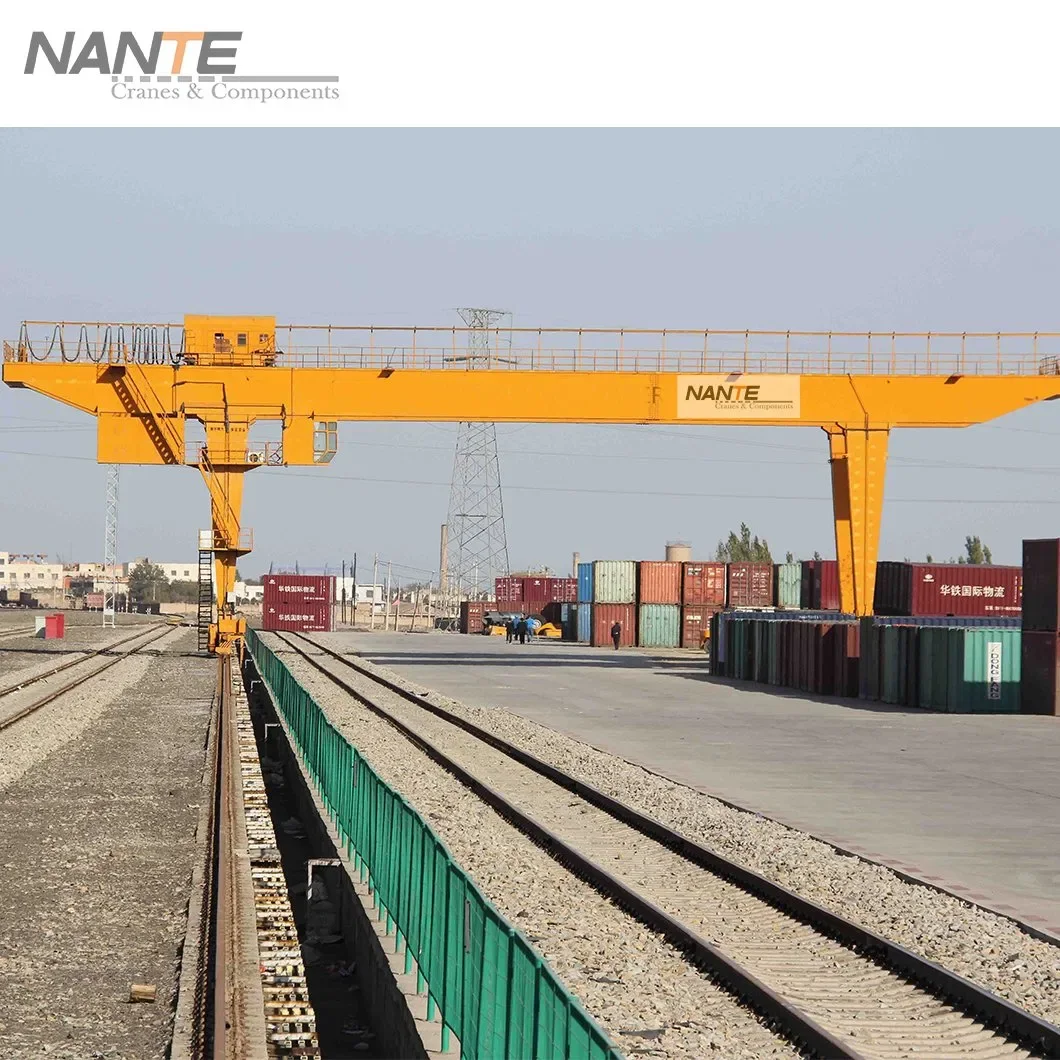
Overview of Gantry Cranes for Container Handling
Gantry cranes play an important role in modern logistics. They move heavy containers efficiently in ports and terminals. A container gantry crane is a large overhead lifting machine. It is built especially for loading, unloading, and stacking shipping containers. The crane works in high-throughput environments. There speed, precision, and reliability matter a lot.
What Makes Gantry Cranes Essential in Ports
Ports and container terminals handle millions of TEUs (twenty-foot equivalent units) every year. Gantry cranes allow quick ship-to-shore transfers and yard stacking. They reduce vessel turnaround time. Their strong design carries heavy loads. It also keeps stability against wind and dynamic forces that appear in marine settings. Typical lifting capacities range from 30 to 65 tons. The spans fit multiple container rows.
Types of Container Gantry Cranes (RMG vs RTG)
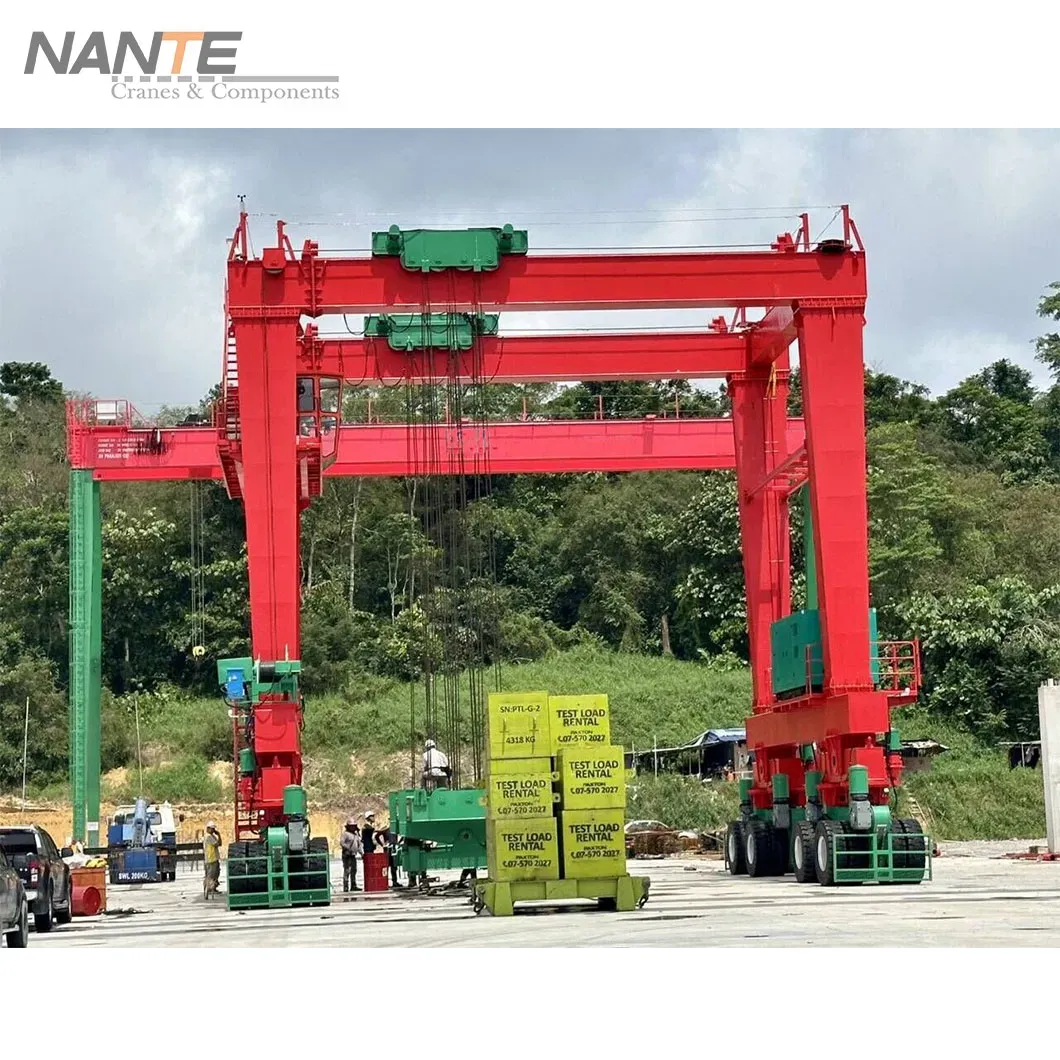
Two main types control container operations. They are Rail-Mounted Gantry (RMG) cranes and Rubber-Tired Gantry (RTG) cranes. RMG cranes run on fixed steel rails. They give high precision and automation for rail-side or terminal stacking. They work well in structured environments with steady paths. RTG cranes use rubber tires for more flexibility. They allow movement across open yards without rails. This mobility fits variable stacking layouts. Yet it may need more space for maneuvering. Both types use similar gantry crane components. They differ mainly in mobility systems.
Main Structural Components of a Gantry Crane
The structural system gives the rigid framework. It supports all loads and movements in the container handling crane structure.
Bridge (Main Girder)
The bridge, or main girder, is the horizontal span. It carries the trolley across the working area. It serves as the primary load-bearing member. It distributes weight evenly. Most designs use box girders for better strength and torsional rigidity. Some use truss girders for lighter weight in shorter spans. Single girder configurations fit lighter duties. Double girder setups manage higher capacities and wider spans. These spans are commonly 20–40 meters in container applications. Corrosion-resistant coatings protect against saltwater exposure in port environments.
Support Legs and Frame Structure
Support legs connect the bridge to the ground or rails. They transfer vertical and lateral loads. Rigid legs stay on one side and flexible legs stay on the other. They handle thermal expansion and skew forces during travel. Box-section construction keeps stability under heavy container loads. The frame joins with end beams for overall rigidity. It forms the classic portal shape that defines gantry cranes.
End Trucks and Traveling Mechanism
End trucks link the legs to the wheels or bogies. They enable longitudinal movement. Precision alignment stops rail wear. It also ensures smooth operation. These gantry crane components keep structural integrity. They allow the entire crane to reposition over container stacks.
Hoisting and Container Handling System
This system forms the core working unit. It is responsible for grasping, lifting, and lowering containers.
Trolley and Hoist Mechanism
The trolley travels along the bridge. It positions the hoist exactly. It carries the hoisting machinery. It moves horizontally at controlled speeds. The hoist includes powerful motors, gearboxes, and braking systems. These provide reliable vertical movement. Open winch or wire rope configurations give the torque needed for fast lifting cycles in busy terminals.
Container Spreader (Twist Lock System)
The spreader is a specialized attachment. It securely engages standard container corner castings with twist locks. Telescopic models automatically adjust for 20 ft, 40 ft, and 45 ft containers. They remove manual changes. Rotation capabilities (±5°) and side-shift functions improve alignment. Twist-lock mechanisms ensure positive locking. Sensors confirm engagement before lifting. This step improves safety and efficiency.
Wire Rope, Drum, and Motor
High-strength wire ropes wind onto durable drums. Electric motors power the drums. Synchronization across multiple ropes prevents tilting. Variable frequency drives allow smooth acceleration and precise speed control. They usually reach lifting speeds suited to terminal throughput requirements.
Traveling and Mobility Components
Mobility gantry crane components decide how well the crane moves through the terminal.
Wheels and Bogies
Wheels and multi-wheel bogies spread heavy loads. They enable travel at the same time. Steel wheels on RMG cranes run on precision rails for accurate positioning. Rubber tires on RTG cranes give traction on paved surfaces. They also allow steering for flexible yard operations.
Rail-Mounted vs Rubber-Tired Systems
RMG systems provide better stability and lower operating costs in fixed layouts. They suit automated stacking lanes. RTG systems give unmatched flexibility. They move freely between stacks without rail infrastructure. Selection depends on terminal design. RMG favors high-density rail-integrated ports. RTG suits dynamic container yards.
Drive Mechanism
Electric or diesel-electric drives power wheel rotation through gearboxes. Variable frequency control ensures smooth starts and stops. It reduces mechanical stress. It also improves positioning accuracy.
Electrical and Control Systems
Modern gantry crane components depend on advanced electronics for coordinated operation.
Control System and Automation
PLC-based controls coordinate all movements from a central interface. Automation options go from semi-automatic cycles to advanced positioning systems. These systems reduce operator workload.
Power Supply System
Festoon cables, conductor rails, or cable reels deliver reliable power during travel. Onboard generators support RTG units in remote yard areas.
Sensors and Anti-Sway Technology
Load cells, encoders, and proximity sensors monitor position, weight, and movement in real time. Anti-sway systems use mechanical dampers or electronic feedback. They minimize container oscillation during acceleration and braking. They ensure precise placement even at higher speeds.
Safety and Auxiliary Systems
Safety features protect personnel, equipment, and cargo in demanding port conditions.
Braking System
Multiple redundant brakes on hoist and travel motions give emergency stopping power. Service brakes manage normal deceleration. Parking brakes secure the crane when it is idle.
Anti-Sway System
Beyond basic sensors, dedicated anti-sway mechanisms absorb kinetic energy. They use hydraulic dampers or rope tension control. They reduce load swing in a big way.
Limit Switches and Protection Devices
Overload protection, over-travel limits, and emergency stops prevent accidents. Wind speed monitors and skew correction systems add more safeguards for outdoor operations.
Operator Cabin and Human-Machine Interface
Cabin Design and Visibility
Ergonomic cabins include panoramic windows, adjustable seating, and climate control. They give operator comfort during long shifts. Elevated positioning offers excellent visibility over container stacks.
Remote Control and Automation Options
Many systems support radio remote controls or centralized remote operation. They allow operators to work from safer or more efficient locations. This happens as automation increases.
How These Components Work Together
All gantry crane components interact smoothly in a coordinated cycle:
The travel mechanism positions the crane over the target container or stack. It uses wheels and drives.
The trolley moves along the bridge. It aligns precisely above the load.
The hoist lowers the spreader. Twist locks engage the container corners with sensor confirmation.
The hoist raises the container smoothly. Anti-sway systems stabilize the load.
The trolley and travel systems transport the container to the new position. They allow accurate lowering and release.
This integrated flow enables efficient lift-move-position-stack operations. It maximizes terminal productivity while it keeps safety.
Partner with Nante Crane for Reliable Container Handling Solutions
Nante Crane is a professional and leading manufacturer in the field of overhead cranes, gantry cranes, and crane components. The company’s products cover a wide range of gantry cranes, such as single girder and double girder gantry cranes, and also provide comprehensive crane components. The company’s main products are designed to provide a robust structure, efficient hoisting equipment, and modern control systems. Nante provides customized gantry crane services and technical consultation. If you are looking for a quotation or technical consultation for your gantry crane needs, please contact Nante Crane.
FAQ
What are the main gantry crane components for container handling?
Key parts include the bridge girder, support legs, trolley and hoist, container spreader, travel wheels or tires, and electrical control systems.
What is the difference between RMG and RTG container gantry cranes?
RMG cranes run on fixed rails for high precision and automation, while RTG cranes use rubber tires for flexible movement across open yards.
Can gantry cranes be customized for specific lifting capacities and spans?
Yes, manufacturers offer tailored configurations for various spans, capacities, and operational needs in container handling.