English


Single Hook vs Double Hook Block Selection Guide for Cranes
Single Hook vs Double Hook Block Selection Guide for Cranes
Date: 2026-07-03 Share:
A Single Hook Block versus a Double Hook Block comparison is mainly of interest to buyers regarding the capacity and build of both types of hook blocks as well as their price, maintenance and the realistic way in which they are used. A Single Hook Block is commonly used for normal lifting tasks due to its compactness and ease of use. A Double Hook Block is used for heavier, wider loads and loads that are harder to balance. The main advantages of a Double Hook Block are outlined below in order to help in deciding whether to opt for a Single Hook or Double Hook configuration for your crane hook.
Crane Hook Block Comparison: What Buyers Should Know First
A crane hook block is the lifting assembly that connects the hoisting system to the load. It normally includes the hook, sheaves, frame, pins, bearing or swivel parts, rope interface, and safety latch.
The hook block is not just an accessory. It affects lifting height, load stability, rope life, inspection workload, and crane performance. The right choice depends on the load weight, center of gravity, lifting points, crane duty cycle, reeving system, and available headroom.
For buyers, the main question is simple: do you need a compact and economical lifting point, or do you need better load distribution for demanding heavy-duty lifting?
Structure: Single Hook Block vs Double Hook Block
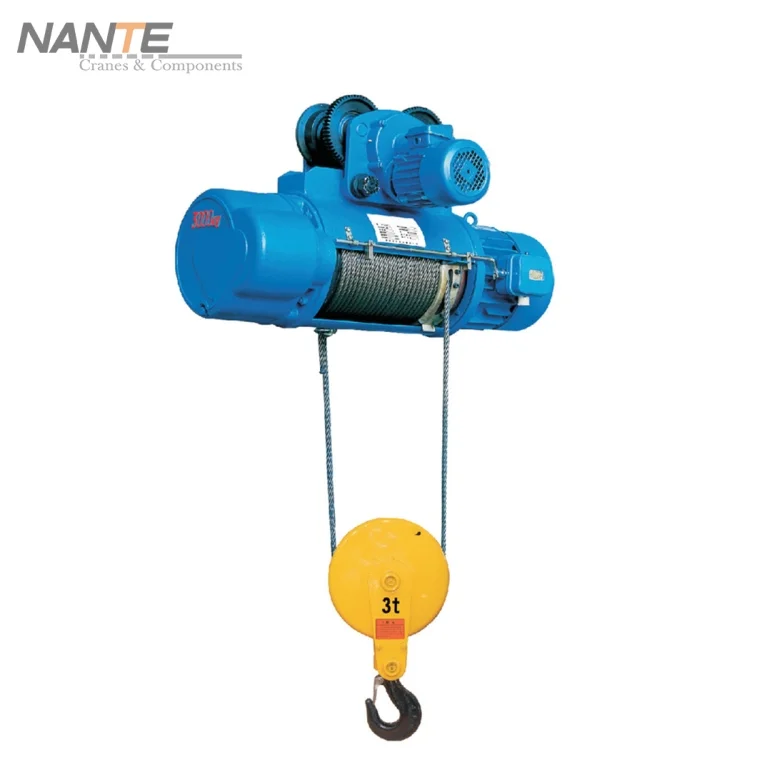
Single Hook Block Structure
A single hook block has one main lifting point. It is usually compact, lighter in self-weight, and easier to position under the hoist. The structure may include one or more sheaves, depending on the rated load and reeving arrangement.
This design is suitable when the load has a clear central lifting point. It keeps rigging simple and supports fast daily operation. However, “single hook” does not automatically mean low capacity. Capacity still depends on hook material, sheave design, wire rope size, number of rope falls, and the crane’s rated load.
Double Hook Block Structure
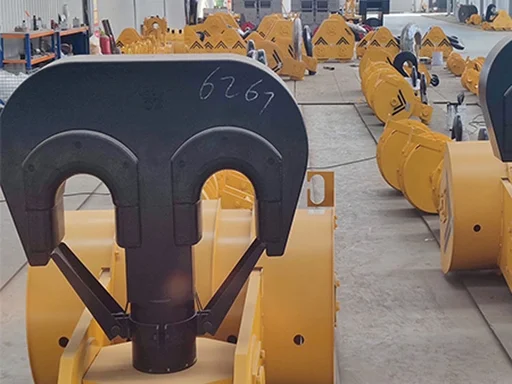
A double hook block uses two lifting points or a double-hook configuration. It is generally larger and more complex than a single hook block. The frame must support balanced force transfer, and the reeving system often requires more careful design.
The double hook structure is useful when the load is wide, long, or heavy enough to require improved balance. It also helps when the load has two engineered lifting points. The trade-off is higher cost, greater self-weight, and more inspection points.
Lifting Capacity: Which Option Handles More?
Capacity should always be judged by the full lifting system, not by hook shape alone. The crane, hoist, hook block, wire rope, sheaves, sling angle, and load attachment points all work together.
Single Hook Block Applications
Common single hook block applications include workshop lifting, warehouse handling, maintenance lifting, light manufacturing, assembly operations, and standard overhead crane service.
A single hook block is usually the practical choice when:
- The load is compact and balanced.
- The center of gravity is predictable.
- The load has one main lifting point.
- The rigging arrangement is simple.
- The operation values speed and easy handling.
It is also a good option where frequent lifting requires quick hook positioning and simple inspection.
Heavy-Duty Lifting Hook Blocks
Heavy-duty lifting hook blocks are used for lifting large machinery, steel structures, shipbuilding parts, mining equipment, energy equipment and many other industrial loads of high value.
A double hook block is generally more suitable for these types of operations, as it allows for better balance and more versatility in the rigging. It is particularly advantageous for loads that cannot be lifted safely from a single point of lift.
Some key factors to consider when selecting the final design of the hook block are heat, corrosion, shock loading, lifting frequency and required safety margin.
Hook Block Load Distribution: Stability Matters
Hook Block Load Distribution in Single Hook Blocks
In a single hook block, the lifting force is concentrated through one central hook. This creates a simple load path and makes the hook easy to align under the hoist.
Symmetrical loads are best lifted this way as it saves setup time and generally requires less equipment to lift the load. However, long and wide loads and loads that are not centered will require additional rigging to stop the load from tilting, swinging or rotating during lift.
Hook Block Load Distribution in Double Hook Blocks
Hook block load distribution is one of the main reasons buyers choose a double hook block. With two lifting points, the load can be supported more evenly when properly rigged.
This is one of the strongest double hook block advantages. It improves lifting stability, reduces unwanted rotation, and helps operators control heavy or wide loads more smoothly.
However, a double hook block does not correct poor rigging. The load’s center of gravity, sling angle, lifting point strength, and operator control still need to be checked before lifting.
Hook Block Reeving Systems: Why Rope Arrangement Matters
Hook Block Reeving Systems for Single Hook Blocks
Hook block reeving systems define how the wire rope passes through the sheaves. More rope parts can increase lifting capacity, while fewer rope parts can improve lifting speed.
For a single hook block, the reeving system is often simpler. Buyers should check rope diameter, sheave groove size, number of rope falls, lifting height, hook approach, and hoisting speed.
A mismatched rope and sheave arrangement can shorten rope life and reduce lifting efficiency.
Hook Block Reeving Systems for Double Hook Blocks
For double hook blocks, reeving design becomes more important. The rope path must keep the block balanced and allow stable lifting. Poor reeving can cause uneven loading, rope wear, and block tilt.
Before selecting a double hook block, buyers should ask:
- Does the reeving match the crane’s rated load?
- Will the hook block remain level during lifting?
- Is there enough lifting height after allowing for the larger block?
- Can the sheaves and bearings be inspected easily?
Cost Comparison: Initial Price vs Long-Term Value
A single hook block usually costs less upfront because it has a simpler structure, fewer load-bearing areas, and easier installation. It is often the best choice for standard lifting where the load is compact and balanced.
A double hook block normally costs more because it requires stronger structure, more precise engineering, and more maintenance attention. But the higher cost can be justified when better balance reduces downtime, protects high-value loads, or improves safety in repeated heavy-duty lifting.
The lowest purchase price is not always the lowest total cost. If the wrong hook block causes unstable lifting, slow rigging, or faster rope wear, the long-term cost can be much higher.
Applications: When to Choose Each Hook Block
Best Single Hook Block Applications
Choose a single hook block for general lifting tasks, compact machinery, warehouse loads, workshop maintenance, assembly line support, and standard overhead crane operations.
It is best when the buyer wants:
- Lower initial cost
- Compact structure
- Fast positioning
- Easier maintenance
- Simple rigging
- Reliable performance for balanced loads
Best Double Hook Block Applications
Choose a double hook block for heavy, long, wide, or difficult-to-balance loads. It is suitable for steel processing, large fabricated parts, shipbuilding, mining, power equipment, and high-capacity crane operations.
It is best when the buyer needs:
- Better balance
- Stronger load control
- Wider lifting support
- Improved stability
- Heavy-duty performance
- More flexible rigging options
Overhead Crane Hook Configurations
Overhead Crane Hook Configurations for Single Hook Blocks
Overhead crane hook configurations using single hook blocks are common because they are efficient and compact. They work well with single girder cranes, double girder cranes, hoists, and standard workshop lifting systems.
Buyers should confirm lifting height, hook approach, hoist compatibility, rated load, and daily inspection access.
Overhead Crane Hook Configurations for Double Hook Blocks
Double hook blocks are often used in higher-capacity overhead crane configurations where the load requires better distribution. They may need more headroom, stronger trolley design, and a carefully planned reeving system.
The hook block and crane should always be selected as one complete lifting system.
Maintenance Comparison
Single Hook Block Maintenance
A single hook block is generally easier to maintain. Inspection should include the hook throat opening, cracks, deformation, safety latch, sheaves, bearings, pins, lubrication points, and rope grooves.
Because the structure is simpler, inspection is usually faster and downtime can be easier to control.
Double Hook Block Maintenance
A double hook block requires more detailed inspection. Both hook areas, the frame, sheaves, bearings, rope alignment, latch condition, and load-bearing pins should be checked carefully.
The maintenance workload is higher, but for heavy-duty lifting, the added stability can be worth it.
FAQ
What is the main difference between a single hook block and a double hook block?
A single hook block has one main lifting point. A double hook block has two lifting points or a double-hook structure for better balance and load distribution.
Is a double hook block always stronger?
Not always. Strength depends on rated load, hook design, material, sheaves, rope size, reeving, and crane capacity.
Do double hook blocks require more maintenance?
Usually yes. They have more load-bearing areas and more complex structures, so inspection takes more time.
Nante Crane designs and manufactures cranes and crane components for industrial lifting applications, including overhead cranes, gantry cranes, hoisting systems, crane control panels, and customized lifting solutions. Contact Nante Crane today to compare single hook and double hook block options and get a safer, more efficient lifting solution tailored to your capacity, crane configuration, reeving system, application environment, and maintenance needs.