English



Single Girder vs Double Girder Overhead Crane: Which Should You Choose?
Single Girder vs Double Girder Overhead Crane: Which Should You Choose?
Date: 2026-08-28 Share:
Choosing between a single girder vs double girder overhead crane can directly affect lifting performance, building loads, available lifting height, maintenance costs and total project investment. A single girder overhead crane is often the more economical option for light- and medium-duty material handling, while a double girder overhead crane is commonly selected for higher capacities, longer spans and more demanding production environments.
However, neither design is automatically better. The right choice depends on capacity, span, lifting height, duty class, headroom, crane weight, runway conditions and total cost of ownership.
What Is the Difference Between a Single Girder and Double Girder Overhead Crane?
The main difference is the bridge structure.
A single girder crane uses one main bridge girder, while a double girder crane uses two parallel bridge girders. This structural difference influences crane weight, stiffness, trolley arrangement, wheel loads, maintenance access and price.
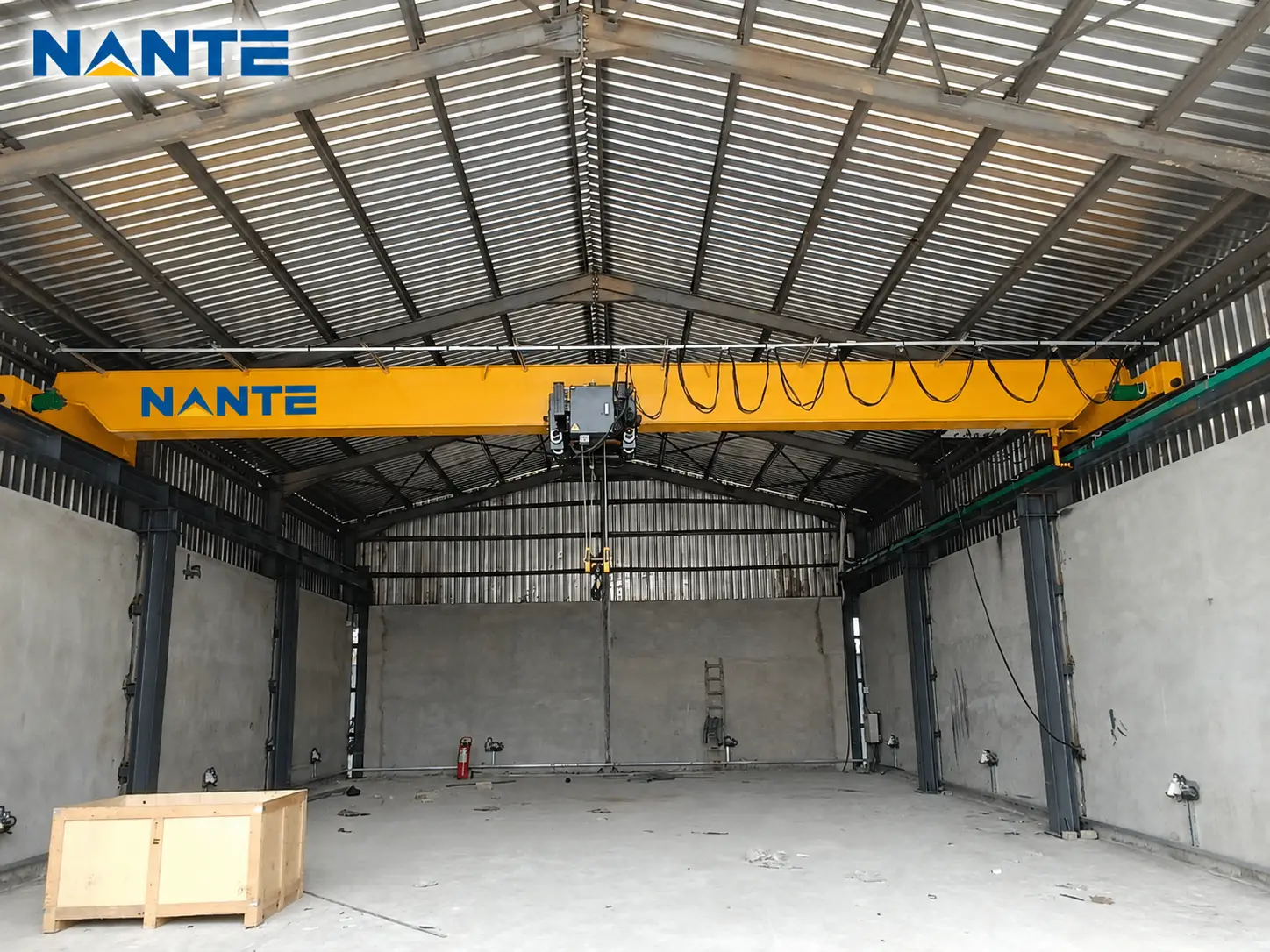
Single Girder Overhead Crane Structure
A single girder crane normally uses one bridge beam with the hoist and trolley traveling along or beneath the girder.
Because the structure requires less steel, the crane is generally lighter and easier to install. Lower self-weight can also reduce the loads transferred to runway beams, columns and foundations.
Double Girder Overhead Crane Structure
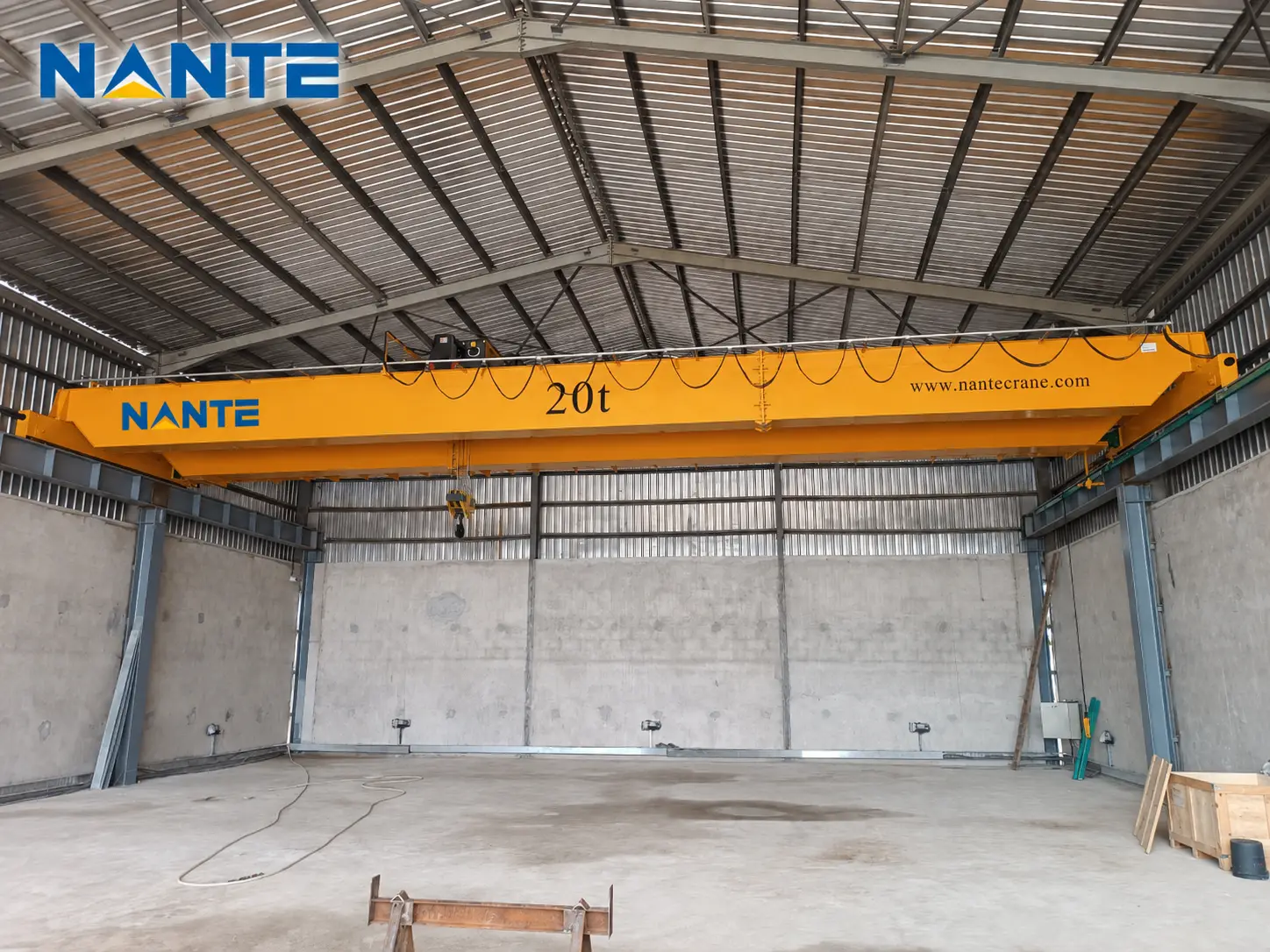
A double girder crane uses two bridge beams connected by end trucks. The trolley can usually travel on rails mounted on top of the girders.
This configuration provides greater structural flexibility and is well suited to high-capacity lifting, demanding spans, heavy-duty operation and applications requiring auxiliary hoists or maintenance platforms.
Single Girder vs Double Girder Crane: Specification Comparison
| Factor | Single Girder Crane | Double Girder Crane |
| Bridge structure | One main girder | Two main girders |
| Capacity suitability | Light to medium, depending on design | Medium to very high |
| Span | Economical for moderate spans | Better for demanding long spans |
| Lifting height | Good with optimized hoist design | Often provides favorable hook positioning |
| Duty class | Multiple duty levels possible | Strong choice for intensive service |
| Crane weight | Usually lower | Usually higher |
| Runway load | Generally lower | Generally higher |
| Maintenance access | Simpler structure | Platforms and walkways can be added |
| Initial price | Usually lower | Usually higher |
| Heavy-duty use | Application-dependent | Commonly preferred |
The single vs double girder crane decision should therefore be based on the complete operating requirement rather than capacity alone.
Capacity: How Much Can Each Crane Lift?
Capacity of a Single Girder Overhead Crane
Single girder cranes are widely used for general workshop, warehouse and manufacturing applications where lifting requirements are moderate.
When defining crane capacity, buyers should consider not only the load itself but also hooks, grabs, magnets, slings and other below-the-hook equipment.
Over-sizing a crane unnecessarily can increase equipment weight, runway requirements and project cost.
Capacity of a Double Girder Overhead Crane
Double girder cranes offer greater flexibility for high-capacity lifting.
They are commonly used for handling heavy machinery, steel products, dies, coils, large fabricated components and other demanding industrial loads.
There is no universal tonnage at which every crane must become double girder. Capacity should always be considered together with span, duty class and structural requirements.
Span: Which Design Is Better for Long Bays?
Crane span is normally measured between the centerlines of the runway rails.
Single Girder Crane for Moderate Spans
For moderate spans and capacities, a single girder crane can provide an efficient combination of low weight and competitive cost.
As span increases, however, girder stiffness and deflection become more important. A very large single girder may eventually lose some of its structural and economic advantages.
Double Girder Crane for Longer Spans
Double girder construction is often preferred when long span is combined with high capacity, demanding duty, high travel speeds or strict deflection requirements.
Capacity and span should always be evaluated together during crane selection.
Lifting Height and Headroom
Lifting height, hook elevation and crane headroom are related but different specifications.
Lifting height refers to the vertical distance the hook can travel, while headroom describes the vertical space occupied by the crane and hoist arrangement.
Single Girder Headroom
Low-headroom hoists can make a single girder crane highly efficient in buildings with limited roof height.
This can be particularly valuable in retrofit projects where changing the roof or runway elevation would be expensive.
Double Girder Lifting Height
A double girder trolley can often be positioned between or above the two girders, allowing favorable hook geometry.
For projects where every millimeter of vertical lifting space matters, buyers should compare actual crane elevation drawings instead of assuming one design automatically provides better headroom.
Duty Class: Which Crane Is Better for Frequent Operation?
Crane duty should be determined by actual operating conditions, including:
- Lifts per hour
- Operating hours per day
- Average lifted load
- Frequency of near-rated loads
- Starts and stops
- Travel distance
- Production environment
A single girder crane is not automatically limited to light duty. Properly engineered designs can support demanding service.
However, when high capacity, long span and frequent operating cycles occur together, a double girder crane often becomes the more practical heavy duty overhead crane solution.
Double Girder Crane Advantages
The main double girder crane advantages include:
- Greater capacity potential.
- Better suitability for demanding long spans.
- Flexible trolley and hoist arrangements.
- Good potential for high hook positions.
- Easier integration of auxiliary hoists.
- Space for walkways and maintenance platforms.
- Better suitability for intensive industrial production.
These advantages become more important when crane downtime directly affects production output.
Single Girder Overhead Crane Advantages
A single girder crane can provide several commercial benefits:
- Lower initial purchase cost
- Lower bridge self-weight
- Reduced runway and building loads
- Simpler transportation and installation
- Efficient performance for general material handling
- Lower structural modification costs in some existing buildings
For moderate lifting requirements, paying for a heavier double girder system may provide little practical benefit.
Crane Weight and Runway Loads
Crane weight is often overlooked during purchasing decisions.
A lighter single girder bridge generally transfers less dead load to the runway system. This can be particularly important when installing a crane in an existing factory.
A double girder crane usually weighs more because of the additional girder and heavier trolley equipment.
However, buyers should not compare total crane weight alone. Ask the supplier for maximum wheel loads and runway reactions, because wheel quantity, spacing and crane geometry also influence building loads.
Single Girder vs Double Girder Overhead Crane Price
A single girder crane normally costs less initially because it requires less structural steel and typically uses a simpler bridge and hoist arrangement.
A double girder crane generally costs more because of its additional structure, heavier trolley system and possible maintenance platforms or auxiliary equipment.
Compare Total Installed Cost
Do not compare only the crane purchase price.
Consider:
Crane + runway + electrification + freight + installation + commissioning + building modifications.
A lighter crane may significantly reduce structural costs in an existing building.
Compare Total Cost of Ownership
For high-production facilities, maintenance accessibility, downtime, component life and future production requirements can be more important than initial purchase price.
The cheapest quotation is not always the lowest-cost solution over the crane’s service life.
Which Crane Should You Choose?
Choose a Single Girder Overhead Crane When:
- Capacity and span are moderate.
- Lower initial investment is important.
- Building structural capacity is limited.
- Lower crane self-weight is desirable.
- The application involves standard material handling.
- Installation simplicity is important.
Choose a Double Girder Overhead Crane When:
- Capacity is high.
- Span is structurally demanding.
- Operating frequency is intensive.
- Loads near rated capacity are frequently handled.
- Maximum lifting height is critical.
- Auxiliary hoists are required.
- Maintenance access is important.
- Future production expansion is expected.
What Information Should You Provide for Crane Selection?
Before requesting a quotation, prepare the following information:
- Required lifting capacity.
- Crane span.
- Required lifting height.
- Runway length and rail elevation.
- Building clear height.
- Maximum and average lifted loads.
- Lifts per hour.
- Operating hours per day.
- Required lifting and travel speeds.
- Indoor or outdoor environment.
- Power supply.
- Control method.
- Existing runway information.
- Special lifting attachments.
- Future capacity requirements.
Providing accurate information makes it easier to compare single and double girder configurations on the same engineering basis.
FAQ: Single Girder vs Double Girder Overhead Crane
When Should I Use a Double Girder Crane?
Use a double girder crane when your project involves high capacity, demanding span, intensive operating cycles, frequent lifting near rated capacity, critical lifting height, auxiliary hoists or maintenance-access requirements. The decision should be based on the complete operating condition rather than tonnage alone.
Is a Double Girder Crane Always Better?
No. For moderate lifting applications, a single girder crane may provide the required performance with lower weight, lower cost and simpler installation.
Can a Single Girder Crane Be Used for Heavy Duty?
Yes, if it is properly engineered for the required service classification. Girder quantity alone does not determine duty level.
Which Crane Provides Better Lifting Height?
It depends on the hoist and trolley arrangement. Double girder designs can offer excellent hook positioning, while low-headroom single girder designs can also perform well in restricted buildings.
Which Crane Costs Less?
A single girder crane generally has a lower initial price. However, the final decision should consider runway construction, installation, building reinforcement, maintenance and lifetime operating costs.
Get a Crane Recommendation & Quote
With experience in industrial lifting solutions, Nante Crane provides single and double girder overhead cranes for a wide range of material-handling applications. Send Nante Crane your capacity, span, lifting height, duty class and application details to receive a suitable crane configuration and project-specific quotation. Request your crane proposal today.