English



RMG Rail Mounted vs RTG Rubber Tyred Container Gantry Cranes: 4 Key Differences for Efficient Yard Operations
RMG Rail Mounted VS RTG Rubber Tyred container Gantry Cranes 4 Key Differences for Efficient Yard Operations
Date: 2026-01-02 Share:
In today’s busy container terminals and intermodal yards, picking the right gantry crane can boost throughput by as much as 30%. The two main types are the rail mounted gantry crane (RMG) and the rubber tyred container gantry crane (RTG). Both move and stack containers well. Yet their design differences strongly affect mobility, accuracy, cost, and automation chances. Knowing these points helps terminal managers choose the best fit for their yard layout, volume, and future plans.
What is a Rail Mounted Gantry Crane (RMG)?
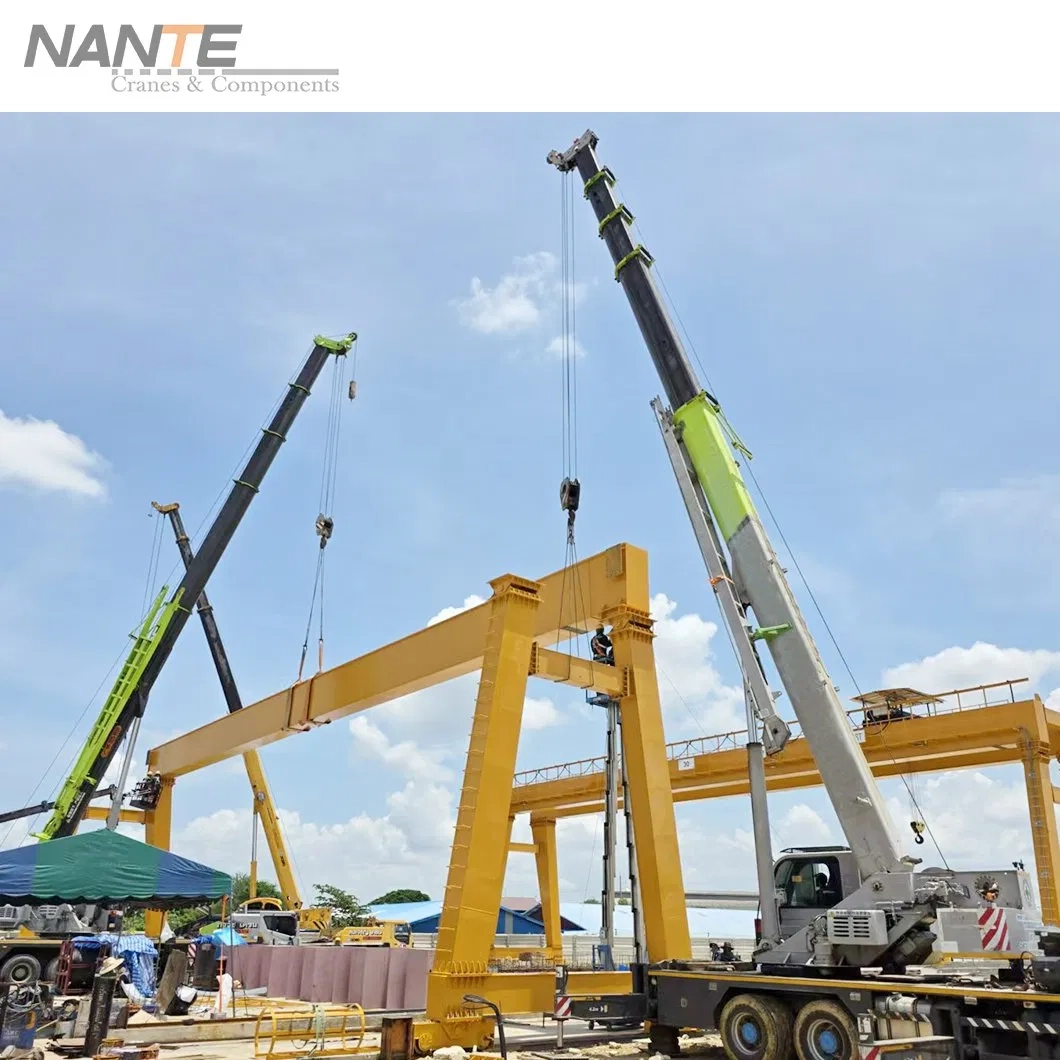
Overview and Basic Structure
A rail mounted gantry crane is a big overhead crane built just for container handling. It travels on parallel steel rails set into the ground. This setup gives great stability and exact control. Most rail mounted container gantry cranes lift 40–50 tons under spreader and have spans from 20 to over 60 meters.
Key Features and Components
- 16–24 heavy-duty steel wheels for smooth rail travel
- Fixed electric power supply through cable reels or conductor bars
- Advanced anti-sway systems and precise positioning technology
- Single or double cantilever options for flexible stacking configurations
Common Applications
Rail mounted gantry cranes are common in high-density container terminals, rail-yard intermodal facilities, and large logistics centers. These places need steady, high-volume stacking, often 5–6 containers high.
What is a Rubber Tyred Gantry Crane (RTG)?
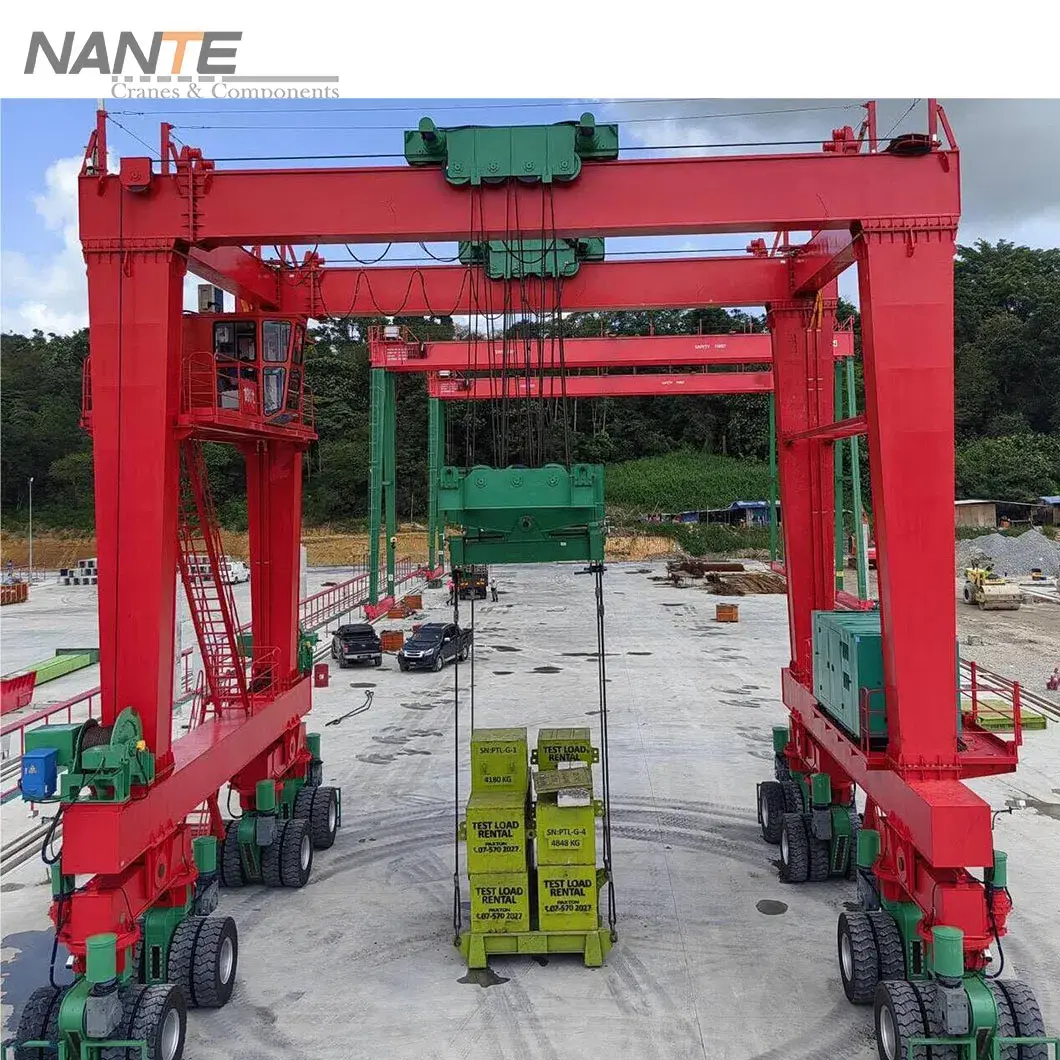
Overview and Basic Structure
A rubber tyred container gantry crane moves freely on eight big pneumatic rubber tires. It uses diesel generators or hybrid/fully electric systems. This gives full yard mobility without fixed tracks.
Key Features and Components
- Multi-directional steering (90° crab, straight, diagonal)
- Telescopic spreader for 20ft, 40ft, and 45ft containers
- On-board power generation or cable reel options
- Ability to operate on slightly uneven surfaces
Common Applications
Rubber tyred container gantry cranes work best in mid-sized ports, inland container depots, and growing yards. These locations often need quick layout changes or container shuffling across lanes.
4 Key Differences Between RMG and RTG Cranes
Difference 1: Mobility and Flexibility
The clearest difference is movement. A rail mounted gantry crane only travels along its own rails. So it stays in one block and moves in straight lines. On the other hand, a rubber tyred container gantry crane can go anywhere. It turns and shifts to other yard blocks fast. That makes RTGs perfect for changing or expanding terminals. Meanwhile, rail mounted container gantry cranes fit fixed, high-throughput areas.
Difference 2: Stability and Precision
Rails give the rail mounted gantry crane outstanding firmness and pinpoint accuracy, often within centimeters, even in strong wind. Automated rail mounted gantry cranes reach stacking accuracy that allows 1-over-5 or 1-over-6 setups safely. Rubber tyred container gantry cranes depend on tire position and electronic steering. They offer solid stability, but they need extra sway control. Usually, they limit stacking to 1-over-4 or 1-over-5.
Difference 3: Cost and Maintenance
Starting cost for rail mounted container gantry cranes is higher because of rail foundation work. However, daily running costs stay low thanks to electric power and little wheel wear. RTGs cost less at first since no rails are needed. Still, they face steady expenses for tire changes every 2–4 years, diesel fuel (unless electrified), and brake service. Many China rail mounted container gantry crane factories now provide hybrid models to find a middle ground.
Difference 4: Automation and Efficiency
Automation is where rail mounted gantry cranes really stand out. Fixed tracks and steady power make automated rail mounted gantry cranes simple to connect with terminal operating systems. They reach 35–45 moves per hour in fully unmanned mode. Rubber tyred container gantry cranes are getting semi-automation and electric versions. Yet full remote control stays harder because of changing position and power limits.
Advantages and Disadvantages of Each Crane Type
Pros and Cons of Rail Mounted Container Gantry Cranes
Pros
- Superior stability and wind resistance
- Lower energy and maintenance costs long-term
- Seamless integration with automation and TOS
- Higher stacking density (up to 6 high + truck lane)
Cons
- High initial infrastructure cost
- Inflexible once rails are laid
- Difficult to expand or reconfigure yard blocks
Pros and Cons of Rubber Tyre Container Gantry Cranes
Pros
- Excellent yard flexibility and quick relocation
- No expensive rail installation required
- Ideal for phased terminal expansion
- Can operate across multiple blocks easily
Cons
- Higher tire and fuel/electricity costs
- Slightly lower stacking height and precision
- More sensitive to ground conditions
Choosing the Right Crane for Your Yard Operations
Decision factors include:
- Annual throughput volume (>500,000 TEU favors RMG)
- Available budget and expansion plans
- Yard size and block layout
- Automation roadmap
- Environmental regulations (electric RMG or e-RTG)
Large, mature terminals with fixed rail blocks gain most from rail mounted container gantry crane systems. Growing or mid-sized yards that must adjust quickly pick rubber tyred container gantry cranes. Many modern terminals use both—RMGs for waterside and rail interchange, RTGs for buffer and truck zones.
Partner with Nante Crane for Premium Solutions
As a leading China rail mounted container gantry crane manufacturer and wholesaler with over 30 years of experience, Nante Crane delivers customized rail mounted container gantry cranes, automated rail mounted gantry cranes, and high-performance rubber tyred container gantry cranes to more than 50 countries. Our ISO-certified factory offers container rail mounted gantry cranes for sale and wholesale with lifting capacities up to 100 tons, anti-sway technology, and full remote-control options. Whether you need a rail mounted container gantry crane factory in China or reliable rubber tyre container gantry crane solutions, contact Nante Crane today at https://www.nantecrane.com/ or +86 575-81260826 for a free consultation and quotation.
FAQ
What is the main difference between a rail mounted gantry crane and a rubber tyred container gantry crane?
Rail mounted gantry cranes run on fixed rails for maximum stability and automation, while rubber tyred container gantry cranes use tires for complete yard mobility and lower initial cost.
Are automated rail mounted gantry cranes suitable for all container yards?
They are ideal for large, high-volume terminals with fixed layouts but less practical for small or frequently changing yards where rubber tyre container gantry cranes offer better flexibility.
Where can I find a China rail mounted container gantry crane factory for wholesale?
Experienced manufacturers in China, such as those specializing in rail mounted container gantry crane wholesale, provide competitive pricing, customization, and global shipping support.
What maintenance tips apply to rubber tyred container gantry cranes?
Regular tire pressure checks, wheel alignment, brake inspections, and timely replacement of wear parts extend service life and ensure safe operation.
How do rail mounted container gantry cranes improve yard efficiency?
By enabling precise, high-density stacking and full automation, they reduce container dwell time, increase storage capacity, and achieve higher moves per hour than most rubber tyred alternatives.