English


Is Double Girder Overhead Crane Your One-Stop Lifting Solution?
Is Double Girder Overhead Crane Your One-Stop Lifting Solution
Date: 2026-04-23 Share:
A double girder overhead crane offers a strong lifting solution for tough industrial jobs. Many teams in manufacturing, steel processing, and shipbuilding wonder if this equipment can handle all their lifting needs. This buying guide looks at the double girder overhead crane structure, working principle, advantages, and selection criteria. Readers will see when the design gives better performance. They will also learn how to avoid extra features that raise costs for efficient operations.
What Is a Double Girder Overhead Crane?
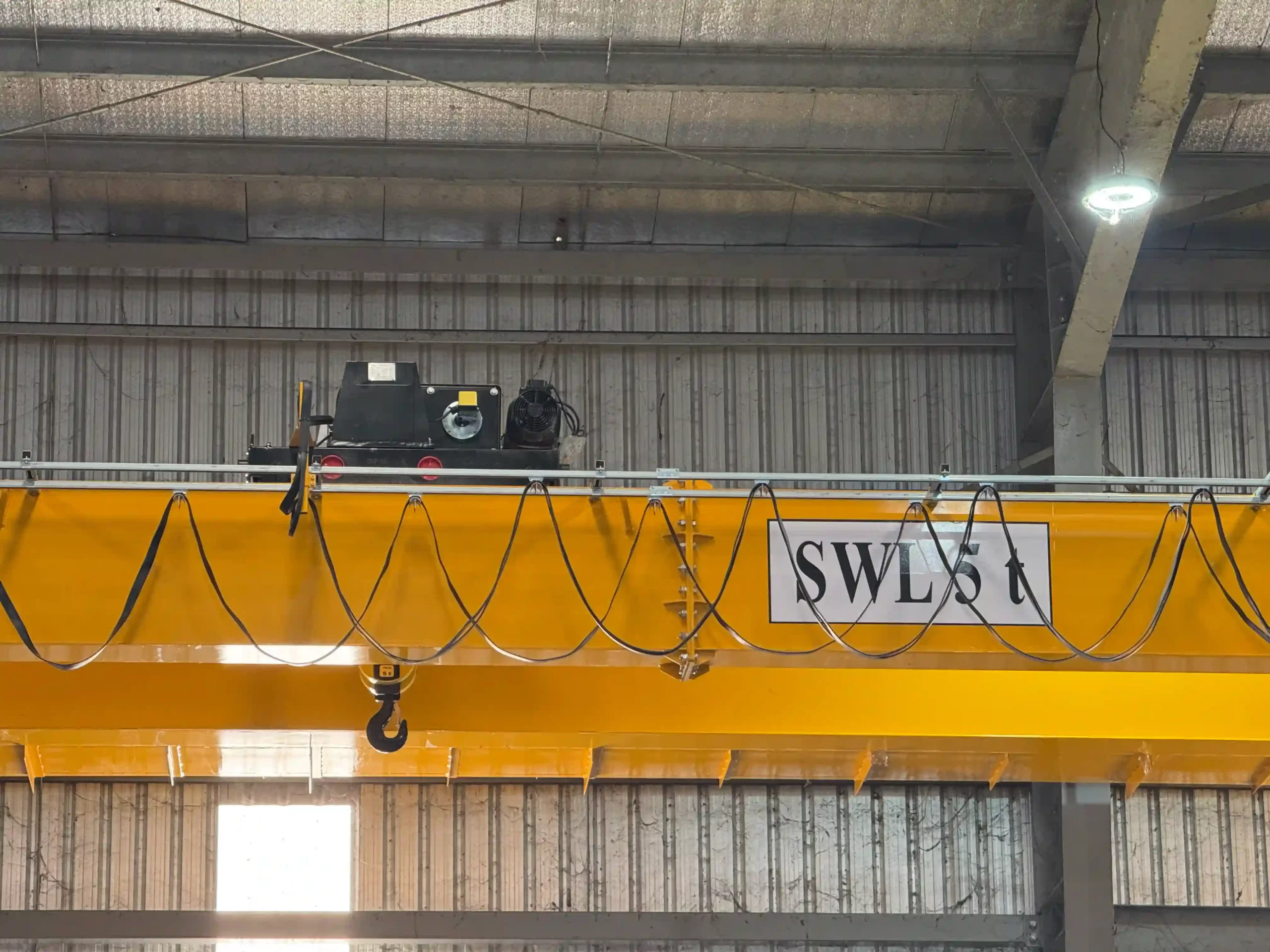
A double girder overhead crane has two parallel main girders that create a solid bridge structure. The crane travels along fixed runway rails mounted on building columns or supports. This setup lets the hoist and trolley move across the bridge. At the same time, the whole assembly shifts along the length of the bay.
The double girder crane working principle depends on even load distribution across the two girders. The trolley runs on rails placed on top of the girders. The hoist lifts the load straight up and down. End trucks sit at each end of the bridge. They allow smooth movement along the runway system. This arrangement creates more rigidity and stability than single-girder designs. It performs especially well with heavy loads.
Key Structural Components of a Double Girder Crane
The two main girders act as the primary load-bearing elements. Manufacturers weld these girders from high-strength steel such as S355 material. The design keeps deflection within 1/700 to 1/1000 ratios. This range supports safety and precision.
Crane end trucks connect the girders to the runway rails. These trucks use hollow shaft or bogie designs. The choice depends on capacity. Forged steel wheels with heat treatment ensure smooth travel and high transmission efficiency.
The hoist and trolley mechanism forms the lifting heart of the system. The trolley moves sideways across the girders. The hoist raises and lowers the load. Many systems use European-standard electric hoists with double-speed or inverter control. These features allow precise positioning.
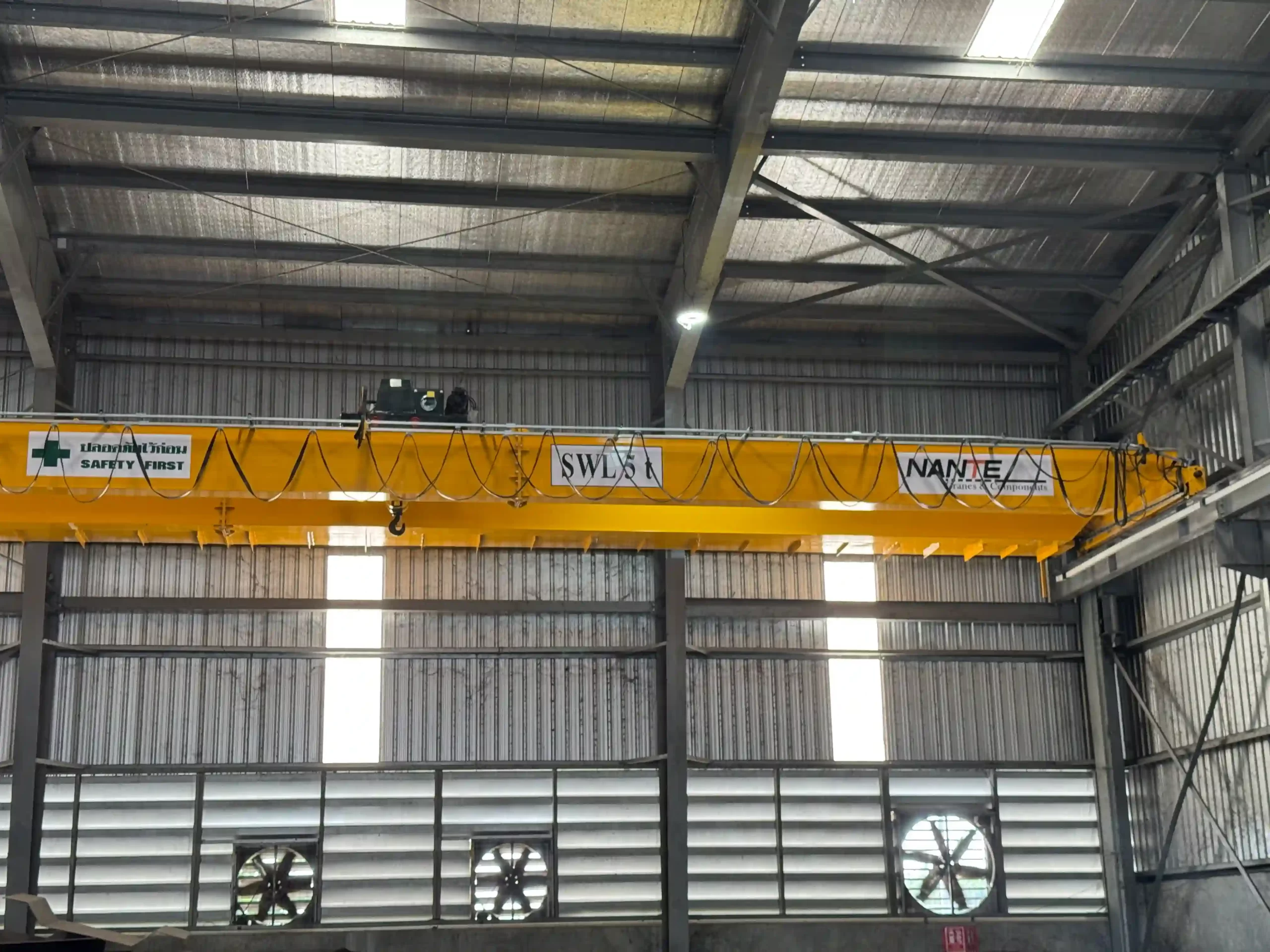
Additional crane components include the runway system, festoon cables or enclosed conductor rails for power supply, and control systems. Walkways and handrails often attach to the girders for maintenance access. All components follow international standards such as FEM, CMAA, and EN ISO for reliable performance.
Advantages of Double Girder Overhead Cranes
Benefits of double girder overhead crane systems show up most clearly in demanding environments. The dual-girder construction spreads weight evenly. It reduces deflection under load. This design supports heavier capacities and longer spans. It does so without losing safety.
Double Girder Crane vs Single Girder Advantages
Double girder crane vs single girder advantages include much higher hook height. The hoist runs on top of the girders instead of hanging beneath a single beam. Operators usually gain 18 to 36 inches of extra lifting height. This extra space makes better use of vertical room in the facility.
High Capacity Overhead Crane Benefits
High capacity overhead crane benefits reach further with unlimited span capability in properly engineered installations. Double girder designs manage spans well beyond single-girder limits. They keep strong structural integrity. The extra strength also permits heavy lifting without limits. It makes the crane suitable for loads that go past practical single-girder thresholds.
Flexible Customization
Flexible customization adds more value. The robust structure accepts platforms, operator cabs, auxiliary lighting, and other crane components with ease. Facilities can adapt the crane to exact workflow needs. They do this without major redesigns.
Higher Hook Height and Better Headroom
The top-running trolley configuration delivers maximum hook height. This advantage matters a lot when facilities need to lift tall equipment or stack materials higher. The extra clearance lowers the risk of collisions with floor-level obstacles. It improves overall operational efficiency.
Unlimited Span Capability
Double girder overhead cranes handle longer distances between runways. Spans often reach 40 meters or more. This depends on engineering specifications. The dual-girder bridge resists bending forces. A single beam would struggle with those forces over long lengths.
Heavy Lifting Capacity Without Restrictions
Capacities usually range from 5 tons to 63 tons with hoist configurations. They go higher with open winch designs. The system manages loads of 20 tons and above with excellent stability. This range makes the crane ideal for applications where single-girder models hit their practical limits.
Flexible Customization (Platforms, Cab, Lighting)
Engineers can add maintenance walkways, enclosed operator cabs, and task lighting directly onto the girders. The strong structure supports these additions. It does so without cutting rated capacity or safety margins. Customization options let the crane fit smoothly into complex production lines.
 Is a Double Girder Overhead Crane Right for Your Application?
Businesses must check whether a double girder overhead crane fits their specific needs. The design works very well in heavy-duty scenarios. Yet it may not suit every operation. Key factors include load weight, lifting frequency, span distance, and available headroom.
Steel plants, shipyards, heavy machinery manufacturing, power stations, and metal fabrication facilities often gain from the added strength and span capability. These industries regularly move loads over 20 tons. They also need wide coverage across large bays.
A simple comparison helps clarify the choice:
- Single Girder Crane: Suited for 1-20 tons, spans up to 30 meters, lower initial cost, lighter building load.
- Double Girder Crane: Ideal for 20+ tons, spans up to 40 meters or more, higher hook height, better for high-frequency use.
The double vs single girder crane selection depends on operational demands in the end. When loads, spans, or duty cycles go beyond light-to-medium levels, the double girder design gives long-term reliability and performance.
Key Factors to Consider Before Buying a Double Girder Overhead Crane
Successful procurement needs a systematic crane selection checklist. Buyers should review several variables. They do this to make sure the equipment gives good value without extra expense.
Load Capacity Requirements
Teams should determine the maximum and average loads the crane will handle. Heavy lifting needs of 20 tons and above generally point toward a double girder overhead crane. The design supplies the necessary strength and stability for these weights.
Buyers should avoid over-specification for lighter applications. Loads that stay consistently below 20 tons often work well with single girder cranes. Proper capacity matching stops unnecessary costs. It still keeps safety margins in place.
Operating Time and Working Duty
Teams need to evaluate daily working hours and lifting frequency. Duty cycle classifications range from M4 to M6 for many double girder models. Higher-frequency operations or near-continuous use benefit from the robust construction that double girder cranes provide.
Cranes with inverter-controlled motors and high-efficiency gear systems support smooth, repeated cycles. They do this with less wear. Matching the duty class to actual operating time extends service life. It also reduces downtime.
Span Requirements and Structural Impact
Buyers must measure the required distance between runway rails. Crane span over 60 feet (approximately 18 meters) makes double girder designs more suitable. They offer superior load distribution and reduced deflection.
Teams should account for the added structural weight of the dual-girder bridge. The building or support structure must handle this weight plus dynamic loads. Professional engineering review confirms compatibility and safety.
Hook Height and Installation Type
Teams need to define the necessary lifting height from floor to hook. Maximizing lifting height often calls for careful selection of installation configuration. Available building clearance directly affects the final hook reach.
Top Running vs Under Running Double Girder Cranes
Overhead crane installation types affect performance in important ways. Most heavy-duty double girder applications use top running configurations.
Top Running Crane Benefits
The bridge travels on rails mounted atop the runway beams. This setup gives maximum hook height and excellent stability for heavy loads. Top running cranes fit most industrial facilities. They provide clear floor space beneath the runway.
Under Running Crane Limitations
Under running (underhung) designs suspend the bridge from the bottom flange of the runway. These configurations usually limit capacity and span. They suit lighter loads or specialized low-headroom situations better. Yet they rarely meet true heavy-duty double girder requirements.
Partner with Nante Crane for Your Custom Lifting Solution
At Nante Crane, there is more than three decades of proven expertise in the manufacture of overhead cranes and components used in crane systems. The firm provides tailor-made double girder overhead cranes with lifting capacities of between 3.2 t and 63 t (even higher if winches are employed), maximum spans of 40 meters, and lifting heights ranging from 3 m to 30 m. Some of the factors that Nante Crane considers when providing overhead cranes include adherence to global design standards, energy-saving parts, smooth inverter control, and full engineering services.Contact Nante Crane today.
FAQ
What capacity typically requires a double girder overhead crane?
Applications with consistent loads of 20 tons and above generally benefit from double girder designs due to enhanced stability and capacity range.
What is the main difference between single and double girder crane designs?
Double girder cranes use two main beams for higher load capacity, greater span, and increased hook height, while single girder cranes offer lighter weight and lower cost for lighter duties.
Is a double girder overhead crane suitable for my shipyard or steel plant application?
Yes, these industries frequently handle heavy loads, wide spans, and frequent lifting cycles where the double girder structure provides the necessary strength and customization options.