English


How to Choose an Outdoor Gantry Crane for Material Handling
Date: 2026-11-19 Share:
Choose an outdoor gantry crane by mapping the lift route first, then verifying how the crane will travel, receive power, and be secured when the weather changes. The right configuration must fit the load, the operating schedule, and the ground or runway that supports it.
Two bids can cover the same rated load and still require very different site work. Before comparing prices, ask each supplier to mark the crane’s working envelope, power feed, and storm parking position on the same yard drawing.
Match the Outdoor Gantry Crane to the Material Route
Plot the pickup, staging, and set-down points. Include gates, delivery lanes, utilities, and the maximum height of stored material. In a precast yard, that may mean lifting from a casting bed, clearing a stack, and setting down on a trailer. In a steel stockyard, the route may start at an unloading lane and end at several storage bays.
Show the heaviest and widest loads, the weight of below-the-hook attachments, and the hook height needed over trailers or stacks. Give suppliers the expected lifts per shift, operating hours, and mix of light and heavy loads. Ask for a layout showing hook approach at each end and the space occupied by the crane legs.
Walk through one full cycle on the drawing. Check whether a truck can wait outside the crane’s travel path and whether the hook can reach the set-down point at the planned stack height. These checks can change span and lift height before the crane is priced.
When a Mobile Gantry Crane Makes Sense
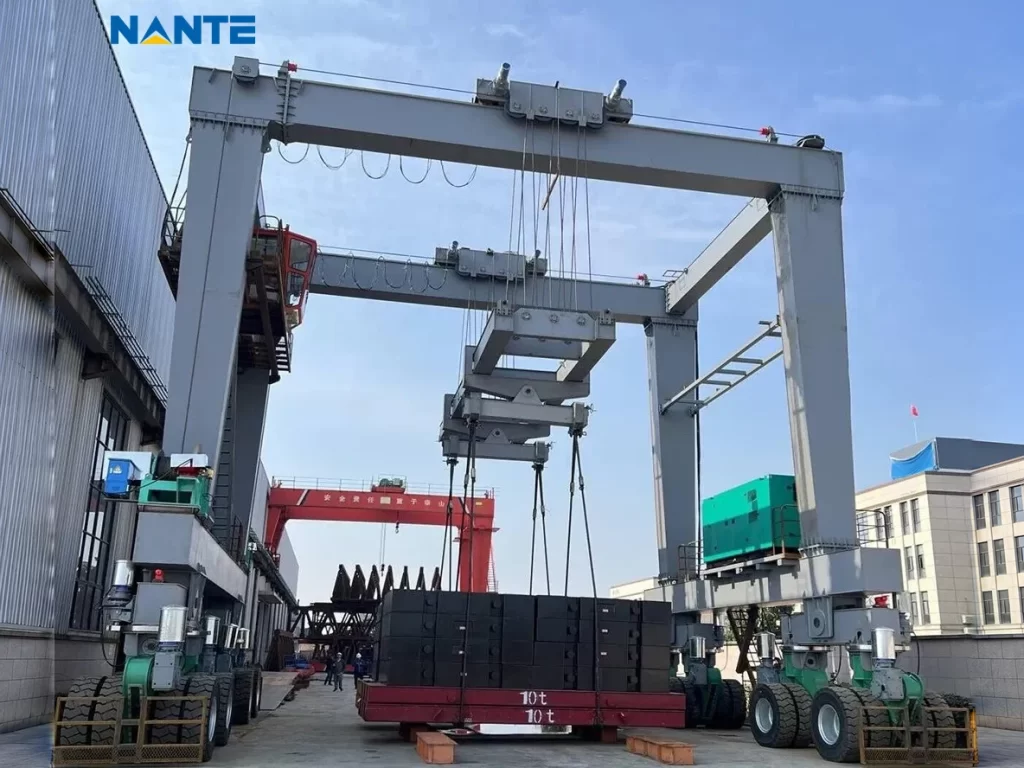
A rail-mounted crane suits a repeatable path, such as a precast shipping lane that will stay in the same location. A powered rubber-tired gantry is worth evaluating when work shifts between prepared bays. Its proposal should show the turning envelope, permitted grades, wheel loads, and whether it can steer while carrying a load.
For occasional outdoor maintenance, a portable gantry may be a better fit. Ask whether relocation is permitted only when unloaded or whether the manufacturer specifically allows loaded travel in the proposed configuration. Confirm the outdoor operating limits and surface requirements for that model.
Define Wind Limits for a Gantry Crane for Outdoor Use
A suspended panel can be harder to control in a gust than a compact steel part of the same weight. Give the supplier the dimensions and typical lifting orientation of broad loads so the wind review accounts for the load’s projected area. Use the project address and actual exposure, including open terrain or an exposed waterfront.
Check the Stop, Park, and Secure Sequence
Ask for the operating limits and the separate out-of-service wind design basis, including the conditions under which the parked crane is designed to withstand a storm. The quote should identify the wind sensor, warning and shutdown logic, parking location, and any clamps, pins, or anchors included in the design.
Wind acting on the parked crane can create sliding and overturning forces. Request the restraint reactions and show on the drawing where those forces enter the rail or foundations.
Review how much time it takes to land a load, clear the route, and reach the restraint point after an alert. Ask how the crane can be secured if site power is lost before it reaches that point. On a Gulf Coast site, the position of the storm parking area can affect both the yard layout and the foundation scope.
Specify Protection for a Weatherproof Gantry Crane
Record where wind-driven rain, washdown, salt deposits, dust, and freeze-thaw cycles reach the crane. Separate direct spray from sheltered exposure when assigning requirements.
Ask for outdoor suitability by component, including motors, brakes, control cabinets, pendants, and cable entries. Where an enclosure rating is specified, confirm that the installed glands and fittings preserve it.
Review Condensation, Drainage, and Coating Details
Moisture can condense inside a cabinet as temperatures change. Ask how the supplier will manage condensation and verify the proposed temperature range for drives, seals, and lubricants. Check where covers shed water so runoff stays clear of cable troughs, rail recesses, and electrical entries.
Use the site exposure to specify a corrosion protection system. Request the surface preparation, coating layers, dry film thickness, and touch-up procedure for erection damage. Agree on inspection points for edges, welds, and fasteners, where coating defects can be easy to miss.
For a coastal fabrication yard, identify hardware that sits in splash or retains moisture. Include access for coating inspection and repair in the layout, especially around the lower legs and cable supports.
Choose a Power Feed That Fits the Yard
Mark the electrical service point, travel limits, and truck crossings on the drawing. Give the supplier the available voltage, phase, and frequency. Ask for the expected demand and a voltage-drop check for the proposed supply path and operating loads.
Compare a Cable Reel and Conductor Rail
A cable reel pays out and retrieves flexible cable as the crane travels. The drawing should show the feed point, cable guides, bend radius, strain relief, and any trough or crossing protection. A feed point selected late can put the cable directly in a truck lane.
An enclosed conductor rail supplies power through a moving collector that contacts fixed conductors. Ask where the rail will be mounted, how thermal movement is accommodated, and how crews will isolate the system and reach the collectors for service.
For a Great Lakes yard exposed to freezing rain, confirm whether the selected conductor system needs ice protection and what inspections follow an icing event.
Ask the electrician and supplier to agree on the disconnect location, grounding and bonding, and who supplies and terminates each cable. The quotation should include enough detail to price the connection from the facility supply to the crane.
Verify Foundation and Rail Requirements Before Ordering
On a rail-mounted crane, the wheels transfer vertical and horizontal forces through the rails and fasteners into the supporting structure. The civil engineer needs wheel spacing and reactions by load case, including braking and storm restraint forces where applicable.
Where the restraint has its own foundation, identify its loads and connection points on the drawing. For a rubber-tired option, use the supplier’s wheel loads and route limits to check pavement capacity and condition.
Set the Rail Acceptance Criteria
Ask who supplies the rails, clips, pads, grout, anchors, and end stops. Agree on the rail profile and tolerances for gauge, straightness, and elevation.
If an existing runway is proposed, obtain a survey and verify the support and anchors against the new crane’s reactions. Differential settlement can change the rail geometry and increase wheel flange contact, so agree on the settlement limits during civil design.
Plan drainage around embedded track and check that yard grades direct water away from rail recesses. Require an as-built rail survey before crane commissioning and state who corrects out-of-tolerance work. Confirm that the completed runway leaves access to inspect clips, joints, and storm restraints.
Compare Outdoor Material Handling Crane Quotes by Scope
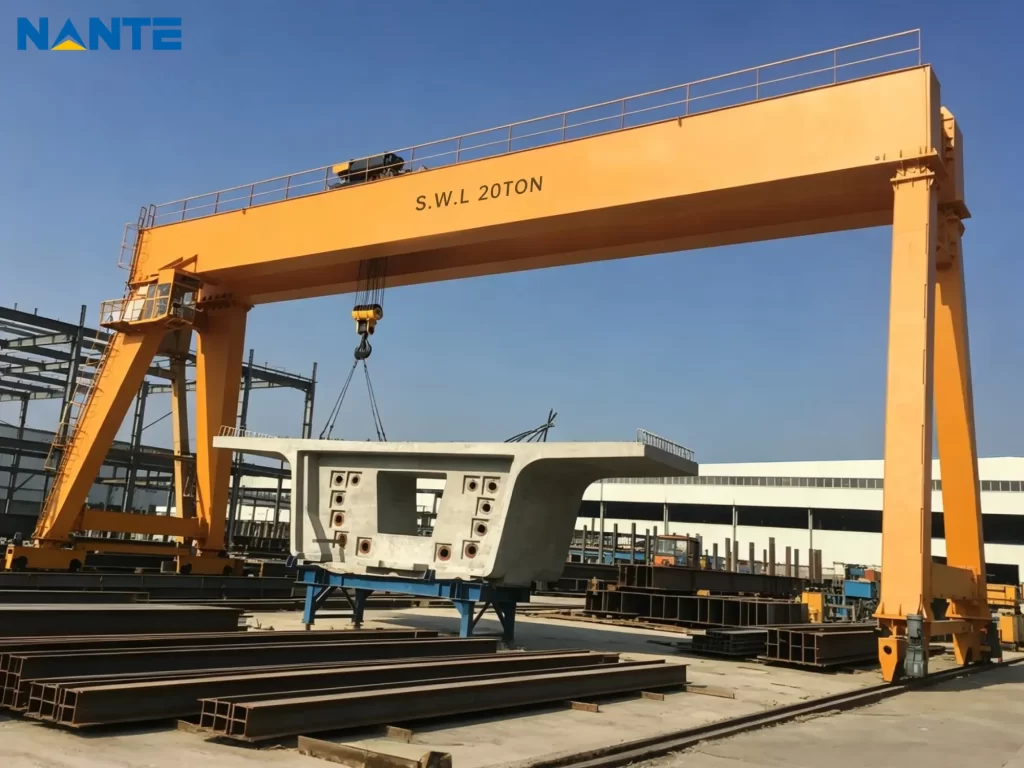
Nante Crane lists multiple gantry configurations, including rubber-tired models, in its gantry crane range. Ask each bidder to quote against the same load cases and site drawing and flag any deviations that could change the crane layout, civil work, or operating limits.
| Review stage | Evidence to request |
| Before design approval | Hook coverage drawing, wheel and restraint reactions, power-feed layout, and an itemized list of what the crane supplier and site contractors each provide |
| Before shipment | Agreed factory test plan and results, coating inspection records, electrical drawings, and packing list |
| Before handover | Rail or pavement acceptance records, site test results, storm parking demonstration, and operator and maintenance documentation |
Compare freight, erection, field wiring, commissioning, training, spares, and warranty on the same basis. Assign a party to close each open item, particularly the handoffs between crane supply, electrical connection, and civil works.
For a US installation, ask the project team to document the applicable OSHA requirements, ASME B30 volume and edition, and locally adopted electrical and building codes. The crane configuration and intended use determine which provisions apply.
Outdoor Gantry Crane FAQs
Can an existing concrete slab support a mobile gantry crane?
It depends on the actual wheel loads and the condition of the slab and its support. Check the entire route, including joints, trench covers, repaired sections, and turning areas. The supplier’s wheel-load information gives the civil engineer a basis for that review.
Can the crane keep working in rain?
Use the manufacturer’s documented operating limits and site procedures. Besides electrical exposure, rain can affect visibility and travel-surface condition. Ask the supplier what conditions require work to stop and what checks are required before restart.
Request an Outdoor Gantry Crane Proposal
Purchasing teams can submit the site address, a yard sketch, the heaviest load with its lifting attachment, the required hook height, expected lifts per shift, and available power. Mark existing pavement or rails and the proposed truck crossings so the Nante Crane team can review the travel configuration and quote the applicable equipment scope. Submit the outdoor crane project brief.