English



How Segment Lifters Revolutionize Precast Segmental Bridge Construction
How Segment Lifters Revolutionize Precast Segmental Bridge Construction
Date: 2026-04-02 Share:
In today’s infrastructure projects, segment lifters really stand out as key bridge construction cranes. They change the way people build precast segmental bridges. People also call them bridge builders or lifting frame cranes. These special segment erection systems allow exact lifting, placement, and setting of precast concrete segments. They work especially well in the balanced cantilever method. In this method, workers add segments in a balanced way from piers outward. This keeps the structure stable. The approach helps build viaducts, highways, high-speed railways, and metro lines quickly. It even handles tough spots like rivers or busy city areas.
These tools use hydraulic propulsion, electric winches, or strand jacks. As a result, they bring great efficiency, accuracy, and safety. They cut down on labor at the site. They speed up the whole schedule. They place segments with millimeter precision. Segment lifters act as a full solution for precast segmental bridge work. They lower interruptions and fit complex jobs around the world.
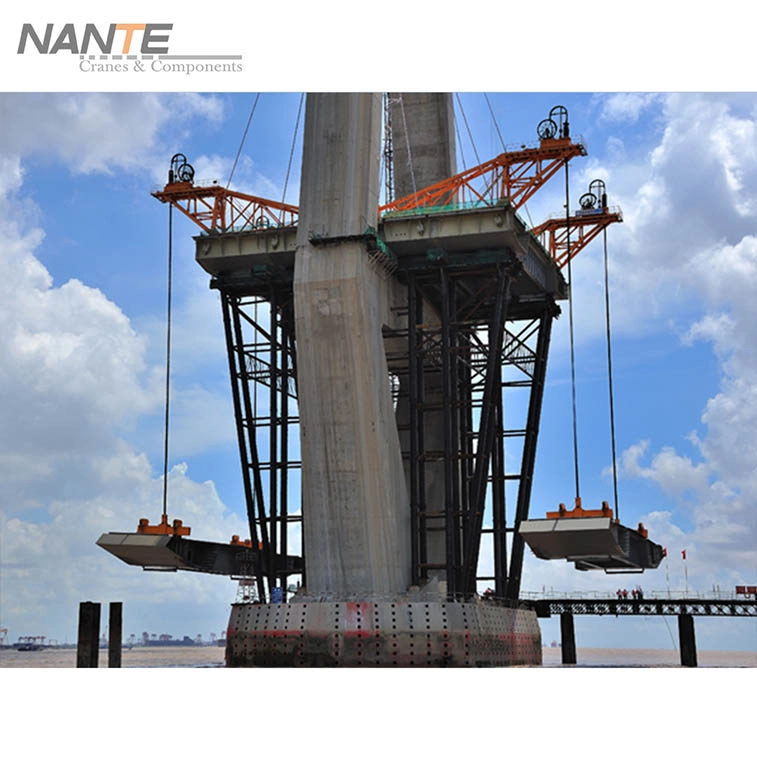 What Is a Segment Lifter in Bridge Construction?
A segment lifter is a special lifting system. It acts as a bridge construction crane. Workers use it to place precast concrete segments. This happens a lot in balanced cantilever methods. These cranes manage heavy precast pieces. The pieces often weigh dozens or even hundreds of tons. The lifter moves them from ground level, from a barge, or from the back of the deck. Then it lines them up exactly on the growing cantilever.
Definition of Segment Lifter (Bridge Builder / Lifting Frame)
Segment lifters work as dedicated bridge builder equipment or lifting frame cranes. They have a strong frame. This frame holds lifting parts like electric winches or strand jacks. The setup usually includes adjustable arms or hooks. These grip segments firmly. It also has propulsion systems for moving forward. This design lets the lifter work on its own after setup. So it becomes very useful for remote places or tight sites.
Role in Precast Segmental Bridge Systems
In precast segmental systems, segment lifters place segments one after another. They start from the pier table and move outward. The work begins with the pier-head segment. Then pairs go on both sides in balance. This keeps loads even on piers and foundations. After each placement, post-tensioning connects the segments tightly. It forms a continuous prestressed structure. The steps continue until closure pours link the cantilevers at midspan. This creates full spans. It avoids big falsework underneath.
Difference Between Segment Lifter and Launching Gantry
Segment lifter: It gives better flexibility for balanced cantilever extensions. It operates right from the deck. It uses hydraulic launching for careful advances. This type fits complex terrains, curved paths, and different pier heights. It needs less setup and adapts easily to changing deck progress.
Launching gantry: It works better for full-span or span-by-span erection over long, repeated sections. It usually features an overhead truss. The truss carries and places several segments in order. It achieves fast erection rates. However, it needs more space. It adapts less to tight urban spots or uneven sites.
Segment lifters lower site needs and allow several work areas at once. Launching gantries shine in standard, high-volume jobs.
How Segment Lifters Work in Balanced Cantilever Construction
Segment lifters support step-by-step balanced erection. This reduces stresses. It controls deflections. It ensures stability over time in precast segmental bridges.
Step-by-Step Segment Erection Process
Precast segments get made off-site in a controlled yard. They cure and then move by truck, barge, or under-deck to the bridge spot.
The segment lifter moves above or near the right place. It lowers lifting attachments like cables or hooks. These secure the segment at several points.
The lifting system raises the segment smoothly to the cantilever end. It often tilts or rotates the piece for perfect fit.
Workers line up the segment’s shear keys and shape with the previous one. They add epoxy for sealing when needed.
Temporary or permanent post-tensioning tendons get stressed. This joins the new segment firmly.
Hydraulic launching cylinders push the lifter forward along rails, wheels, or tyres to the next spot.
The same steps repeat on the opposite cantilever side. This keeps balance and avoids too much force on the pier.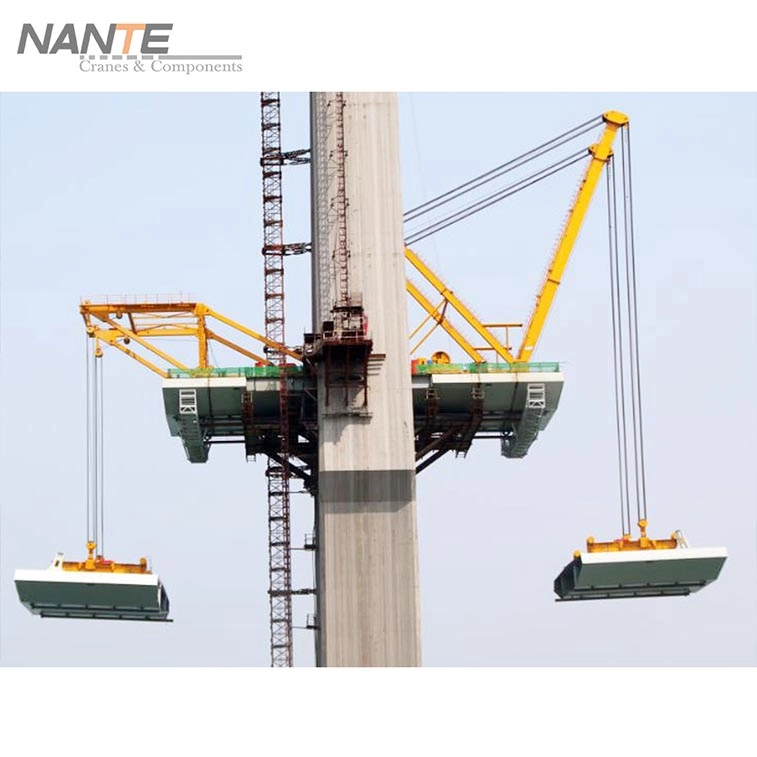 Hydraulic Launching System Explained
The hydraulic launching system uses synced cylinders. These advance the lifter safely along the deck or guide paths. It gives small, controlled moves—usually short strokes. Counterweights or tie-downs keep things stable. This avoids problems during extension. It allows exact positioning even on slopes of 5-10%.
Winch vs Strand Jack Lifting Mechanism
Electric winch: It fits mid-range loads (60-150t). It offers higher speeds, easier upkeep, and steady work for many cycles in medium-span jobs.
Strand jack: It handles ultra-heavy loads (up to 1200t) and great heights. It uses hydraulic gripping on steel strands. This gives millimeter-precise control. Lifts are slow but strong. It holds loads well during alignment or tilting.
Pairs of segments go up one side then the other. This preserves equilibrium all through construction.
Key Features of Modern Segment Lifters
Advanced hydraulic segment lifter systems focus on controlled, efficient, and flexible work. They suit tough bridge sites.
Hydraulic System for Controlled Movement
Hydraulic propulsion and adjustment systems allow fine control. They handle forward launching, segment tilting, and small position fixes. This keeps operations safe under different loads and weather.
Electric Winch / Strand Jack Integration
Versatile setup lets projects pick what fits. Winches work for speed in lighter cases. Strand jacks provide precision in heavy or tall situations.
Mobility Options: Rail, Steel Wheel, Rubber Tyre
Rail/steel wheel: It gives stable, long moves on prepared paths.
Rubber tyre: It provides great deck movement. It handles uneven ground or small spaces without big track setup.
Adjustable Lifting Arms for Different Segments
Customizable arms and grippers fit various segment shapes. They handle different widths (up to 18m+ ) and forms. This works for curved or tapered viaducts.
Types of Segment Lifters for Different Bridge Projects
Segment lifters get customized. They match project tonnage, lift height (6m–100m), span lengths, and site limits.
Hydraulic Pre-stress Wire Segment Lifter (600–1200t)
High-capacity types suit large balanced cantilever bridges. They handle extreme loads and heights up to 100m. They use strand jacks for precise heavy lifts.
Variable Amplitude Segment Lifter (200–500t)
Adjustable reach fits medium-heavy segments. It works for different heights and arm setups in various jobs.
Rubber Tyre Segment Lifter (60–150t)
Very mobile for city sites or tight spots. It handles shorter lifts. It repositions fast with little ground prep.
Gantry Crane Type Segment Lifter (50–150t)
It combines gantry-style overhead parts for certain setups. It balances capacity with simple structure.
Selection depends on tonnage range (50t–1200t), maximum lift height, bridge curvature, pier spacing, and challenges like rivers or slopes.
Advantages of Segment Lifters in Precast Bridge Construction
Segment lifters provide a complete solution. They focus on efficiency, precision, and safety in precast segmental projects.
Faster Construction Timeline
Off-site precasting plus quick on-site placement (often 1-3 segments per day) shortens schedules a lot. This beats cast-in-place methods.
High Precision Segment Placement
Advanced controls ensure exact alignment. This cuts geometry mistakes, later fixes, and long-term bending.
Reduced Manual Handling & Safer Operation
Automated lifting and positioning lower worker risks at heights and with heavy items. Built-in safety parts improve site protection.
Adaptability to Complex Terrains
They succeed in rivers, valleys, tall piers, curved paths, and urban zones with little access. They support changing progress and low disruption.
Applications of Segment Lifters in Modern Infrastructure
Segment lifters drive many high-demand infrastructure jobs around the world.
Highway & Viaduct Construction
They fit well for elevated precast segmental viaducts. They allow fast deck finishing over traffic or water.
High-Speed Railway Bridges
They provide the strict alignment and smooth surface needed for rail movement and rider comfort.
Metro & Urban Transit Systems
They move through narrow corridors. They cause low disruption to existing services and use small space.
Cable-Stayed Bridge Projects
They help complex cantilever builds. They work with cable anchorages and tower links.
How Segment Lifters Improve Bridge Construction Productivity
Reduced Site Dependency
Heavy use of factory precasting cuts weather-affected on-site concrete tasks.
Modular Construction Benefits
Repeated segment handling streamlines crews, tools, and quality checks.
Faster Project Delivery
Quicker erection keeps budgets and deadlines on track. It still maintains strong structure.
Why Choose a Customized Segment Lifter Solution?
A tailored segment lifter serves as the top bridge construction crane for precast segmental bridge construction. It delivers outstanding efficiency, precision, and safety in balanced cantilever and viaduct work.
Contact Nante Crane for Your Segment Lifter Needs
Nante Crane is a leading manufacturer of cranes and crane components with over 30 years of experience. It specializes in construction cranes like segment lifters for bridge projects. The company offers customized, high-quality solutions with global service in over 50 countries. Nante focuses on safety, efficiency, and modular designs. Contact our engineers today for a custom segment lifter solution tailored to your project.
FAQ
What is a segment lifter?
A specialized bridge construction crane for lifting and positioning precast segments in balanced cantilever methods.
How does a segment lifter differ from a launching gantry?
Segment lifters are more flexible for cantilever work. Launching gantries suit full-span erection.
What capacities do segment lifters typically offer?
From 50t to 1200t, e.g., rubber tyre 60–150t, pre-stress wire 600–1200t.
In which bridge construction methods are segment lifters most used?
Primarily balanced cantilever for precast segmental bridges, viaducts, and cable-stayed projects.
What are the main advantages of using segment lifters?
Faster timelines, high precision, enhanced safety, and adaptability to complex sites.
How to get a customized segment lifter for my project?
Reach out to Nante Crane engineers via our contact page for expert consultation and tailored solutions.