English



How Material & Coating Choices Affect Offshore Crane Lifespan in Marine Environments
How Material & Coating Choices Affect Offshore Crane Lifespan in Marine Environments
Date: 2025-12-12 Share:
Introduction
In the tough world of offshore work, picking the right materials and coatings stays vital for offshore crane corrosion protection. This helps achieve lasting strength against constant sea attacks. It also cuts total cost of ownership (TCO) by needing fewer fixes and longer use time.
Ship engineers and buying staff need to focus on offshore crane material specifications to fight corrosion. This issue can cut crane lifespan by up to 50% without good guards. Harsh sea settings expose cranes to steady saltwater mist, high moisture, and physical strain. Thus, choices in materials and coatings become key for dependability.
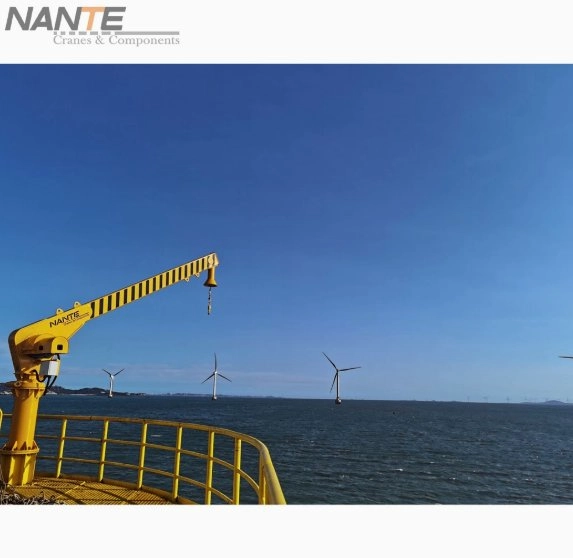
Discover how smart picks boost safety, speed, and money savings in offshore places.
Understanding Corrosion Mechanisms in Marine Atmospheres
Key Types of Corrosion Impacting Offshore Cranes
Sea settings spark strong chemical reactions. Saltwater works as an electrolyte. It speeds up even rusting over steel faces and builds rust layers that weaken build parts.
Galvanic corrosion happens when different metals, such as steel and bronze parts, touch in salty conditions. This makes electric flows that quickly wear down the weaker metal.
Pitting and crevice corrosion lead in oxygen-full splash areas. Local pits grow under dirt or in narrow spaces. They dig deep into the metal and harm crane strength over time.
Environmental Factors Driving Corrosion
Seawater holds up to 3.5% chlorides. These fuel iron breakdown in crane steels. Oxygen fullness further boosts rust build on open faces.
Temperature changes from cold winters to warm summers double reaction speeds every 10°C rise. Germ activity, including sulfate-reducing bacteria, causes MIC in low-oxygen spots like dipped bases.
Wave hits and sea growth remove guard films. This exposes new metal to wear-corrosion on booms, wires, and hooks during moving tasks.
Implications for Crane Performance and Safety
Corrosion lowers load ability by thinning key sections. It raises break risks during big lifts on oil rigs or wind farms. One event can stop work for weeks.
Global offshore corrosion costs go beyond $50 billion each year. Active offshore crane corrosion protection stops idle time. It keeps crew safety and meets rule needs.
Material Comparisons for Offshore Crane Durability
Q345B Steel: Properties and Marine Limitations
Q345B is a low-alloy strong steel with 345 MPa yield strength. Its great joining ease and low price fit common build uses in crane frames.
Yet, its 0.20% max carbon level gives only fair rust fight. In sea contact, uncoated Q345B faces pitting. This limits lifespan to 10-15 years.
It stays useful for low-budget jobs when joined with strong coatings that meet offshore crane material specifications.
S355 Steel: Enhanced Strength and Corrosion Resilience
S355, equal to improved Q355B, gives 355 MPa yield strength. Mixing with niobium and vanadium boosts toughness and tire resistance.
It better handles low-heat brittleness common in North Sea winters. This lengthens work trust by 20-30% compared to Q345B.
Q345B vs S355: Direct Performance Comparison
| Aspect | Q345B | S355 (Q355B Equivalent) |
|---|---|---|
| Yield Strength | 345 MPa | 355 MPa |
| Corrosion Rate in Seawater | 0.2-0.3 mm/year (uncoated) | 0.15-0.25 mm/year (uncoated) |
| TCO Impact | Higher upkeep (15% more) | Lower life costs (20% savings) |
| Marine Suitability | Good with coatings | Excellent for harsh contact |
S355 shines in tire-heavy spots. It slows crack spread under repeated wave loads and cuts check frequency.
Stainless Steel Options for Critical Components
316L austenitic stainless steel has 16-18% chromium and 10-14% nickel. It builds a passive oxide layer that fights chloride hits well.
Perfect for hooks, pins, and fluid cylinders, it stops stress corrosion cracking in splash zones. Though 2-3 times pricier than Q345B, it lowers TCO by skipping often swaps.
Role of Coatings in Offshore Crane Corrosion Protection
Common Coating Systems and Their Mechanisms
Epoxy starters bond chemically to steel. They block out water. Polyurethane top layers add sun stability and scrape resistance for lasting show.
Zinc-full starters give themselves up to guard steel by cathode way. Multi-layer setups reach 15-25 years of strength under ISO 12944 C5M rules.
Application Techniques for Optimal Adhesion
Rough blasting to Sa 2.5 clears mill scale and rust. It ensures over 95% coating stick. Hot-dip galvanization puts 100-200 µm zinc for base guard.
Weld fillers pack crevices. They stop hidden rust. Controlled moisture during putting avoids flaws.
Maintenance and Inspection Best Practices
Do yearly sound thickness checks to spot thinning.
Use gap detection to find coating breaks early.
Put matching fix-up epoxies right after harm.
Join with forced current cathode guard for dipped parts.
These moves lengthen coating life by 5-10 years. They reduce TCO.
Case Studies and Test Results on Material and Coating Efficacy
Real-World Case: Epoxy-Coated Q345B Cranes in North Sea Operations
Q345B cranes with three-layer epoxy coatings worked 12 years in the North Sea. NACE checks noted corrosion rates under 0.1 mm/year.
Coating hold hit 90%, versus 60% on uncoated ones. This gave 25% TCO savings through delayed big fixes.
Comparative Testing: S355 vs Q345B in Simulated Marine Exposure
ASTM B117 salt spray tests lasted 5,000 hours. Galvanized S355 lost just 5% thickness, while Q345B lost 15%.
Gulf of Mexico trials showed S355 cranes with zero breaks in 18 months. Q345B units faced two pitting events needing fixes.
Stainless Steel Integration: Lessons from Wind Farm Installations
Offshore wind jobs used 316L fittings on S355 booms. Chemical tests proved MIC fight for 8 years.
Coating fails dropped 40%. This cut upkeep costs 30% and raised safety during 1,000+ turbine lifts.
Spotlight on Advanced Anti-Corrosion Processes
Innovative Multi-Layer Coating Innovations
Nano-boosted epoxies with ceramic bits self-fix tiny cracks in salty conditions. This lengthens guard in high-hit zones.
Hot-dip galvanization plus polymer seals meets ISO 12944-9 CX class. It halves rust in splash areas.
Integration with Cathodic Protection for Comprehensive Defense
Give-up aluminum anodes shift steel to -0.80V. They stop breakdown on dipped legs. Combined with coatings, this doubles lifespan.
Watching via reference points allows forecast upkeep. It improves offshore crane material specifications.
Testing and Certification for Proven Reliability
Processes face 10,000-hour dip tests per DNV rules. Results promise 40-year gaps between major renews.
Call to Action: Partner with Nante Crane for Superior Offshore Solutions
Boost your offshore tasks with Nante Crane, a 30-year leader in crane making with skill in rust-fight designs for sea settings. Our offshore cranes, including 150kg-10t Davit models and 5t-50t customized units, feature advanced materials like S355 steels and multi-layer coatings for top strength and low TCO. Certified to ISO, FEM, and CMAA standards, we serve over 5,000 global clients—contact us today at Sales@nantecrane.com to talk custom offshore crane corrosion protection solutions.
FAQ
What is the primary cause of corrosion in offshore cranes?
Saltwater’s chlorides and oxygen drive chemical reactions. They speed up even and pitting rust on steel parts.
How does S355 compare to Q345B for marine use?
S355 gives higher yield strength and better rust fight. It cuts TCO by 20% through longer life.
What coatings are best for offshore crane corrosion protection?
Multi-layer epoxy systems with zinc-rich starters provide 15-25 years of guard. They suit splash zones well.
Can stainless steel replace carbon steel in all crane parts?
No, it fits best for key, high-contact areas like fittings due to cost. Carbon steels work with proper coatings.
How often should offshore crane coatings be inspected?
Yearly, using non-harm methods like sound testing to catch wear early and keep low TCO.