English


How IoT Technology Is Transforming Crane Maintenance
How IoT Technology Is Transforming Crane Maintenance
Date: 2026-06-18 Share:
The IoT crane maintenance is revolutionizing the way of the overhead cranes and other lifting equipment maintenance in industrial sites. The classical maintenance way are based on periodical inspections or on repair actions based on failures which have already occurred. In contrast the smart crane monitoring systems and the predictive crane maintenance, based on the real time data, prevent the idle times and the risks. These solutions are in line with the Industry 4.0 approach, based on sensors, on cloud data analysis and on intelligent systems. By using these solutions the industrial sites report a relevant reduction of the idle times for maintenance purposes and of the related costs, and an increase of the site productivity.
Understanding IoT Crane Maintenance in the Era of Industry 4.0
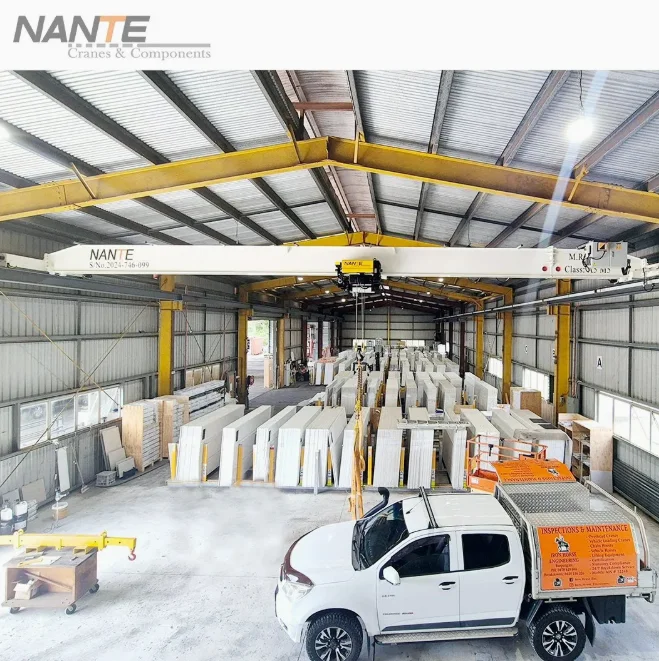
IoT crane maintenance links up physical parts of a crane with digital networks in order to continuously collect and analyze data from said crane in real time. As part of Industry 4.0, smart manufacturing is being developed using a large network of connected products, increased automation and decision-making based on data from various sources. Thus, a crane which once consisted of a number of single components is now transformed into an intelligent piece of equipment.
Industry practice has moved from regular manual inspections to continuous monitoring using various automated methods. Predictive maintenance using data from sensors and other machine monitoring systems can reduce machine downtime by 30-50% and maintenance costs by 20-30%. The potential benefits of improved operational performance and enhanced safety compliance are particularly marked in industries such as steel, manufacturing and logistics.
Smart Crane Monitoring Systems: Real-Time Visibility and Control
Smart crane monitoring systems offer the possibility for crane operators as well as for the maintenance to continuously monitor important parameters of the crane. Monitoring systems for cranes consist of sensors, communication, edge computing as well as a user-friendly visualization. All parameters are in real-time and are automatically monitored 24/7 without human intervention.
Early anomaly detection, optimal use, remote monitoring. For example, in busy production facilities with many overhead cranes, such a system can effectively prevent overloading, excessive vibration and wear of components.
Crane Sensor Monitoring – The Foundation of Intelligent Systems
The monitoring of Crane sensors forms the core of a successful IoT solution. A variety of sensors within the crane are recording key data points.
- Vibration sensors detect imbalances in motors, gearboxes, and hoists.
- Temperature sensors monitor motors, brakes, and electrical components for overheating.
- Load cells and strain gauges track weight distribution and mechanical stress.
- Acoustic sensors identify unusual sounds that signal potential failures.
- Position and speed sensors ensure precise movement control.
Data is collected at high frequency and sent to centralized platforms in real time. By continuously monitoring the crane with sensors, even the tiniest change can be picked up in time before it becomes a major problem, for example rope wear or a bearing fault.
Predictive Crane Maintenance: Shifting from Reactive to Proactive Strategies
Predictive crane maintenance uses historical and real-time data to predict potential failures of the various crane components. Instead of scheduling maintenance in advance or waiting for a failure to occur, maintenance can be performed exactly when it is required. This can extend the lifespan of the individual components and avoid a number of unnecessary maintenance interventions.
Analyzing trends in thousands of data points with the help of AI and machine learning algorithms leads to better forecasts and more efficient schedules for maintenance. This is often even able to reduce the number of unexpected failures by up to 70%.
How Predictive Analytics Works with IoT Data
The predictive maintenance workflow follows a clear sequence:
- Sensors continuously gather raw operational data.
- Edge devices or cloud platforms process and filter the information.
- Analytics engines apply algorithms to identify patterns and anomalies.
- The system generates alerts and recommended actions.
- Teams receive prioritized maintenance tasks through dashboards or integrated CMMS software.
- Post-maintenance feedback refines future predictions.
Digital twin technology creates replicas, sometimes even of physical cranes, for scenario testing and for simulation of complex environments. The virtual model improves the accuracy of the simulation.
IoT Overhead Crane Technology and Its Key Components
IoT overhead crane technology specifically targets bridge cranes, gantry systems, and similar lifting equipment. Wireless connectivity options such as Wi-Fi, 5G, or industrial protocols ensure reliable data transmission even in harsh conditions. Cloud integration allows centralized management across multiple sites.
Core components of our offering are robust sensors, secure gateways and intuitive software. Our offering is designed to support both real-time control and performance optimization in the long run.
Remote Crane Diagnostics for Faster Troubleshooting
Diagnostics for remote crane monitoring enable specialists to assess faults without having to travel to the location immediately. When faults occur, the technicians can access live data streams, analyze trends and read out the diagnostic logs. This allows for fast fault analysis and reduces response times, thus preventing production downtime in logistic hubs as well as in production plants.
Industrial IoT for Cranes: Broader Ecosystem Integration
Industrial IoT for cranes connects the lifting equipment with the rest of the factory. It also connects to ERP systems and automation lines to support a more intelligent workflow coordination and also for easier compliance reporting. Safety functions such as automatic overload protection and collision avoidance become more effective with shared data.
Cloud Monitoring and Data-Driven Decision Making
The cloud platform is the central point for data storage, processing and visualization. All authorized users can then from anywhere access the corresponding dashboards to check the performance of their crane fleet in real time. Additionally, threshold values are monitored and, in case of a breach, alert messages are sent to the respective staff members. Historical reports allow for strategic planning.
Key cloud monitoring features include:
- Customizable KPI tracking.
- Automated reporting and compliance documentation.
- Scalable storage for large data volumes.
- Secure multi-user access with role-based permissions.
Empowering data-driven decision-making for safety, efficiency and return.
Implementation Challenges and Best Practices for IoT Crane Systems
When deploying successfully, you need to plan carefully to such issues as getting legacy systems to work with each other, data security and the initial cost. Employees will also need training and there is also the need for change management.
Best practices for implementation follow these steps:
- Conduct a thorough assessment of existing crane assets and pain points.
- Define clear objectives and key performance indicators.
- Select compatible sensors and platforms based on operational needs.
- Implement in phases, starting with critical equipment.
- Train maintenance and operations teams on new tools.
- Monitor results and continuously refine the system based on feedback.
- Establish strong cybersecurity protocols from the outset.
Measuring ROI in terms of reduced downtime and savings from maintenance helps to justify further investment.
The Future Impact on Crane Operations and Safety
IoT crane maintenance continues to evolve to increase efficiency, improve reliability and ensure workplace safety. As Industry 4.0 continues to mature, the use of connected cranes in industry allows for the creation of smarter and more sustainable industrial locations. Companies operating smarter cranes can achieve a competitive edge by running their equipment for longer while reducing the risks of operational failures.
FAQ
What is the difference between predictive and preventive crane maintenance?
Predictive maintenance is based on real time condition data and is scheduled on need basis. Preventive maintenance is scheduled on fixed time intervals and does not take into account the actual condition of the equipment.
What do sensors do in a smart crane monitoring system?
In a continuous flow of data, sensors measure vibrations, temperature, load etc. of a crane. Potential damage can be detected in time.
Nante Crane is one of the leading Chinese overhead crane suppliers, crane parts makers and intelligent crane control systems manufacturers. Nante Crane has strong R&D capability on crane intelligence, crane lightweight design, crane energy saving and crane Internet of Things application. Nante produces a wide variety of lifting equipment that can be monitored and controlled in advanced ways. Our products can meet the needs of today’s industries. If you are looking for ways to improve your overhead crane, contact us for more information on our products.