English


How Crane Travelling Mechanism Affects Overhead Crane Stability and Performance
How Crane Travelling Mechanism Affects Overhead Crane Stability and Performance
Date: 2026-06-18 Share:
A Crane Travelling Mechanism is not only the drive unit that moves an overhead crane along the runway. It directly affects crane travel system stability, overhead crane travelling performance, wheel wear, vibration control, and the load path between the bridge, end carriages, rails, runway beams, and supporting structure. When the system is well designed, aligned, and synchronized, the crane travels smoothly under load. When it is poorly matched, the crane may skew, vibrate, bind on the rail, or create abnormal stress in wheels, motors, brakes, and steel structures.
Why Is the Crane Travelling Mechanism Critical to Crane Travel System Stability?
The traveling mechanism of the crane is the basis for the movement of an overhead crane. End carriages, wheel sets, engines, gearboxes, brakes, buffers, travel limit switches and travel control devices are typically part of the traveling mechanism. The traveling mechanism moves the bridge along the rails on the runways and at the same time it supports the trolley, hoist and the load that is lifted.
Stability or uneven travel also has to do with travel-geometry. If the two sides of a bridge do not move equally, then the crane can become skewed. This leads to increased side thrust, flange contact, friction, vibration, and fatigue stress.
How Does Smooth Travel Improve Overhead Crane Travelling Performance?
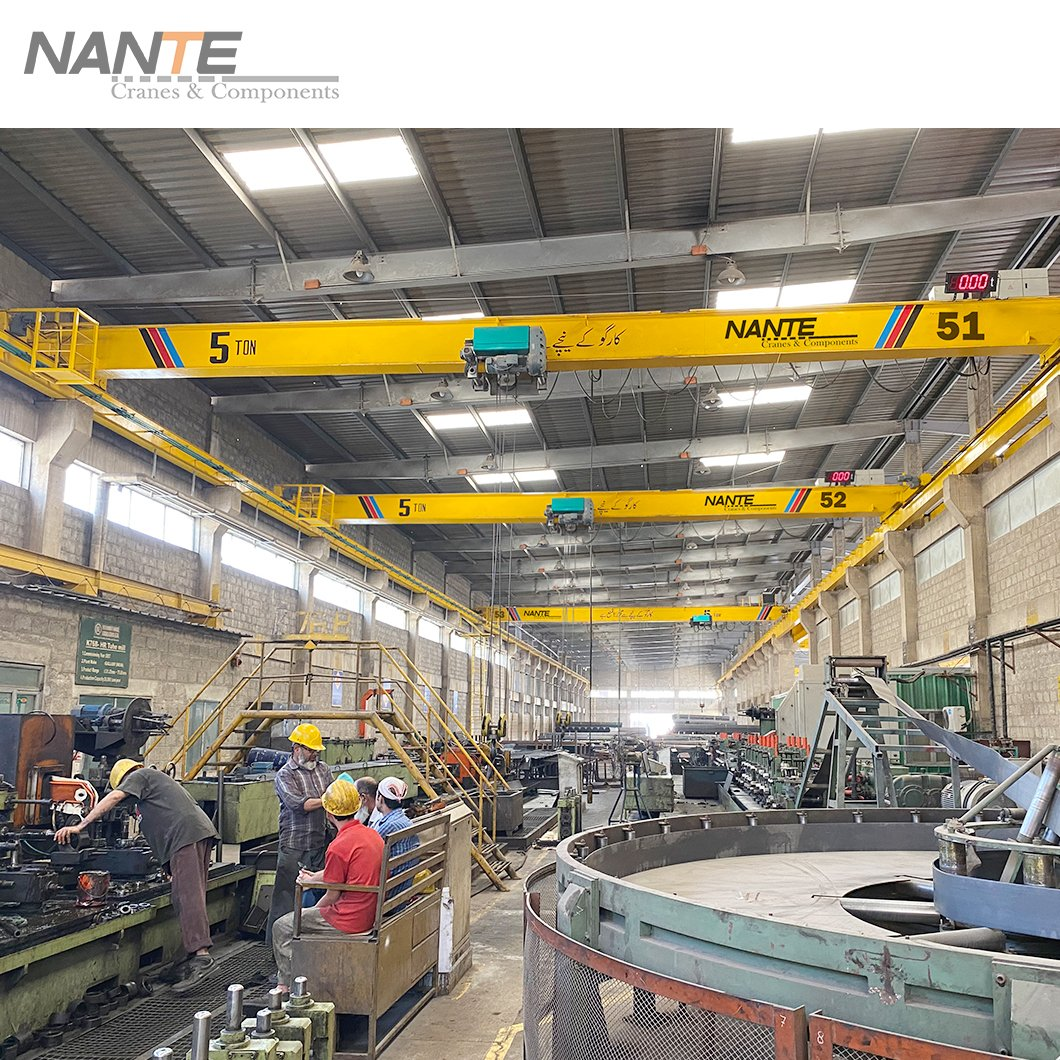
Smooth travel improves the traveling performance of the overhead crane. Load is transported with less shock, less swing and better accuracy for positioning. Contrary to this, unstable traveling of the crane will impair the handling performance and cause additional time for operation as well as increased operator corrections.
A good travelling performance is characterized by straight tracking, good starting and braking behavior, low vibration, smooth and balanced motor behavior and accurate end position.
What Role Does Crane Wheel Alignment Play in Stable Travelling?
Alignment of the crane wheel axles are a crucial factor in the movement of a crane. The wheel axes have to be aligned with the end carriage’s geometric outline and the direction of the runway. If the crane wheels are not running parallel on the rails, a part of the force used for driving the crane will be transformed into a lateral force.
As this force acts laterally, the wheel flange bites into the rail surface. This can cause grinding, generate heat, create uneven wear on the wheel tread and travel unstabley. In extreme cases the bridge may even travel diagonally to its course when traveling straight.
The following are examples of wheel alignment problems: Poor installation, Frame damage, Worn bearings, Loosened mounting, Different wheel diameters, Rail damage.
How Does End Carriage Wheel Load Affect Crane Stability?
End carriage wheel load is the load transferred into each wheel through the bridge and trolley structure. It changes as the trolley moves across the span. When the trolley moves near one side, the wheels on that side carry higher reactions.
In order to design a bogie, uneven distribution of wheel load on axles must be taken into account, as it affects the system in terms of traction, contact stress, vibration and wear of the system’s components. The information about the distribution of wheel load can thus be used for the selection of the wheel diameter and wheel material as well as for the dimensioning of the motor, the reducer, the brakes and the rails.
How Can Crane Motor Synchronization Prevent Skewing?
Crane motor synchronization keeps both sides of the bridge moving at matched speed. If one side accelerates faster, releases the brake earlier, slips more, or meets higher rolling resistance, the bridge may skew.
Synchronization is influenced by inverter settings, acceleration ramp-up and ramp-down, braking time, motor output, wheel diameter, bearing friction on wheel treads, and the condition of the rails.
How Do Rail Alignment Issues Cause Vibration and Structural Stress?
The problems of the rail alignment are transferred to the traveling mechanism because the rail is guiding the bridge. Thus even a perfectly constructed end carriage is not able to perform well if there is a span deviation, height difference, horizontal offset of the rails or if there are loose clips, worn rail heads or inadequate joints.
Misalignment errors generate side force, while height errors generate impact force. Rail rotation or twist changes the point of wheel/rail contact. Allowance for rail clip expansion is required to prevent rail end movement under load. Movement of rail ends under load will generate vibration, noise, excessive wear of wheels and increased stress on the rail and wheel bearings.
Premature wear of new wheel sets can be due to the runway. If there is repeated skewing, rail biting or excessive vibration a rail survey should be carried out.
How Does Vibration Control Protect the Crane Structure?
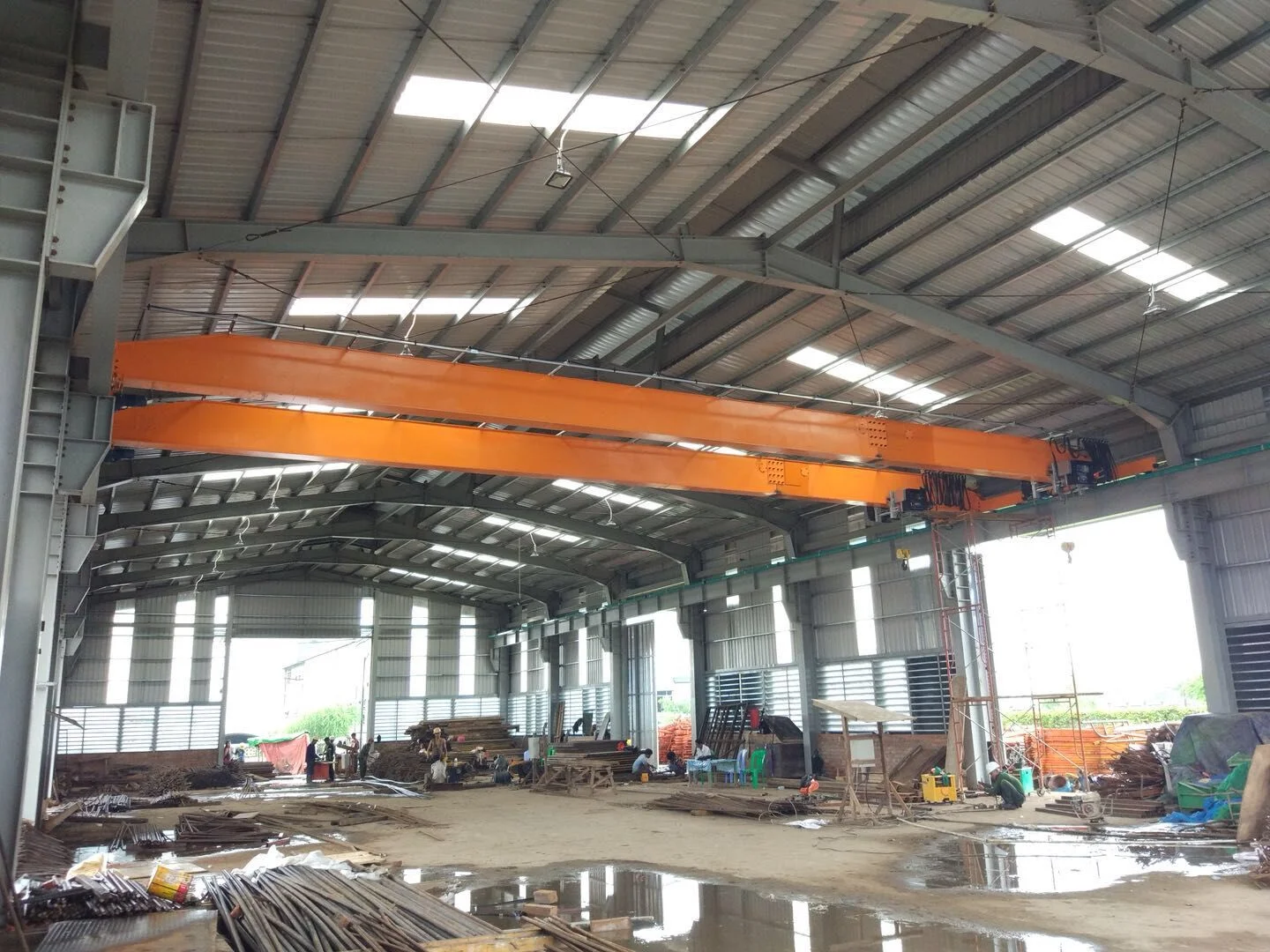
Vibration control protects the crane from dynamic stress. Real operation includes acceleration, braking, rail impact, wheel contact variation, and load swing. These effects can increase stress beyond static load conditions.
Common causes of vibration are: wheel flat spots, rail joint crossings, uneven elevation of rails, sudden starts, hard braking, worn bearings, gear clearance, loose bolts and poor alignment of crane wheels. Repeated vibration can loosen fasteners, damage bearings, increase wear on gearboxes and decrease fatigue life.
What Design Factors Improve Crane Travel System Stability?
The end carriage frame needs to resist twisting under vertical and lateral loads. The wheels have to be of the correct size for the corresponding wheel load, match the duty, are suitable for the corresponding rail type and the operational environment. The motor and gearbox are dimensioned on the basis of the desired travel speed, the corresponding start up for acceleration and the operational frequency.
Release and apply of brakes needs to be even. Control panels need to support the long travel, cross travel and lifting commands. The inverter control reduces starting shock and also the impact of braking. The buffers, limit switches, anti-derailment devices and the rail locking devices support safe travel.
How Should Engineers Diagnose Poor Overhead Crane Travelling Performance?
Poor travelling performance should be diagnosed systematically:
- Record skewing, noise, vibration, rail biting, flange wear, or motor overload.
- Check the condition of the rails, wheels, bearings, end trucks, gearboxes, idler and drive mounts, brakes and other control elements.
- Compare loaded and unloaded travel behavior.
- Check current of the motor, brake timing, acceleration, stopping distance.
- Address the root cause of the problem before replacing major parts.
How Can Maintenance Reduce Wheel Wear, Rail Biting, and Travel Instability?
Maintenance should focus on the early signs of instability rather than allowing to develop into major problems. Early indications of wheel flange wear, unusual noise, excessive vibration, hot bearings, loose rail clips and abnormal stopping are not normal and should be addressed.
Practical check list is: Wheel diameter measurement, Wheel straightness check, Rail gauge check, Tightening of rail clips, Motor current check, Brake release check, Inverter setting check, Change in vibration reading. High duty cranes need to be checked more frequently.
Conclusion: Why Travelling Mechanism Design Determines Long-Term Crane Performance
The traveling mechanism of a crane not only determines the horizontal travel, but also has a significant influence on other important parameters like stability, vibration, wear on wheels and rails, lifetime of rails, load on motor, braking and fatigue of structure. All these can be controlled by ensuring proper alignment of wheels, sufficient stiffness of end carriage, proper profile of rails, proper synchronization of motor, controlled acceleration and regular inspection.
A reliable travel system, helps to reduce down time, improve load positioning, protect building structure and extend service life of the hoist for overhead crane.
FAQ
What is a Crane Travelling Mechanism?
This system enables a horizontal movement of a crane by means of end carriages, wheels, motors, gearboxes, brakes, buffers and travel control.
Why does crane wheel alignment affect overhead crane stability?
Lateral force created by poor alignment causes skewing, rail biting, excessive wear on wheel flange and tread, vibration, heat and increased structural stress.
How do rail alignment issues affect crane travelling performance?
Any of the following could be causing poor travel and premature wear: Rail gauge error, elevation difference, rail offset, loose clips, rail twist or worn rail heads.
Nante Crane, designer and manufacturer of cranes and crane parts for the sector of lifting and material handling. We provide overhead cranes, gantry cranes and travelling mechanisms for cranes, as well as control panels for cranes, crane rails, electric hoists, mobile power supply systems and other parts and components for cranes. For specific applications that need a stable travel, vibration control, precise calculation of the wheel loads and long travel operation without any problem, we can provide customized solutions of cranes and parts. If you have any requirements or inquiries, feel free to contact us for professional support and tailored services.