English



How Does a Gantry Crane Work? Detailed Guide for Beginners
How Does a Gantry Crane Work Detailed Guide for Beginners
Date: 2026-05-29 Share:
A gantry crane is a useful lifting machine. It has a horizontal bridge beam held up by vertical legs. This setup lets it move heavy loads in an effective way. This beginner guide explains how a gantry crane works. It covers the gantry crane working principle. It also gives a full gantry crane guide for new users. Readers will learn about the main parts, the step-by-step gantry crane operation, various types, safety parts, and real uses of gantry cranes.
Gantry cranes work well in outdoor and indoor places. They fit situations where regular overhead cranes do not work easily. These cranes have three main movements. These include hoisting motion for vertical lifting, trolley travel motion for side-to-side movement on the beam, and gantry travel motion for forward movement of the whole structure. Workers combine these actions to handle materials with care and safety.
What Is a Gantry Crane?
Definition of a Gantry Crane
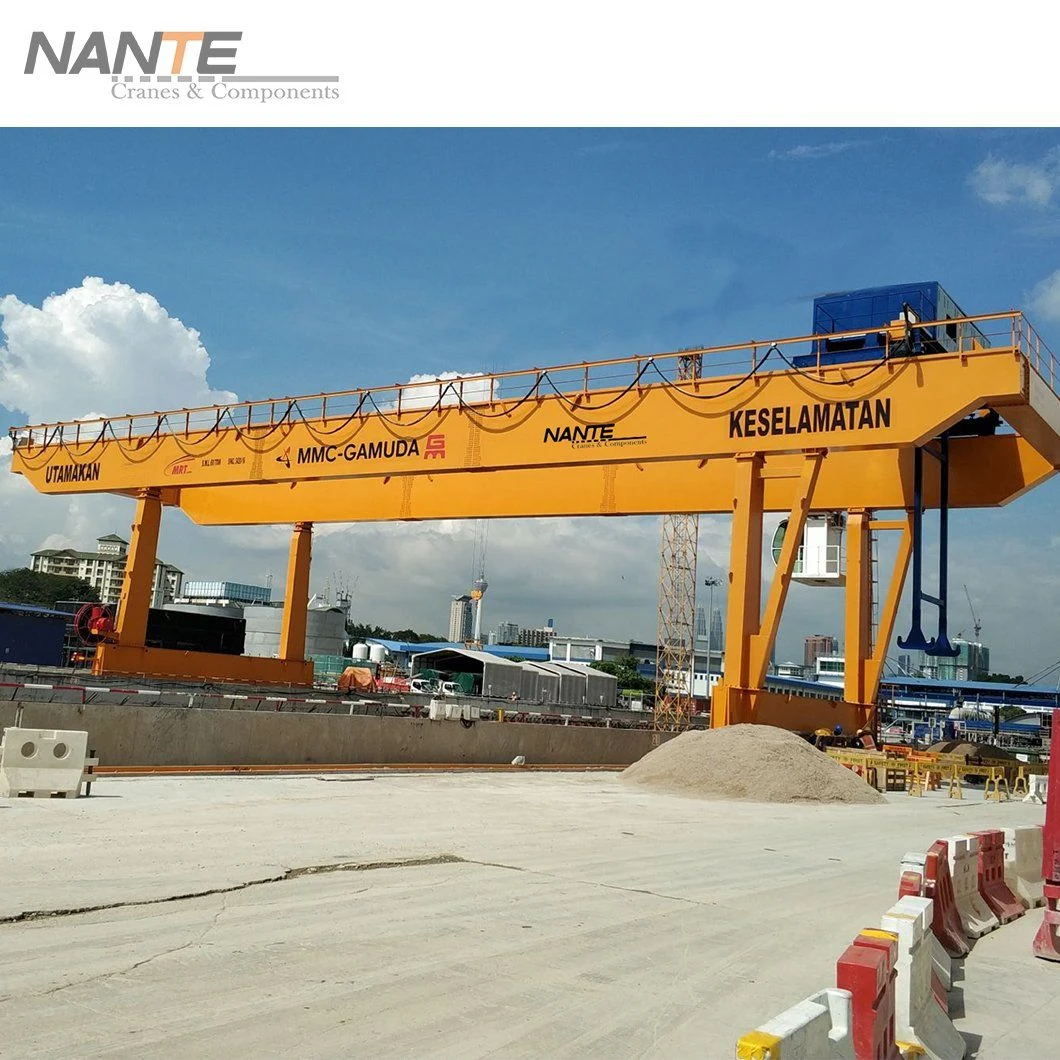
A gantry crane is a crane built on a gantry frame. It stands over the work area or load. It includes a horizontal bridge, also called a girder. This bridge rests on legs that stand alone. The legs move on wheels, rails, or rubber tires. Unlike overhead cranes, gantry cranes do not need support from building runways. They work on their own. This makes them good for flexible setups.
In simple terms, a gantry crane creates a portal shape. This frame gives good stability. At the same time, it allows full movement. The design carries heavy loads over different distances and heights. It comes in single or double girder options based on the needed capacity. This self-supporting build removes the requirement for major building changes. It provides a low-cost option for lifting tasks.
Main Industries That Use Gantry Cranes
Gantry crane applications cover many heavy industries. Ports and container yards use them to stack and shift shipping containers. Shipbuilding yards employ large gantry systems to handle ship parts and materials. Steel and precast industries apply them to move beams, plates, and concrete pieces.
Manufacturing plants, warehouses, construction sites, and outdoor storage areas gain from the gantry crane flexibility. These cranes manage bulk cargo, machines, and structural parts. Mobility and strong lifting power matter most in these spots. Their ability to run outdoors without fixed structures makes them very important in logistics and heavy building work.
Main Components of a Gantry Crane
Bridge Beam
The gantry crane bridge beam, also known as the girder, acts as the main horizontal load-bearing part. It crosses the work space and holds the trolley and hoist system. Makers build it as a single or double box or truss girder. This gives good strength and weight balance. The bridge beam affects the crane’s span, load capacity, and total stability.
Hoist and Trolley System
The gantry crane hoist system manages vertical lifting. It contains an electric motor, drum, wire rope or chain, and hook block. The trolley in a gantry crane shifts the hoist from side to side along the bridge beam. Operators place the load with care by guiding trolley travel. This action works together with hoisting for exact placement.
Gantry Legs and End Trucks
Gantry crane legs offer vertical support and balance. They link the bridge to the ground or rail system. They often use A-frame or box shapes to spread the load. Gantry crane end trucks contain the wheels or drive units at the bottom of the legs. This setup supports smooth motion.
Wheels, Rails, and Travel Mechanism
The gantry crane rail system or rubber tires permits forward travel. Rail-mounted models run on set tracks for accuracy. Rubber-tired versions give more flexibility. Drive motors power the wheels. This allows the full crane to carry heavy loads across the site.
Crane Control System
Modern gantry crane control systems use pendant remotes, operator cabins, or automated controls. These systems manage all movements with variable speed settings for smooth and exact work. Safety locks and monitoring parts improve dependability during difficult lifts.
How Does a Gantry Crane Work?
Gantry cranes follow a clear operation order. This order brings together the three main motions.
Step 1 – Positioning the Crane
Operators start with gantry crane positioning. They move the whole structure along rails or the ground. This step lines it up with the load. The crane movement before lifting places the bridge right over the work zone.
Step 2 – Attaching the Load
Workers fix the load with the gantry crane lifting hook, slings, or special spreaders. Good alignment with the load’s center of gravity stops swinging. It also keeps the process safe during load attachment.
Step 3 – Hoisting the Load
In the gantry crane lifting process, the hoist motor turns the drum. This winds the wire rope and raises the load straight up. Gear reducers and brakes give controlled and smooth rise. This setup creates mechanical advantage. It supports safe movement of heavy weights.
Step 4 – Horizontal Trolley Movement
The trolley travel in a gantry crane shifts the hanging load across the bridge beam. This gantry crane horizontal movement sets the load in the right spot within the span.
Step 5 – Gantry Travel Movement
Gantry crane travel motion moves the entire crane along rails or tires. It carries the load to a new place. This gantry crane rail movement increases the working area in a big way.
Step 6 – Lowering and Positioning the Load
Operators perform the gantry crane lowering operation with careful descent. They use anti-sway systems for exact load placement. The load is set down safely and then released once it becomes stable.
Types of Gantry Cranes and How They Work
Single Girder Gantry Crane
A single girder gantry crane has one main beam. It fits lighter loads and shorter spans. It offers lower cost and easier maintenance. The design works well in workshops and light-duty tasks.
Double Girder Gantry Crane
Double girder gantry crane models give higher capacity, stronger stability, and more hook height. They perform best in heavy industrial lifting. Rigidity and performance count in these cases.
Rubber-Tired Gantry Crane (RTG)
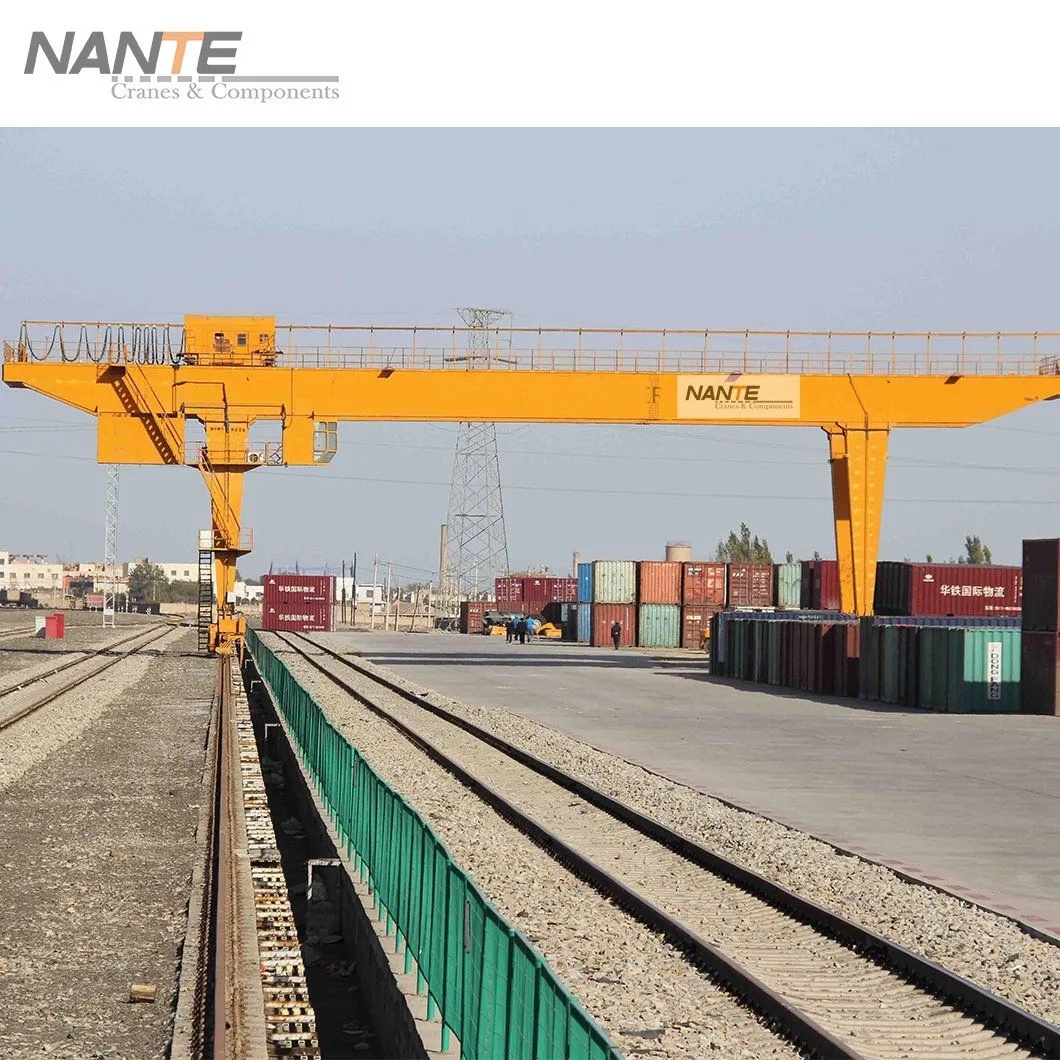
RTG crane working principle depends on rubber tires for movement in container yards. These cranes shift freely. They stack containers and provide flexible positioning without fixed rails.
Rail-Mounted Gantry Crane (RMG)
Rail mounted gantry crane systems run on fixed tracks. They offer high-precision stacking in ports and rail terminals. They provide excellent stability for tall container stacks.
Semi-Gantry Crane
A semi gantry crane has one leg on the ground rail and the other on an elevated runway. This design saves space. It fits well with current structures.
Safety Features in Gantry Crane Operation
Overload Protection Systems
Gantry crane overload protection includes load cells and automatic shutdowns. These stop operation past the rated capacity.
Limit Switches and Emergency Stops
Gantry crane safety controls have limit switches, emergency stops, and warning alarms. These avoid crashes and over-travel.
Anti-Sway and Stability Features
Gantry crane anti sway systems reduce load swinging. They use advanced reeving or electronic controls. This improves stability while the crane moves.
Advantages of Gantry Cranes
Gantry cranes provide strong mobility and flexibility for different work areas. They perform well in outdoor uses. They handle heavy materials in an efficient manner. Compared to overhead cranes, they need lower infrastructure costs. They do not require building-supported runways.
Common Applications of Gantry Cranes
Ports and Container Yards
Ports and container yards use RTG and RMG cranes for effective container handling.
Construction Sites
Construction sites gain from mobile lifting of materials.
Manufacturing Plants
Manufacturing plants depend on gantry cranes for assembly line support.
Steel and Precast Industries
Steel and precast industries move large structural elements with gantry cranes.
Shipbuilding Yards
Shipbuilding yards use large gantries for hull sections.
Conclusion
In summary, a gantry crane works through coordinated hoisting, trolley travel, and gantry travel motions. Its strong components, different types, and solid safety features make it a dependable choice in many industries. This gantry crane beginner guide shows how these systems supply efficient and safe material handling for various needs. Knowledge of these principles helps operators and buyers pick the right equipment.
Why Choose Nante Crane for Your Gantry Crane Needs
Nante Crane stands as a leading manufacturer. It offers a full range of high-quality gantry cranes. These include single girder, double girder, semi-gantry, rubber-tired, and truss models. It also supplies advanced crane components. With over 30 years of experience, Nante Crane delivers light self-weight, compact, energy-saving, safe, and reliable lifting solutions. These match customer requirements across ports, shipbuilding, steel, manufacturing, and more. Their global service network ensures professional support for customized and efficient equipment. Contact Nante Crane today.
FAQ
What is a gantry crane and how does it differ from an overhead crane?
A gantry crane uses freestanding legs for mobility, while overhead cranes rely on building structures.
What are the three main motions in gantry crane operation?
Hoisting (vertical), trolley travel (horizontal across beam), and gantry travel (longitudinal).
What is the difference between single girder and double girder gantry cranes?
Single girder suits lighter loads and lower costs; double girder offers higher capacity and stability.
How do RTG and RMG cranes work?
RTG uses rubber tires for flexible yard movement; RMG runs on rails for precise stacking.
What safety features should a gantry crane have?
Overload protection, limit switches, emergency stops, and anti-sway systems.