English


Electric Hoist Trolley Overhead Crane vs Open Winch Trolley Overhead Crane: Selection Guide for Industrial Lifting Projects
Electric Hoist Trolley Overhead Crane vs Open Winch Trolley Overhead Crane Selection Guide for Industrial Lifting Projects
Date: 2026-05-28 Share:
Engineers and procurement teams often compare the electric hoist trolley overhead crane and the open winch trolley overhead crane when they plan industrial lifting systems. Both types can handle the same rated lifting capacity. Yet differences exist in hoisting mechanism design, structural integration, duty class suitability, and long-term performance. These differences make each type right for certain operating conditions.
What Is the Difference Between Electric Hoist Trolley and Open Winch Trolley Overhead Cranes?
What Is an Electric Hoist Trolley Overhead Crane?
An electric hoist trolley overhead crane uses an integrated hoisting mechanism. In this setup the motor, gearbox, brake, drum, and related components form a compact and self-contained unit. This unit mounts directly onto the trolley. The result is an electric hoist overhead crane structure that stresses standardization and modularity. Nante offers models such as the NHA Series European standard wire rope hoist and similar integrated units suitable for single or double girder configurations.
The integrated hoist trolley crane design gives low headroom, lower overall weight, and simple installation. These cranes usually serve light to medium duty applications with capacities commonly ranging from 1.6t to 63t, depending on the specific hoist series. The compact layout makes the electric hoist trolley overhead crane ideal for workshops where space limits exist and lifting operations occur at moderate frequencies.
What Is an Open Winch Trolley Overhead Crane?
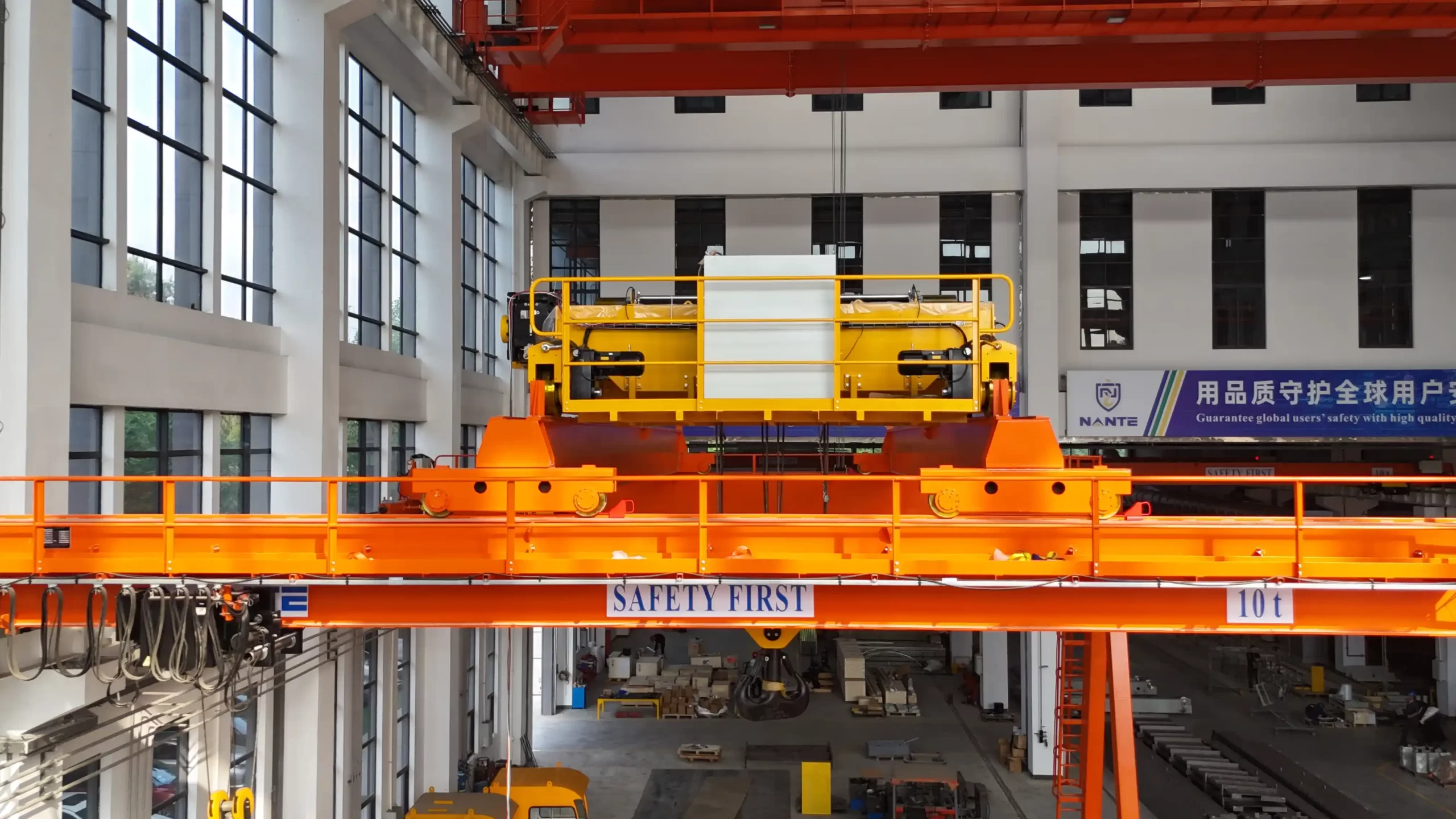
An open winch trolley overhead crane uses a split-type hoisting mechanism. Engineers mount the motor, gearbox, brake, and open drum separately on a strong trolley frame. This configuration, often called a wire rope winch trolley crane or open winch overhead crane system, supports higher load distribution and greater customization. Nante’s NW Series open winch (5t-300t) shows this design for double girder overhead cranes.
The open design improves heat dissipation and allows stronger components. These features make the system suitable for demanding environments. Open winch trolleys provide better rigidity and adaptability for heavy loads and continuous operations.
Main Structural Differences Between Hoist Trolley and Open Winch Trolley
The hoist trolley versus open winch trolley comparison centers on integrated versus split hoisting mechanisms. Electric hoist trolleys use a compact, all-in-one unit that reduces weight and headroom. Open winch trolleys employ a distributed layout that increases structural rigidity and resistance to deformation.
Key Structural Comparison
The main structural differences include:
- Hoisting Mechanism: Integrated compact hoist vs split open winch components
- Headroom Requirement: Lower for hoist trolley vs higher for winch trolley
- Overall Crane Weight: Lighter for hoist systems vs heavier but more rigid for winch systems
- Load Distribution: Concentrated vs uniform across trolley frame
- Customization: Standardized vs highly customizable
These differences in overhead crane hoisting mechanism comparison directly affect suitability for specific duty classes and industrial applications.
Service Class and Working Condition Comparison
Which Duty Class Is Suitable for Electric Hoist Trolley Cranes?
Electric hoist trolley cranes usually align with A3 (light duty) overhead crane applications or equivalent FEM 1Bm/M3 classes. These cranes perform well in situations with intermittent operation, low to medium lifting frequency, and occasional full loads. Workshops and assembly areas benefit from the electric hoist crane for workshop use, where daily cycles stay moderate and loads vary.
Duty class tables show electric hoist systems suit light to medium service with lower full load ratios and shorter continuous run times. Over-specifying an integrated hoist for heavier duty speeds up wear on components.
Why Open Winch Trolley Cranes Fit Heavy-Duty Operations
Open winch trolley cranes support heavy duty overhead crane classifications from A5 to A8 (FEM 2m to 5m or higher). These systems handle high-frequency lifts, near-continuous operation, and high full load ratios. The robust design and better heat dissipation make the open winch trolley ideal for continuous operation in demanding environments.
Higher duty classes require stronger structures, larger motors, and enhanced safety margins that split winch designs provide naturally.
Full Load Ratio and Operating Frequency Comparison
Full load ratio measures the proportion of lifts at or near rated capacity, while operating frequency counts lifts per hour and daily hours. Electric hoist systems work best with lower ratios and frequencies. Open winch systems excel with higher values. They support continuous duty crane system demands.
Typical metrics include:
- Electric Hoist: Lower lifts/hour with partial loads dominant
- Open Winch: Higher lifts/hour with frequent full loads possible
Typical Industrial Applications for Each Crane Type
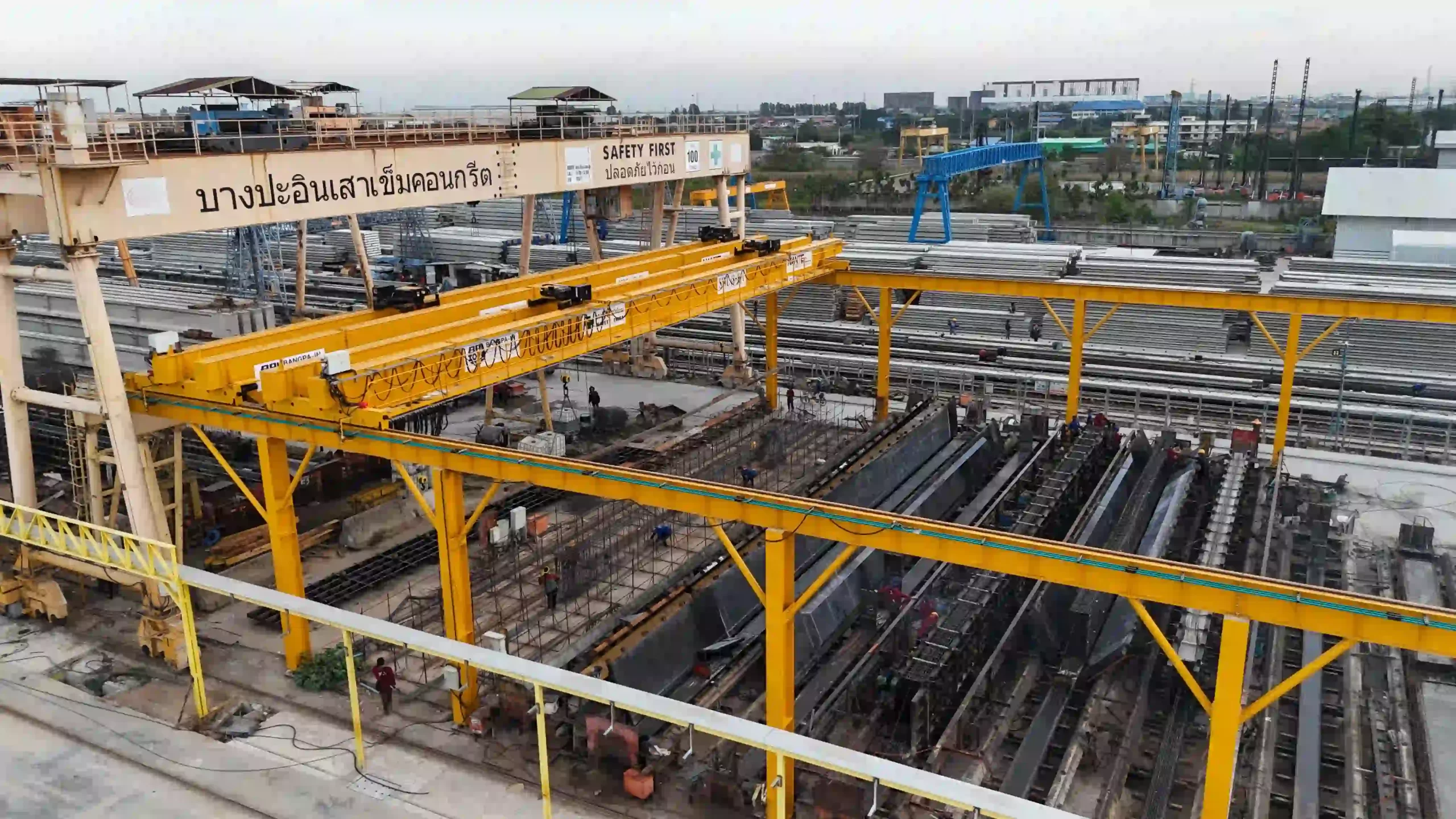
Electric hoist trolley overhead cranes suit machining workshops and light assembly lines. Open winch trolley overhead cranes serve overhead crane for steel plant, heavy equipment manufacturing, foundries, and continuous production environments.
Typical application matching includes:
- Light duty workshops: Electric hoist trolley
- Steel and metallurgy: Open winch trolley
- Heavy machinery: Open winch for high loads and cycles
Nante’s solutions cover diverse sectors including metal & steel, advanced manufacturing, and shipbuilding.
Hoisting Mechanism Comparison: Integrated Hoist vs Open Winch Design
Advantages of Electric Hoist Trolley Design
The electric hoist trolley offers a compact overhead crane design with low headroom hoist trolley crane benefits. The lightweight bridge crane system reduces structural steel requirements and building costs. Standardization simplifies procurement and spare parts management.
Advantages of Open Winch Trolley Design
Open winch designs deliver high performance winch trolley crane capabilities through customizable crane hoisting system options and heavy load crane trolley strength. Better cooling, higher sustainable speeds, and superior fatigue resistance support long service in harsh conditions.
Maintenance and Installation Differences
Standardized hoist trolley systems allow easier overhead crane maintenance comparison with readily available parts. Open winch trolleys may require more initial crane trolley installation cost but offer better component accessibility for major repairs. Both types benefit from proper planning to minimize downtime.
Safety and Structural Stability Comparison
Open winch systems generally provide higher overhead crane structural rigidity and crane deformation resistance under dynamic loads. Heavy duty crane safety features benefit from the split design’s robustness. Integrated hoists include comprehensive built-in safety devices suitable for their duty range.
Speed and Performance Comparison Under the Same Specifications
Hoisting Speed Comparison
Under identical capacity, open winch trolley cranes often achieve higher hoisting speeds due to more powerful motor configurations. Overhead crane hoisting speed comparison shows winch designs support faster lifting cycles in demanding operations.
Trolley and Crane Traveling Speed Comparison
Winch trolleys frequently enable higher trolley traveling speed and overall overhead crane travel speed. These features contribute to high efficiency crane system performance and reduced cycle times.
Production Efficiency in High-Frequency Operations
Crane for high frequency lifting applications gains clear advantages from open winch designs through sustained performance and minimal thermal derating. This boost improves industrial lifting efficiency and supports continuous operation overhead crane requirements.
Cost Comparison Between Electric Hoist Trolley and Open Winch Trolley Cranes
Initial Equipment Cost Comparison
Electric hoist crane cost remains significantly lower than open winch trolley crane price for comparable capacities. The integrated design reduces component complexity and manufacturing expenses.
Installation and Structural Steel Cost Differences
Lightweight crane design with hoist trolleys lowers crane supporting structure cost and crane installation cost. Winch systems may need stronger runways and platforms.
Long-Term Maintenance and Operating Costs
Lifecycle costs depend on proper duty class matching. Correctly specified open winch systems often deliver lower overhead crane lifecycle cost in heavy use due to durability, despite higher initial crane maintenance expenses.
Which Crane Provides Better ROI?
The best overhead crane for factory depends on matching specifications to actual loads and cycles. Economical industrial crane solution choices prioritize lifecycle efficiency and uptime over pure purchase price.
How to Choose the Right Overhead Crane for Your Industrial Project
When to Choose an Electric Hoist Trolley Overhead Crane
Select the electric hoist trolley for best crane for light duty lifting, economical overhead crane needs, and workshop material handling crane scenarios with moderate intensity.
When to Choose an Open Winch Trolley Overhead Crane
Choose open winch for crane for steel mill, heavy load bridge crane, and crane for continuous production line applications requiring high reliability.
Key Selection Factors Before Purchasing
An effective overhead crane selection guide includes duty class calculation (load spectrum + operating time), environmental conditions, future expansion, and how to choose overhead crane based on full parameters. Industrial lifting equipment selection must consider cycles, not just tonnage.
Common Mistakes in Crane Selection
Overhead crane buying mistakes often involve incorrect crane duty class selection or ignoring operating frequency. These industrial crane selection problems lead to premature failure and high downtime costs.
FAQ
What is the difference between hoist trolley and winch trolley cranes?
The primary difference lies in the integrated versus split hoisting mechanism. This affects compactness, duty suitability, and performance.
Which overhead crane is better for heavy-duty lifting?
Open winch trolley cranes perform better in heavy-duty, high-frequency operations.
Contact Nante Crane for Expert Overhead Crane Solutions
Nante Crane stands as a leading manufacturer with over 30 years of experience. The company offers comprehensive cranes and crane components including NHA series electric wire rope hoists for integrated trolley systems and NW series open winch solutions for heavy-duty applications. Nante provides double girder overhead cranes, customized hoisting mechanisms, and support across diverse industries such as metal & steel, manufacturing, and shipbuilding. Strong service networks back these solutions for reliable industrial lifting projects. Visit Nante’s overhead crane category, hoisting mechanism pages, or contact team for tailored consultation.