English



Guide to Rubber Tyre Gantry Cranes for Buyers and Users
Guide to Rubber Tyre Gantry Cranes for Buyers and Users
Date: 2026-03-27 Share:
Rubber tyre gantry cranes, often called RTG cranes or rubber tyred gantry cranes, deliver flexible and trackless heavy lifting options for busy work sites. These mobile cranes perform well in container handling and various industrial tasks. They provide better mobility than rail-based systems.
 1. What Are Rubber Tyre Gantry Cranes?
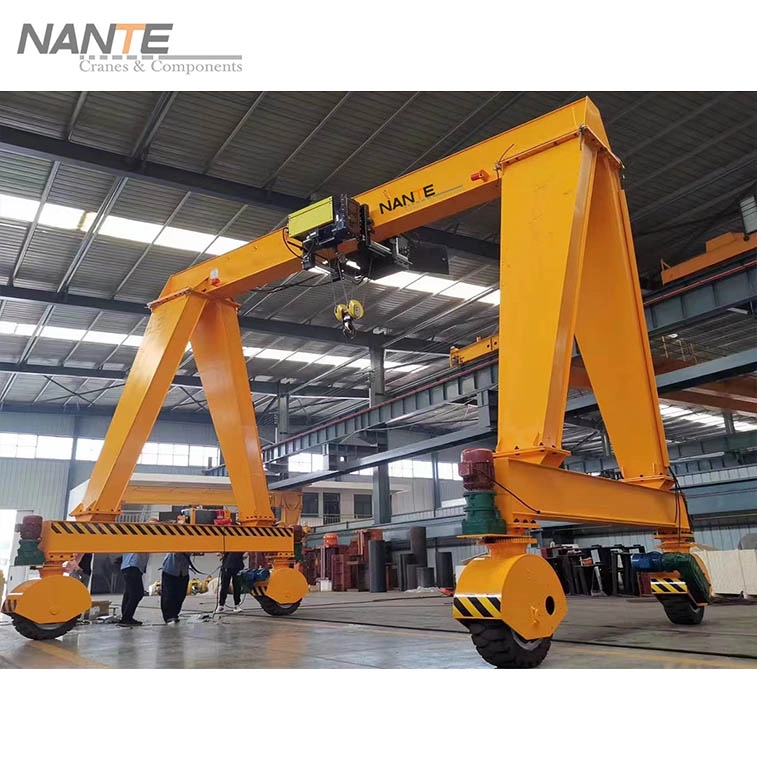
Rubber tyre gantry cranes (RTG cranes) act as mobile gantry systems. They travel freely on rubber tyres and do not need fixed rails at all. They lift, move, and stack heavy loads in an efficient way inside open yards.
Key parts include the main girder (which can be single or double), the hoist or winch system, rubber tyre end carriages that allow steering, the power supply setup, and controls for the operator (such as pendant, remote, or cabin). These cranes rely on large solid or pneumatic tyres. The tyres help them move smoothly across prepared surfaces.
RTG cranes stand apart from traditional fixed cranes. They focus more on flexibility instead of permanent setup. This quality makes them perfect for places where layouts change often.
1.1. Rubber Tyre Gantry Crane Definition
A rubber tyre gantry crane serves as a wheeled mobile gantry crane. People sometimes refer to it as a transtainer. It handles stacking intermodal containers or moving industrial materials. The rubber tyres allow movement in many directions. They support 90-degree steering for accurate placement. This trackless setup cuts down on infrastructure costs. At the same time, it keeps strong lifting ability.
1.2. Rubber Tyred Gantry Crane vs Rail Mounted Gantry Crane
RTG cranes and rail mounted gantry (RMG) cranes handle similar jobs. However, they differ in important ways.
Mobility: RTG cranes move freely around yards. RMG cranes stay limited to fixed rails.
Infrastructure: RTG cranes need no rails, so initial costs stay lower. RMG cranes demand expensive rail setups.
Flexibility: RTG cranes adjust easily to layout shifts. RMG cranes give greater precision and better automation options.
Power and Costs: RTG cranes usually run on diesel for independent work, but fuel expenses rise. RMG cranes often use electric power for better efficiency.
Typical Use: RTG cranes fit dynamic or medium-volume yards well. RMG cranes shine in high-throughput fixed terminals.
RTG cranes bring more versatility. RMG cranes supply added stability in organized settings.
2. Types of Rubber Tyre Gantry Cranes
Rubber tyre gantry cranes appear in several setups. These match different load needs and site conditions.
Common varieties feature single girder models for lighter work and double girder models for heavier tasks.
2.1. Single-Girder Rubber Tyre Gantry Crane
Single-girder versions have just one main beam. This design keeps them compact and more affordable.
Load capacity: Usually 2-20t, and sometimes up to 63t in certain builds.
Ideal for light to medium loads in smaller yards or industrial areas.
Benefits: They offer easier handling, reduced cost, and simpler upkeep.
These work best in operations that do not demand very high stability or capacity.
2.2. Double-Girder Rubber Tyre Gantry Crane
Double-girder models include two parallel beams. This adds extra strength.
Load capacity: 5-100t or more, especially with winch setups for tough duties.
Advantages: Better stability, wider spans, and more dependable lifting.
Suited for heavy-duty settings that require solid performance.
Many come with hoist or winch choices to meet various lifting demands.
2.3. Other Configurations (Special Frame Designs)
Special frames, like A-frame or U-type, bring improved stability or easier access.
A-frame: Provides even load spread on uneven ground.
U-type: Allows better access underneath the crane for some stacking jobs.
Custom options fit special site limits.
These designs increase adaptability beyond basic girder styles.
3. Specifications & Technical Details
Rubber tyre gantry crane specifications change depending on the model and custom features.
Important parameters help guide the right choice for performance and safety.
3.1. Load Capacity & Span Range
Load capacity goes from 2t in lighter models to over 100t in strong heavy-duty ones.
Common: 20-65t for container work.
Span: 5-40m, which covers several rows along with access paths (for example, 20-35m is typical).
Span decides how much area the crane covers. Wider spans work well for bigger stacking zones.
3.2. Lifting Height, Speeds, and Other Parameters
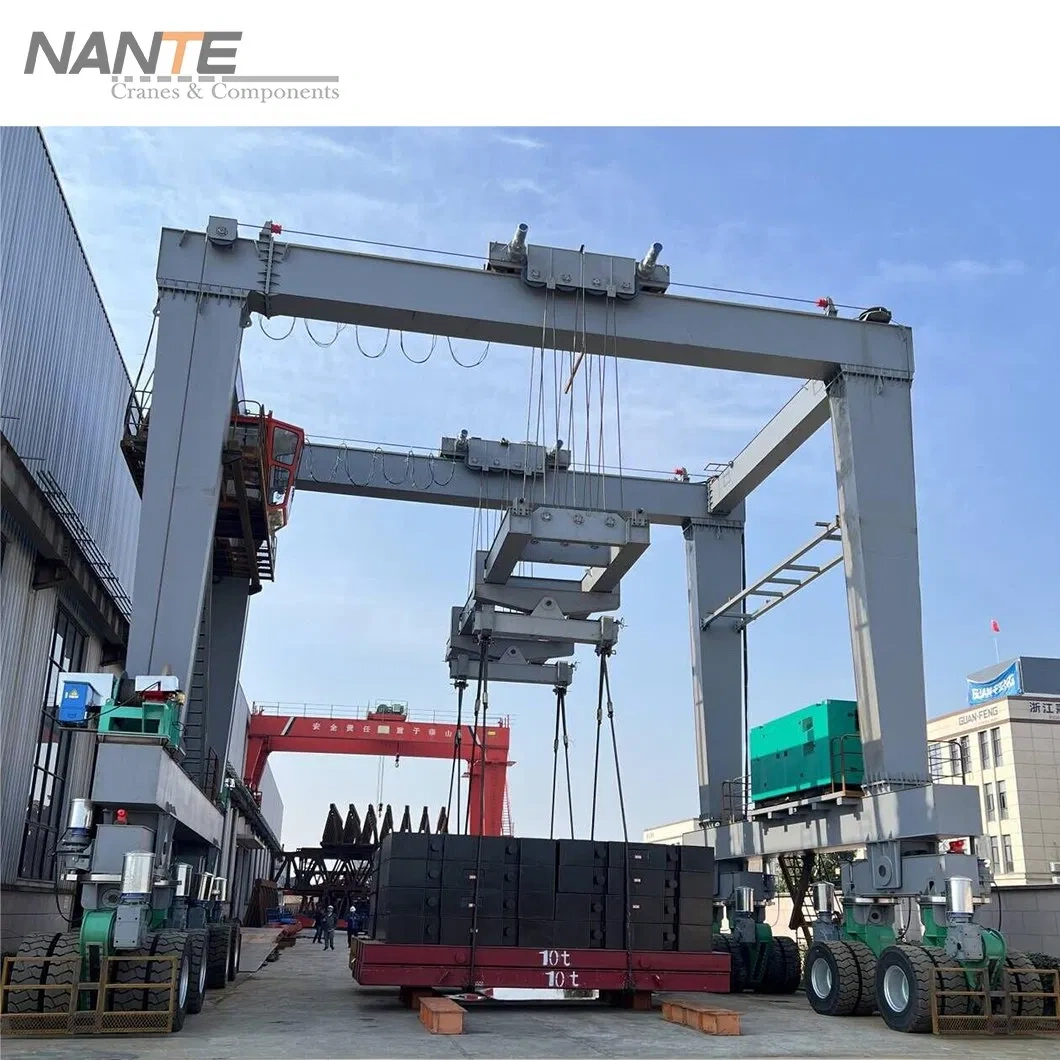
Lifting height reaches 3-60m. It often sits at 12-21m for stacking 1-over-3 to 1-over-6 containers.
Hoisting speed: 12-50 m/min.
Travel speed: 30-130 m/min for the gantry, 70 m/min for the trolley.
Steering: 90° rotation gives great flexibility.
Deflection: 1/700 to 1/1000 according to standards.
These features support smooth and secure work.
3.3. Power Source Options (Diesel, Electric, Hybrid)
Power choices affect efficiency and the environment.
Diesel: Allows free movement and suits remote locations.
Electric: Cuts running costs and helps the environment (like eRTG versions).
Hybrid: Combines power with greener benefits.
Diesel fits flexible yards. Electric lowers emissions.
4. Key Features and Advantages
Rubber tyre gantry cranes bring clear benefits compared to other options.
4.1. Mobility & Flexibility
The trackless design lets operators reposition the crane without stopping work.
90° steering and movement in many directions adjust to new needs.
Perfect for active yards or layouts that evolve.
This adaptability improves daily efficiency.
4.2. Ground Surface Compatibility
These cranes run on asphalt or concrete without any rails.
Solid or pneumatic tyres manage prepared surfaces.
Low ground pressure helps avoid surface damage.
They fit many outdoor settings.
4.3. Safety and Reliability Features
Newer RTG cranes include modern safety elements.
Dual brakes, anti-sway systems, and overload protection.
They follow FEM, CMAA, EN ISO standards.
Controls have IP55/IP65 enclosures.
These elements deliver safe and dependable results.
5. Application Scenarios for Rubber Tyre Gantry Cranes
Rubber tyre gantry cranes work in many industries.
5.1. Container Handling & Logistics
The main use happens in ports and container yards.
They stack containers up to 6 high and 8 wide.
They load and unload trucks, rail, or ships quickly.
They increase throughput at intermodal terminals.
Mobility deals with changing traffic patterns.
5.2. Industrial & Construction Uses
Outside ports, they appear in steel mills, precast yards, and bridge projects.
They manage heavy parts, steel structures, and wind equipment.
They handle pipelines and large assemblies on open sites.
In construction, they position precast elements and machinery.
They offer versatility for heavy industrial lifting.
6. How to Choose the Right Rubber Tyre Gantry Crane
Choosing one requires careful review of needs and choices.
6.1. Assessing Operational Needs
Begin with basic requirements.
Figure out the maximum load, span, height, and how often it runs.
Think about site conditions like surface, space, and surroundings.
Select the power source based on use (diesel for mobility, electric for efficiency).
Match the specs to everyday tasks.
6.2. Budget, Customization, and Supplier Evaluation
Consider the total cost. This includes purchase price, maintenance, and energy use.
Focus on compliance with FEM/CMAA/EN ISO standards and quality parts.
Look for customization to handle special needs.
Check the supplier’s support, warranties, and experience.
Select dependable partners for lasting value.
Rubber tyre gantry cranes supply mobility, efficiency, and reliability for current lifting needs. Their trackless design and adjustable specs make them vital in logistics and industry.
Call to Action – Discover Reliable Rubber Tyre Gantry Crane Solutions with Nante Crane
Nante Crane, a leading manufacturer with over 30 years of experience, specializes in high-quality cranes and components compliant with FEM, CMAA, EN ISO, and GB standards. Their rubber tyre gantry cranes feature customizable single/double girder designs, capacities up to 100t, spans 5-40m, and options like European-standard hoists/winches, dual brakes, and flexible steering. Serving 50+ countries across 30+ industries, Nante offers intelligent, energy-saving solutions—visit nantecrane.com to explore gantry cranes, components, and applications, then contact us for tailored guidance.
FAQ
What is the main difference between RTG and RMG cranes?
RTG cranes move freely on rubber tyres for flexibility. RMG cranes run on fixed rails for precision and higher automation.
Can rubber tyre gantry cranes operate without tracks?
Yes, they require no rails. They depend on rubber tyres for movement on suitable ground surfaces.
What load capacities do rubber tyre gantry cranes typically support?
They range from 2-20t for single-girder models to 20-100t+ for double-girder heavy-duty versions.
Are electric or hybrid RTG cranes more efficient?
Electric and hybrid options reduce operating costs and emissions compared to traditional diesel. They suit sustainable operations.
Where are rubber tyre gantry cranes most commonly used?
They appear mainly in container yards, ports, logistics hubs, steel mills, precast plants, and construction sites for heavy material handling.