English



Environmental Design Requirements for Davit Cranes
Environmental Design Requirements for Davit Cranes
Date: 2026-02-26 Share:
Davit crane environmental design requirements matter a lot for safe, durable work in tough sea and factory spots. Engineers and advisors need to focus on davit crane corrosion protection to fight salt water, damp air, and chemicals. They also must meet offshore crane environmental requirements for winds, waves, and harsh states. Good marine davit crane design makes sure of rule following, lower upkeep costs, and better work steadiness. This guide looks at needs by spot—offshore, coastal, and bad weather. It gives useful tips for rule checks.
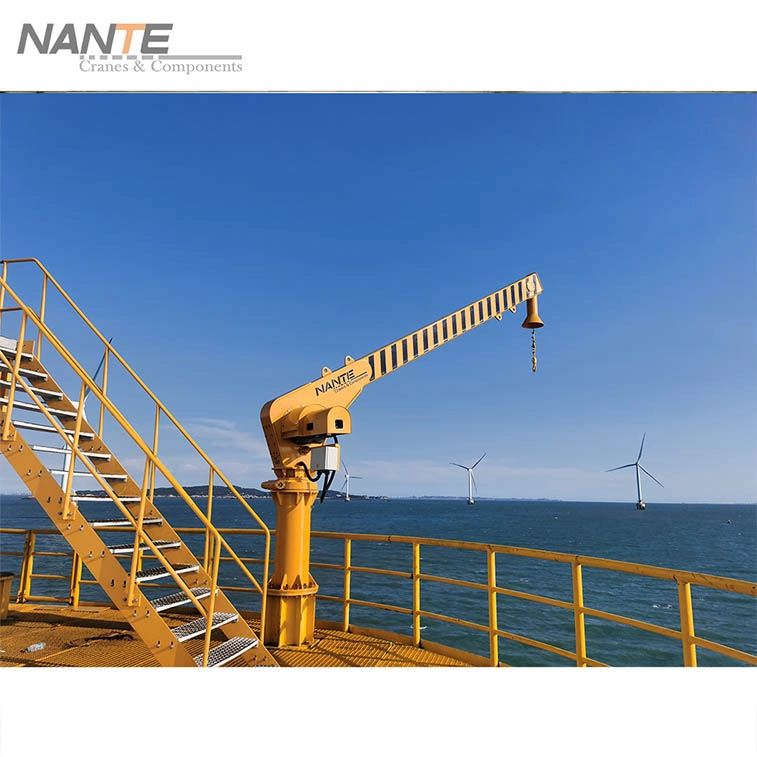
Understanding Davit Crane Environmental Design Requirements
Davit cranes serve as small, deck-fixed or wall-fixed turning lift tools. They mainly help launch and recover lifeboats, rescue boats, workboats, gear, and sometimes crew on ships, offshore platforms, floating docks, and shore setups.
Their small size and turn ability fit them well for tight-space sea jobs. But the work spot proves very rough.
Steady touch to salt mist, high dampness, UV light, heat shifts, and moving ship shakes speed up material wear fast. This happens if builders do not fix it right in the plan stage.
Not meeting davit crane environmental design requirements can cause early rust, stuck parts, lower lift power, safety problems, and high stop time or swaps.
The top used rules cover the EN 13852 set (mainly EN 13852-1 for light offshore cranes), Lloyd’s Register Code for Lifting Appliances in a Marine Environment, ISO 12944 (guard paint setups), and API RP 2C ideas fit for small lift tools.
Key Factors in Marine Davit Crane Design
Material Selection for Durability
Picking materials builds the base of any strong marine davit crane design.
High-strength low-alloy build steel stays the usual main material. It offers good power-to-weight balance and join ease.
But in sea spots, plain carbon steel rusts quick. So builders often pick:
Stainless steel grades 316 or 316L for key parts like pins, shafts, fasteners, and sheaves.
Marine-grade aluminum alloys (e.g., 5083 or 6061) for light booms or builds where less weight matters most.
Duplex or super-duplex stainless steels in very rust-prone places when both power and top pit fight are needed.
Using these materials in smart ways helps match cost, weight, power, and long-run strength.
Corrosion Protection Strategies
Davit crane corrosion protection comes from many-layer guard setups. It does not rely on one way alone.
Usual and tested ways cover:
Hot-dip galvanizing (HDG) put on build steel parts before last put-together. It gives both guard and block safety—even to cut sides and inside faces.
Thick epoxy base paint setups (often 200–300 μm total dry film thickness). They follow with polyurethane or polysiloxane top layers made for long UV and rub fight.
Electrostatic powder coating for small parts. It brings even thickness and good edge cover when mixed with right pre-work.
Electropolishing of stainless steel faces to clear stuck dirt and make a very smooth guard layer. This boosts rust fight a lot.
The ISO 12944 rule (mainly parts 2, 5, and 9) sets strength groups. It picks setups for varied rust levels:
C5-M (very high marine corrosivity) — usual for shore and near-shore spots
CX (extreme offshore/impregnated) — needed for open-sea platforms and ships in bad salt-mist areas
Offshore Crane Environmental Requirements
Offshore spots show the hardest work states for davit cranes. They include steady high-salt mists, wave-caused moving loads, wind speeds often over 100 km/h, and few chances for normal upkeep.
Plans must stop water entry into gear boxes, winches, turn bearings, and power box setups.
Fitting rules cover:
BS EN 13852-1 (offshore cranes — general requirements)
Lloyd’s Register Rules for Lifting Appliances in a Marine Environment
API RP 2C (offshore pedestal-mounted cranes), whose environmental and dynamic load considerations are frequently referenced for davit-type appliances
Okay process often needs type okay, plan check, and watch tests under fake sea states.
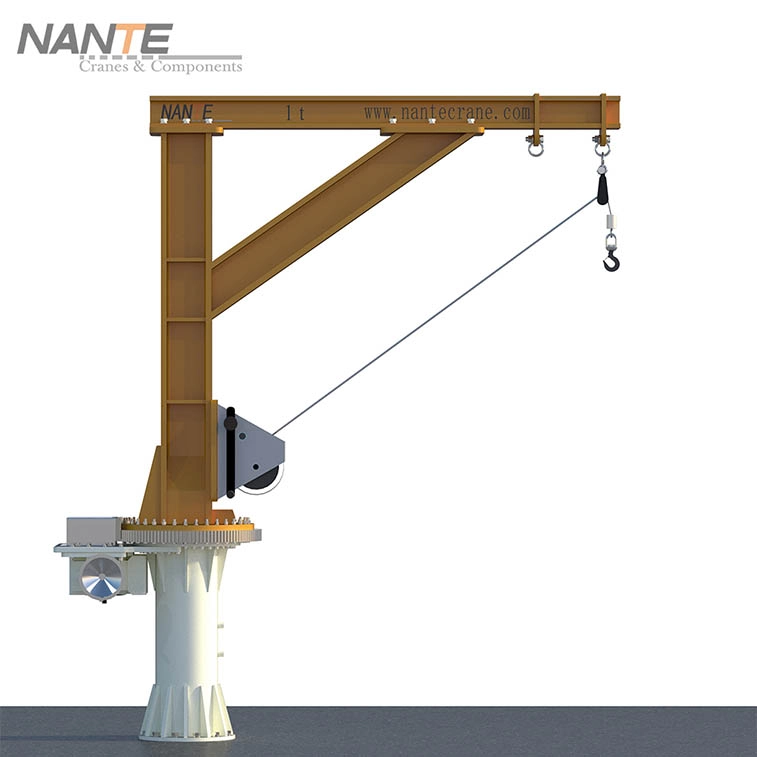
Design Adaptations for Offshore Conditions
Main build changes cover:
Build checks that mix wind, wave, and ship move loads (often using 50-year or 100-year return period environmental data).
IP66 (or higher) rated electrical panels, motors, and control stations to ensure reliable operation during wash-down or heavy spray.
Sealed or grease-purged slewing bearings and winch gearboxes to exclude salt and moisture.
Redundant limit switches, emergency lowering systems, and overload protection devices specifically required when the crane is used for personnel handling.
Preference for electric or electro-hydraulic power units with low-noise and low-emission characteristics suitable for sensitive offshore installations.
Davit Crane Design for Coastal Environments
Shore jobs face a bit less rough but still very rusting states. These include often salt-filled winds, high dampness, some tropic storms, and heat changes.
Davit crane corrosion protection stays a main need. But the needed layer thickness and material boosts are usually one level under full offshore specs.
EN 12944 C5-M class is the most often used rust level in shore spots.
Specific Coastal Protection Measures
Useful steps cover:
Hot-dip galvanized base structures finished with a high-performance marine paint system (minimum 320 μm total DFT).
All exposed fasteners, hinges, and small fittings manufactured from 316 stainless steel to prevent galvanic corrosion.
Weatherproof boots, seals, and labyrinth glands protecting winch drums, wire ropes, and hydraulic cylinders.
Clear inspection and wash-down procedures documented in the maintenance manual to remove salt deposits before they cause pitting.
Davit Cranes in Extreme Weather Conditions
Bad weather covers high winds, heavy rain, cold temps, ice build-up, and strong sun light in tropic areas.
Each part must get checked in the build and part plan stage.
Wind tunnel tests or CFD checks sometimes get used for high-wind areas.
Load charts often include environmental derating factors (e.g., reduced capacity at wind speeds above 20 m/s).
Engineering for Wind, Temperature, and Precipitation
Key plan thoughts are:
Increased section modulus and bracing in booms and masts to limit deflection and prevent buckling under extreme gusts.
Selection of elastomers, seals, and lubricants rated for wide temperature ranges (–30 °C to +60 °C or wider).
Anti-icing coatings, heated control enclosures, or low-temperature hydraulic fluids in cold-climate installations.
Full enclosure or shielding of electrical and control systems to protect against driving rain, snow ingress, and hail impact.
Compliance and Standards Reference
Following known rules is a must for safe work and insurance okay.
Often used papers cover:
EN 13852-1 & -2 (offshore and light offshore cranes)
ISO 12944 series (corrosion protection of steel structures by protective paint systems)
Lloyd’s Register, DNV, or ABS type approval rules for marine lifting appliances
API RP 2C environmental and load considerations
Third-party plan checks, material okay, factory acceptance testing, and regular proof-load testing are usual needs.
Why Choose Custom Davit Crane Solutions
Each ship, platform, or shore setup has special space limits, load types, and spot risks.
Custom marine davit crane design makes sure of best work, easy fit-in, and top work life.
Explore more on our ship cranes page and ship crane customization options.
Contact Nante Crane for Expert Davit Crane Solutions
Nante Crane focuses on top-quality crane and crane part fixes, including tough davit cranes made for hard sea and offshore jobs. With skill in rust-fight materials, fresh coatings, and rule follow with global standards, Nante gives steady, custom lift gear for ships, platforms, and rough spots. Explore our full range at https://www.nantecrane.com/crane/ or contact us today for tailored advice.
FAQ
What is the most important aspect of davit crane corrosion protection?
A properly selected multi-layer coating system (meeting CX or C5-M requirements per ISO 12944/EN 12944-9) combined with appropriate base materials such as galvanized steel or 316 stainless steel.
Which standards apply to offshore crane environmental requirements?
The primary references are BS EN 13852-1, Lloyd’s Register Code for Lifting Appliances in a Marine Environment, and API RP 2C principles for dynamic and environmental loading.
How do extreme weather conditions affect marine davit crane design?
Engineers incorporate reinforced structures, environmental load derating, wide-temperature-range components, sealed systems, and specialized coatings to maintain safety and functionality.
Where can I find more on custom ship cranes?
Visit our ship cranes page or customization options.