English


Crane Cable Reel Specification Checklist for International Buyers
Date: 2026-10-23 Share:
A reliable crane cable reel specification must define the cable, motion, duty, environment, controls, and required supplier evidence before a model is selected. A travel distance and current rating alone are not enough.
Incomplete RFQs create three common risks: insufficient drum capacity, an electrically unsuitable cable, or uncontrolled payout under the real duty cycle. This checklist turns operating data into a comparable quotation package.
Establish the Application Boundary Before Sizing
Define the Crane Motion and Feed Arrangement
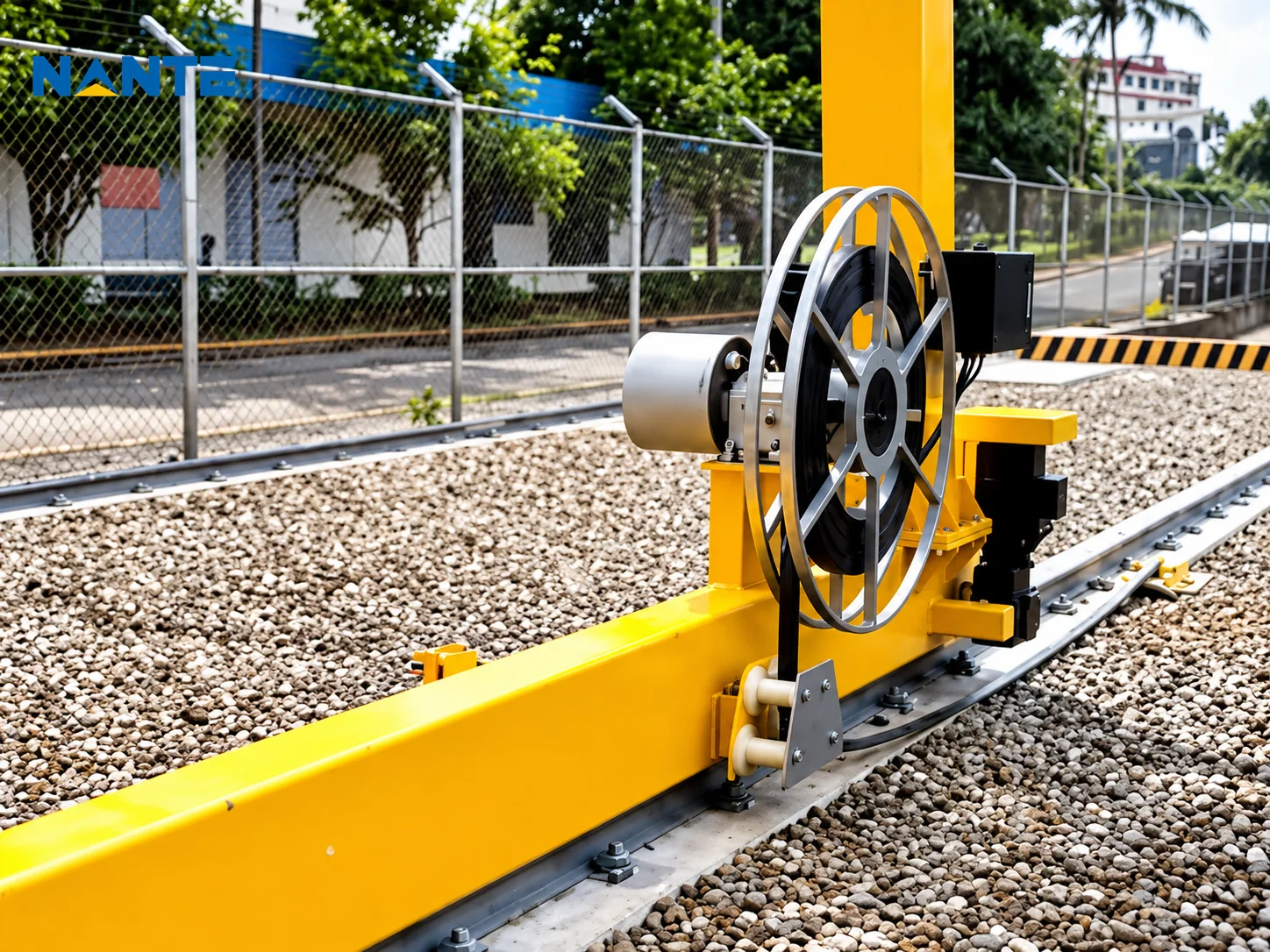
State whether the reel supplies bridge travel, trolley travel, or vertical motion. Identify the crane type, reel mounting location, feed point, direction of payout, maximum travel, and whether the system is end-fed or center-fed.
Attach a dimensioned layout showing the reel, cable route, terminal points, obstructions, and installation envelope. For a center-fed runway, show both travel directions.
Record maximum speed, acceleration, braking, reversing frequency, operating hours, and cycles per hour. Crane capacity gives project context, but it does not replace the electrical and motion data needed to size the reel.
Freeze the Supply Scope
Specify whether the quotation includes the reel only or also the cable, support frame, guide, anchor, junction box, controls, installation supervision, commissioning, and spares. State the control interface, destination, and document language.
This scope boundary prevents a low quotation from appearing comparable when essential hardware, testing, or site services are excluded.
Cable Reel Capacity Calculation: Inputs and Method
Calculate Required Cable Length First
Required stored length should be based on the layout, not a generic percentage of runway length:
Required cable length = maximum active payout + fixed connection lengths + routed length + approved installation/service allowance.
Measure active payout from the feed or anchor point to the furthest operating position. Add fixed tails and any cable routed through guides or structures. The project engineer should approve the allowance because site geometry varies.
For vertical payout, also provide the maximum suspended length and cable weight per unit length. These values affect hanging load, torque, and tension control even when storage length is unchanged.
Check Geometric Drum Capacity
A preliminary cable reel capacity calculation can use the cable outside diameter d, drum core diameter Dc, usable flange diameter Df, and usable winding width W.
- Winding layers: n = floor[(Df − Dc) / (2d)]
- Turns per layer: t = floor(W / d)
- Approximate geometric length: L = π × t × [nDc + d(n²)]
Use consistent units. The equation assumes orderly level winding and treats each layer at its mean diameter. It is a screening calculation, not a purchase-release value.
Request the supplier’s calculation with usable dimensions, winding arrangement, flange clearance, cable construction, and working-capacity allowance. Do not fill the drum to a theoretical limit or apply an arbitrary universal derating factor.
Validate Bending, Torque, and Dynamic Behavior
Capacity is acceptable only if the drum core and guides respect the cable manufacturer’s minimum dynamic bending radius. The reel must also manage the total wound cable mass, starting torque, acceleration, and payout tension without crushing, pulling, or excessive slack.
Ask the supplier to identify the worst operating case: empty drum, full drum, maximum payout, vertical lift, acceleration, braking, or reversal. The calculation should show cable tension and drive or spring torque across the working range.
Crane Cable Size Selection
Complete the Electrical Sizing Review
Crane cable size selection begins with voltage, AC or DC, phase, frequency, continuous current, starting current where relevant, simultaneous load, control circuits, and protective conductor requirements. State the applicable codes or project specifications.
Request ampacity confirmation for the reeling condition. A partly wound cable may dissipate heat differently from an extended cable. The responsible electrical engineer must also review voltage drop, short-circuit withstand, protective-device coordination, and termination.
Do not define a cable only by conductor area. The RFQ should list conductor material, power and control core counts, shielding or data needs, protective conductor, voltage rating, and permitted connection arrangement.
Confirm Mechanical and Environmental Compatibility
Provide cable outside diameter, weight per unit length, minimum static and dynamic bending radius, tensile limits, and manufacturer data sheet. These inputs directly affect drum dimensions, torque, guide geometry, and allowable tension.
Define repeated-flexing duty and exposure to oil, abrasion, sunlight, water, chemicals, salt, low or high temperature, and flame-performance requirements. The jacket and internal construction must suit reeling service rather than fixed installation.
If power, control, and communication conductors cannot share one cable, identify the number of drums or independent winding paths required. Confirm signal integrity and shielding with the control-system designer.
Industrial Cable Reel Requirements to Put in the RFQ
Drive, Controls, and Mechanical Interfaces
State whether the supplier should evaluate a spring-driven, motorized, or other controlled-torque arrangement. Selection should follow cable mass, payout length, speed, acceleration, cycle rate, mounting orientation, and required tension behavior.
Define power and control interfaces, local isolation, limit or slack detection, interlocks, emergency behavior, and signals required by the crane control panel. Provide mounting loads, bolt pattern constraints, cable entry angle, and maintenance clearance.
At this stage, Nante Crane can be asked to review the completed application data rather than quote from travel length alone. Its cable reel product page presents motorized and spring configurations, while the final configuration still requires project-specific confirmation.
Environment, Protection, and Safety
List indoor or outdoor service, ambient temperature range, altitude, humidity, rain, dust, washdown, icing, corrosion, vibration, and hazardous-area classification where applicable. State the required enclosure protection and the governing project or destination-market standard instead of requesting a vague “outdoor type.”
The purchasing team should identify guarding, pinch-point controls, cable guidance, anchoring, grounding or bonding, and lockout provisions required by the site. Where a listing, third-party approval, or local inspection is mandatory, state the exact requirement and acceptance authority in the RFQ.
For cable compatibility details, the crane cable product information can support a technical discussion about construction and operating conditions. Final acceptance should remain tied to submitted data, drawings, and compliance evidence.
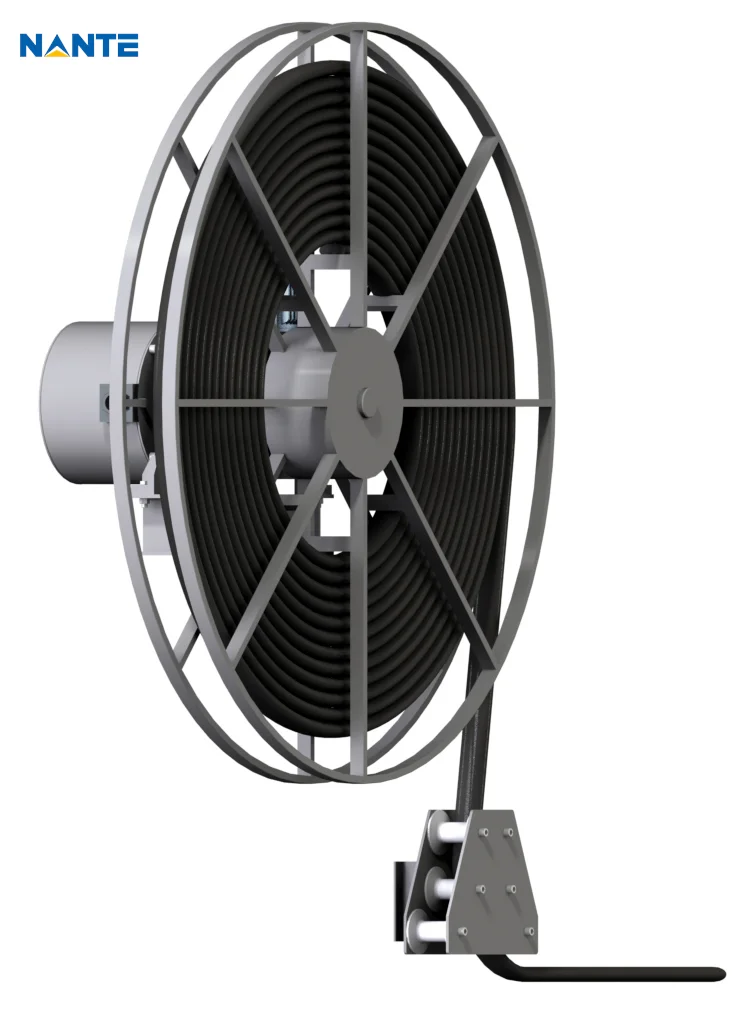
img.Large crane cable reel installed on an outdoor gantry crane at a container port.webp
Supplier Evidence and Comparable-Bid Review
Request Documents Before Purchase Release
Require a general arrangement drawing, drum-capacity calculation, torque or spring selection, cable data sheet, electrical schematic, terminal plan, control narrative, bill of materials, installation instructions, and maintenance manual. Drawings should show dimensions, mass, mounting reactions, payout direction, and service clearances.
The inspection and test plan should identify routine checks and project-specific FAT items. Buyers may request dimensional inspection, winding checks, control-function tests, insulation or continuity records, nameplate verification, and valid instrument calibration records.
Ask for a compliance matrix that answers every RFQ clause with “comply,” “deviation,” or a referenced document. A management-system certificate is not proof that a particular reel meets a product requirement; its entity, site, scope, issuer, and validity should be checked separately.
Normalize Commercial Scope Before Comparing Price
Compare equipment, cable, accessories, controls, documentation, tests, packing, freight basis, installation, commissioning, training, recommended spares, warranty, exclusions, and change terms line by line. Record every deviation before technical approval.
The related crane cable reel selection guide provides broader application context; this specification checklist should be used as the RFQ audit record.
Download Checklist: Crane Cable Reel RFQ Data Sheet
Buyer Input Fields
Use this copy-ready checklist as a one-page PDF or gated download labeled Download the Crane Cable Reel RFQ Checklist.
- Crane type and reel function
- End-fed or center-fed layout drawing
- Maximum travel and active payout length
- Reel location, payout direction, and mounting orientation
- Maximum speed, acceleration, and reversing frequency
- Operating hours, cycles per hour, and duty pattern
- Voltage, phase, frequency, current, and control voltage
- Cable cores, conductor sizes, outside diameter, and weight
- Minimum dynamic bending radius and cable data sheet
- Indoor/outdoor environment and temperature range
- Dust, water, corrosion, chemical, or hazardous-area exposure
- Installation envelope, interfaces, and maintenance clearance
- Destination, applicable standards, and required approvals
- Scope for installation, commissioning, training, and spares
Supplier Response Fields
The downloadable version should also require the supplier to return:
- Selected reel type and model with stated selection basis
- Required versus usable drum capacity calculation
- Cable compatibility and reeling-condition ampacity confirmation
- Torque/tension review for worst-case operation
- Drawings, schematics, interface list, and document schedule
- Compliance matrix with deviations clearly identified
- FAT scope, acceptance criteria, and records supplied
- Packing method, delivery basis, warranty, and exclusions
FAQ for International Purchasing Teams
Can a Reel Be Selected From Travel Distance and Current Alone?
No. Cable diameter, weight, bending radius, feed position, speed, acceleration, duty, environment, mounting, and control interfaces can change the required drum and drive arrangement.
Should Buyers Specify Drum Dimensions or Required Performance?
Specify verified space constraints and required performance. Unless an existing interface must be duplicated, allow the supplier to propose drum dimensions and support them with capacity, bending-radius, and torque calculations.
What Is the Most Important RFQ Attachment?
A dimensioned layout is the strongest starting point because it establishes travel, feed position, routing, payout direction, and installation space. It should be paired with cable data and the operating-duty profile.
Submit a Specification Package for Technical Review
Turn Checked Inputs Into a Comparable Proposal
Purchasing managers, plant engineers, and project contractors can submit the completed checklist, layout, cable data, electrical load, duty profile, environment, destination requirements, and requested supply scope. Nante Crane can review those inputs and prepare a project-specific configuration and quotation through the cable reel technical inquiry form.