English


Corrosion Protection for Outdoor Gantry Cranes: C3, C4, and C5 Coating for Marine Crane Applications
Date: 2026-07-23 Share:
Outdoors gantry cranes are mostly used in coastal yards, ports, shipyards and other heavy industries. The structures consist of steel which for outdoor use has to be provided with adequate corrosion protection. In general the same type of coatings are used for steel structures exposed to rain, moisture, salt, UV-radiation and industry pollution. The choice of a coating system for a marine crane or a seaside gantry crane has to be made based on the real operating environment, design service life and the maintenance conditions. The common C3-, C4- and C5-coatings are considered.
Why Corrosion Protection Matters for Outdoor Gantry Cranes
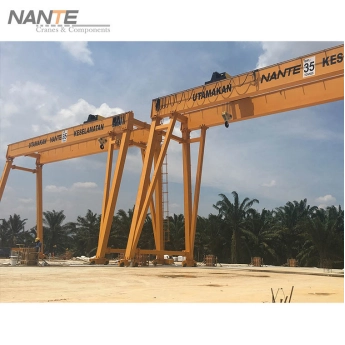
For gantry cranes used outdoors, paint film can deteriorate over time as weather conditions change. This includes the effects of rain and condensation, as well as exposure to sunlight, dust and changes in temperature. As paint film deteriorates it can expose the underlying steel.
In coastal environments the risk of corrosion is significantly increased. The salt from the air can remain on structures such as crane booms, and can cause serious corrosion, particularly around welds, bolt holes, girder edges, runways, ladders, platforms and electrical enclosures etc.
Lack of corrosion protection can result in early rust, paint peeling, increased maintenance, more downtime and reduced structural life. The coating level should therefore be clearly specified prior to manufacture.
Understanding C3, C4, and C5 Coating Classes
Categories C3, C4 and C5 are amongst the most common classes of corrosion for steel structures, allowing Buyers and Designers to select a suitable paint system for a particular working environment.
What Is C3 Coating?
C3 coating is suitable for medium-corrosivity environments.
It is commonly used for outdoor gantry cranes in inland yards, logistics centers, general industrial areas, and urban sites with moderate pollution. It may also be used in coastal areas with low salinity, where the crane is not directly exposed to strong salt spray.
However, C3 coating is usually not recommended for ports, shipyards, or high-salt marine environments.
What Is C4 Coating?
C4 coating is designed for high-corrosivity environments.
It is suitable for coastal areas with moderate salinity, humid industrial plants, water treatment areas, and outdoor production sites with higher moisture and pollution.
For an outdoor gantry crane in a sea exposure area but not subject to severe exposure to salt spray, a C4 coating would be a cost effective alternative. However due consideration must be made as to wind direction, distance to seawater, humidity, usage hours and access for maintenance.
What Is C5 Coating?
C5 coating is used for very high-corrosivity environments.
It is often selected for marine crane applications, ports, shipyards, seaside construction yards, and aggressive industrial sites. For cranes installed close to seawater, C5 coating provides stronger long-term protection than C3 or C4 systems.
C5 coating is a special form of coating and is relevant when a repaint of a crane after the installation would be too costly, too time-consuming or too difficult.
C3 vs C4 vs C5 Coating: Quick Comparison
| Coating Class | Corrosion Risk | Typical Environment | Crane Application |
| C3 coating | Medium | Inland, urban, light industrial, low-salinity coastal areas | General outdoor gantry crane |
| C4 coating | High | Industrial zones, humid areas, moderate coastal salinity | Coastal workshops and humid plants |
| C5 coating | Very high | Ports, shipyards, high-salinity coastal areas | Marine crane and seaside gantry crane |
The coating class should not be chosen only by asking whether the crane is used outdoors. The better method is to evaluate salt level, humidity, air pollution, cleaning frequency, maintenance interval, and expected coating life.
Recommended Coating System for Outdoor Gantry Cranes
A reliable anti-corrosion coating system consists of several layers: first of all there is the surface preparation, then the primer, intermediate coat and topcoat. Each layer has its specific characteristics.
Surface Preparation
Surface preparation is the foundation of coating performance.
It is essential to clean steel prior to painting in order to remove any rust, mill scale, oil, welding flux, dust or moisture. All sharp edges are to be rounded off and due care to be taken with welds.
Even a high-performance coating system can fail early if the steel surface is not properly prepared.
Zinc Coating or Zinc-Rich Primer
Zinc coating or zinc-rich primer is widely used to improve corrosion protection for outdoor steel structures.
Zinc helps provide barrier protection and sacrificial protection. If a small area of coating is damaged and the steel is exposed, nearby zinc can corrode first and help protect the steel surface. This is valuable for gantry cranes exposed to moisture, impact, and outdoor abrasion.
Epoxy Intermediate Coat
The epoxy intermediate coat builds film thickness and improves barrier protection.
It helps reduce the penetration of water, oxygen, and chloride particles. For C4 coating and C5 coating systems, this layer is especially important because coastal and marine environments create stronger corrosion pressure.
Weather-Resistant Topcoat
The topcoat protects the lower coating layers from sunlight, rain, and weathering.
A good outdoor topcoat should support UV resistance, color retention, surface durability, and easier cleaning. It also helps maintain the crane’s appearance during long-term outdoor operation.
Coating Lifetime Comparison Chart
Coating durability is usually used as a planning period before first major maintenance. It does not mean the coating requires no inspection or small repair during operation.
| Durability Range | Expected Time to First Major Maintenance | Suitable Crane Scenario |
| Low | Up to 7 years | Temporary projects or easy-access sites |
| Medium | 7–15 years | General outdoor gantry crane use |
| High | 15–25 years | Coastal or industrial cranes |
| Very High | More than 25 years | Marine crane, port crane, shipyard crane |
Simple visual comparison:
Low: 0–7 years
Medium: 7–15 years
High: 15–25 years
Very High: 25+ years
For a marine crane or outdoor gantry crane near seawater, High or Very High durability is usually preferred because repainting large steel structures can be difficult and costly.
Corrosion Protection for Marine Crane and Coastal Applications
Marine crane and coastal gantry crane projects require more careful coating planning than inland projects.
Port and Shipyard Environments
Ports and shipyards expose cranes to salt spray, high humidity, wind, and continuous outdoor operation. In these conditions, C5 coating is often the preferred option.
Special attention should be given to weld seams, lower structures, platforms, handrails, rail contact areas, bolted joints, and maintenance walkways.
Outdoor Gantry Cranes Near the Sea
Not every coastal crane faces the same corrosion risk.
A crane in contact with seawater has a completely different exposure to elements than a crane some kilometers inland on land. Factors influencing coating life such as salt concentration, wind direction, rainfall, drainage and frequency of cleaning play a major role.
For moderate coastal exposure, C4 coating may be suitable. For high-salt marine exposure, C5 coating is the safer choice.
Electrical Components and Control Panels
Corrosion protection should also include electrical systems.
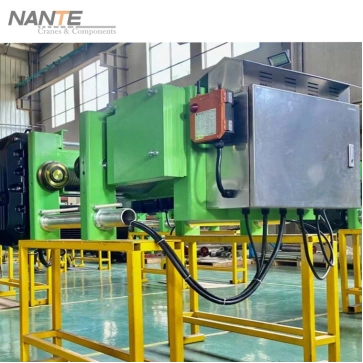
Control panels, cable glands, connectors, terminals, limit switches, and exposed fasteners must be protected from moisture and salt. In harsh outdoor or marine environments, upgraded enclosure protection can improve reliability and reduce electrical failure risk.
Key Specification Points Before Ordering
Before ordering an outdoor gantry crane, confirm these items:
- Site environment: inland, coastal, port, shipyard, or marine.
- Required coating class: C3 coating, C4 coating, or C5 coating.
- Surface preparation requirement.
- Primer type and whether zinc coating is required.
- Total dry film thickness.
- Intermediate coat and topcoat system.
- Protection for bolts, ladders, platforms, and walkways.
- Electrical enclosure protection.
- Coating inspection and repair plan.
Maintenance Tips to Extend Coating Life
Even a strong coating system needs regular inspection.
Wash salt deposits from crane surfaces in coastal areas. Check welds, edges, bolted joints, platforms, and damaged paint areas. Repair scratches quickly before rust spreads under the coating.
Keep drainage paths clear and inspect control panels for water ingress. A simple maintenance record can help identify corrosion problems before they become expensive structural issues.
FAQ
What is the best coating for an outdoor gantry crane?
The best coating depends on the environment. C3 coating is suitable for moderate outdoor sites, C4 coating is better for humid or coastal industrial areas, and C5 coating is recommended for marine crane, port, and high-salinity coastal applications.
Is C5 coating always necessary near the sea?
Not always. If salinity is moderate and the crane is not directly exposed to strong salt spray, C4 coating may be enough. For ports, shipyards, and high-salt marine sites, C5 coating is usually the safer option.
Why is zinc coating useful for crane corrosion protection?
Zinc coating helps protect steel through barrier protection and sacrificial protection. When small coating damage occurs, zinc can corrode before the steel and help slow rust formation.
How long can an anti-corrosion coating last?
Coating lifetime depends on environment, surface preparation, coating thickness, coating type, and maintenance. Common planning ranges include up to 7 years, 7–15 years, 15–25 years, and more than 25 years before first major maintenance.
What should be checked before ordering a marine crane?
Check the coating class, C5 coating requirement, zinc coating specification, surface preparation, dry film thickness, electrical enclosure protection, fastener protection, inspection documents, and maintenance plan.
Nante Crane provides industrial cranes, gantry cranes, offshore cranes, electric hoists, crane travel units, mobile power supply systems, crane control panels, and customized lifting solutions for different working environments. For outdoor gantry crane and marine crane projects, Nante Crane can help customers select suitable C3 coating, C4 coating, or C5 coating requirements according to site conditions, corrosion risk, and long-term maintenance expectations. To discuss your project requirements and get a suitable crane solution, please visit the Contact page and send your inquiry to Nante Crane today.