English


Copper vs Aluminum Conductor Rails: Which Is Better?
Copper vs Aluminum Conductor Rails Which Is Better
Date: 2026-06-11 Share:
In the tough field of industrial material handling, picking the correct conductor rail material affects crane power supply efficiency, safety, and running costs. This copper vs aluminum conductor rails review gives a clear conductor rail material comparison. It looks at conductivity, cost, weight, and corrosion resistance. Businesses checking copper conductor rail advantages or aluminum conductor rail systems for overhead cranes, hoists, and automated lines get useful facts to fit their needs.
Understanding Conductor Rail Material Comparison
What Are Conductor Rails?
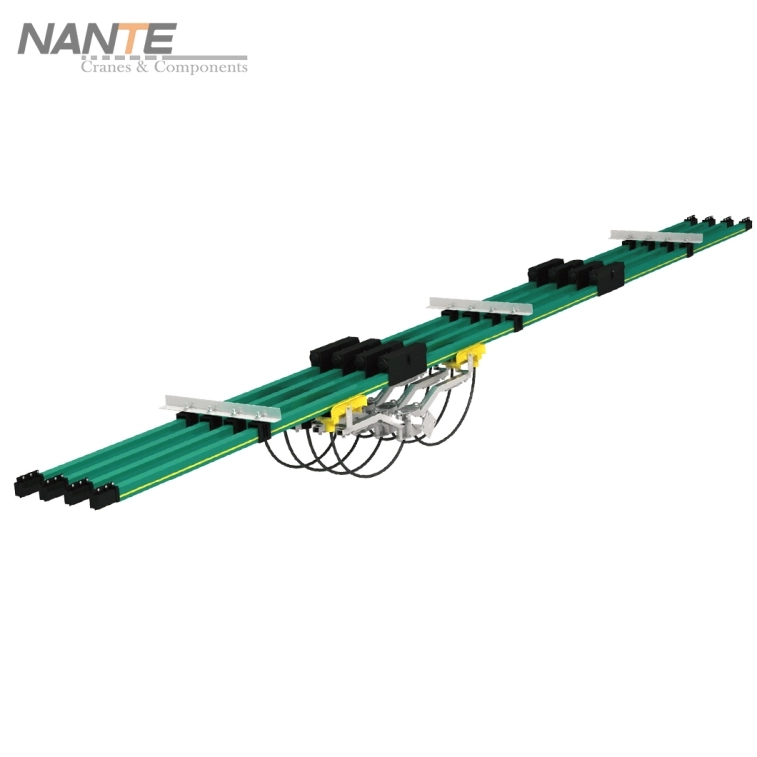
Conductor rails supply steady electrical power to moving machines such as overhead cranes, gantry cranes, and automated production systems. These rails differ from normal cables. They allow smooth power transfer across long distances and at different speeds. Common types include enclosed conductor rails for dusty or outdoor spots and unipole conductor rails for medium to high current uses.
Key Factors in Choosing Conductor Rail Materials
The material choice shapes electrical performance, structural needs, maintenance needs, and total project budget. Factors cover current load, travel distance, environmental exposure, installation limits, and duty cycle. Good selection improves system reliability and cuts downtime in heavy industrial work.
Common Materials: Copper and Aluminum Overview
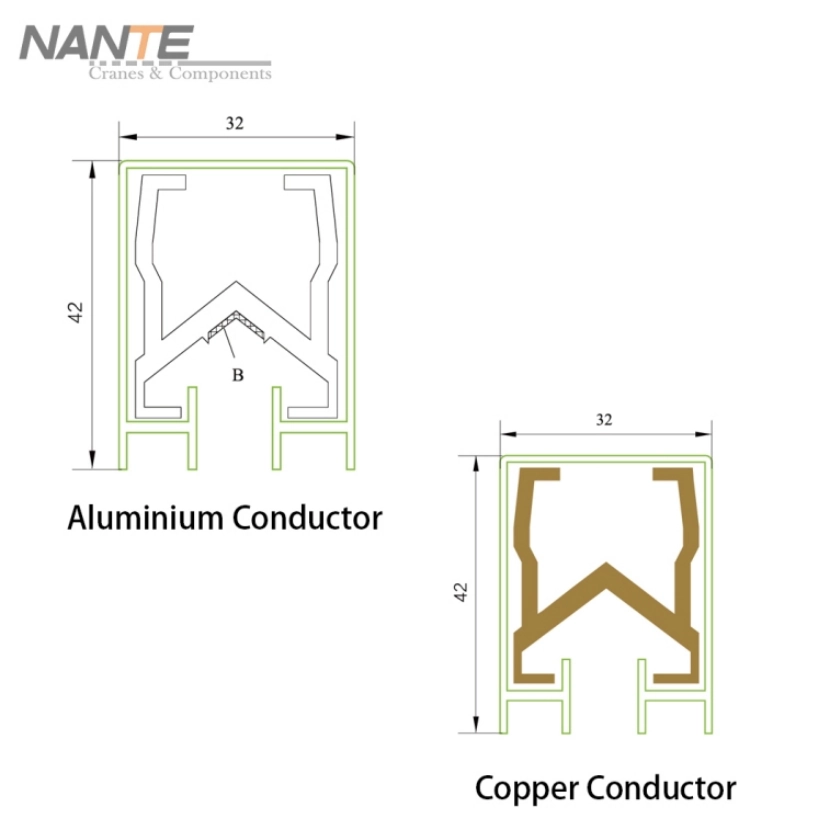
Copper and aluminum lead conductor rail production because of their strong electrical traits. Copper gives better conductivity. Aluminum brings benefits in weight and cost. Both materials work well in crane power supply systems when chosen for the right job.
Conductor Rail Conductivity
Copper Conductor Rail Advantages in Conductivity
Copper sets the standard for electrical conductivity. It rates near 100% IACS. Its lower resistance leads to small voltage drop, less heat, and higher efficiency in power transfer. In high-power crane work with heavy use, copper conductor rails keep voltage steady even over long runs. They support steady motor output and cut energy waste.
Aluminum Conductor Rail Systems and Conductivity Performance
Aluminum reaches about 61% of copper conductivity. To carry the same current, aluminum rails often need a bigger cross-section. This change offsets higher resistance but can cause slightly larger voltage drops in long or high-current setups. Modern aluminum alloys and better rail shapes make these systems work well for many standard crane jobs.
Impact on Crane Power Supply Efficiency
Better conductivity in copper rails means lower energy loss and stronger crane power supply efficiency. This shows most in frequent-start and high-load cases. Aluminum systems handle moderate-duty work well when larger rail size balances the conductivity gap. Less heat in efficient systems also lengthens part life and lowers cooling needs.
Cost Analysis in Conductor Rail Material Comparison
Initial and Long-Term Costs of Copper Conductor Rails
Copper has a higher starting material price. Yet its strong conductivity often allows smaller rail sizes. This cuts support structure costs and installation work. Over time, lower energy loss and less maintenance can raise return on investment, especially in high-use plants.
Cost Benefits of Aluminum Conductor Rail Systems
Aluminum gives clear cost savings per pound. This makes it appealing for large projects. Even with bigger cross-sections for equal performance, total material and structural costs often stay lower. The edge helps most in budget-tight jobs or long-span uses.
Total Cost of Ownership Comparison
- Material & Installation: Aluminum usually costs less; copper may need less support gear.
- Energy Costs: Copper costs less due to smaller losses.
- Maintenance: Both last well, but copper often needs fewer checks in tough spots.
- Lifecycle: Aluminum works best in cost-focused, moderate-duty setups; copper fits high-performance, long-term runs.
Reviewing total ownership cost gives the clearest project view.
Weight Considerations for Conductor Rails
Why Weight Matters in Crane Applications
Lighter systems lower structural loads on building frames. They also ease transport and installation. Weight affects long-span bend and support spacing choices too.
Copper’s Heavier Profile
Copper has a density near 8.96 g/cm³. Its rails weigh about three times more than aluminum versions. This raises demands on support brackets and runway frames, especially in long systems, though the small size helps offset some of the load.
Aluminum’s Lightweight Advantage
Aluminum has a density near 2.7 g/cm³. This gives real weight savings. The gain eases handling during setup, cuts structural reinforcement needs, and suits long crane runways or sites with weight limits.
Conductor Rail Corrosion Resistance
Copper’s Natural Corrosion Resistance
Copper resists oxidation on its own and keeps good contact surfaces over time. It performs well in humid, mildly corrosive, or indoor industrial spots without heavy extra protection.
Aluminum Corrosion Performance and Protection
Aluminum builds a protective oxide layer that gives solid corrosion resistance. In harsh chemical or outdoor areas, proper enclosure designs and surface treatments add durability. Many modern aluminum conductor rail systems use strong PVC or special housings for extra safety.
Environmental Factors Affecting Longevity
Humidity, dust, chemicals, temperature swings, and salty air all shape material life. Enclosed designs help both materials handle tough conditions. Site checks ensure the best material and protection choices.
Technical Comparison Table and Other Key Factors
Side-by-Side Conductor Rail Material Comparison Table
| Property | Copper | Aluminum |
| Conductivity (% IACS) | ~100 | ~61 |
| Density (g/cm³) | 8.96 | 2.7 |
| Relative Material Cost | Higher | Lower |
| Corrosion Resistance | Excellent (natural) | Good (with oxide layer/protection) |
| Typical Current Capacity | High in compact size | High with larger cross-section |
| Voltage Drop | Lower | Slightly higher (compensated) |
| Installation Ease | Good, heavier handling | Easier due to lighter weight |
| Best Applications | High-power, heavy-duty cranes | Cost-sensitive, long-span systems |
Durability, Maintenance, and Safety
Both materials last well when used correctly. Copper offers strong contact quality and thermal performance. Aluminum systems gain from modern collector designs that cut wear. Safety features like insulated housings lower electrical risks in both cases.
Application Suitability for Different Crane Systems
Copper works best in high-duty, high-power overhead cranes in tough environments. Aluminum conductor rail systems fit cost-effective installs, lighter-duty gantry cranes, or long-travel jobs where weight savings count most.
Making the Right Choice for Your Needs
Factors to Consider in Your Decision
- Power needs and duty cycle
- Environmental conditions (indoor/outdoor, corrosive elements)
- Travel distance and span length
- Budget limits and total cost of ownership
- Structural limits and installation options
Best Practices for Installation and Maintenance
- Pick rail size based on calculated current and voltage drop.
- Keep proper alignment and secure joint connections.
- Plan regular checks of collectors and contact surfaces.
- Use suitable enclosures for dusty or wet areas.
- Follow maker guidelines for expansion and contraction control.
Discover Reliable Conductor Rail Solutions
For high-quality crane parts and power supply systems, consider Nante Crane. As a leading designer and maker of lifting equipment and components, Nante Crane supplies innovative solutions including enclosed conductor rails and unipole conductor rails with options for both copper and aluminum conductors. With years of experience, international certifications, and focus on safety, efficiency, and customization, Nante Crane supports global clients across industries with reliable material handling technologies. Explore their full range at https://www.nantecrane.com/ to find solutions that fit your operations.
FAQ
How does weight affect the choice between copper and aluminum conductor rails?
Aluminum’s much lighter weight reduces structural needs and eases installation. This makes it better for long spans or weight-sensitive structures, while copper’s heavier profile may need stronger supports.
What are the main advantages of copper conductor rails?
Key advantages include top conductivity, natural corrosion resistance, compact design for high currents, and long-term efficiency in demanding work.
Are aluminum conductor rail systems suitable for corrosive environments?
Yes, especially with proper enclosures and protective steps. Aluminum’s oxide layer gives good resistance, and modern designs improve performance in tough conditions.
How do I determine the best conductor rail material for my crane power supply?
Review power needs, environment, budget, span length, and duty cycle. Talking with experienced suppliers helps match the best material and system design to exact requirements.