English


How to Choose an Outdoor Overhead Crane: 7 Weatherproofing Checks
Date: 2026-11-27 Share:
Choose an outdoor overhead crane by matching its lifting duty, elevated runway, and component protection to conditions across the complete working route. A hoist parked beneath a roof may still enter an exposed loading area during every shift. The specification must cover both positions.
Capacity, span, hook height, and operating cycles remain the starting inputs. The following seven checks connect outdoor exposure to equipment choices, installation interfaces, and acceptance evidence, helping buyers distinguish a complete outdoor package from a quotation with loosely defined weatherproofing options.
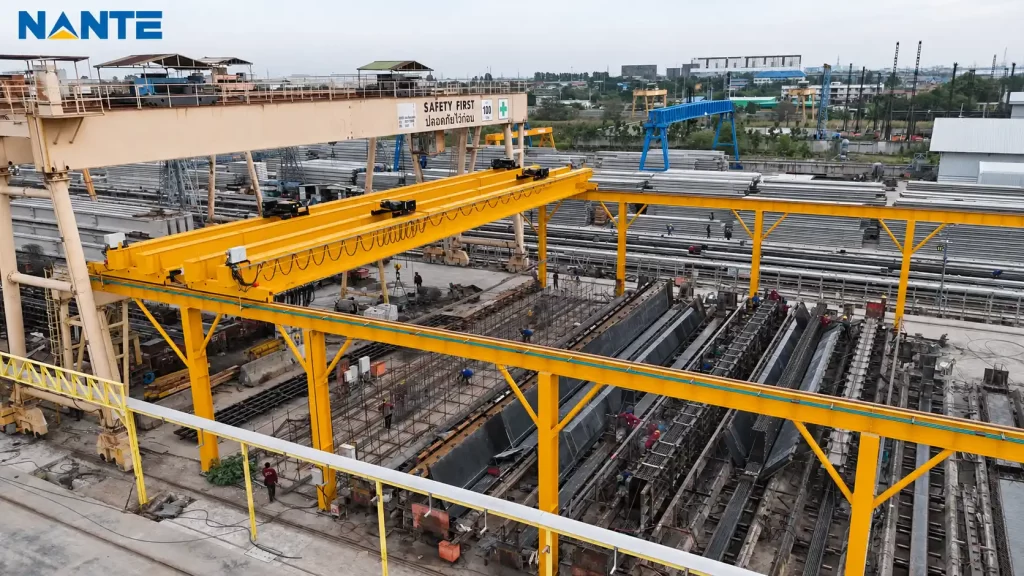
Indoor vs Outdoor Crane: What Changes in the Specification?
This comparison assumes a relatively clean indoor workshop. Indoor chemical processing and washdown areas require their own environmental assessment.
| Selection item | Sheltered indoor crane | Outdoor overhead crane |
| Working area | Exposure often consistent within one building | Rain, sun, dust, and shelter can change along the runway |
| IP rating | Match enclosures to indoor contamination | Define ratings by component; assess IP55, IP65, or other protection against actual exposure |
| Coating requirements | Select for indoor humidity and contaminants | Specify corrosivity, durability target, preparation, coating layers, and dry-film thickness |
| Covers | Building roof provides primary shelter | Define full-travel, machinery, and parking protection separately |
| Temperature and UV | Building moderates some exposure | Check cold starting, solar heating, cables, seals, and polymer housings |
| Wind and parking | Usually sheltered by the building | Coordinate bridge, runway supports, wind limits, and securing arrangements |
Map Exposure across the Full Working Route
Mark the pickup point, load-transfer route, unloading area, and parking position on a plan. Record which sections are roofed, open-sided, or fully exposed. Include the trolley’s cross travel, since the hoist may leave shelter while the bridge remains beneath a canopy.
Use a simple exposure schedule rather than one indoor/outdoor checkbox. Each location should identify rainfall, wind-driven spray, dust, salt or chemical contamination, sunlight, and drainage conditions.
For example, an RFQ might state: “The bridge parks beneath a roof, but the hoist serves an uncovered truck-loading position; electrical equipment remains outdoors overnight.” This describes a selection problem more clearly than “outdoor crane required.”
Confirm that elevated runway beams, columns, bracing, and foundations can support the proposed crane reactions. Where suitable elevated supports are unavailable, compare the installed scope of a gantry crane before committing to the layout.
Keep duty selection separate from weather protection. Record lift frequency, average and peak loads, operating hours, and travel distances. A sheltered crane performing repeated production lifts may require a different mechanical package from an exposed crane used only occasionally, even when their rated capacities match.
Check Canopy Coverage, Runoff, and Clearances
A weatherproof overhead crane proposal should show exactly what each cover protects. A hood above the motor, a shelter at the parking position, and a roof over the complete travel area provide different coverage.
Full-Travel Canopy vs. Parking Shelter
A parking shelter protects equipment only while it remains underneath. If production requires lifting in rain, specify protection for the exposed operating positions as well. The supplier should identify any weather conditions that require work to stop.
Review canopy drawings for roof slope, drip edges, runoff direction, cooling airflow, and removal space. Runoff should avoid electrical entries, collectors, and access routes. Covers must not obstruct hook travel, brake inspection, or lubrication.
Added roof area also changes wind loading and support reactions. Include canopy attachments in the structural review and verify that later installation work will not require unapproved drilling or welding.
Specify IP65 Crane Components Where Exposure Requires Them
The phrase “IP65 crane” is incomplete without identifying the rated equipment. Request a schedule for the main cabinet, motors, limit switches, junction boxes, connectors, and pendant or radio-control equipment.
IP65 means dust-tight protection and protection against water jets under specified test conditions. IP55 has the same water-protection digit but permits limited dust ingress without harmful effects. Choosing between them therefore requires an assessment of dust as well as water exposure.
Check the Installed Assembly
For an exposed loading position, ask how cable glands, unused entries, door seals, and mounting orientation preserve the specified protection. Equipment beneath a hood may have different requirements from an exposed switch.
Condensation needs separate consideration because moisture already inside a cabinet can condense overnight. Any heaters, breathers, drains, or cooling equipment must work with the enclosure design. For detailed terminology, refer to the outdoor crane IP rating guide.
An IP code does not establish corrosion resistance, immersion protection, or hazardous-area suitability. For US projects requiring a NEMA enclosure Type, verify that requirement separately.
Match Outdoor Crane Design to Temperature and UV Exposure
Specify operating, starting, and parked temperature ranges separately. A crane that can remain outside overnight may still require a defined warm-up procedure before lifting. Request temperature limits for the assembled equipment rather than accepting a steel-material statement alone.
Check lubricants, brakes, seals, flexible cables, drives, and control devices against those ranges. At sunny sites, include enclosure location and solar heating in the thermal review; weather sealing does not resolve heat dissipation.
UV selection should follow the same route map. Cable sections beneath a roof may remain shaded while moving loops, conductor housings, and control cases receive direct sunlight. Request outdoor material suitability for the exposed items, including replacement parts.
For runways extending through a building opening, review the transition between protected and exposed zones. Cable routing, covers, and operating clearances must remain suitable throughout that movement.
Define Corrosion Protection for the Crane and Runway
Specify corrosion protection for the bridge, trolley steelwork, runway beams, exposed attachments, and separately supplied supports. Salt deposits, process contamination, and surfaces that remain wet can create different requirements within one installation.
Painting Scope and Repair Responsibilities
Ask the supplier to connect the assessed environment to a coating system with defined preparation, compatible products, layer thicknesses, curing, and inspection criteria. Where ISO 12944 is used, state the selected category and durability range; neither replaces a complete painting specification.
The primer and intermediate layers contribute corrosion protection, while a suitable finish addresses weathering and UV exposure. Drainage details, welds, edges, fasteners, and inaccessible surfaces need attention alongside the large painted faces.
Clarify who repairs transport damage, erection marks, and coating disturbed at site connections. Include approved repair materials and acceptance records. The outdoor crane corrosion protection guide provides the supporting detail without expanding this selection check into a painting procedure.
Verify Outdoor Conductor Rail Interfaces
Check the complete power route from the incoming supply to the moving crane. An IP-rated cabinet cannot compensate for an unsuitable runway joint, exposed feed connection, or poorly aligned collector.
For an enclosed conductor rail, request the outdoor installation arrangement, housing suitability, joint protection, expansion provisions, collector clearances, and support details. Confirm how rainwater is kept away from vulnerable connections and how maintenance personnel reach them.
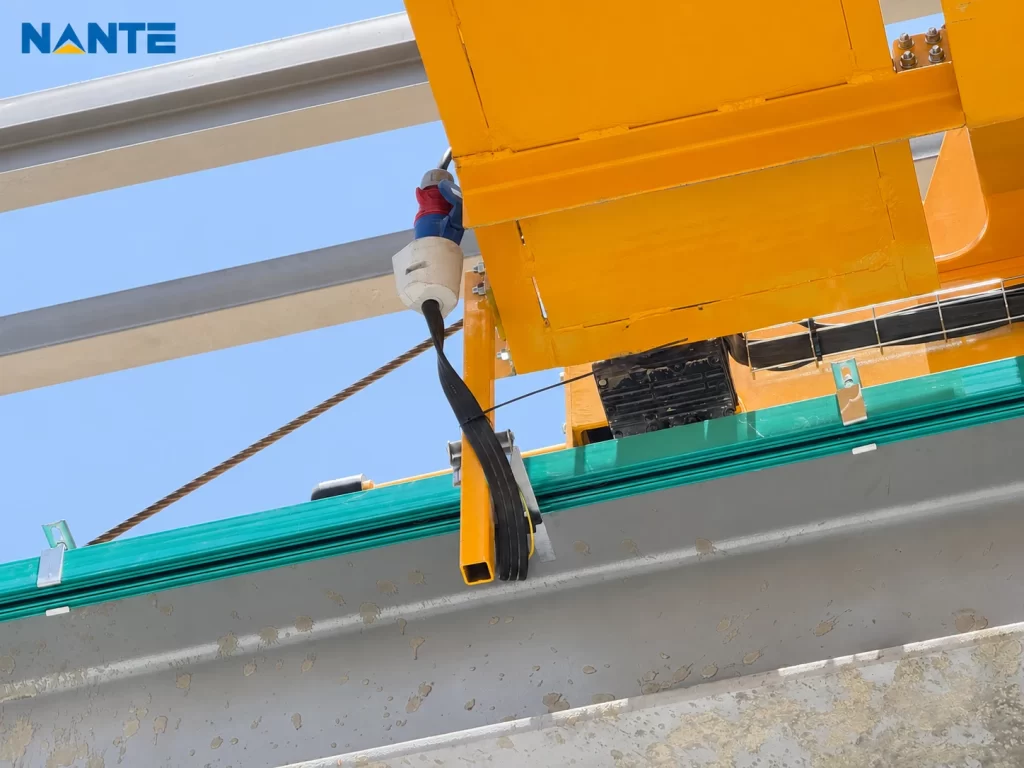
Compare these details at the least sheltered position, rather than judging the system from its appearance beneath the roof. Changes between building-supported and independently supported runway sections also need coordinated alignment and movement allowances.
Nante Crane lists overhead cranes and mobile power components. The quotation should identify the selected equipment and its outdoor configuration, including any separately supplied electrification or runway work.
Confirm Wind Limits, Parking, and Acceptance Evidence
Distinguish the wind conditions permitted during lifting from those the secured crane must withstand while parked. Load shape matters: a broad panel presents different wind exposure from a compact item of equal weight. Request documented limits and the required securing procedure.
Confirm the parking position, restraints or anchors, access, and responsibility for their installation. Include canopy area and runway-support interfaces in the engineering scope.
Also establish how the crane reaches its secured position when weather deteriorates. The operating plan should account for unloading the hook, completing travel, and engaging the specified restraints before conditions exceed the permitted limits.
Before order placement, align the acceptance package:
- Approved layout, runway reactions, and environmental assumptions.
- Component protection schedule and coating inspection records.
- Agreed fabrication inspections and factory functional tests.
- Site checks of seals, bonding, drainage, covers, and parking devices.
- Operating instructions, inspection access, spares, and service responsibilities.
Factory functional testing alone does not demonstrate weather resistance. Assign each check to the supplier, installer, or project owner, and confirm the applicable US structural, electrical, and workplace requirements for the installation.
Frequently Asked Questions
Is a Canopy Enough to Convert an Indoor Crane for Outdoor Use?
No. Conversion requires an engineering review of the complete crane, runway, electrical equipment, temperature suitability, corrosion protection, and wind provisions. A canopy addresses only part of the exposure.
Does Every Outdoor Component Need the Same IP Rating?
No. Select protection for the component’s location and function, then verify the installed arrangement. A single enclosure rating should not be presented as the complete crane’s weather rating.
Request an Outdoor Overhead Crane Selection Review
Purchasing teams and project engineers should submit capacity, span, hook height, duty, a marked working-route layout, site location, weather exposure, and power details. Nante Crane can review these inputs for a project-specific equipment recommendation and technical proposal through the outdoor overhead crane selection inquiry form.