English


Manual vs Electric Jib Crane: How to Choose Between Manual and Electric Jib Cranes
Date: 2026-11-13 Share:
Choose a manual jib crane when lifting and positioning can be completed with manageable effort at the required operating frequency. Choose electric hoisting when repeated vertical movement creates excessive workload or delays. Add powered trolley travel or rotation when horizontal handling also needs assistance.
The decision is rarely just “manual or electric.” A jib crane combines several movements, and each can have a different operating method. Understanding how those movements work helps purchasing teams avoid unnecessary motorization while specifying equipment that supports the actual task.
Why Manual vs Electric Jib Crane Selection Matters
Three movements create one handling cycle
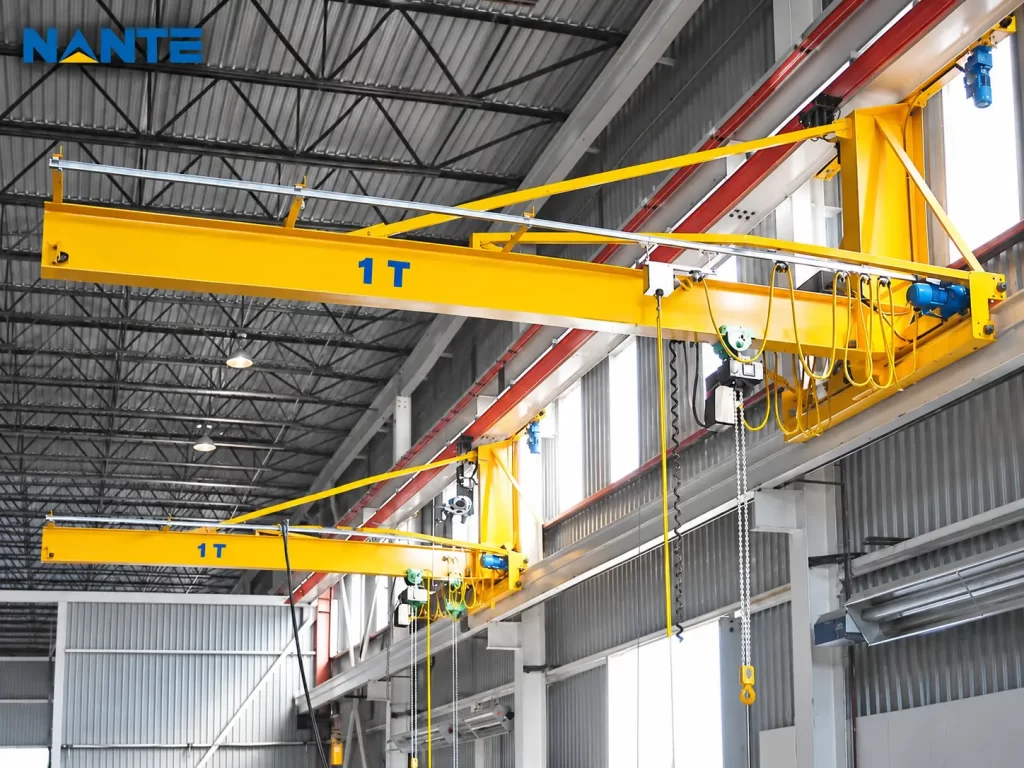
A typical jib crane raises and lowers a load, moves the hoist along the boom, and rotates the boom around its support. These movements provide vertical, radial, and angular positioning.
The demands on them may differ. Machine loading can involve frequent vertical lifting but little rotation. Another workstation may require short lifts followed by repeated transfers across a wider arc.
This explains why an electric hoist with manual rotation can be a practical configuration. Power should address the movement that creates the workload, rather than automatically being applied to every motion.
The wrong configuration can move the bottleneck
Electric lifting may shorten the raising and lowering stage while leaving difficult manual positioning unchanged. Conversely, powered rotation provides limited benefit when prolonged hand-chain operation causes most of the delay.
The purchasing assessment should connect each proposed drive to a specific operating requirement. That makes the investment easier to justify and the supplier’s proposal easier to evaluate.
How Manual and Electric Jib Crane Mechanisms Work
Manual jib crane lifting: mechanical advantage and effort
In a hand-chain hoist, pulling the hand chain drives a geared mechanism that moves the load chain. Mechanical advantage allows the operator to raise a substantial load with a smaller input force, but requires more hand-chain movement than the resulting hook travel.
This trade-off matters when lifting distance or repetition increases. A manageable individual lift can still involve considerable repeated operation across a shift.
The hoist’s load-holding mechanism is also essential. Buyers should request the selected model’s brake description, inspection criteria, and operating instructions rather than assume all manual hoists work identically.
Electric hoist jib crane lifting: motor, transmission, and brake
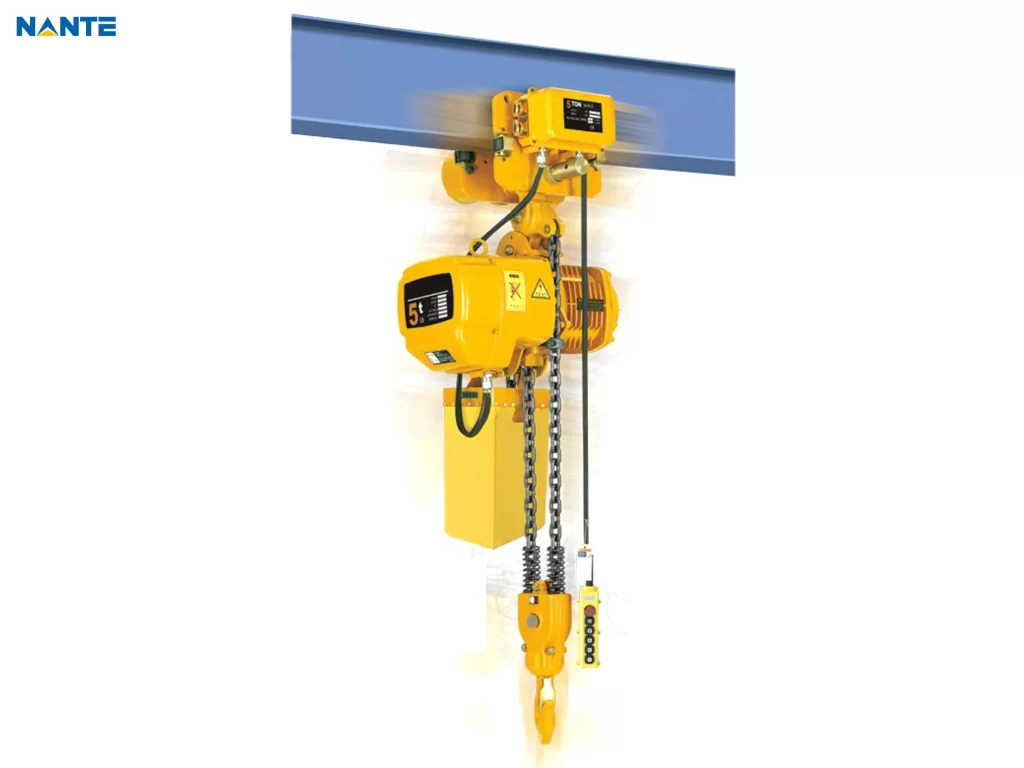
An electric hoist uses a motor and transmission to drive a load-chain mechanism or wire-rope drum. Controls command lifting and lowering, while the specified braking arrangement supports stopping and holding the load.
Motorization reduces the need for hand-chain operation. However, lifting speed, starts, running time, and load spectrum must suit the selected hoist’s duty.
Brake design, speed control, and protective functions vary by model. The technical offer should identify what is supplied instead of relying on the description “electric hoist.”
Trolley travel and boom rotation are separate systems
The trolley carries the hoist along the boom. Manual travel relies on the approved manual operating arrangement; powered travel uses a drive to move the trolley.
Boom rotation turns the arm around its support. Depending on the design, movement may be manual, geared, or motor-driven.
Powering either motion changes how force is applied, but does not eliminate the need to control suspended-load movement. Acceleration, stopping, clearances, and operator visibility remain part of the handling assessment.
Compare Manual, Hybrid, and Powered Jib Crane Configurations
Select power by motion
| Selection factor | Fully manual arrangement | Electric hoist with manual rotation | Additional powered travel or rotation |
| Vertical lifting | Hand-operated hoist | Electric hoist | Electric hoist |
| Trolley travel | Manual | Manual or powered | Powered where specified |
| Boom rotation | Manual | Manual | Powered where specified |
| Potential fit | Occasional handling with manageable effort | Repeated lifting with manageable horizontal positioning | Tasks requiring assistance with horizontal movement |
| Main benefit | Simpler operating infrastructure | Addresses repeated vertical lifting | Addresses additional movement demands |
| Main limitation | Lifting time and operator effort | Manual positioning may remain demanding | More drives, controls, and service requirements |
| Electrical supply | Not required for manual motions | Required for powered motions | Required for all specified drives |
| Capacity basis | Complete rated system | Complete rated system | Complete rated system |
These configurations are alternatives to assess, not fixed categories based on load weight. The same rated capacity can serve very different operating cycles.
Operating Frequency and Productivity: Follow the Cause and Effect
Translate the workload into duty information
Increasing lift frequency increases repeated operation. Longer vertical travel increases running time per lift. Frequent starts can create a different demand from fewer, longer movements.
Suppliers therefore need more than “eight hours per day.” The operating brief should identify:
- Typical and maximum suspended loads.
- Lifts per shift and concentrated production periods.
- Vertical travel and horizontal movement per cycle.
- Starts and operating time for each powered motion.
- Expected changes in production demand.
These inputs support mechanism selection. They should not be replaced with an assumed duty classification chosen only from the crane’s rated capacity.
Measure the complete handling cycle
A handling cycle includes attaching accessories, lifting, traveling, rotating, positioning, and releasing the load. Faster hoisting affects only part of that sequence.
For preliminary comparison:
Potential time saving = measured manual cycle time − proposed powered cycle time.
The proposed cycle must include realistic positioning and rigging allowances. Supplier-confirmed speeds or representative trials should support the estimate.
Time released from handling does not automatically become additional production. Machine availability and downstream processes determine whether it creates useful output.
Treat positioning as a performance requirement
Fast movement followed by prolonged load settling may provide little practical benefit.
For close assembly or machine loading, specify the required placement task and ask how speed selection, control response, and braking support it. Review operator visibility and access at difficult positions.
Acceptance should consider controlled handling under representative conditions, rather than unloaded hook speed alone.
Capacity, Reach, and Environment: What Changes the Decision?
Motorization does not increase rated capacity
The motor provides movement; the structure and complete rated system establish allowable lifting capacity. A larger motor cannot independently justify a higher load.
Specify maximum suspended weight, including applicable below-hook accessories, together with load dimensions and center of gravity.
There is no universal capacity threshold separating manual and electric jib cranes. Operating effort, movement distance, frequency, and positioning requirements also influence suitability.
Reach affects coverage and handling conditions
Greater horizontal distance increases the load’s bending effect on the supporting structure. It can also change the movement path, clearance requirements, and practical positioning assessment.
Structural load moment should not be confused with the force required for manual rotation. Bearings, alignment, crane geometry, load behavior, and operating conditions also matter.
Nante Crane lists manual and motorized slewing options within its jib crane product range. The selected arrangement still needs project-specific confirmation of coverage, capacity, and operating method.
Environment and power can limit available options
Available voltage, frequency, power routing, moisture, dust, temperature, and outdoor exposure can affect the proposed equipment.
A manual arrangement avoids electrical requirements for its manual motions, but is not automatically suitable for every environment. Powered equipment likewise requires an appropriate specification.
Identify unusual or hazardous conditions early so the supplier can state suitability and exclusions before quotation approval.
Three Scenarios That Explain the Selection Logic
Occasional maintenance lifting
An illustrative maintenance station may handle a component infrequently over a short path. A fully manual arrangement can be evaluated where effort and positioning remain manageable.
However, a long vertical lift may make hand-chain operation impractical despite low frequency. Electric hoisting could address that requirement without powered rotation.
Repeated machine loading
At an illustrative machining cell, repeated raising and lowering may dominate handling effort.
Electric hoisting with manual rotation is a useful starting configuration to evaluate. Powered trolley travel or rotation becomes relevant if horizontal movement remains demanding or delays placement.
Repeated transfers between work areas
An illustrative station transferring loads repeatedly across an arc may justify motorized rotation.
The review should include stopping positions, obstructions, load movement, and cable routing. Power should support a defined transfer task rather than simply add features.
These examples explain procurement decisions; they are not customer projects or guaranteed outcomes.
Maintenance and Cost: Evaluate What Motorization Adds
Compare mechanisms and service responsibilities
Manual systems still require inspection of hoists, brakes, hooks, trolleys, bearings, and supporting connections. Powered systems add electrical components and any specified drive equipment.
Request model-specific maintenance instructions, service access requirements, and spare-parts identification. Avoid assuming that either configuration is maintenance-free.
Compare incremental cost against useful benefit
Separate the added cost of each powered motion from costs shared by both proposals. Include controls, power distribution, commissioning, maintenance capability, and spares.
The broader jib crane price factors guide can support scope comparison. This article’s central question remains which powered movements deliver practical value for the application.
Frequently Asked Questions
Does an electric hoist mean electric rotation?
No. Hoisting, trolley travel, and boom rotation are separate functions. Each operating method should be stated in the quotation.
Is manual operation unsuitable for heavy loads?
Weight alone cannot determine suitability. The rated system, operating effort, lifting distance, frequency, and positioning conditions require assessment.
Can motorization be added later?
Possibly, subject to supplier review. Drive interfaces, braking, controls, clearances, and power routing may restrict conversion. Future requirements should be discussed before purchase.
Request a Project-Specific Configuration Comparison
Submit the operating requirements
Purchasing teams should provide maximum load, working radius, lifting height, lifts per shift, load path, available power, and a layout. Identify which movement causes delay or excessive effort.
Nante Crane can review these inputs and prepare a proposed configuration and quotation for comparison. Submit the operating brief through a manual and electric jib crane selection inquiry.