English


How to Evaluate Overhead Crane Painting Quality and Corrosion Protection
Date: 2026-11-05 Share:
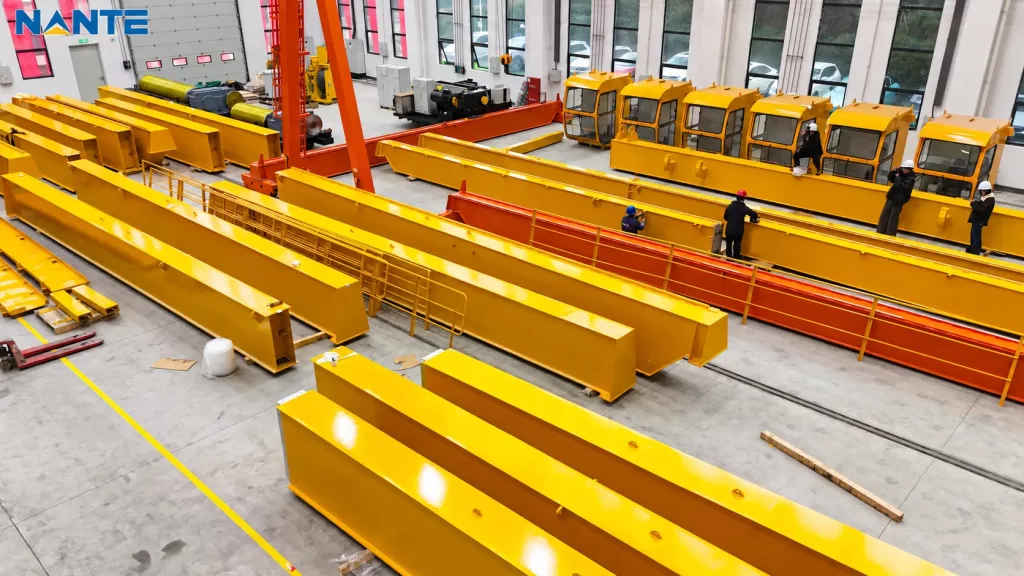
Overhead crane painting quality should be accepted through documented inspection at defined production stages. The strongest evidence combines an approved coating specification, verified surface preparation, application records, representative dry film thickness measurements, and completed repairs.
A glossy finish cannot establish what happened beneath the topcoat. Once primer covers the steel, missed preparation checks become harder to verify. Once the crane ships, coating repairs can require additional access, labor, and downtime.
For procurement teams, the practical question is whether the supplier can demonstrate that the specified protection was delivered on the actual order. The following workflow turns that question into clear inspection and release decisions.
Before Ordering: Define Overhead Crane Corrosion Protection
Describe the exposure before selecting a coating
Start with the installation environment: indoor or outdoor operation, condensation, coastal salt, industrial pollution, chemical fumes, washdown, and temperature changes.
“Indoor service” alone is insufficient. A crane operating above a wet production process may face persistent moisture, while another indoor installation remains relatively dry.
Record any unusual exposure separately. Chemical splash, immersion, elevated temperatures, and abrasive contamination require specific evaluation rather than assumptions based only on an atmospheric corrosion category.
Review C3 C4 C5 crane coating proposals as complete systems
C3, C4, and C5 describe medium, high, and very high atmospheric corrosivity under ISO 12944 terminology. They do not prescribe one universal coating thickness.
An acceptable proposal should connect the exposure category with the intended durability range, preparation requirements, named coating products, layer thicknesses, and application instructions. The framework is outlined in this ISO 12944 coating selection guidance.
A quotation stating only “C5 coating” leaves important questions unanswered. Request the complete system recommendation and supporting documentation before treating different quotations as equivalent.
Durability expectations also need separation from contractual warranty terms. Confirm maintenance assumptions, warranty coverage, exclusions, and repair responsibilities independently.
Before Production: Agree on the Crane Painting Inspection Plan
Establish hold points while evidence remains visible
The inspection plan should identify stages requiring approval before work continues. Surface preparation is a useful hold point because primer will conceal the inspected substrate.
Depending on project requirements, additional witness or review points may cover stripe coating, individual layers, final thickness inspection, and repaired areas.
For remote inspection, agree on notification periods, photographs, report formats, component identification, and who can authorize release. An inspection plan without access arrangements may provide little practical control.
Define the evidence required at each stage
Use a concise acceptance matrix rather than a general request for “good paint quality.”
| Inspection stage | Evidence to request | Reason to withhold release |
| Specification approval | Named products, preparation grade, layer DFT, acceptance method | Incomplete or conflicting requirements |
| Prepared steel | Cleanliness, profile, specified contamination checks | Failed checks or missing identification |
| Application | Batch, mixing, environmental and recoat records | Conditions outside approved limits |
| Final inspection | DFT map, visual findings, specified test results | Unresolved defects or nonconforming readings |
| Shipment release | Repair closure and final condition records | Open coating defects or handling damage |
Acceptance limits should come from the approved specification and product instructions. Agree on deviations in writing before release.
After Blasting: Accept the Steel Before Primer
Check contamination, cleanliness, and profile separately
Oil, grease, salts, and dust require appropriate controls. Abrasive blasting should not be assumed to remove every contaminant, and visual appearance cannot establish soluble salt levels.
Review the required cleaning and testing procedures. Where contamination testing is specified, records should identify the method, result, acceptance limit, and component inspected.
Blast cleanliness describes visible surface condition. Surface profile describes the texture produced by preparation. Both must suit the coating system; one cannot substitute for the other.
Hempel’s surface preparation guidance explains why initial steel condition and preparation require assessment before painting.
Inspect welds, edges, and delayed primer application
Inspect weld spatter, sharp edges, crevices, and difficult corners before coating. Confirm that fabrication inspection is complete and that required surface finishing has been accepted.
A specification may call for Sa 2½ blast cleaning under ISO 8501-1. The inspector should assess the stated grade using the applicable procedure rather than accepting a photograph labeled “sandblasted.”
Also check the interval between preparation and primer application. Flash rusting, condensation, or renewed contamination requires reassessment and corrective action before painting proceeds.
During Application: Verify the Crane Coating System
Trace primer, intermediate coat, and topcoat
The application record should identify the products actually used, including batch numbers. Compare those products with the approved system rather than accepting generic descriptions such as “epoxy primer.”
The primer establishes the specified foundation for adhesion and corrosion protection. An intermediate coat builds the barrier, while the topcoat provides the specified finish and exposure resistance.
Not every system requires three coats. The procurement decision should follow the approved system design, including compatibility and thickness requirements.
Review mixing ratios, induction time where applicable, thinning, pot life, and recoat intervals. Final appearance cannot reconstruct these application conditions.
Check environmental records across the work period
Require records of steel temperature, air temperature, relative humidity, and dew point at the frequency defined in the inspection plan.
Compare results with the selected product’s application limits. A dry-looking workshop does not prove that cold steel remained free of condensation.
For factory evaluation, Nante Crane describes heated and mobile facilities in its published painting process upgrade. These facilities provide relevant audit context.
For an individual order, request actual operating records and component photographs. Confirm that heating, ventilation, application, and curing follow the selected coating manufacturer’s instructions.
Before Acceptance: Verify Crane Paint Thickness
Review measurement coverage, not just the average
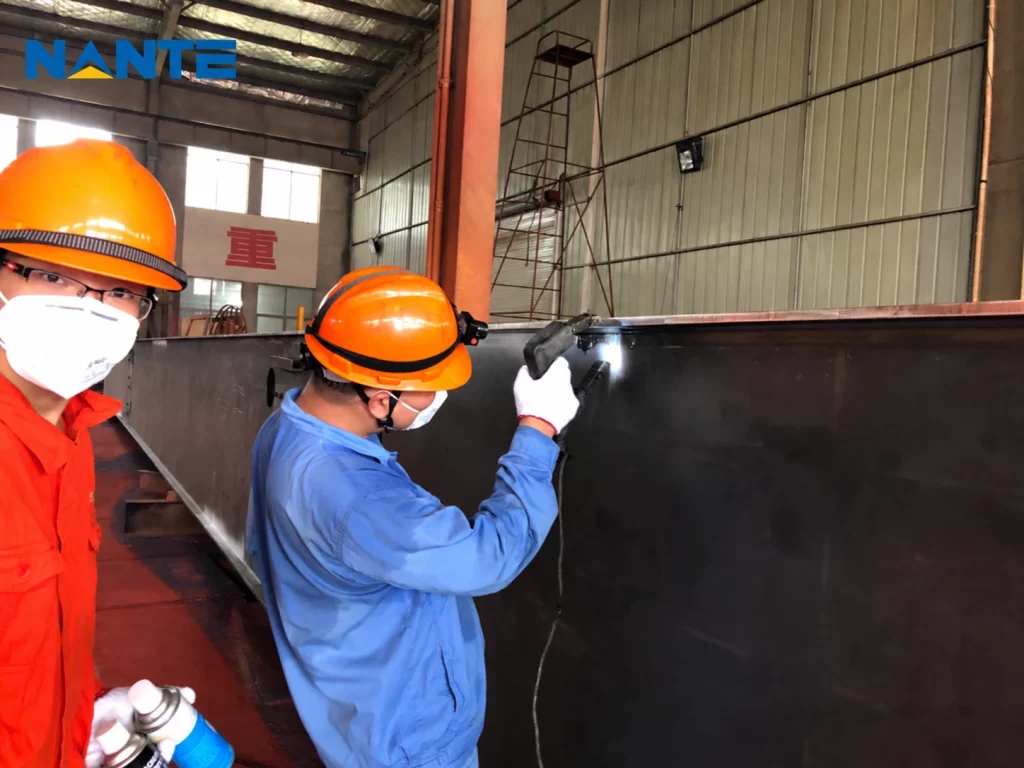
Dry film thickness, or DFT, measures the coating remaining after drying or curing to the stage required by the inspection procedure. Wet film checks help control application but do not replace final DFT acceptance.
A report showing only an average can conceal local thin areas. Request identified measurement locations and results across girders, end carriages, connections, and other representative surfaces.
Agree on the measurement and acceptance procedure, such as ISO 19840 or SSPC-PA 2 where appropriate. Confirm instrument identification, calibration status, verification checks, and treatment of surface roughness under the selected method.
Check individual layers and excessive thickness
A satisfactory total DFT does not prove that primer, intermediate coat, and topcoat were each applied correctly. Where required, inspect and record layers before the next coat covers them.
Excessive thickness also needs review against product limits. Additional paint is not automatically additional protection and may contribute to coating defects.
State units clearly. International documents commonly use micrometers, while US records may use mils; 1 mil equals 25.4 micrometers.
For the selected overhead crane configuration, confirm that the measurement plan represents the actual structure rather than a generic inspection template.
Before Shipment: Close Defects and Assign Repair Responsibilities
Require documented repair and reinspection
Visual inspection should address missed areas, pinholes, runs, overspray, cracking, blistering, contamination, and mechanical damage.
The repair procedure should define cleaning, preparation, feathering, compatible materials, overlap, curing, and reinspection. Where adhesion testing is specified, agree on test locations, acceptance criteria, and restoration of affected areas beforehand.
Keep defect records traceable to component locations. A statement that “all repairs are complete” is weaker evidence than identified repairs with accepted inspection results.
Recheck after assembly and handling
Coating accepted before assembly may be damaged during lifting, testing, packing, or transport preparation. Include a final condition review after these activities.
Coordinate coating release with the broader crane manufacturing quality inspection process, while retaining separate coating acceptance records.
Confirm shipment protection, supplied touch-up materials, site preparation instructions, and responsibility for transport or installation damage. Include a baseline inspection record for subsequent maintenance.
Frequently Asked Questions
Can photographs establish overhead crane painting quality?
Photographs support traceability and remote review, especially before primer. They cannot replace specified preparation tests, environmental records, or representative DFT measurements.
Should missing records automatically fail an inspection?
Missing records create an evidence gap. The project team should assess whether additional inspection can establish conformity or whether rework is required. Record any accepted concession formally.
Does an outdoor crane automatically require C5 coating?
No. Select protection from actual exposure and durability requirements. Outdoor location alone does not establish the corrosivity category.
Request a Coating Proposal with Clear Acceptance Requirements
Submit project conditions and inspection expectations
Purchasing teams evaluating Nante Crane should provide the installation location, moisture and chemical exposure, required corrosion category, durability objective, and any owner coating specification.
Include crane capacity, span, and required inspection hold points so the technical discussion connects coating protection with the equipment proposal. To request a project-specific coating recommendation and discuss inspection documentation, submit the crane coating brief for technical review.