English



Floor Mounted vs Wall Mounted Jib Crane: Which Is Better?
Floor Mounted vs Wall Mounted Jib Crane Which Is Better
Date: 2026-09-24 Share:
For most facilities, neither mounting style is universally better. A floor mounted jib crane is often the more straightforward starting point when the work area needs an independent, wide-swing lifting station or when the building structure cannot be certified for crane reactions.
A wall mounted jib crane can be more space-efficient when a verified column or reinforced wall can carry the overturning moment and the required rotation is limited. The decision comes from matching the load path, working envelope, duty cycle, and installation scope to the building.
The Short Answer: Choose by Load Path
What Each Mounting Style Supports
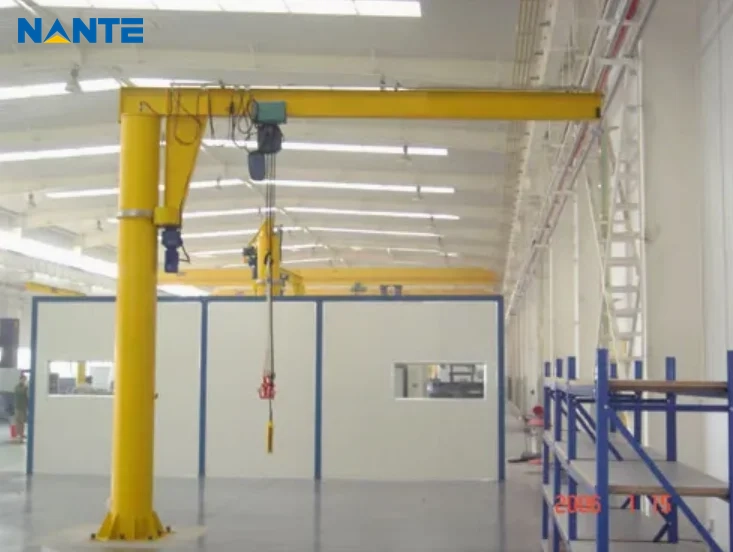
In a floor mounted arrangement, the boom and hoist transfer vertical load and horizontal slewing forces through a mast, base plate, anchors, and the supporting slab or foundation. The crane is structurally independent of the wall, although nearby structures may still limit the envelope.
A wall mounted jib crane transfers those forces through brackets into a wall, column, or dedicated steel frame. It avoids a floor mast and can keep aisles clear, but the supporting structure becomes part of the crane system. Anchor design, local plate bending, column stability, and load combinations must be checked together.
A Load-Path Diagram
Floor mounted:
Load -> hoist/trolley -> boom -> mast -> base/anchors -> slab or foundation
Wall mounted:
Load -> hoist/trolley -> boom -> brackets -> wall/column/frame -> building structure
This distinction explains why a lower purchase price can become a higher installed cost when reinforcement, outage time, or survey work is missing from the quotation.
Floor Mounted Jib Crane: Strengths and Limits
Installation and Foundation Work
A floor mounted jib crane can be installed where slab thickness, concrete strength, edge distance, and anchor capacity are adequate. A new foundation or reinforced pedestal may be required for high overturning moments, shock loading, or weak floors.
The installation package should identify anchor type, embedment, base-plate tolerances, grout, reinforcement, and inspection methods. A site survey should locate drains, pits, embedded services, and floor joints before drilling.
For a configurable floor mounted jib crane options review, the supplier should receive the required capacity, radius, lift height, rotation, duty, and floor information before proposing a base arrangement.
Capacity and Working Radius
The mast lets the designer select boom length and rotation without relying on a building column at the ideal pickup point. That flexibility helps when loads vary between stations or a broad envelope is valuable.
Capacity is not determined by the hoist alone. The quotation should state rated load, maximum radius, hook approach, lift height, load spectrum, and duty classification. A crane rated at the mast may have a lower allowable load at the boom tip, so the load chart must show the relationship.
Floor-Space Trade-Off
The mast and foundation occupy floor area and may interfere with forklifts, carts, or future equipment. Clearance around the base is needed for inspection and safe passage.
When floor space is available but wall lines are congested, this penalty may be acceptable.
Wall Mounted Jib Crane: Strengths and Limits
Structural Dependence
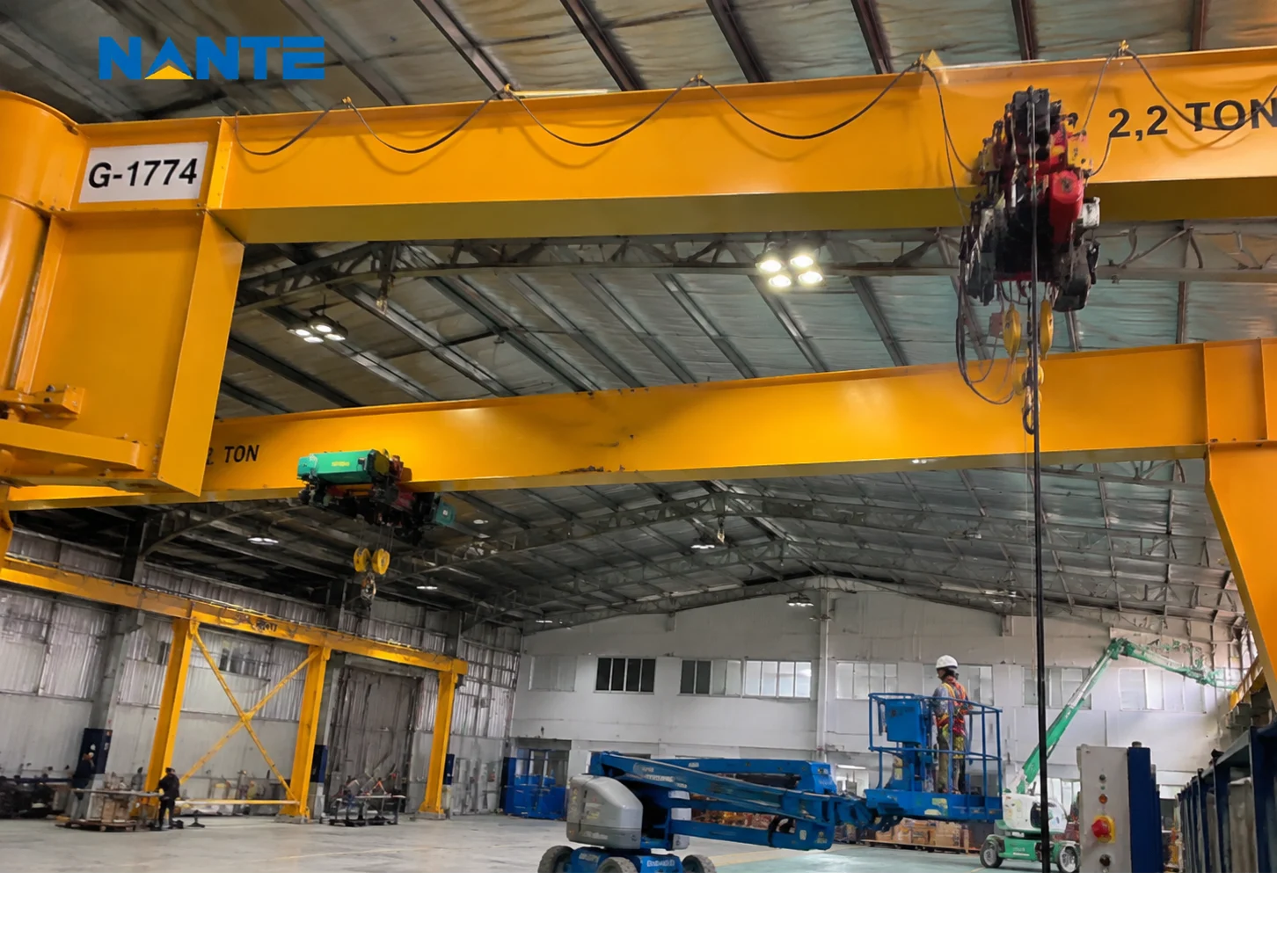
A wall mounted jib crane is attractive when a column or wall sits beside the point of use. It can eliminate a floor foundation and preserve the aisle, but only after the support is verified for combined shear, tension, bending, torsion, and cyclic loading.
Brick or block walls, thin cladding, lightly reinforced partitions, and columns with unknown reinforcement are not ready-made crane supports. The engineer of record should confirm material properties, connection geometry, reactions, and effects on the building frame.
An existing-column review can be organized with a wall mounted jib crane structural checklist covering member data, connection details, and crane reactions.
Rotation, Radius, and Access
Wall mounted units suit a defined bay or workstation where the boom serves a partial arc. Limited rotation can keep the hook inside a controlled zone and reduce conflict with adjacent equipment.
The design review should check folded position, hook approach, headroom, and whether loads can transfer without dragging. A wall solution is not compact if brackets project into a traffic lane or the boom needs extra reach to clear the structure.
Maintenance and Future Changes
Bracket bolts, welds, pins, bearings, and the supporting column need an inspection plan. Future doors, racking, process lines, or wall changes can alter the safe envelope.
The asset register should identify the building member and connection details, not just the hoist model.
Wall Jib Crane vs Floor Jib Crane: Buyer Comparison
Decision Matrix
| Criterion | Floor mounted jib crane | Wall mounted jib crane |
|---|---|---|
| Primary load path | Mast to base and foundation | Brackets to wall, column, or frame |
| Building dependency | Lower, but slab or foundation is critical | High; structural verification is mandatory |
| Floor obstruction | Mast and base remain in the work area | No mast at floor level |
| Typical envelope | Flexible rotation; project-specific | Defined arc; project-specific |
| Best fit | Independent stations and uncertain walls | Proven columns and tight floor layouts |
| Main risk | Inadequate slab, anchors, or collision clearance | Local connection or building-frame overstress |
| Future relocation | Usually easier if a new base is possible | Depends on spare support locations and repairs |
The matrix is a screening tool, not design approval. Comparable quotations should use the same load, radius, lift, duty, controls, installation, testing, and documentation assumptions.
Cost Beyond the Crane Price
For a floor mounted unit, compare foundation work, anchors, grout, curing, and floor reinstatement. For a wall mounted unit, compare engineering review, access equipment, temporary support, connection fabrication, and shutdowns.
Freight, electrical supply, cable management, controls, commissioning, training, spares, warranty, and exclusions belong in both bids. A low equipment price is not a low project cost when interfaces are undefined.
Jib Crane Mounting Options and Engineering Checks
Confirm the Operating Envelope
Prepare a dimensioned plan showing pickup and set-down points, maximum radius, rotation stops, hook height, headroom, traffic routes, and adjacent cranes. Include the largest load and least favorable position.
Record operating hours, starts per hour, load spectrum, exposure, temperature, dust, moisture, corrosive agents, and power supply. These inputs affect duty, brakes, controls, enclosure, paint system, and maintenance intervals.
Verify the Support and Interfaces
For floor mounting, request slab drawings, concrete data, reinforcement scans, anchor calculations, and base tolerances. For wall mounting, request member sections, material grades, reinforcement details, bracket reactions, connection design, and a signed structural review.
The design package should list applicable OSHA, ASME, and local building-code requirements for the actual configuration. Certificate claims should be checked for issuer, legal entity, site, scope, validity, and expiry. A management-system certificate is not the same as product compliance.
Plan Testing and Handover
Before release, define weld and dimensional inspections, electrical checks, no-load and load tests, calibrated instruments, and acceptance criteria.
Handover should include drawings, load charts, manuals, parts lists, test records, maintenance schedules, and a clear boundary between crane and building work. Confirm the jib crane installation support included in the supplier’s scope before release.
A Practical Selection Process
Use This Five-Step Screen
-
Map the load path and identify the member or foundation that carries it.
-
Draw the working envelope and remove collisions before selecting a radius.
-
Normalize duty, environment, controls, testing, installation, and documents.
-
Have a qualified engineer approve slab, anchors, brackets, and building interfaces.
-
Compare lifecycle access, inspection points, relocation needs, and planned expansion.
This process prevents choosing a mounting style from a catalog photograph before structural and operational constraints are known.
When the Current Product Range Becomes Relevant
Match Supplier Options to the Brief
The official Nante Crane site describes a configurable jib-crane range that includes free-standing, wall mounted, wall travelling, and mobile designs. Its product information presents capacity, lifting height, jib length, slewing method, and rotation as project parameters rather than one fixed model.
The page identifies manual or motorized slewing on selected designs and lists chain, low-headroom, and monorail hoists as possible mechanisms. These are supplier-stated options; final selection still requires a load chart, duty review, and interface drawings.
Installation scope, commissioning, and service boundaries should be clarified before release.
FAQ
Is a Floor Mounted Jib Crane Stronger Than a Wall Mounted Jib Crane?
Neither is inherently stronger. Allowable capacity and fatigue life depend on the boom, mast or brackets, hoist, anchors, support structure, duty, and load spectrum. The governing calculation is project-specific.
Which Option Uses Less Floor Space?
A wall mounted unit normally removes the mast from floor level, but the answer depends on bracket projection, radius, and traffic clearance. A floor mounted unit can be better where wall reinforcement is costly.
Can an Existing Column Support a Wall Jib Crane?
Only after a documented structural and connection assessment. Drawings, material data, reinforcement, member condition, crane reactions, and connection details should be available.
Does a Longer Jib Always Improve Productivity?
No. A longer radius may increase coverage but reduce allowable load, add deflection, raise overturning moment, and create collision or sway issues. Test coverage against actual pickup and set-down points.
What Should Be Sent for a Comparable Quotation?
Provide rated and maximum loads, radius, lift height, duty, rotation, hook approach, layout, support details, environment, power, controls, destination, installation scope, and required records.
Photos and marked-up drawings expose interface risks early.
Request a Project-Specific Jib Crane Review
What to Include in the Inquiry
The purchasing team should submit load data, operating envelope, floor or column information, environment, controls, destination, and installation boundary.
Nante Crane can review the mounting concept, identify missing structural inputs, and prepare a project-specific technical response or quotation scope. Send the brief through the jib crane project inquiry channel.