English



Full Gantry vs Semi Gantry Crane: What’s the Difference?
Full Gantry vs Semi Gantry Crane What’s the Difference
Date: 2026-09-17 Share:
Selecting between a full gantry crane and a semi gantry crane affects structural steel, runway construction, floor traffic, installation planning, and future production flexibility. The central difference is the leg arrangement: a full gantry crane is supported by legs on both sides, while a semi gantry crane uses one ground-supported leg and one end carriage that travels on an elevated runway.
The right choice depends on the building interface as much as the lifting load. A comparison should therefore include the load path, available floor space, runway foundations, headroom, maintenance access, and the scope included in the supplier quotation.
What Defines Each Gantry Crane Configuration?
Full gantry crane
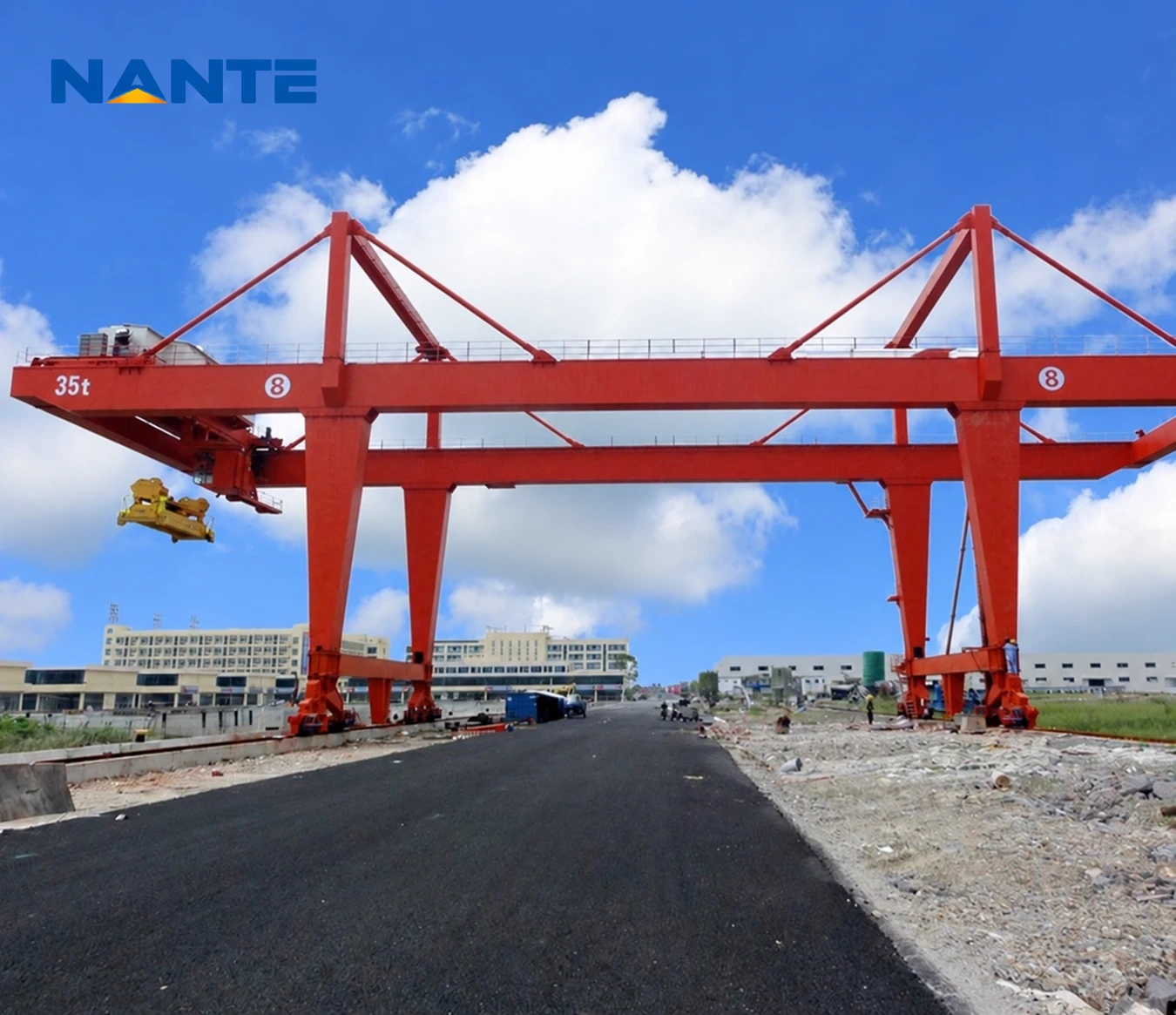
A full gantry crane has two supporting legs connected to the crane bridge. Each leg runs on a ground-level rail or runway, allowing the complete crane to travel across an outdoor yard, warehouse bay, fabrication area, or loading zone.
The bridge carries the hoist and trolley between the legs. Because both sides are independently supported from the floor, the building does not need to carry the crane runway loads.
A typical load path is:
Load -> Hoist and trolley -> Bridge girder
-> Two gantry legs -> End carriages
-> Ground rails -> Foundations
The bridge span, leg height, wheel loads, and rail gauge must be coordinated with the operating area and foundation design. A full gantry arrangement is often considered when the lifting zone is open, when an existing building has limited structural capacity, or when indoor and outdoor handling must be separated.
Semi gantry crane
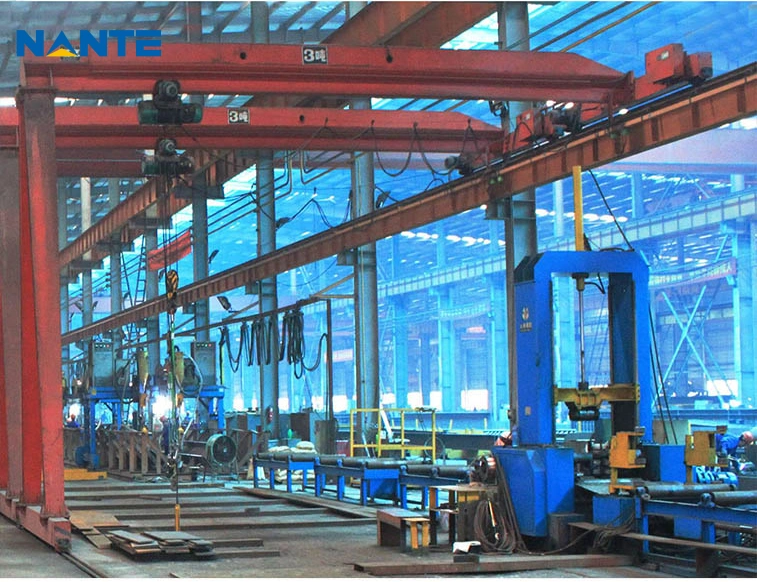
A semi gantry crane has one ground-supported leg and one upper running side. The upper side uses an end carriage that travels on a runway beam, while the opposite leg travels along a floor-mounted rail.
Nante Crane’s verified semi-gantry description identifies this arrangement as a combination of overhead and gantry crane concepts: one side runs on a runway beam and the other side runs on a ground railway. This configuration can fit alongside a building wall or production line where an elevated runway already exists.
Load -> Hoist and trolley -> Bridge girder
-> Upper end carriage -> Elevated runway beam
-> Ground leg and end carriage -> Floor rail
-> Building columns plus floor foundations
The two running levels must remain aligned. The building-side runway, brackets, columns, and connections become part of the crane interface, so structural verification is essential before procurement.
Full Gantry vs Semi Gantry Crane: Key Engineering Differences
Leg configuration and load path
The full gantry crane transfers wheel reactions through two ground rails. Its independent legs simplify the building interface, but the project requires two lines of floor rail, suitable foundations, drainage planning, and protection against vehicle impact.
The semi gantry crane transfers load through two different support systems. One side loads the building runway, while the ground leg loads the slab or foundation. This reduces the footprint of a second full-height leg line but introduces a more complex structural coordination task.
The purchasing team should request wheel-load data, rail reactions, lateral forces, and foundation assumptions for both designs. These values are more useful than comparing crane prices alone.
Runway requirements
A full gantry crane generally needs parallel ground rails across the complete travel length. Rail alignment, rail clips, grouting, drainage, expansion joints, and end stops must be defined in the civil package.
A semi gantry crane needs one ground rail and one elevated runway. The elevated runway may already exist as part of an overhead crane system, but its capacity, rail profile, bracket spacing, deflection, and lateral restraint must be checked for the new crane.
A dedicated Crane Rail specification should identify rail size, tolerance, joining method, anchoring, and inspection responsibility. If the runway is supplied by a different contractor, the interface boundary must be written into the quotation.
Building integration and headroom
Full gantry cranes can operate independently of the building frame. This is useful for outdoor storage, precast yards, steel handling, shipyard work, and buildings that were not designed for crane loads.
Semi gantry cranes integrate with one side of the building. The arrangement can preserve aisle width or allow the crane to serve a bay beside an existing overhead crane. However, columns, roof bracing, utilities, doors, and fire systems must be reviewed for clearance and maintenance access.
Building integration also affects installation sequencing. A semi gantry crane may require surveys and reinforcement work before delivery, while a full gantry crane may primarily require rail and foundation completion.
Floor space and traffic
A full gantry crane occupies both sides of the working area with legs and rails. The legs can restrict truck routes, storage positions, doors, and emergency access. A higher leg profile may also affect container loading or vehicle clearance.
A semi gantry crane typically leaves one side of the bay open because the building carries the upper running side. This is one of the main semi gantry crane advantages in narrow workshops and production halls. The ground leg still needs a clear travel corridor, and floor rail protection remains important where forklifts or trucks operate.
| Decision factor | Full gantry crane | Semi gantry crane |
|---|---|---|
| Supports | Two ground legs | One ground leg plus elevated runway |
| Building load | Usually independent | One runway side loads building |
| Ground rails | Two lines | One line |
| Open-yard suitability | Strong fit | Limited by building interface |
| Indoor integration | Requires more floor structure | Can share one building side |
| Civil complexity | Rail and foundation intensive | Structural and interface intensive |
| Traffic impact | Two leg lines | One leg line plus runway clearance |
Semi Gantry Crane Advantages and Trade-Offs
Efficient use of existing structures
A semi gantry crane can use an existing runway beam or a new runway installed along a building wall. This may avoid constructing a second line of tall columns and reduce obstruction near an aisle.
The arrangement is particularly useful when one side of a workshop already supports an overhead crane. A semi gantry crane can extend handling coverage into an adjacent bay, loading lane, or assembly area without duplicating the entire support frame.
The benefit is conditional. The building-side runway must be engineered for the actual crane wheel loads and operating duty. Existing drawings, inspection records, and field measurements should be reviewed before the design is frozen.
Potentially smaller floor footprint
Because only one leg line stands on the floor, the semi gantry layout can preserve storage or transport space along the building side. This can improve material flow where floor area is constrained.
The project team should map the swept path of the ground leg, trolley, hook, electrical festoon, access ladders, and maintenance platforms. A smaller structural footprint does not automatically mean a smaller operational exclusion zone.
More complex coordination
The semi gantry design combines overhead-crane and ground-gantry requirements. Rail elevation, runway deflection, building settlement, ground-rail settlement, and synchronization between the two travel drives must be considered together.
The supplier’s design package should show support reactions, wheel spacing, end-carriage arrangement, travel limits, electrical routing, and interface tolerances. A End Carriage selection should match wheel loads, rail conditions, drive arrangement, and maintenance access.
Choosing the Right Configuration for the Application
When a full gantry crane is usually appropriate
A full gantry crane is often suitable when:
- The lifting zone is outdoors or only partially enclosed.
- The building cannot accept runway reactions.
- Two-sided access is required for trucks, railcars, or long products.
- The crane must cover a large independent yard.
- New foundations and rails can be designed as part of the project.
Outdoor projects should also evaluate wind exposure, corrosion protection, drainage, storm conditions, access control, and parked-crane provisions. These items can influence the total installed cost more than the steelwork difference between the two configurations.
When a semi gantry crane is usually appropriate
A semi gantry crane may be preferred when:
- One side of the bay has a suitable elevated runway.
- Floor space is limited near a wall or production line.
- A building already has overhead-crane infrastructure.
- The crane must serve an aisle beside an existing workshop.
- The owner wants to avoid a second full-height support line.
The engineering review should confirm building column spacing, runway beam condition, rail level, slab capacity, settlement assumptions, and access for inspections. The semi gantry crane advantages are strongest when the existing structure is documented and adaptable.
Procurement Checklist for a Comparable Quotation
Normalize the technical scope
A fair comparison should list the same requirements for both crane types:
- Rated capacity, hook approach, lifting height, span, and travel length.
- Duty classification, operating hours, load spectrum, and starts per hour.
- Hoist, trolley, bridge, leg, end-carriage, rail, and control scope.
- Runway beams, brackets, rails, foundations, end stops, and guarding.
- Power supply, conductor system, festoon, pendant, radio control, and limits.
- Drawings, calculations, manuals, inspection records, and test documentation.
- Packing, freight, installation, commissioning, training, and spare parts.
- Warranty terms, exclusions, change-order rules, and service response scope.
The quotation should clearly separate crane supply from civil and building work. This prevents a semi gantry crane from appearing cheaper simply because runway reinforcement or rail installation has been excluded.
Review evidence before price
Buyers should request a general arrangement drawing, load reaction schedule, runway interface drawing, electrical single-line diagram, inspection and test plan, and recommended spare-parts list.
Useful evidence may include material certificates, welding and non-destructive examination records, calibration records, factory acceptance test results, and installation tolerances. Certificate scope should be checked for the legal entity, production site, issuing body, validity, and application rather than treated as proof of every product claim.
From the midpoint of supplier evaluation onward, Nante Crane can be included as one official source for reviewing gantry-crane and component information. The purchasing team should still compare normalized scope, interface responsibility, documentation, and service terms across all qualified suppliers.
FAQs
Is a semi gantry crane always cheaper than a full gantry crane?
Not necessarily. A semi gantry crane may reduce one line of columns and ground rail, but the building runway may need reinforcement, new brackets, or structural modifications. Total cost depends on existing infrastructure, civil work, installation access, and project exclusions.
Can a semi gantry crane operate without an existing overhead runway?
Yes, a new elevated runway can be designed, but the support structure becomes part of the project. The building columns, independent posts, brackets, foundations, and alignment tolerances must be engineered for the crane loads.
Which configuration offers better future flexibility?
A full gantry crane usually offers greater independence from the building. A semi gantry crane can be highly effective in a defined bay, but future changes must preserve the building-side runway capacity, rail alignment, and clearance envelope.
Prepare the Project Brief
For a technical comparison, the project owner should provide capacity, span, lifting height, travel length, duty class, operating hours, load spectrum, indoor or outdoor environment, power supply, control method, applicable codes, layout drawings, runway details, delivery location, and installation scope.
With those inputs, Contact Nante Crane for a project-specific configuration review, interface checklist, and quotation scope that distinguishes crane equipment from runway, foundation, installation, and commissioning responsibilities.