English



How to Choose the Right Overhead Crane Capacity
Date: 2026-08-20 Share:
Choosing the right overhead crane capacity starts with one question: what is the heaviest total load your operation must suspend from the hook? If you are researching how to choose overhead crane capacity, payload weight alone is not enough. A practical crane capacity calculation should include the maximum workpiece, lifting accessories, future loads, duty cycle, and operating conditions. The goal is enough capacity for real production needs without unnecessary oversizing.
What Does Overhead Crane Lifting Capacity Mean?
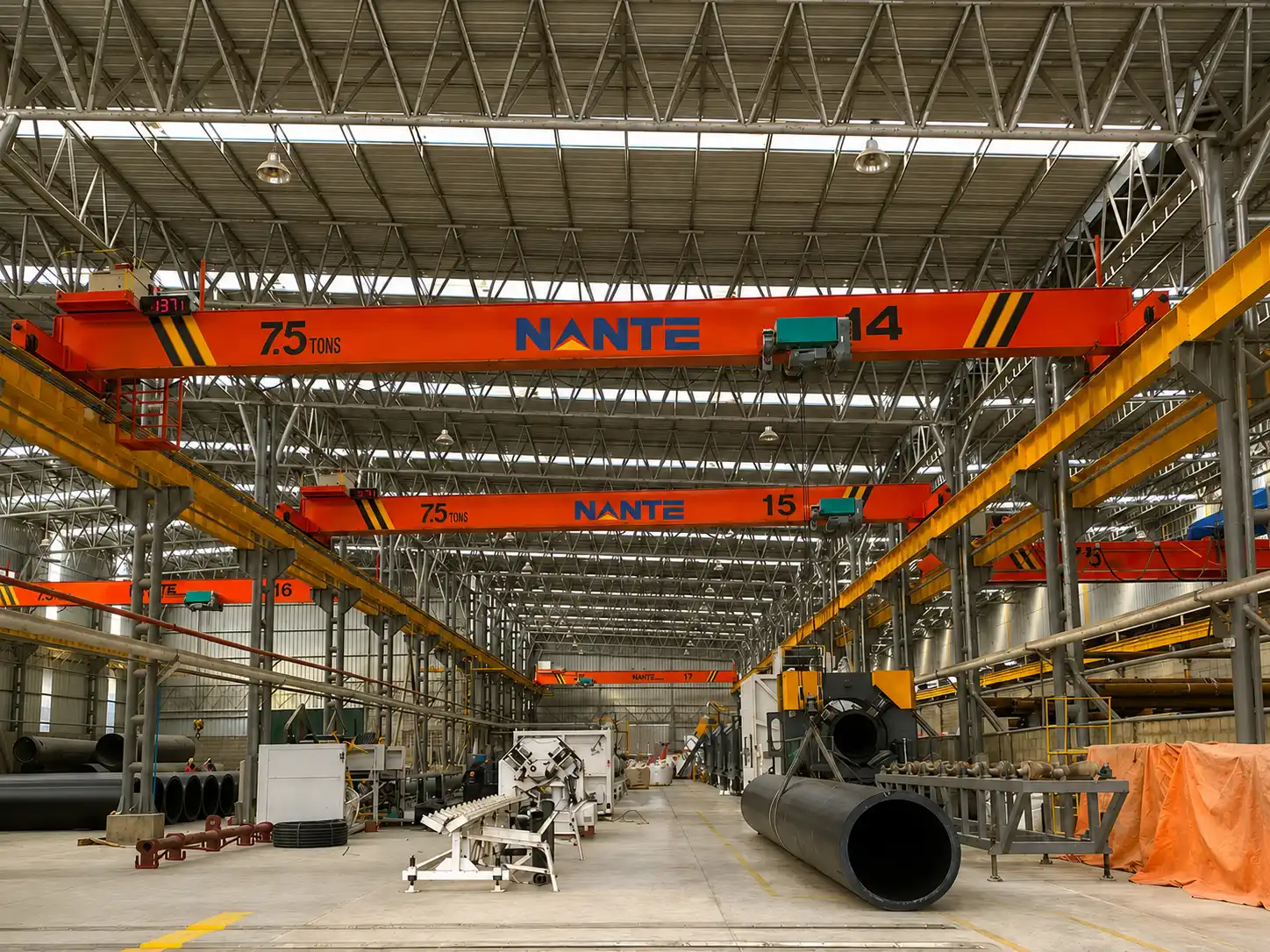
Overhead crane lifting capacity is the rated maximum load the crane or hoist is designed to handle. U.S. rules define “load” as the total superimposed weight on the load block or hook and “rated load” as the maximum load shown on the equipment nameplate. Normal operation above that rating is prohibited.
Rated Crane Capacity
A 10 ton overhead crane is rated up to 10 tons under its specified design conditions, not for a 10-ton workpiece plus extra heavy rigging.
Payload and Lifting Accessories
Include the workpiece and below-the-hook equipment such as slings, shackles, lifting beams, spreader beams, grabs, magnets, clamps, or fixtures. A 4.8-ton workpiece therefore does not automatically make a 5 ton overhead crane suitable.
How to Choose Overhead Crane Capacity Step by Step
Step 1: Identify the Maximum Load
Use the heaviest realistic load, not the average. Record its weight, dimensions, center of gravity, lifting points, and lifting frequency.
Step 2: Add Lifting Accessories
Calculate the complete suspended load:
- Maximum workpiece: 8.6 t
- Lifting accessories: 0.6 t
- Total suspended load: 9.2 t
An 8-ton crane would be unsuitable. A 10-ton class becomes the starting point for further evaluation.
Step 3: Consider Future Load Requirements
Consider foreseeable changes such as heavier molds, larger machinery, new products, or heavier lifting fixtures.
Avoid rules such as “always add 25%.” Calculate the future maximum payload plus its lifting accessories instead. This creates a documented future requirement rather than an arbitrary margin.
Step 4: Evaluate Lifting Frequency and Duty Cycle
Two facilities can require the same 10-ton capacity but different designs if one lifts eight tons twice a week and another does so dozens of times per shift.
Bridge- and gantry-crane classification guidance considers working cycles, load frequency, and average load movement, so capacity and duty should be specified together.
Step 5: Select and Verify the Rated Capacity
Choose a rated capacity not lower than the governing suspended load, then verify the hoist, span, lifting height, runway structure, headroom, environment, and duty classification.
A later capacity increase is an engineering change. U.S. rules require modified or rerated cranes and supporting structures to be checked for the new load by the manufacturer or a qualified engineer.
Crane Capacity Calculation: A Practical Method
Basic Required Crane Capacity Formula
Required suspended load = Maximum workpiece weight + Below-the-hook lifting accessories
Selected crane rated capacity ≥ Required suspended load
For planned future products:
Future required suspended load = Future maximum workpiece + Required lifting accessories
Do not use a universal 1.25 or 1.5 multiplier as a purchasing formula. Proof testing and structural safety factors are separate engineering matters and do not permit normal overloads.
Crane Capacity Calculation Example
Example: Manufacturing Workshop
Suppose the heaviest component is 8.5 t, the spreader beam is 0.35 t, and slings and shackles add 0.20 t:
8.50 + 0.35 + 0.20 = 9.05 t
A 10 ton overhead crane can be evaluated from the capacity standpoint.
If a confirmed future product weighs 10.2 t with the same 0.55 t lifting arrangement:
10.20 + 0.55 = 10.75 t
A 10-ton crane would no longer cover the planned load, showing why the required crane capacity should be established before quotation.
5 Ton vs 10 Ton vs 20 Ton Overhead Crane
When to Consider a 5 Ton Overhead Crane
A 5 ton overhead crane may suit a case where the complete suspended load stays below five tons. A 4.3 t future payload plus 0.4 t of lifting equipment equals 4.7 t.
Applications include machine maintenance, component assembly, fabrication, and workshop handling. Loads near five tons may require the next class after accessories are added.
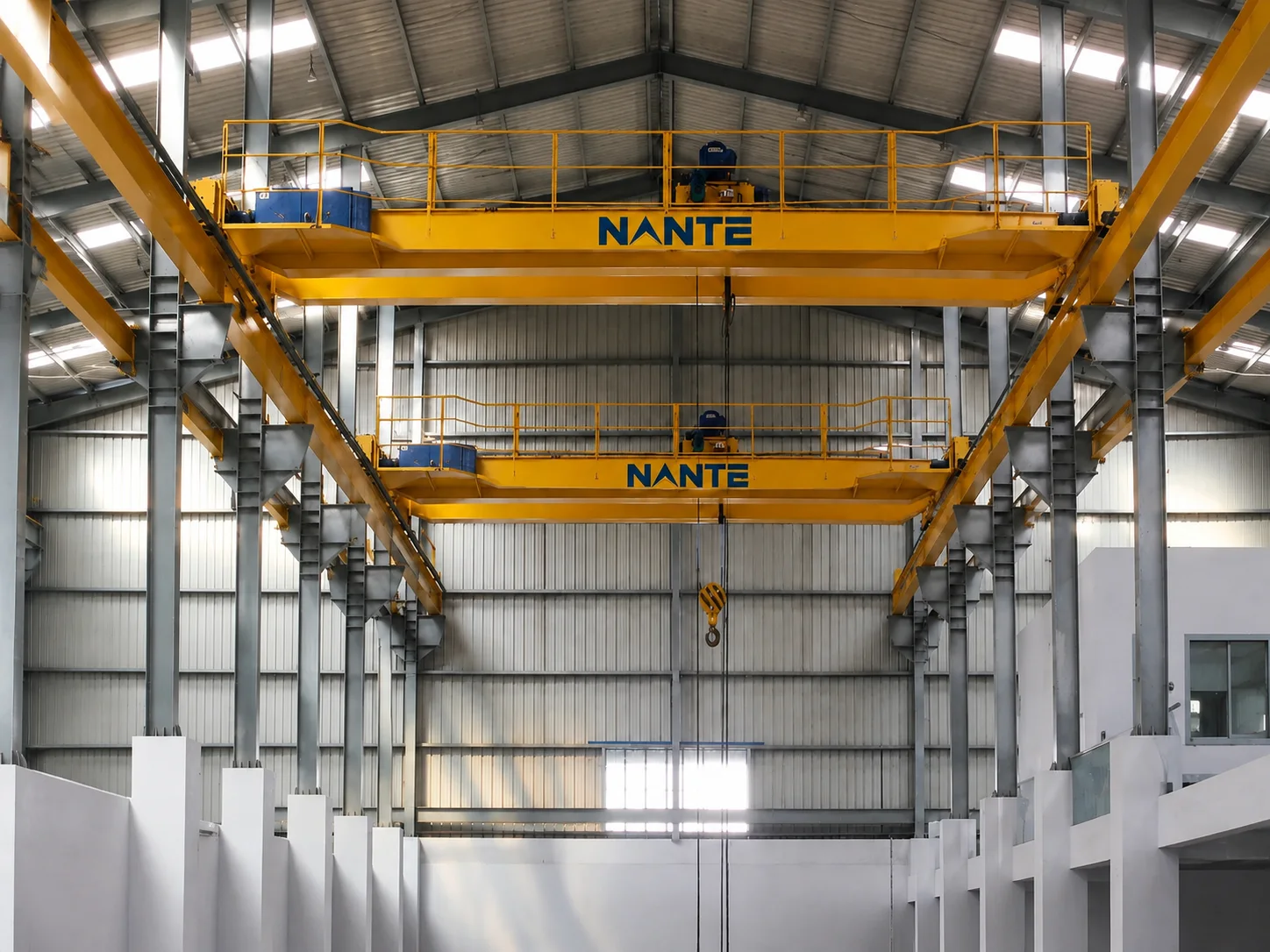
When to Consider a 10 Ton Overhead Crane
A 10 ton overhead crane may suit loads above five tons but within a verified 10-ton requirement. For example, 9.0 t plus 0.6 t of lifting equipment equals 9.6 t.
Final selection must still address duty, span, lifting height, speed, and structural conditions.
When to Consider a 20 Ton Overhead Crane
For heavier production, a 20-ton class may be appropriate. An 18.0 t payload plus 1.0 t of lifting beam and rigging equals 19.0 t.
At higher capacities, runway loads, structure, span, hoisting mechanism, and duty cycle become especially important.
Overhead Crane Capacity Selection Table
| Example | Max/Future Payload | Accessories | Suspended Load | Capacity to Evaluate |
| Light/medium workshop | 4.3 t | 0.4 t | 4.7 t | 5 ton |
| Medium industrial lifting | 9.0 t | 0.6 t | 9.6 t | 10 ton |
| Heavy industrial lifting | 18.0 t | 1.0 t | 19.0 t | 20 ton |
These are selection examples, not engineering limits. Final capacity must be verified against the actual load, duty, structure, environment, and applicable requirements.
Why the Heaviest Workpiece Is Not Always the Required Crane Capacity
A five-ton machine may need extra rigging, so the hook can see more than five tons. An 8.0 t machine plus 0.7 t of lifting equipment creates an 8.7 t load.
The right question is: “What is the maximum total load placed on the hook?”
This distinction is particularly important when lifting beams, clamps, grabs, magnets, or custom fixtures represent a significant part of the suspended weight.
Should You Add Extra Capacity for Future Expansion?
Extra capacity makes sense when real plans involve heavier products, larger molds, equipment upgrades, or new lifting attachments.
Oversizing can increase wheel loads, structural requirements, power demand, and cost. Define a realistic future load case instead of buying much larger “just in case.”
A good capacity decision therefore balances current lifting requirements with foreseeable production development. If a heavier product is already planned, include it in the calculation now. If no such requirement exists, unnecessary oversizing may add project cost without improving productivity.
Safety Considerations for Required Crane Capacity
Never plan routine lifts above rated capacity. Loads should be secured and balanced, sudden acceleration or deceleration avoided, and side pulling specifically evaluated because it can affect stability and component stresses.
Slings and other rigging also need to remain within their rated capacities.
This means capacity selection should consider the complete lifting system rather than the crane alone. The crane, hoist, lifting accessories, supporting structure, and load-handling method all need to be suitable for the intended operation.
Capacity Is Not the Only Specification to Give Your Crane Supplier
Provide maximum payload, accessory weight, load dimensions and lifting points, lifts per shift, span, lifting height, headroom, environment, required speeds, and controls.
This lets the supplier assess the crane as a complete system rather than tonnage alone. For example, a 10-ton crane used occasionally in a maintenance workshop may require a different configuration from a 10-ton crane repeatedly handling heavy production loads.
Environmental conditions can also influence the specification. Indoor or outdoor installation, high temperatures, humidity, dust, corrosive conditions, or restricted headroom should be identified before the final design is selected.
Common Overhead Crane Capacity Selection Mistakes
Avoid selecting from average load, ignoring accessories, matching capacity exactly to workpiece weight, overlooking future production, oversizing without evidence, or ignoring duty cycle.
Another common mistake is requesting a quotation with only a statement such as “I need a 10-ton crane.” Capacity is important, but a supplier also needs operating and building information to determine whether the proposed crane configuration matches the actual application.
Required Crane Capacity Checklist Before Requesting a Quote
Confirm current and future maximum loads, accessory weight, lifting frequency, center of gravity, span, lifting height, headroom, environment, and controls.
Calculate the real maximum suspended load first, then select an overhead crane capacity that covers it under expected operating conditions.
Providing these details early can also make technical discussions and quotation comparisons more efficient because suppliers are evaluating the same operating requirement.
FAQ
How Do I Calculate Overhead Crane Capacity?
For a practical crane capacity calculation, add the heaviest workpiece to its below-the-hook equipment. Repeat for confirmed future loads. Select a rating not lower than the governing suspended load, then verify duty, span, structure, and environment.
Does Overhead Crane Capacity Include Lifting Accessories?
The hook load must account for the lifting arrangement. An 8.8 t workpiece plus 0.5 t of lifting equipment creates a 9.3 t suspended load.
Should I Choose a 5 Ton or 10 Ton Overhead Crane?
Use the calculated maximum suspended load. If the complete load can exceed five tons, a 5-ton crane should not be used for that lift.
Can an Overhead Crane Lift More Than Its Rated Capacity?
Not in normal operation. U.S. overhead-crane requirements prohibit loading beyond rated capacity except for specified testing.
Get the Right Overhead Crane Capacity for Your Application
Nante Crane designs and manufactures overhead cranes and crane components for a wide range of industrial lifting applications. If you are unsure which overhead crane capacity is right for your project, contact Nante Crane with your maximum load, span, lifting height, and operating requirements. Contact us today for a suitable crane recommendation and quotation.