English



Overhead Crane vs Gantry Crane: Which Is Better for Your Application?
Date: 2026-08-20 Share:
Choosing between an overhead crane and a gantry crane would depend largely on the location of the crane and how the materials will be handled within the premises. In doing a proper comparison of a bridge crane vs gantry crane, factors such as structure of building, installation, cost, space, capacity, and maintenance should all be taken into account. The indoor vs outdoor crane issue is also very important.
There is no automatic winner when choosing a crane. The key is in selecting the right type of crane for the facilities and operational needs of your business.
Overhead Crane vs Gantry Crane: Quick Comparison
The fundamental difference is structural. An overhead crane travels on an elevated fixed runway, while a gantry crane has a bridge supported by legs that travel on rails or another designed runway.
| Factor | Overhead Crane | Gantry Crane |
| Support | Elevated runway structure | Legs supported at ground level |
| Building requirements | Runway and supporting structure required | Less dependent on building structure |
| Floor obstruction | Low | Legs and travel paths use floor-level space |
| Installation | May require runway beams and structural work | May require rails, foundations or suitable floor |
| Mobility | Normally dedicated to one runway bay | Some designs offer greater relocation flexibility |
| Indoor use | Excellent for permanent production bays | Useful where no overhead runway exists |
| Outdoor use | Possible with suitable engineering | Common for yards and open areas |
| Capacity | Light to heavy-duty designs available | Light to heavy-duty designs available |
| Cost | Building modifications may increase project cost | Civil works and rails may increase project cost |
| Best fit | Permanent, high-use indoor lifting | Outdoor, flexible or structurally independent lifting |
Bridge Crane vs Gantry Crane: What Is the Structural Difference?
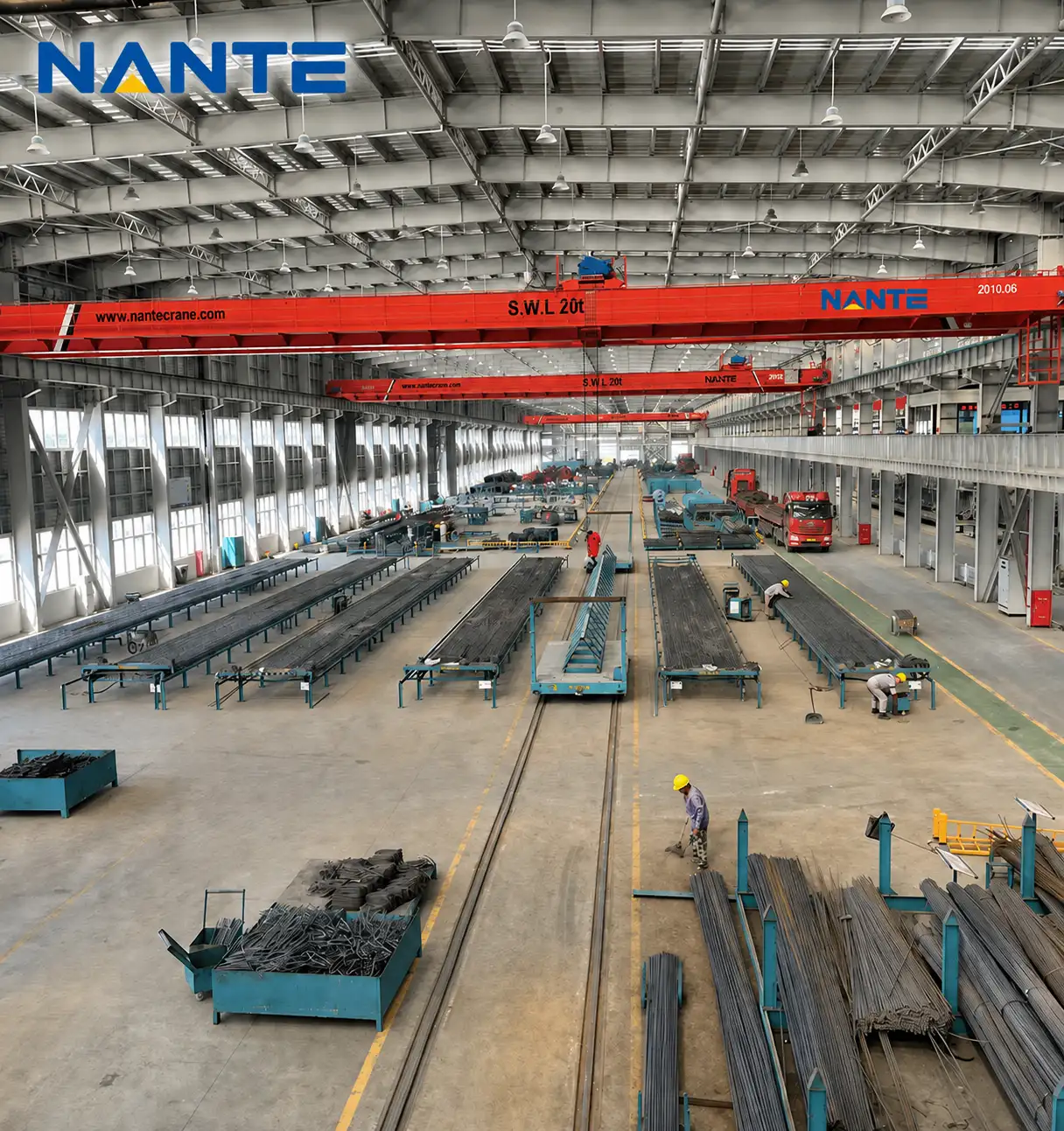
How an Overhead Bridge Crane Is Supported
An overhead or bridge crane has a bridge carrying the hoisting mechanism. The bridge travels along elevated runway rails, while the trolley or hoist moves across the bridge.
OSHA defines an overhead crane as a crane with a movable bridge carrying a hoisting mechanism and traveling on an overhead fixed runway structure.
Because the system operates above the working area, it can provide extensive lifting coverage without placing crane legs in production aisles.
How a Gantry Crane Is Supported
A gantry crane uses supporting legs beneath the bridge. OSHA defines it as a crane similar to an overhead crane except that its bridge is rigidly supported on two or more legs running on fixed rails or another runway.

This difference makes the gantry crane less dependent on roof columns or elevated runway structures. However, the ground, rail system and foundations must still be engineered for crane loads.
Overhead Crane vs Gantry Crane: 7 Key Differences
1. Installation and Building Requirements
An overhead crane usually requires runway beams, rails and a supporting building structure or independent runway columns. When installing one in an existing facility, the structure should be evaluated for crane loads and required clearances.
A gantry crane transfers loads through its legs toward the ground-level supporting system. This can be valuable where an existing workshop was not originally designed for an overhead runway.
However, “freestanding” does not mean “no infrastructure.” Rail-mounted gantry cranes may require substantial foundations, accurate rail alignment and carefully planned travel paths.
2. Installation Cost and Total Project Cost
When deciding between an overhead crane or gantry crane, compare total installed cost rather than the crane purchase price alone.
An overhead crane project may include:
- runway beams and rails;
- structural columns or building reinforcement;
- electrical power supply;
- installation and commissioning;
- maintenance-access provisions.
A gantry crane project may include:
- crane legs and end carriages;
- ground rails;
- foundations or floor improvements;
- electrical supply;
- outdoor protection;
- installation and commissioning.
A gantry crane can reduce expensive building modifications in some facilities. On other projects, long rail foundations or demanding outdoor conditions can make civil works a major cost item.
3. Floor Space and Workflow
Floor utilization is one of the strongest bridge crane vs gantry crane differences.
An overhead crane keeps most crane infrastructure above the production area. This is useful when machinery, storage racks, workstations, forklifts and pedestrian routes already compete for floor space.
Gantry crane legs travel at floor level. Their rails or wheel paths must remain clear, so the plant layout should account for nearby equipment and vehicle traffic.
4. Mobility and Relocation
Overhead cranes are normally tied to a specific runway and production bay. This makes them highly effective for repetitive lifting within a permanent workflow.
Some gantry crane configurations provide greater flexibility. Mobile designs can serve changing work areas, while rail-mounted gantry cranes can cover long outdoor or indoor zones.
Not every gantry crane is freely movable, however. Large rail-mounted systems still follow a fixed travel path.
5. Lifting Capacity, Span and Hook Height
Neither crane type should be selected based only on maximum tonnage.
Capacity must be evaluated together with:
- span;
- lifting height;
- crane duty;
- operating frequency;
- wheel loads;
- trolley configuration;
- available headroom;
- environmental conditions.
Both overhead and gantry cranes can be designed in single-girder or double-girder configurations. For demanding applications, wider spans, higher capacities or frequent lifting often lead engineers to evaluate double-girder solutions.
6. Maintenance and Inspection
Both crane types require inspection and preventive maintenance. ASME B30.2 addresses construction, installation, operation, inspection and maintenance for applicable overhead and gantry crane systems.
OSHA classifies inspections for cranes in regular service as frequent and periodic. Frequent inspection intervals range from daily to monthly, while periodic inspections are generally performed at intervals from one to twelve months depending on service conditions.
Maintenance commonly covers brakes, hooks, ropes or chains, wheels, rails, drives, controls and electrical equipment. OSHA also requires a preventive maintenance program based on the crane manufacturer’s recommendations.
7. Flexibility and Future Expansion
An overhead crane is often attractive when the production layout is permanent and the same lifting area will be used for many years.
A gantry crane may be more attractive when the working area could change, structural modification is difficult, or lifting is needed outside the main building.
Crane selection should therefore consider future production changes—not only today’s lifting requirement.
Gantry Crane Advantages and Limitations
Main Gantry Crane Advantages
The major gantry crane advantages come from structural independence and application flexibility.
They include:
- reduced dependence on an existing building runway;
- suitability for outdoor material handling;
- availability of full, semi-gantry and mobile configurations;
- flexibility for facilities with changing lifting areas;
- suitability for buildings where overhead structural modification is impractical.
These characteristics make gantry cranes especially useful for yards, loading zones, storage areas and workshops without suitable overhead runway support.
Gantry Crane Limitations to Consider
The same supporting legs that provide structural independence also create floor-level requirements.
Buyers should consider leg clearance, rails, wheel loads, foundations, forklift routes and nearby machinery.
Outdoor gantry cranes also require additional consideration of wind, rain, corrosion, drainage and electrical protection. OSHA specifically requires wind-indicating equipment and automatic rail clamps for certain outdoor storage-bridge applications, illustrating why wind conditions cannot be ignored in outdoor crane engineering.
Indoor vs Outdoor Crane: Which Configuration Works Better?
When an Overhead Crane Makes Sense Indoors
For an indoor vs outdoor crane decision, overhead cranes are particularly attractive in permanent manufacturing buildings.
Consider an overhead crane when:
- the building has suitable runway support;
- floor space must remain clear;
- lifting is frequent and repetitive;
- materials follow predictable routes;
- full production-bay coverage is required.
Typical environments include manufacturing, assembly, maintenance, warehousing and material-processing facilities.
When a Gantry Crane Makes Sense Outdoors
Gantry cranes are widely suited to stockyards, loading areas, fabrication yards and other open material-handling areas because their structure does not depend on an overhead building runway.
Outdoor selection should account for wind, precipitation, corrosion, temperature, drainage, rail conditions and electrical protection—not simply lifting capacity.
Overhead Crane or Gantry Crane? Application-Based Recommendations
Choose an Overhead Crane for Permanent Indoor Production
Choose this direction when your facility has suitable runway support, floor congestion is important, and lifting follows a permanent production flow.
Choose a Gantry Crane for Outdoor Yards
A gantry crane is often the practical option where loads must be handled in an open storage or loading area without an overhead support structure.
Choose a Gantry Crane for Buildings Without Crane Runways
If an existing workshop cannot economically support new elevated runway loads, a gantry system may reduce dependence on major structural modifications.
Consider Mobile Gantry Designs for Changing Work Areas
Temporary maintenance, equipment installation and changing work cells may benefit from a crane that offers greater relocation flexibility.
Evaluate Both for Heavy-Duty Applications
Heavy capacity alone does not determine the winner. Compare load, span, lifting height, duty cycle, wheel loads, structural support and operating environment before choosing.
How to Choose Between an Overhead Crane and Gantry Crane
Use a simple six-step process:
- Check the structure.Determine building capacity, runway availability and floor or foundation conditions.
- Define lifting requirements.Confirm maximum load, typical load, span and lifting height.
- Map material flow.Identify pickup points, destinations, obstacles and traffic routes.
- Confirm the environment.Determine whether the crane operates indoors, outdoors or in a mixed environment.
- Compare total installed cost.Include structural work, civil works, electrical installation and commissioning.
- Plan for future changes.Consider whether the production layout or lifting area could change during the crane’s service life.
Information to Prepare Before Requesting a Crane Quote
For a more accurate crane proposal, prepare:
- maximum lifting capacity;
- required span;
- lifting height;
- crane travel length;
- indoor or outdoor location;
- building dimensions;
- existing runway information;
- floor or foundation conditions;
- operating frequency and duty;
- power supply;
- control requirements;
- environmental conditions;
- future expansion plans.
Providing these details allows the crane system to be evaluated as a complete material-handling solution rather than simply selecting a crane by tonnage.
FAQ
What Is the Main Difference Between an Overhead Crane and a Gantry Crane?
The main difference is support. An overhead crane travels on an elevated fixed runway, while a gantry crane supports its bridge with legs that run on rails or another runway.
Is a Gantry Crane Cheaper Than an Overhead Crane?
Not necessarily. A gantry crane may reduce building modification costs, but foundations, ground rails and outdoor protection can increase project cost. Always compare total installed cost.
Can a Gantry Crane Be Used Indoors?
Yes. It can be especially useful in an existing building that lacks suitable runway beams or crane-supporting columns.
Which Crane Has Greater Lifting Capacity?
Neither type is automatically stronger. Capacity depends on the crane’s structural design, girder configuration, span, duty class and supporting system.
Get the Right Crane for Your Application
Nante Crane provides overhead cranes, gantry cranes, hoists, crane components, and customized material-handling solutions for industrial applications. Send us your required lifting capacity, span, lifting height, travel length, duty requirements, and operating environment, and our team can recommend a suitable crane configuration for your project. Contact Nante Crane today for a customized crane recommendation and quotation.