English


Crane Electrical Panel Arc Flash Risk: Design, SCCR, Labeling, LOTO, and Energized Work
Crane Electrical Panel Arc Flash Risk: Design, SCCR, Labeling, LOTO, and Energized Work
Date: 2026-08-06 Share:
Crane electrical panel arc flash risk becomes most immediate when a technician reaches for a cabinet door after a crane fault. A safe response requires more than an OFF indication. The responsible team must understand crane control panel SCCR requirements, follow a crane electrical panel LOTO procedure, verify the absence of voltage, and control any justified energized work.
This article provides general electrical-safety guidance. OSHA references primarily apply to workplaces under United States jurisdiction. Requirements may differ depending on the installation country, local regulations, applicable standards, and project specifications.
Why Opening a Crane Control Panel Creates a High-Risk Moment
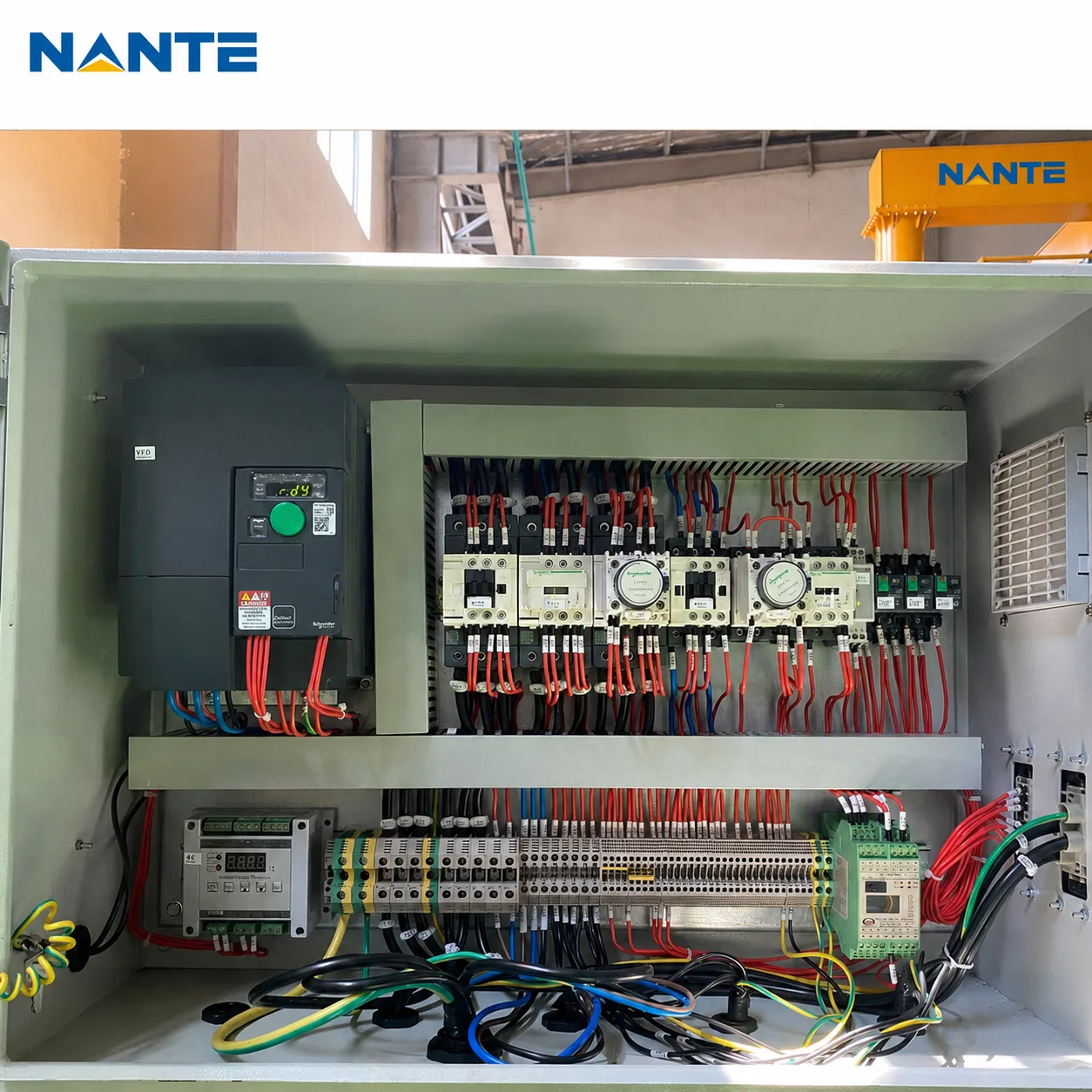
A closed enclosure separates personnel from energized conductors. An open door can place a technician’s face, hands, tools, and test leads close to incoming terminals, contactors, drives, and power-distribution components.
OSHA warns that even 120/208 V systems can produce enough arc energy to cause catastrophic or fatal injuries. OSHA also explains that incident energy depends strongly on current, fault duration, and worker distance. Therefore, a lower operating voltage does not automatically create a lower arc-flash risk.
Common Arc-Flash Initiators Inside the Cabinet
A slipped test probe, loose conductor, conductive tool, condensation, damaged insulation, or component failure can create an unintended current path.
Crane systems add complexity because hoist, cross-travel, long-travel, brake, control, and auxiliary circuits may not share one isolation point. A cabinet can also retain DC-bus energy after the incoming supply opens.
How Incident Energy Defines Worker Exposure
Incident energy represents the predicted thermal energy at a specified working distance. IEEE 1584 provides calculation models for determining incident energy and the arc-flash boundary on applicable three-phase alternating-current systems.
What Affects the Incident-Energy Result
A qualified study should consider the available fault current, calculated arcing current, protective-device clearing time, system voltage, enclosure configuration, electrode arrangement, and working distance.
A lower arcing current can sometimes place an upstream protective device in a slower operating region. The longer fault-clearing time can then increase the worker’s thermal exposure. Therefore, a technician cannot determine arc-flash PPE from system voltage or fault current alone.
What the Arc-Flash Label Should Communicate
The label should support a safe decision before the door opens. Applicable electrical safety guidance calls for information such as the nominal system voltage, arc-flash boundary, and either the available incident energy with its working distance or another permitted PPE designation.
The label must correspond to the actual crane panel and electrical supply configuration. A project team should never copy an incident-energy value from another crane, cabinet, or installation.
Crane Control Panel SCCR Requirements and Available Fault Current
SCCR identifies the fault-current level that an industrial control panel can withstand under its evaluated conditions. SCCR does not describe worker thermal exposure, and an incident-energy calculation does not prove that a panel has adequate short-circuit withstand capability.
How to Compare SCCR with the Installation
The project team should determine the available fault current at every machine supply disconnect. The marked panel SCCR should equal or exceed the available fault current at that point.
A crane can contain multiple control panels or incoming supplies. Each relevant supply circuit and panel therefore requires an appropriate SCCR evaluation. An arc-flash label cannot correct a panel that has an inadequate SCCR.
Which Components Can Limit SCCR
Disconnects, protective devices, contactors, motor controllers, drives, terminal blocks, and unverified component combinations can limit the assembly rating.
A current-limiting protective device does not automatically increase the complete panel rating. The final SCCR must follow an accepted calculation, tested component combination, or applicable panel-evaluation method.
Panel Design Features That Reduce Door-Open Exposure
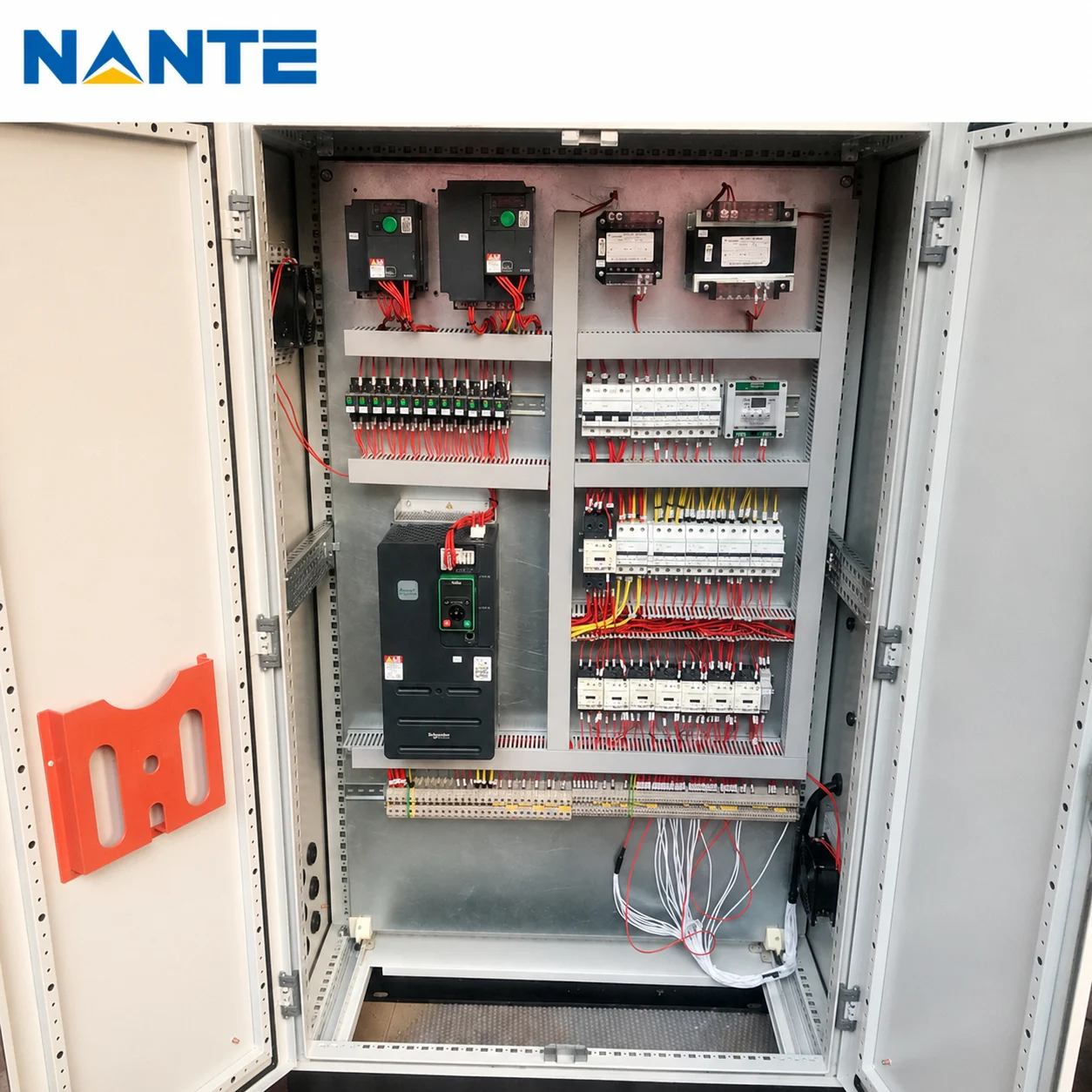
A safer panel design reduces tasks that require direct access to energized components. The design should support positive isolation, controlled cabinet access, clear circuit identification, and external diagnostics where practical.
Main Disconnects and Line-Side Hazards
A main disconnect should provide a positive isolation point that accepts a lockout device. A pushbutton, selector switch, software command, or control relay does not physically isolate incoming electrical energy.
Line-side terminals can remain energized after a cabinet-mounted disconnect is switched OFF. A separately enclosed disconnect or segregated incoming section can reduce exposure inside the main control enclosure. However, the design must still identify every supply, backfeed path, and line-side hazard.
Remote De-Energization and Door Interlocks
Remote opening can move the worker away from the cabinet during a switching operation. However, a remote stop or trip command cannot replace physical isolation, locks, tags, stored-energy control, and voltage verification.
A disconnect-to-door interlock can discourage normal access while the disconnect is ON. However, OSHA states that control-circuit devices and electrical interlocks cannot serve as the sole means of de-energization or substitute for lockout and tagging.
Internal Barriers and External Diagnostics
Dead-front covers, insulated busbar covers, segregated incoming compartments, and guarded terminals can reduce accidental contact. These features do not automatically eliminate arc-flash exposure.
External displays, approved test points, inspection windows, and remote diagnostic functions can reduce unnecessary cabinet opening. However, a status indicator cannot independently prove the absence of hazardous voltage.
Crane Electrical Panel LOTO Procedure Before Opening the Door
The procedure must address the complete crane rather than one visible disconnect handle. OSHA requires electrical parts that have been de-energized but not properly locked or tagged to be treated as energized.
Required Isolation Sequence
The authorized team should complete the following sequence:
- The operator should place the crane, hook, load, bridge, and trolley in the approved safe state.
- The authorized employee should identify every electrical and stored-energy source.
- The authorized employee should open each required energy-isolating device.
- The authorized employee should apply locks and tags to the applicable disconnecting means.
- The authorized employee should discharge capacitors and control mechanical, hydraulic, pneumatic, or gravitational energy.
- The qualified person should confirm that the crane cannot restart.
- The qualified person should test exposed circuit elements and verify the absence of voltage.
OSHA requires hazardous stored energy to be released, restrained, or otherwise rendered safe before work begins. OSHA also requires verification that isolation and de-energization have been achieved.
Why Voltage Verification Matters
An OFF handle, auxiliary contact, or voltage-presence indicator can provide useful information, but none of those indications replaces an approved electrical test.
The qualified person should use correctly rated test equipment. The qualified person should check relevant phase-to-phase and phase-to-ground points, investigate possible backfeed or induced voltage, and confirm that the tester works before and after testing.
PPE and Justified Energized Work
The employer should de-energize exposed live parts unless de-energization creates an additional hazard or the task is infeasible with the circuit off. Testing that can only occur while energized may qualify, but production pressure alone does not establish technical necessity.
Qualified Personnel and Work Controls
Only a qualified person should work on exposed energized circuit parts. The qualified person must understand the equipment, shock hazards, arc-flash exposure, special precautions, insulated tools, protective barriers, and required PPE.
The work area may require warning signs, barricades, restricted access, and an attendant. OSHA requires appropriate alerting techniques when electrical hazards could injure workers or allow unqualified personnel to enter the work area.
PPE Selection
The task-specific risk assessment should determine the required arc-rated clothing, face and head protection, eye protection, hearing protection, voltage-rated gloves, and insulated tools.
Arc-rated clothing addresses thermal exposure from an electric arc. Voltage-rated insulating equipment addresses electric-shock exposure. One form of protection does not automatically replace the other.
Procurement Information That Supports a Safer Panel
A buyer should confirm the supply voltage, frequency, control voltage, grounding method, available fault current, required SCCR, upstream protection, and number of incoming feeds.
The buyer should also confirm the crane type, rated capacity, motion functions, enclosure environment, isolation architecture, remote de-energization requirements, door-interlock requirements, label language, applicable standards, and required electrical drawings.
Discuss Your Confirmed Crane Control Requirements
Nante Crane designs and manufactures cranes and crane components for material-handling applications. Nante Crane offers hoisting control panels, long-travel control panels, and integrated whole-crane control panels. Its published options include IP55 enclosures, higher enclosure-protection levels, three-phase supplies from 220 V to 580 V at 50/60 Hz, and several control-voltage selections.
Your project team can contact Nante Crane after it confirms the key procurement information. A concise inquiry should include the crane configuration, electrical supply, available fault current, required SCCR, enclosure conditions, isolation arrangement, control functions, applicable standards, and delivery destination.
FAQ
Can a Technician Open the Panel When the Main Switch Is Off?
The technician should not rely on the OFF position alone. The authorized team must isolate every source, apply LOTO, control stored energy, and verify the absence of voltage.
Can Remote Shutdown Replace LOTO?
Remote shutdown can reduce exposure during switching, but it does not physically isolate hazardous energy. The authorized employee must still lock and tag the required energy-isolating devices.
Is SCCR the Same as Incident Energy?
SCCR describes the panel’s short-circuit withstand capability. Incident energy describes the predicted thermal exposure at a stated working distance.
Can a Door Interlock Replace LOTO?
A door interlock can control normal cabinet access, but it cannot verify that every conductor is de-energized. OSHA prohibits using an electrical interlock as a substitute for lockout and tagging.